
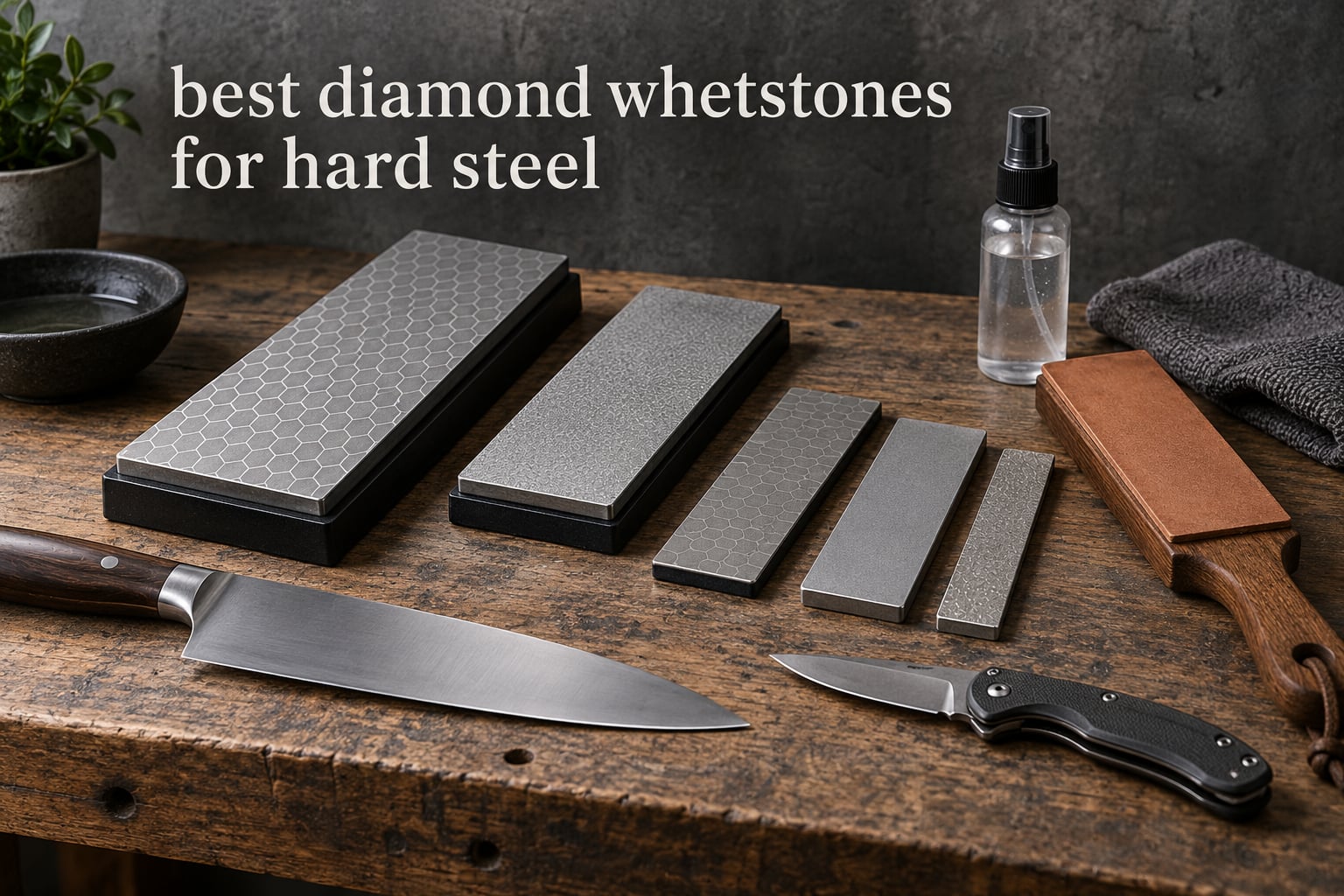
Most sharpening advice is written for soft stainless steel, where a thousand-grit waterstone does the job beautifully. That advice falls apart the moment you pull out a D2 pocket knife, a hard-chiseled Japanese gyuto, or an S90V folder that has lost its bite after a month of cardboard work. Carbide-rich steel does not just resist abrasion, it actively burnishes instead of cutting, and edges that never form are the frustrating result. That is where the best diamond whetstones for hard steel earn their place on a crowded bench.
We spent weeks putting ten diamond stones through real sharpening jobs on carbide-heavy steel, from a folded 8 inch plate to a full 8 x 3 inch three-grit set with a stone holder. The differences between them turned out to be far more about grit pairing, plate thickness, and base rigidity than about brand. We also tracked what buyers say once a stone is worn in, because the honest weaknesses are what you cannot read on a product page.
This guide covers what a diamond whetstone actually is, when you genuinely need one, the four bond types you will run into, ten picks across every use case from pocket knife maintenance to chisel work, and the buying trap that costs people their waterstones. We also flag which steels do not need diamond at all, because buying the wrong abrasive is the most expensive sharpening mistake there is.
Top 3 Diamond Whetstones for Hard Steel in 2026

SHARPAL 162N 325/1200 Stone
- Dual 325 and 1200 grit
- 0.35 inch steel base
- Works dry on carbide steel

DMT Deluxe 3 Stone Kit
- Three 6 inch stones at 325
- 600
- 1200
- Micronized monocrystalline diamond
- Wood storage box

S SATC 400/1000 Plate
- 400 and 1000 grit on machined steel
- Never needs flattening
- Arrives flat from the factory
Our top three share one trait that matters more than any spec sheet: a genuinely rigid, thick base plate. Thin plates flex under load, and a flexing plate is a plate that produces a rounded edge instead of a straight one. All three work dry, none of them need soaking, and all three grind hard carbides without the drama that a waterstone session on S90V can produce.
All 10 Picks at a Glance in 2026
| Product | Specifications | Action |
|---|---|---|
| SHARPAL 162N Dual-Grit Diamond Stone |
|
Check Latest Price |
| DMT Deluxe Diamond 3 Stone Kit |
|
Check Latest Price |
 DMT FWFC DuoSharp Folding Stone DMT FWFC DuoSharp Folding Stone |
|
Check Latest Price |
| S SATC 8 Inch 400/1000 Plate |
|
Check Latest Price |
 Ultrasharp 8 x 3 Three-Grit Set Ultrasharp 8 x 3 Three-Grit Set |
|
Check Latest Price |
 Work Sharp Tri-Brasive Benchstone Work Sharp Tri-Brasive Benchstone |
|
Check Latest Price |
 Schaaf Tools 325/1200 Diamond Kit Schaaf Tools 325/1200 Diamond Kit |
|
Check Latest Price |
 Kota Japan 3000/8000 Combination Stone Kota Japan 3000/8000 Combination Stone |
|
Check Latest Price |
 goodjob 3 Sided 400/1000/8000 Stone goodjob 3 Sided 400/1000/8000 Stone |
|
Check Latest Price |
 KITANIS Five Plate Diamond Set KITANIS Five Plate Diamond Set |
|
Check Latest Price |
1. SHARPAL 162N Dual-Grit Diamond Stone for Fast Carbide Work
SHARPAL 162N Double-sided Diamond Sharpening Stone, 8 in. x 3 in.
325 and 1200 grit dual sided
8 x 3 inch face
0.35 inch steel base
Works dry
Pros
- Cuts high speed steel
- carbide and CBN quickly
- 0.35 inch solid steel base resists flexing
- Stays flat where waterstones dish
- Bundled case doubles as a non-slip base
- 1200 grit side finishes keen after stropping
Cons
- Fine side loads with metal over time
- Bundled plastic case lid is awkward for very sharp blades
- Cannot be lapped flat again once worn
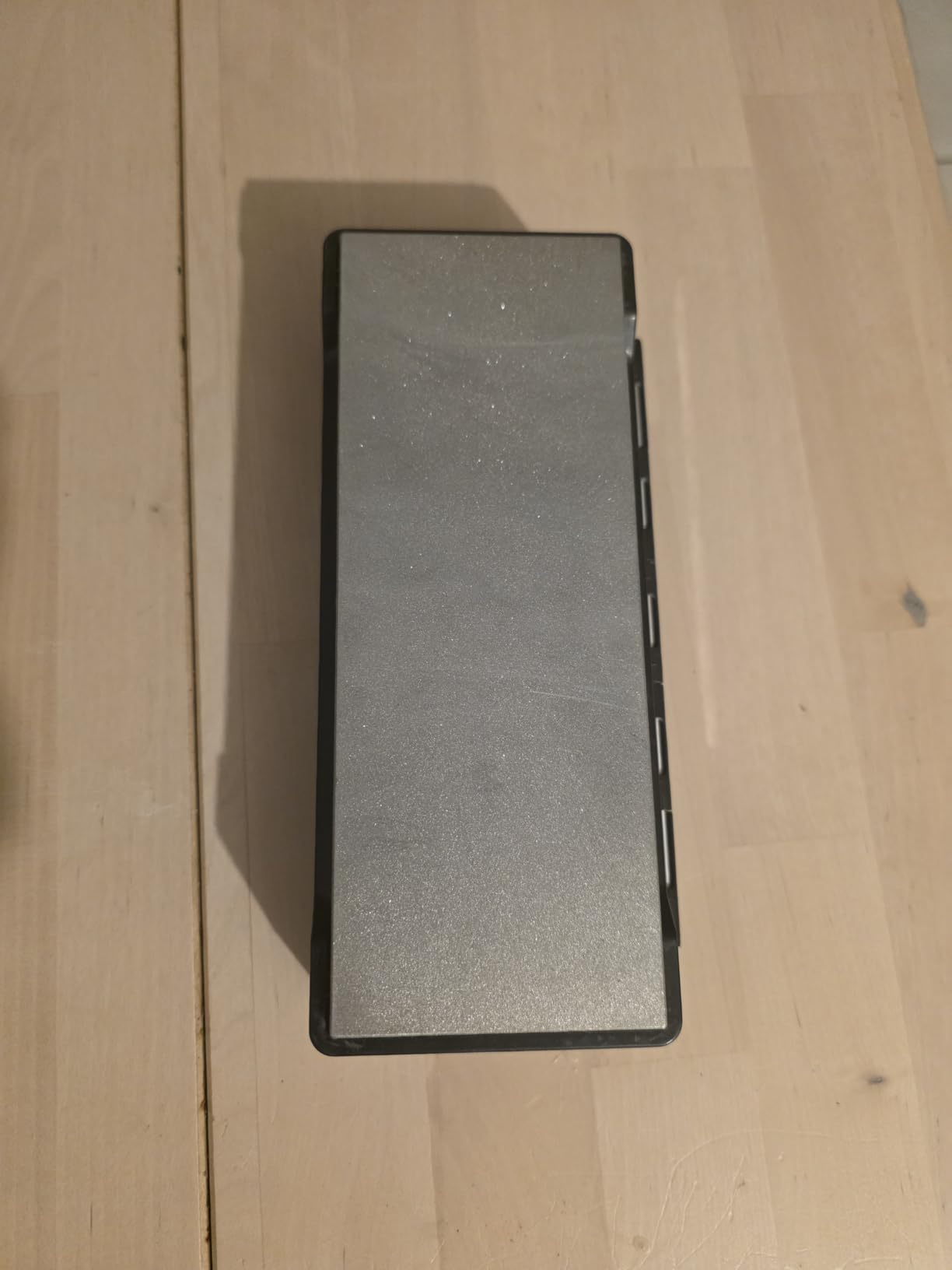
The first thing I check on a diamond plate is the base, and this one passes immediately. It is electroplated onto a 0.35 inch stainless steel core rather than stamped thin sheet, which means it does not flex when you push on a D2 knife with both hands. For a stone you might use on the toughest steel in your drawer, that rigidity is the feature that matters most.
The grit pairing is 325 on one side and 1200 on the other, which is a smart split. The 325 side handles reprofiling and resetting a bevel on a knife that has been used as a pry bar, and reviewers consistently report that it chews through hardened high speed steel, carbide, and cubic boron nitride without complaint. The 1200 side refines and finishes. Neither side needs water, oil, or a slurry, so cleanup is a dry brush and a rinse.
Break-in matters more than most sellers admit. Fresh electroplated plates have proud particles that can feel scratchy for the first few sessions, and the standard fix is to run the coarse side over a piece of scrap steel with firm pressure until the surface evens out. After that the plate feels considerably more aggressive and considerably less scratchy on the blade.
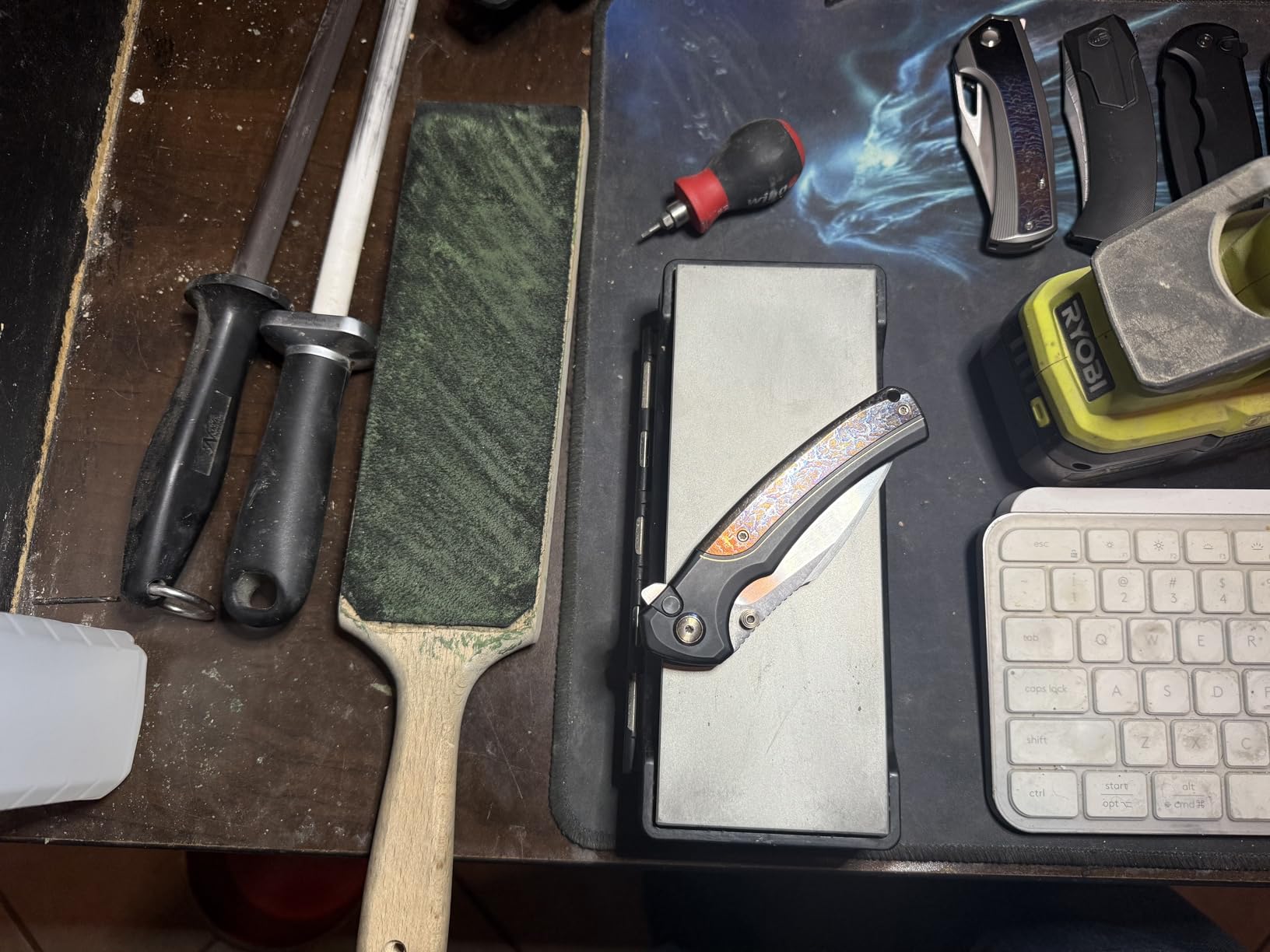
What I like most is the accessory set. The included storage box has a rubber pad that works as a stone base, and the angle guide covers 14, 17, 20, and 25 degrees, which is unusual at this level and saves you from guessing factory bevel angles. Users report consistent hair-shaving results after stropping the 1200 side, and comparisons against pricier DMT plates come out in its favour more often than not.
Flatness is the other quiet advantage here. Waterstones dish and go out of parallel within a few sessions of use, and that inconsistency is what makes a bevel wavy instead of straight. A machined plate holds its plane indefinitely, so the same angle you dial in on day one still holds on day one hundred.
Who This Stone Suits Best
If your collection is carbide steels and hard stainless, this is the plate to start with. One 8 x 3 inch stone covering 325 and 1200 handles everything from reprofiling a neglected S30V folder to putting a keen working edge on a hardened stainless chef knife, and the wide face gives you room for long blades. The angle guide makes it workable for anyone who has never tried to establish a bevel on their own.
Where It Falls Short
The 1200 grit side picks up metal after heavy sessions and stops cutting as crisply until you dress it, and the packaged plastic lid is a poor place to handle a truly sharp blade. Because the diamond layer is electroplated rather than resin-bonded through the body, this stone cannot be lapped flat again once it wears, so it is a consumable with a long but finite life. Anyone chasing a mirror polish will finish here and need a finer abrasive or a strop to go further.
2. DMT Deluxe Diamond Professional Kit for a Full Progression
DMT Deluxe Diamond Professional Knife Sharpening Kit – Includes Set of 3 Diamond Whetstone Blocks for Kitchen Knives, Lawn Mower Blades, Hunting/Butchery Tools, and More – Comes in Natural Wood Box
Three 6 inch bench stones
325, 600 and 1200 mesh
Micronized monocrystalline diamond
Natural wood box
Pros
- Full coarse to fine progression in one purchase
- Cuts about three times faster than comparable waterstones
- Ready immediately with no soaking
- Stones stay flat without lapping
- Color coded stages speed up progression
Cons
- Hollow plastic laminated bases feel cheap and can deform
- Grit numbers printed only on the box insert
- Wood box lid sits loosely and slides
- Finest grit is 1200 so no true mirror edge
A three-stone set solves a problem that single plates create. With only 325 and 1200 available, the jump between repair grit and finishing grit is large, and you either skip refinement work or grind the same edge twice for longer. This kit inserts a 600 mesh stone between them, which is exactly the stage that removes the deep scratches the coarse stone leaves and produces a working edge you can actually use on a daily knife.
DMT has been making diamond sharpening products in the USA for over fifty years, and the micronized monocrystalline diamond here is the reason this set has held its reputation. Sized particles give a more uniform scratch pattern than mixed-grade grit, which means the 600 stage behaves predictably. Users with decades of waterstone experience report that these stones matched or beat their waterstones on kitchen knives and plane irons while eliminating soaking, flattening, and constant washing.
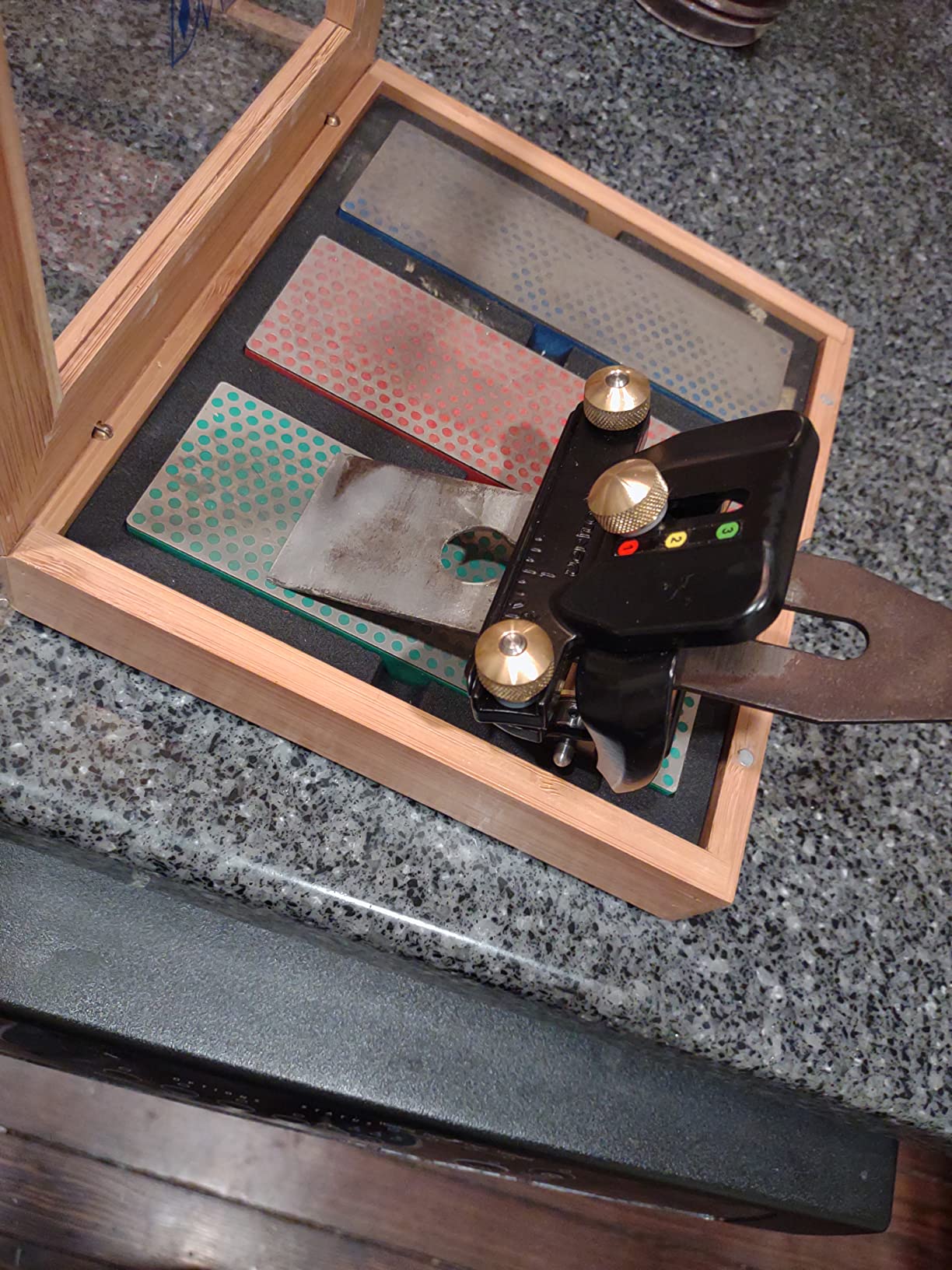
The included sharpening guide establishes a 20 degree bevel, which suits most edges and gives you a reference while you are learning. Colour coding is the detail that looks cosmetic and turns out not to be: blue coarse for neglected edges, red fine for honing, green extra fine for polishing. On a busy bench you stop reading labels.
Speed is the genuine surprise. Several reviewers put the cutting rate at roughly three times a comparable waterstone with virtually no mess, which changes what a session looks like. There is no slurry bucket, no drying cycle, and no loading check. On carbide steel, that speed is the difference between a five-minute touch-up and a fifteen-minute one, and it is why experienced hands reach for diamond on powder steels even when a perfectly good waterstone is sitting right there.
The wood box keeps all three stones indexed in order, which sounds minor until you have chased a 600 mesh stone across a workshop floor. It also looks like a tool worth leaving on a counter rather than hiding in a drawer.
Who This Stone Suits Best
This is the set for someone who sharpens several edge types, not just knives. Chisels, plane irons, a hunting knife, and a set of kitchen knives all benefit from having a dedicated coarse stage, a dedicated medium stage, and a dedicated finishing stage. Experienced sharpeners using it on plane irons report edges that hold noticeably longer than the same blades taken to an all-purpose stone.
Where It Falls Short
The hollow plastic-laminated bases are the most repeated criticism, and fair it is. They feel cheap and can deform under heavy downward pressure, which is exactly the pressure you want when reprofiling a stubborn bevel. The grit numbers are printed only on the paper insert in the box, not on the stones, so you have to look them up every time unless you memorize the colours. The lid also slides rather than latching, and six-inch stones are cramped for blades over about 20 cm.
3. DMT FWFC DuoSharp Folding Stone for Pocket and Field Use
DMT FWFC DuoSharp Double-Sided Diamond Sharpening Stone for Knives and More, 8-Inch, Fine/Coarse, White
325 and 600 mesh dual sided
Folds to 5 inches
9.5 inches long when open
75 grams
Pros
- Folds closed and fits a pocket or tool roll
- Coarse side rescues dull and chipped edges fast
- Fine 600 side finishes sharp in few passes
- Works wet or dry with no oil
- Light enough to carry without thinking about it
Cons
- Plastic handles flex under blade pressure
- Too small for wide chisels or plane irons
- No case included for belt or pack carry
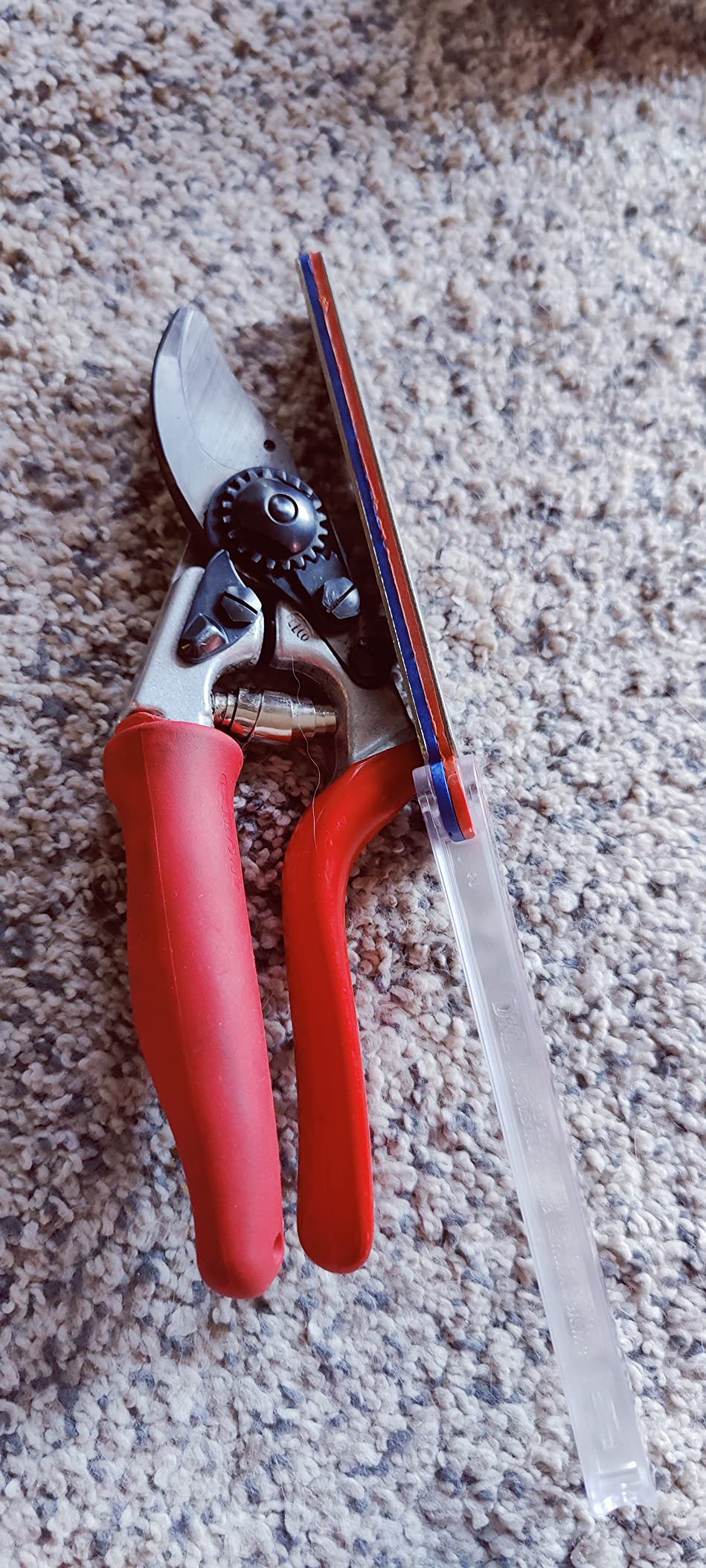
This is the DMT answer to a specific question, which is what you carry when you are not standing at a bench. At 75 grams and folding down to 5 inches, it fits in a jacket pocket or a tool roll without becoming something you leave behind. Opened out it is 9.5 inches long, which is long enough for a folding knife or a small pocket chisel, and short enough that it never feels awkward in the hand.
Micronized monocrystalline diamond again, at 325 mesh coarse and 600 mesh fine. That pairing is deliberately coarser than a finishing-oriented plate because a portable tool is for restoring edges in a field, not for chasing a mirror. Owners report that the coarse side takes a badly dulled edge and a small chip back to functional in only a few minutes, which is the job you actually need done away from a workbench.
It works dry or with water, which means one fewer thing to carry. No oil, no slurry, no container to rinse out. On a fishing trip or a job site, that simplicity is worth more than the extra finesse of a heavier system.
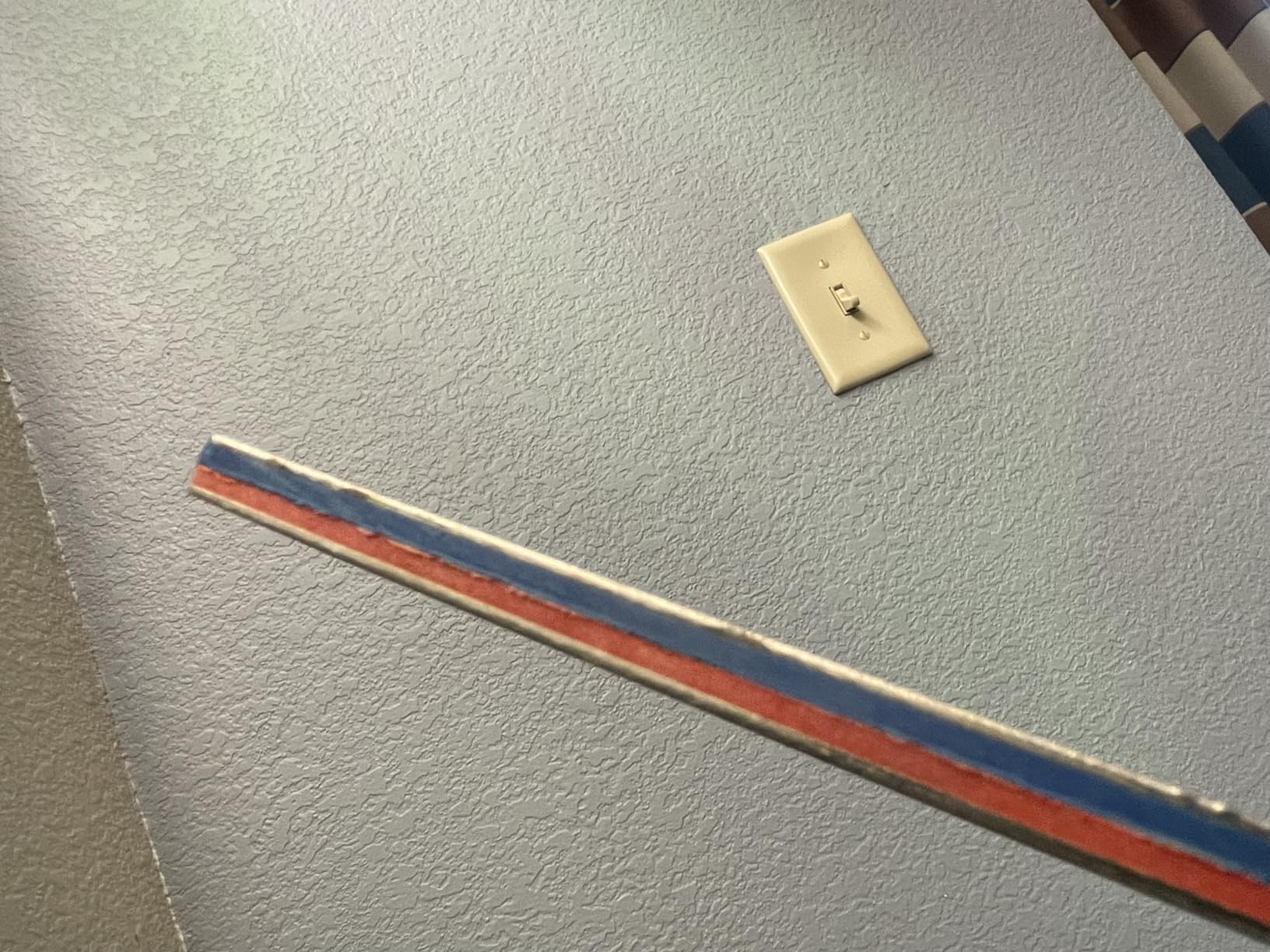
Quality control on the plate itself is generally praised, with only isolated reports of small chips in the coating. That matters more than it sounds, because a chipped electroplated layer creates a local hard spot that produces an uneven bevel. Across the large numbers of plates sold this has stayed a rarity.
The folding handles also protect the plate, which is the second thing you want from a portable sharpener after sharpness itself. A diamond face in a bag with a pocketknife is a face full of deep gouges. Closed, the plate is fully covered.
Who This Stone Suits Best
Anyone who maintains knives away from a bench. Field cleaners, technicians who travel, and anyone who wants a DMT plate that fits in a pocket without thinking about it. It is also a sensible first diamond stone, because the flat pair of grits teaches grit progression without the complexity of a full set, and the price of a mistake is low.
Where It Falls Short
The plastic handles are the one consistent complaint, and they flex under blade pressure. Some buyers find it merely annoying; others consider it a concern on a tool being used hard. The surface area is also simply too small for wide chisels, plane irons, or checking a long straight edge, and there is no included case, so the plate ends up loose in whatever bag you own.
4. S SATC 8 Inch 400/1000 Plate for Rigid Budget Work
S SATC Diamond Sharpening Stone 2 Side Grit 400/1000 Diamond Plate Honing Stone 8-inch Hone Sharpener White
400 and 1000 grit dual sided
8 inch steel plate
Precisely machined base
No flattening needed
Pros
- Machined steel base outlasts hollow plastic plates
- Diamond resists cratering so no flattening
- Two sided design handles coarse and fine work
- Long service life on plated diamond
- Suited to chisels and planer blades
Cons
- No base or holder included
- No ultra fine polishing surface available
- Manufacturer specs are described only generically
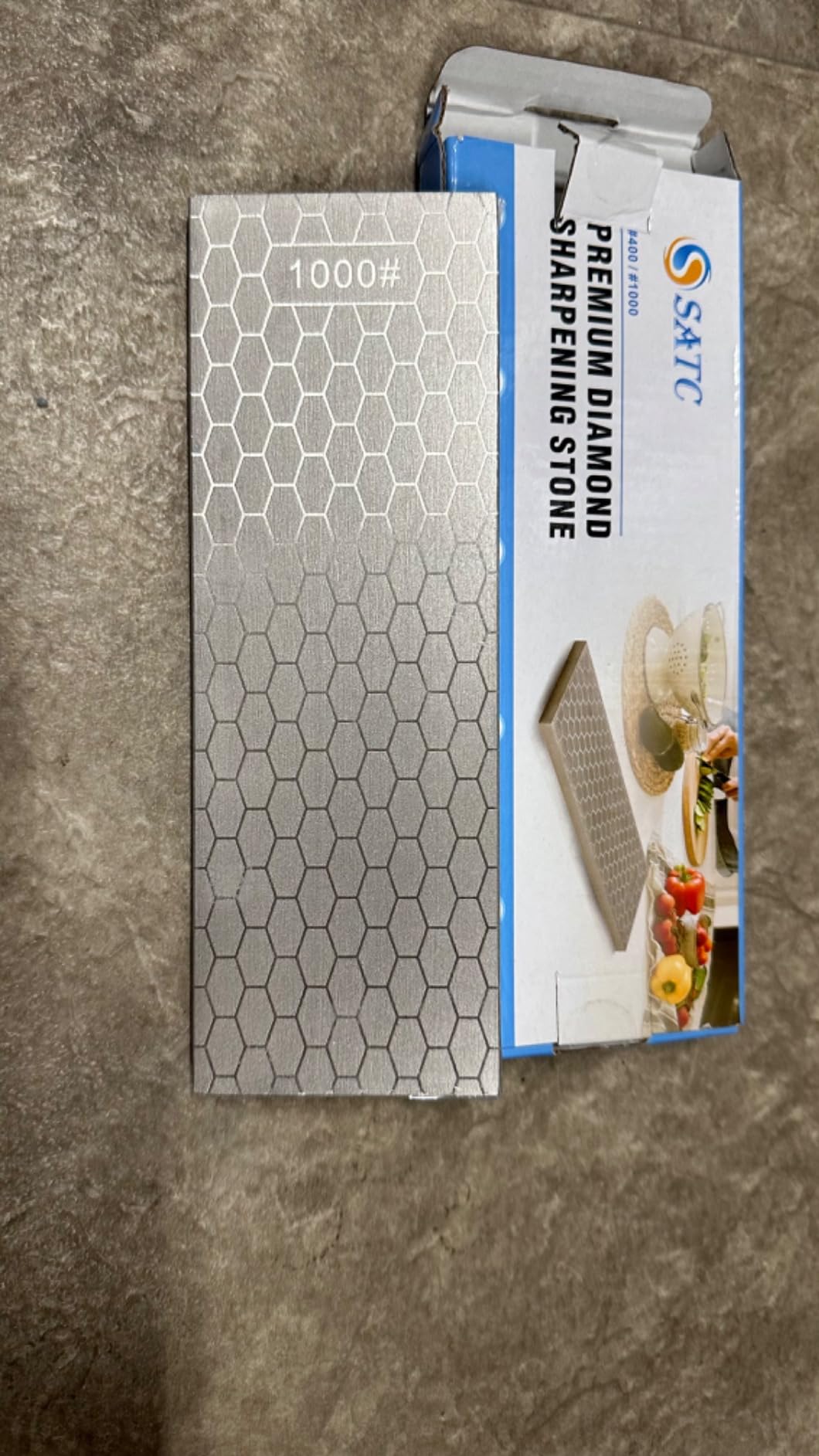
The S SATC plate is a straight piece of engineering with almost no styling, and that is exactly why it works. The base is precisely machined steel with monocrystalline diamond electroplated on top, so the plate arrives flat and stays flat. Waterstones crater within weeks. This one never will, which means the angle you set once holds for the life of the plate.
The grit pair is 400 and 1000. That is a narrower window than some competitors, but for most hard steel work it is the right window. The 400 side does edge setting and reprofiling, and the 1000 side does the refining and honing that keeps a working edge sharp between sessions. The same maker also offers pairings including 150 and 600 for coarse heavy work and 600 and 1200 if you want a finer finish.
With more than two thousand ratings behind it, this is the plate most often described as the dependable budget option. Buyers treat the machined base as more durable than hollow or plastic-bodied plates of the same nominal size, and the low-maintenance story lands well for anyone who does not want a soaking routine or a lapping job.
Straight-edged tools are the other selling point. Chisels, plane blades, and hand tools that need a clean, flat, square edge are exactly where a rigid machined plate shows its value, because there is no soft stone to dish and no wobble to transfer into the bevel. Users report wide tool compatibility as a consistent strength.
Cleaning is trivial. A rinse under the tap, a wipe, and it is done. There is no slurry to dispose of carefully and no oil film left to go rancid on a shelf.
Who This Stone Suits Best
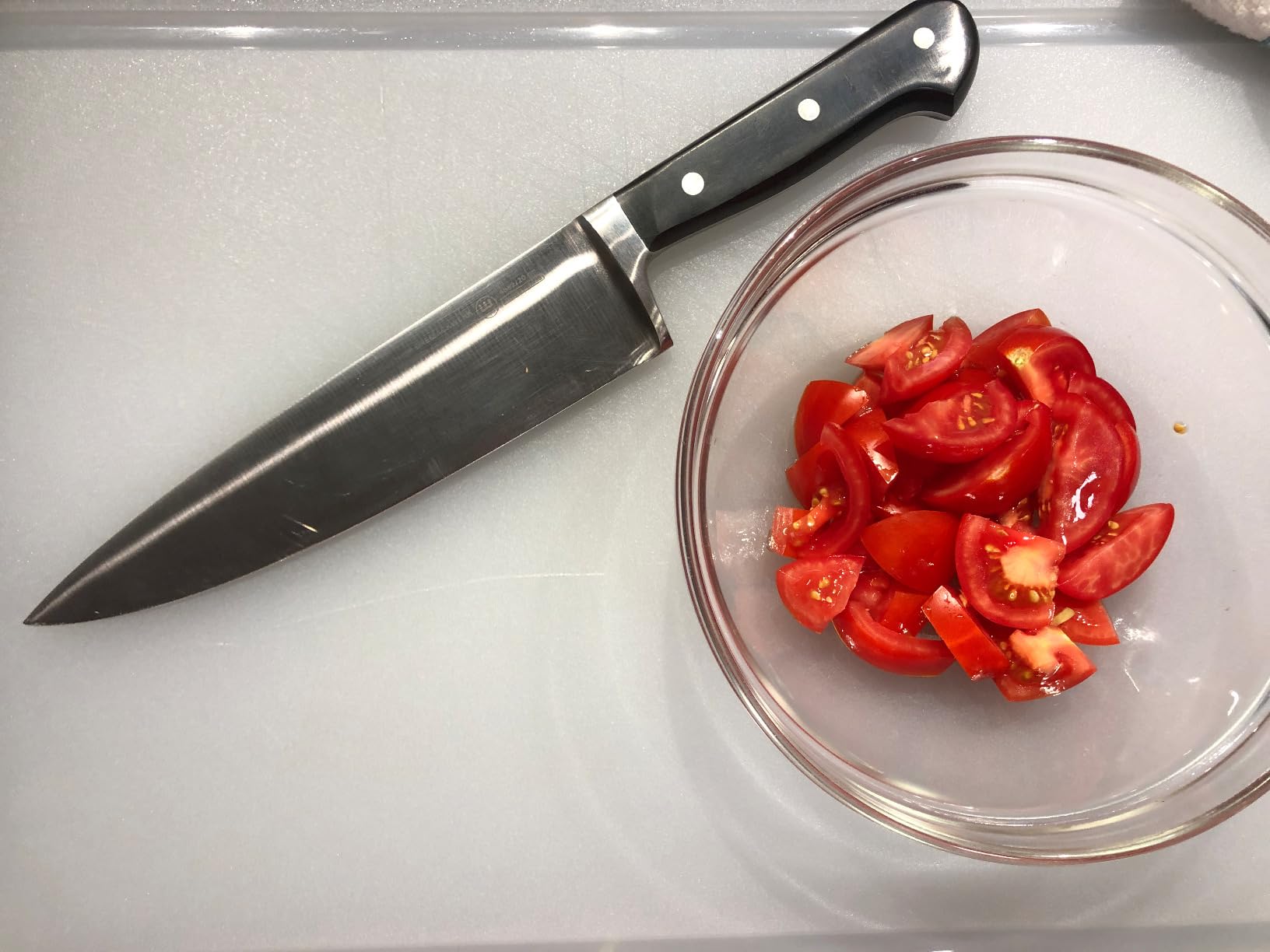
Woodworkers and hand tool owners who already own waterstones and want something rigid for flattening, plus anyone adding a first diamond plate without wanting to spend much. The 400 and 1000 pairing covers edge repair and routine honing for kitchen knives, chisels, and plane irons, and the lack of any softening or dish requirement means it just works.
Where It Falls Short
There is no base or holder in the box, so you need something to set it on or you will be working off a countertop with a bare plate. There is also no ultra-fine surface here, so mirror polishing is out of reach on this stone alone. Finally, the listing describes its features only in generic terms, so if you need detailed grit density or bond chemistry before buying, the information simply is not offered.
5. Ultrasharp 8 x 3 Three-Grit Set for Solid Bench Work
Ultra Sharp Diamond Sharpening Stone Set – 8 x 3 Coarse/Medium/Extra Fine
Three 8 x 3 inch stones
300, 600 and 1200 grit
2.2 pounds per stone
Stone holder included
Pros
- Three generously sized plates in one set
- Heavy bodies give stable consistent strokes
- Included holder makes grit changes fast
- Works on ceramic blades as well as hardened steel
- Backed by a lifetime warranty
Cons
- 8.5 pounds total package weight is bulky
- Finest grit is 1200 with no polishing stage
- Holder adds further weight to an already heavy set
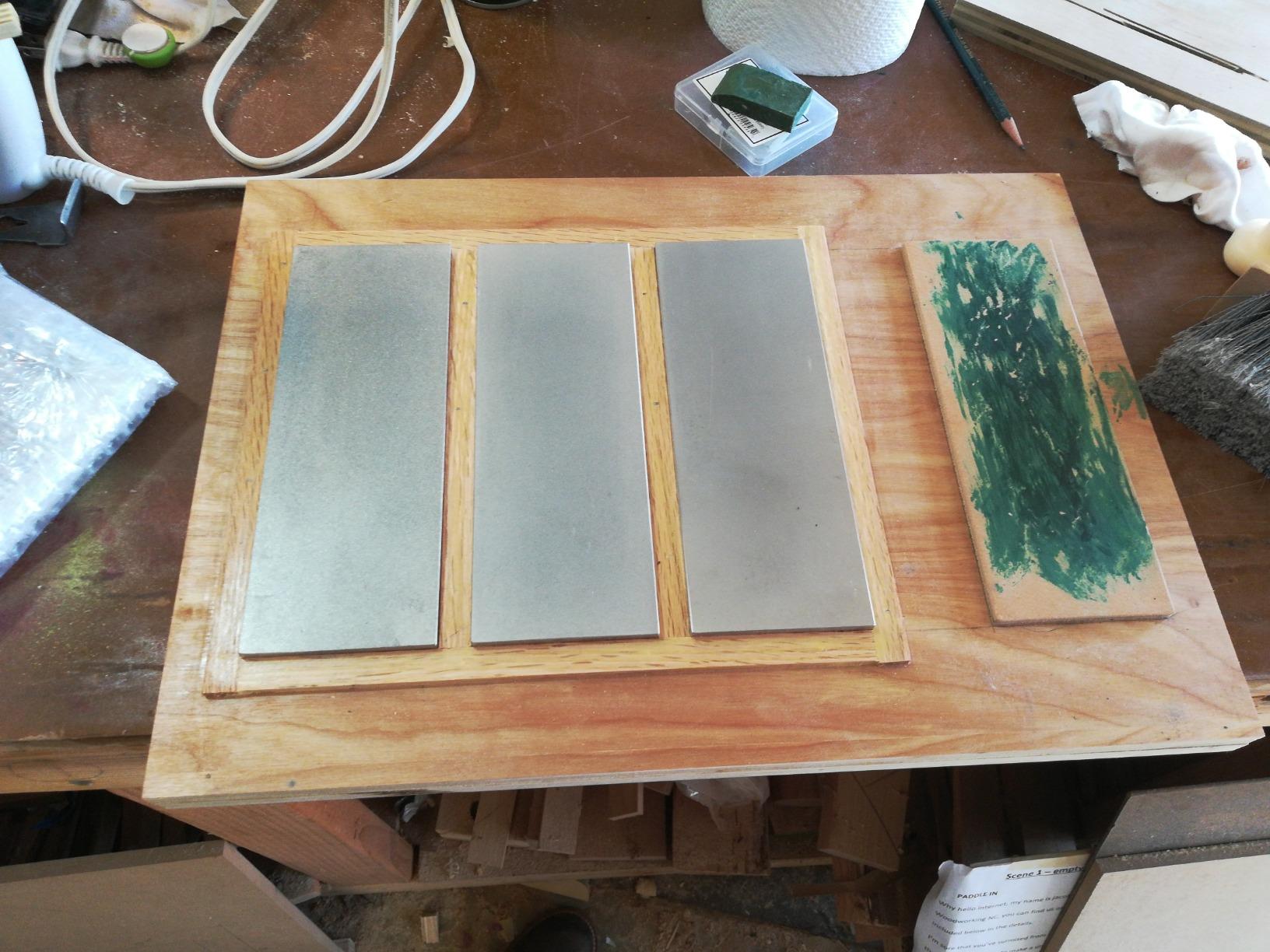
Weight is a feature on a bench stone, and this set is built around that idea. Each of the three 8 x 3 inch stones weighs 2.2 pounds, so the plate does not walk across the bench when you push on it. Combined with the included holder, which accepts stones from 6 to 9 inches, that gives you a fixed working position you do not have to recreate with improvised blocks every session.
The grits are 300, 600, and 1200. That is a complete working progression on one purchase, from reprofiling a neglected edge, through refining, to finishing. It is the same logic as a three-stone waterstone set, translated into an abrasive that does not need soaking, does not dish, and does not need flattening.
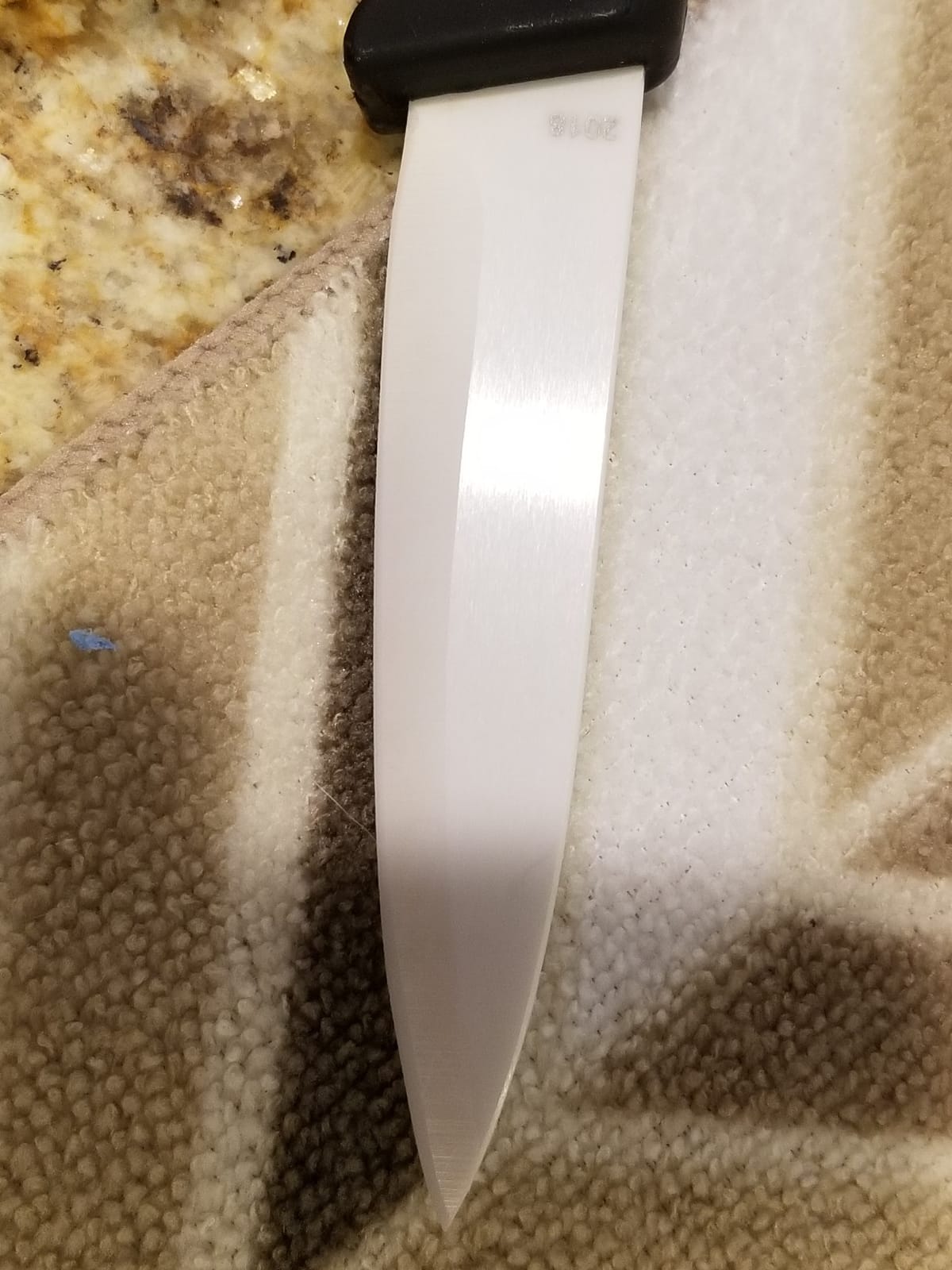
The ceramic blade claim is the one that surprised us. Buyers report that the plates sharpen ceramic knives cleanly, which is a genuine test of diamond since ceramic is nearly as hard as the abrasive itself. If you own a whetstone-messenger chef knife or a ceramic pocket knife, this set handles them alongside the steel.
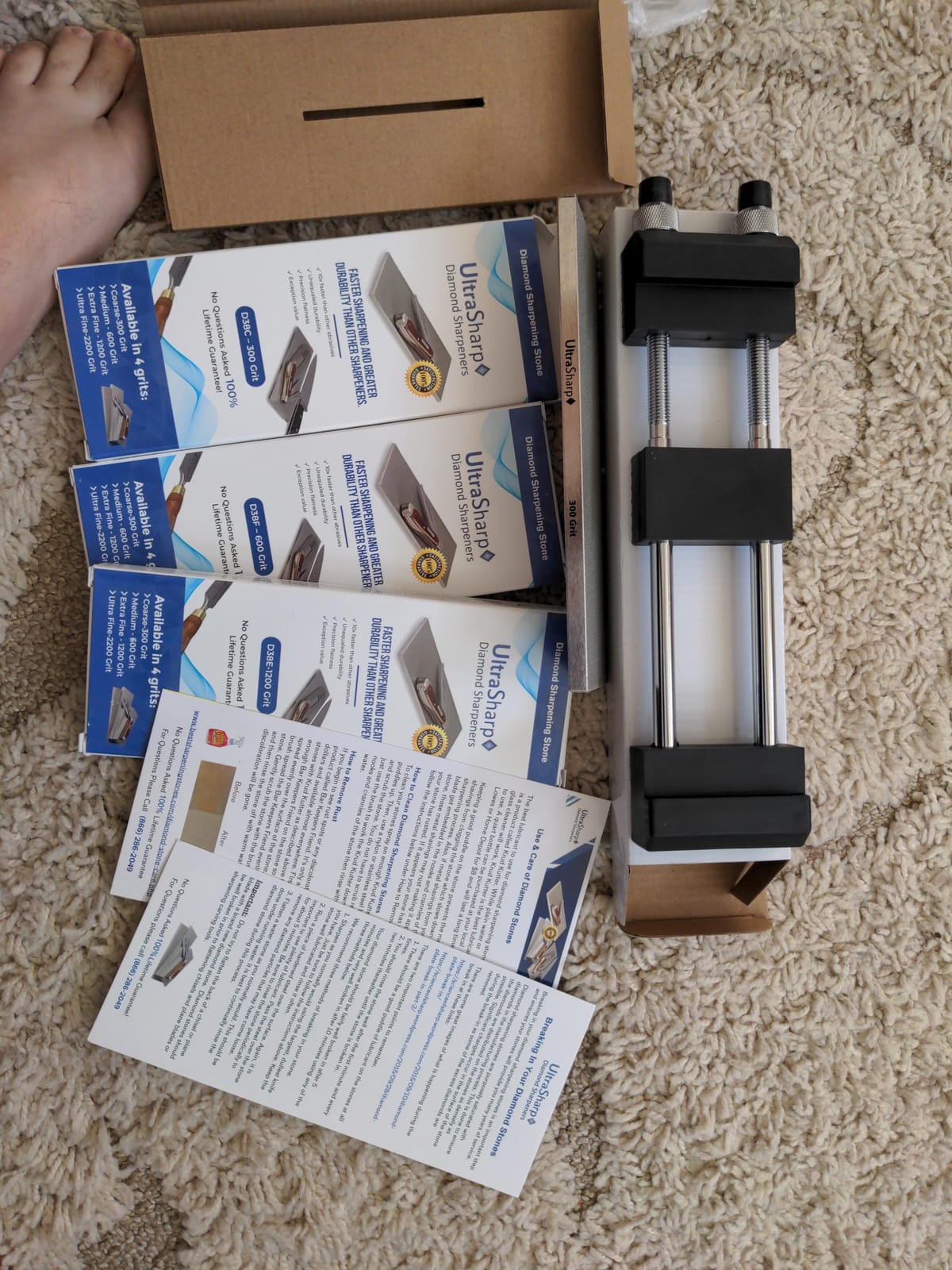
Ratings run consistently high, and the practical criticisms are about logistics rather than quality. The total package weight of 8.5 pounds makes this a substantial object to store and carry, so it belongs on a bench, not in a bag. The holder is also a separate choice depending on which variant you pick, so check that when you order, because the set is noticeably more useful with it.
The lifetime warranty on these stones is unusual in the category and removes most of the risk of buying into a brand you have not used before.
Who This Stone Suits Best
A dedicated sharpening corner with a real work surface and someone who sharpens often. The weight and the holder mean you can work with two hands and still have the plate where you put it, which is exactly the technique hard steel requires. If you maintain a spread of kitchen knives, pocket knives, and occasional tools, the three stages eliminate the guesswork of single-plate jumps.
Where It Falls Short
Eight and a half pounds is genuinely heavy for a small apartment, and the storage question is real. Like the DMT set above, the finest grit is 1200, so a true mirror edge still requires a finer stone or a strop. It is also a bench-only answer, with no folding handle and no carrying case for field use.
6. Work Sharp Tri-Brasive Benchstone for Beginners
Work Sharp Benchstone Knife Sharpener, 3 sided for faster manual pocket or hunting knife sharpening
400 and 800 grit diamond plus ceramic
20 and 25 degree guides
Pivot Response base
Three sided block
Pros
- Three abrasive surfaces in one compact unit
- Angle guides make repeatable bevels achievable
- Pivot Response base follows curved blades
- Replacement abrasives extend tool life
- Guides remove for freehand sharpening when ready
Cons
- Ceramic face wears faster than diamond
- No 8000 level polish without a strop or finer abrasive
- 15 and 17 degree guides sold separately
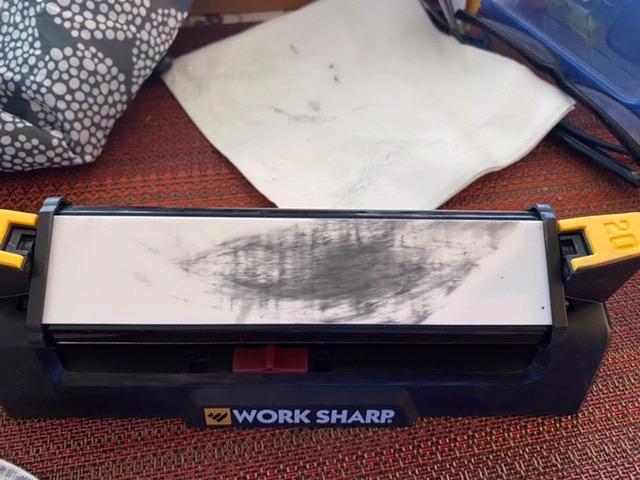
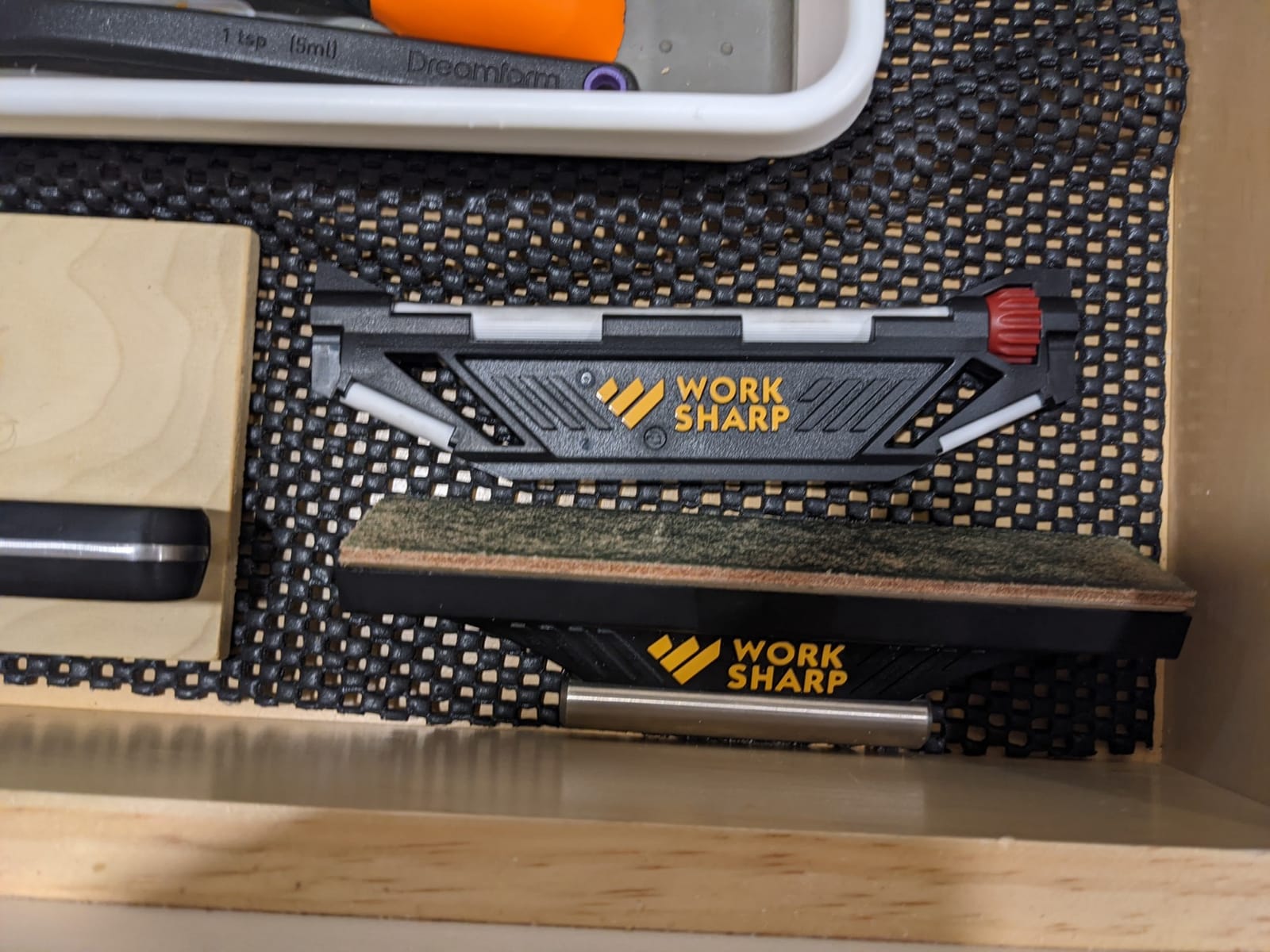
Work Sharp built this for the person who has never set a bevel and does not want to fail at it. The 20 and 25 degree guides are the reason. Slide the blade against the guide and the angle is held without calculation, which turns the most common beginner mistake, holding a 20 degree angle steady for a full stroke, into something the tool handles for you.
The three surfaces cover a real progression: 400 grit diamond to repair a chipped or dull edge, 800 grit diamond to refine it, and a fine ceramic to bring it to a keen finish. On a hard steel knife the diamond faces do the work and the ceramic face does the finishing, which is the correct division of labour because ceramic does not cut carbide steel quickly but does polish the edge nicely.
The Pivot Response base is the other clever part. It follows the curve of a blade like a hunter or a folding knife so the whole surface stays in contact, or it locks rigid when you want flat sharpening on a chisel or a plane iron. For a compact bench stone at this size, that flexibility is unusual.
Experienced users have a clear migration path. Remove the guides and lock the base, and the unit becomes a straightforward three-sided benchstone for freehand work. That progression matters, because the tool does not lock you into the beginner position once you outgrow it.
Replacement abrasives are sold separately, which extends the life of the unit without replacing the whole body. It is backed by a limited lifetime warranty and a three-year coverage period on the components.
Who This Stone Suits Best
New sharpeners, and anyone who wants a single object covering repair, honing, and finishing without tracking down separate stones. It is compact enough for a small kitchen counter and stable enough for a workbench. If you mainly maintain kitchen knives and a couple of folders, this covers the whole job in one footprint.
Where It Falls Short
The ceramic face is softer than diamond and wears faster under heavy work, so on the toughest powder steels the diamond faces will get the work and the ceramic face will only ever be a finishing step. It also does not reach mirror polish, and the 15 and 17 degree guides for thinner edges have to be bought separately, which is the first thing to add if you own thin Japanese knives.
7. Schaaf Tools Diamond Kit for Chisels and Hand Tools
Schaaf Tools Diamond Sharpening Stone, 325/1200 Knife Sharpening stone
8 x 2.75 inch plate at 325 and 1200
Adjustable base
Chisel jig for irons to 3 inch
Angle guide 14/17/20
Pros
- Complete kit with plate base angle guide and jig
- Chisel and plane iron jig simplifies guided sharpening
- Solid steel plate is heavy and very stable
- No soaking required at all
- Useful as a low maintenance alternative to water stones
Cons
- Fine 1200 side reported slightly hollow out of box
- Not flat enough to serve as a precision flattening plate
- Fine side scratch pattern persists and needs stropping
This is the most complete single-plate kit we tested, and the included chisel jig is the reason. The jig handles chisels from an eighth of an inch up to nearly two inches, and plane irons from an inch and a third up to over three inches. For anyone who sharpens hand tools regularly, that jig removes the single hardest part of the job, which is holding a wide iron square on a flat surface without rounding the corners.
The plate itself is 8 x 2.75 inches at 325 and 1200 grit, with monocrystalline diamonds electroplated onto solid steel. The surface uses a honeycomb pattern rather than a flat continuous face. That texture keeps grinding dust from sitting in a film across the working area, which means the plate stays aggressive longer between cleanings than a smooth-faced plate of the same grit.
Everything else is included. An adjustable base with non-slip rubber feet holds the plate at a working height and stops it sliding, a three-sided angle guide covers 14, 17, and 20 degrees, and a spray bottle handles the light water the plate likes for occasional cleaning. No soaking, no slurry, no flattening routine.
Woodworkers report that this plate cuts fast on the 325 side and produces a workable edge on the fine side after stropping. The adjustable holder gets singled out repeatedly as useful with other stones too, which is the sort of accessory that quietly becomes part of your bench setup regardless of what is in it.
It is also genuinely useful as a low-maintenance alternative to a waterstone for coarse shaping work, and it can help flatten softer stones, though see the caveat below about how flat it actually is.
Who This Stone Suits Best
Hand tool owners first and foremost. If you own chisels, a hand plane, or a set of marking tools, the jig turns guided sharpening from a guessing game into a repeatable operation. It also suits kitchen knife owners who want a solid, stable plate and do not want to maintain a waterstone, and the 325 side handles reprofiling a dull hand tool edge quickly.
Where It Falls Short
Evenness is the recurring complaint. A small number of owners find the fine side slightly hollow out of the box, which matters because a hollow surface produces an uneven bevel on a flat tool. It is also not flat enough to use as a precision lapping plate for flattening waterstones, so if that is your main goal, look at a dedicated diamond lapping plate instead. The fine side leaves a scratch pattern that needs stropping to clear.
8. Kota Japan 3000/8000 Combination Stone for Razor Finishing
Kota Japan Combination Dual Sided 3000-8000 Grit Diamond Knife Sharpener Whetstone Set for Coarse Sharpening & Fine Polishing. Water Stone Kit | Adjustable Bamboo Holder Base | Precision Blade Guide
3000 and 8000 grit dual sided
7.25 x 2.25 inch face
Bamboo base with silicone holder
Water stone, soak before use
Pros
- 3000 and 8000 pairing refines then polishes to near mirror
- Aluminum oxide resists cracking and chipping
- Bamboo base and silicone holder keep it stable
- Water only so cleanup is simple
- Suitable for straight razors as well as knives
Cons
- Listed material is corundum rather than diamond
- Requires a 10 to 15 minute soak before each use
- Small 7.25 by 2.25 inch face gives a short stroke
Let’s be straight about what this is. Despite the diamond-themed name in the listing, the material is listed as aluminum oxide corundum, which makes this a water stone, not a true diamond whetstone. Several buyers make the same observation after it arrives. We include it because the finishing problem it solves is real and it solves it well, and because the pairing of 3000 with 8000 is the mirror-polish combination many diamond users finish with anyway.
The value here is finishing. A 3000 grit side refines an edge and removes the scratches left by coarser work, and the 8000 side brings up a polished finish suitable for straight razors and fine kitchen knives. Diamond plates in this roundup top out around 1200 grit because that is where the technology sits at this tier, so a dedicated finishing stone fills a gap the diamond options cannot.
The bamboo base with a silicone holder is better than it sounds. On a small stone with a short working surface, stability is everything, and the base keeps the stone from walking while your hands do the work.
Maintenance is the trade. This stone needs a ten to fifteen minute soak before each session, and it must be stored wet or it will go out of flat. That is a genuine commitment compared with a splash-and-go diamond plate, and it is why we would never call this a substitute for a carbide-capable abrasive on hard steel.
The other limitation is scale. At 7.25 by 2.25 inches the stroke is short, which is fine for a razor or a small knife and awkward for a full-length chef knife. An alternate 1000 and 6000 configuration is offered if you want to start a little coarser.
Who This Stone Suits Best
Straight razor owners and anyone whose diamond work stops at 1200 grit and wants more. It is also a sensible final-stage stone for people who already own a diamond plate for the hard steel work. If you keep a bamboo-handled straight razor, this is the stone that takes it from sharp to shaving sharp.
Where It Falls Short
It does not cut carbide-rich steel efficiently, which is the entire reason to buy diamond in the first place, so it is a finishing tool rather than a hard steel tool. The soak requirement adds friction to quick touch-ups, and the small face is a nuisance on long blades. If your only goal is hard steel, this is not the stone and the diamond plates above are the right answer.
9. goodjob Three-Sided 400/1000/8000 Sharpener for Mirror Finishing
Diamond Sharpening Stone, 3‑Sided Grit 400/1000/8000 for Knife Sharpening
400 and 1000 diamond plus 8000 ceramic
10.35 inch overall footprint
14, 17 and 20 degree guide
Wide non-slip base
Pros
- Repair
- honing
- and mirror polish on one unit
- Handles all hardness steels plus chisels and carving tools
- Built-in angle guide helps beginners hold a bevel
- Wide base keeps the stone stable
- Works with water or honing oil and rinses quickly
Cons
- 8000 grit face is ceramic and wears faster than diamond
- Ceramic face does not cut hard steel as quickly as diamond
- Occasional flattening still needed to stay true
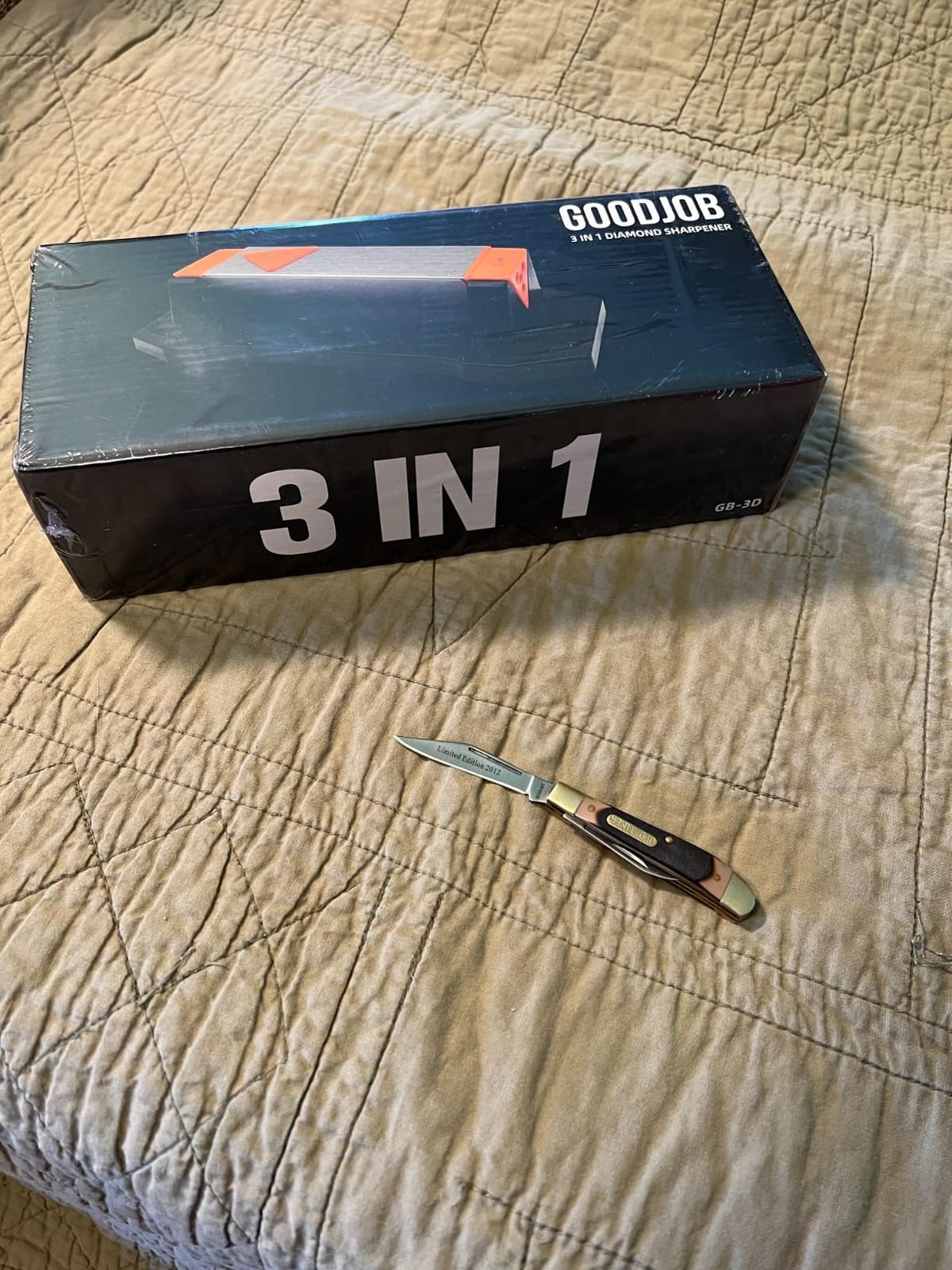
This is the most complete grit range in the roundup for the money, and the 8000 grit face is the reason to pay attention. Most affordable diamond plates stop at 1200 because that is the practical limit of plated diamond at this tier. Adding a ceramic 8000 face after two diamond faces gives you a genuine mirror polish route without buying a separate stone, which is what separates this from a simple dual-grit plate.
The division of labour makes sense. The 400 grit diamond repairs chips and restores a dull edge, the 1000 grit diamond handles daily honing on hard steel, and the 8000 ceramic does the final polishing. Ceramic is a sensible choice for that last stage because it produces a smoother, more reflective finish than diamond and is not trying to remove much metal.
The built-in angle guide covers 14, 17, and 20 degrees, and the wide non-slip plastic base is noticeably bigger than most at this size, which is what keeps the stone from shifting under load. Owners across kitchen knives, chisels, and carving tools report consistent results across that range.
Cleaning is straightforward. It works with clean water or honing oil and rinses quickly, so you can run it dry for a quick touch-up or add a few drops when you want a longer session. Three years of after-sales support is included for home cooks, working chefs, and collectors.
The honest limitation shows up under load. The 8000 face is ceramic, so it wears faster than the diamond faces and will not remove hard steel as aggressively. On superhard powder steel the diamond faces do all the cutting and the ceramic face is strictly the finishing step, which is fine but worth knowing before you try to reprofiling on it.
Who This Stone Suits Best
Home cooks who want one object that does everything. If you sharpen a few times a month, want to avoid maintaining a waterstone, and would like a mirror finish without buying a second stone, this covers repair, honing, and polishing in a single footprint. It also works for chisels and light carving tools.
Where It Falls Short
The ceramic 8000 face is the first thing to wear out under heavy use, and it will not cut hard steel as fast as the diamond faces will. Also note that even a machined plate can need occasional flattening to stay true, so the no-maintenance story is not absolute. For very frequent use on superhard steel, a dedicated diamond plate with a thicker base will outlast this unit.
10. KITANIS Five-Plate Set for Multi-Grit Craft and Touch-Up Work
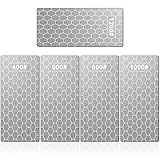
Diamond Sharpening Stone, 5 Pcs Knife Sharpening Stone with Extra Fine/Coarse Plate and Non-slip Base, 400/600/800/1000/1200 Grit
Five plates at 400, 600, 800, 1000, 1200
About 15 by 6.3 cm each
Honeycomb surface
Non-slip base
Pros
- Five grits give an unusually wide range of steps
- Small plates suit craft and detail work
- Honeycomb texture reduces dust buildup
- Non-slip base keeps them steady
- Diamond resists corrosion and breakage
Cons
- Plates are very small and thin with short strokes
- Light duty rather than heavy stock removal
- No handle or holder beyond the non-slip base
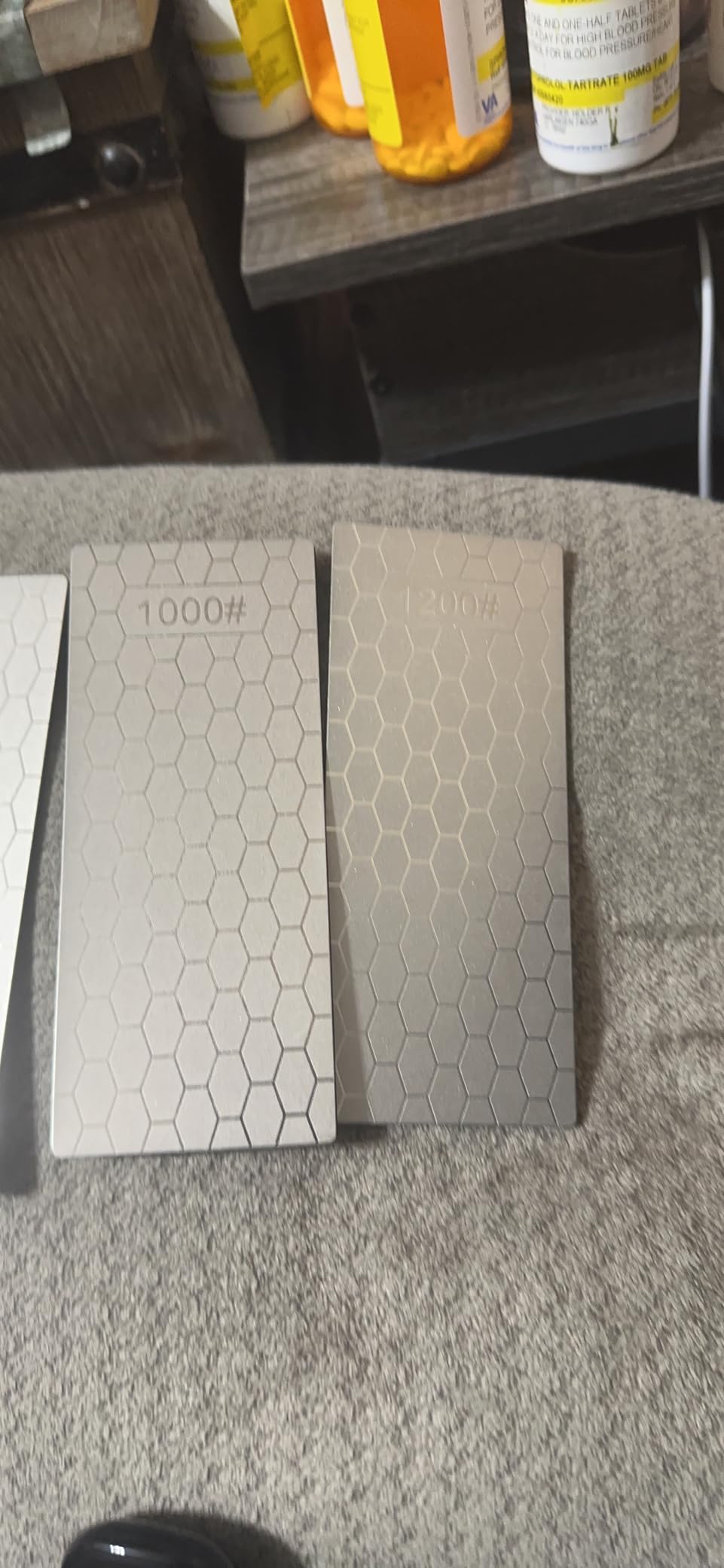
Five plates is a lot of grits for a compact set, and the ladder from 400 through 600, 800, 1000, and 1200 gives you the finest step control of anything we tested. Instead of jumping from a coarse stage straight to a finishing stage, you can walk the edge up in small increments, which is the way you get a clean apex on hard steel without grinding away the thin margin near the edge.
The honeycomb surface is the detail worth knowing. Raised cells keep grinding dust from spreading in a film across the face, so the plates stay aggressive longer and shed swarf more readily than a smooth-faced plate at the same grit. That matters most at the finer ends, where smooth-faced plates glaze quickly.
Size is the defining constraint. Each plate is roughly 15 by 6.3 cm, which is a finger-sized working area. That is enough for a carving knife, a small chisel, a razor, or a touch-up session on a folding knife. It is not enough for a chef knife, a plane iron, or a straight edge check.
Buyers treat this as a budget multi-grit option and rate it accordingly. It is quick and easy for household knives, wood chisels, and craft work, and the non-slip base keeps the small plates from skating. Applications beyond knives include seal carving, stone and jade work, and glass tile chamfering, all of which benefit from small controlled strokes.
Light pressure is the technique here. The included guidance calls for roughly a 15 degree angle with water or oil as lubricant and no downward force, which matches the general rule for diamond abrasives: they cut fast and pressing harder just wears the plate.
Who This Stone Suits Best
Craft and detail work. Carvers, engravers, and anyone doing seal or stone carving needs a small, controlled surface rather than a long one. It is also a good inexpensive set for keeping a folding knife, a razor, or a set of small chisels in shape, and the five-grit ladder gives you more progression options than any single plate in the roundup.
Where It Falls Short
These are light duty plates. The short stroke and the thin profile mean minimal hand protection and no capacity for real metal removal, so do not try to reprofiling a badly damaged knife on them. There is no handle or holder beyond the non-slip base either, which makes them easy to lose among other tools if you keep your kit tidy.
How to Sharpen Hard Steel on a Diamond Stone
The first rule is counter-intuitive and the most common mistake. Use almost no pressure. Diamond stones cut with very little force, and experienced sharpeners consistently advise against pressing down at all, because pressure gains you nothing on cut rate while accelerating plate wear and rounding the apex. Let the weight of the blade do the work.
The second rule is splash and go. Never soak a diamond stone. Water is only needed for a rinse during the session or a light spray for cleaning, and leaving a diamond plate sitting in water for an extended period can affect the bond and the backing plate. Users across multiple forums describe diamond stones as strictly splash and go.
The third rule is to do the most work at the lowest grit. Hard steel edges respond best when the bevel is reprofiled early and refined late. On a full progression, work at 325 or 400 to establish the bevel, move to 600 or 800 to remove the coarse scratches, and finish at 1000 to 1200 with light strokes. Raise your pressure on neither side, and count your strokes per side so you stay symmetric.
Between sessions, keep the burr under control. Hard steel throws a stubborn wire edge, and leaving a thick burr to break later means more work on the finishing stone. Deburr after each grit stage by drawing the blade through a strop or a piece of denim, then change grit. Diamond plates remove metal quickly, which means the burr forms fast and needs managing.
Flattening is rarely needed on a machined plate, but resin-bonded and vitrified stones do benefit from occasional lapping. If a diamond surface stops cutting, the usual cause is glazing rather than damage. A few firm strokes on a coarse silicon carbide plate or a plate labelled for flattening will dress it and bring the cutting action back. If that does not help, the diamond layer may simply be worn out.
Why Cheap Diamond Plates Wreck Your Waterstones
This is the warning we would put at the top of the list. Very cheap diamond plates, particularly the thinnest ones, shed loose diamond particles. Those particles sit on your bench, end up on your stone holder, and get carried into the surface of a waterstone. One Kitchen Knife Forums user broke in a cheap plate on a scrap of steel, used it to flatten their waterstones, and discovered large gashes from embedded diamond chunks. The stones were ruined.
The mechanism is simple. Diamond is harder than silicon carbide and harder than corundum. A loose diamond particle sitting on or embedded in a waterstone face acts exactly like the abrasive it is, and it cuts a deep line that no amount of lapping will fix.
Rust is the second problem with low-cost plates. Cheap steel backing plates rust quickly, particularly if they are patted dry with a paper towel and set to air dry. Plate a shelf and the stone develops orange bloom within weeks, which then transfers rust staining onto your blades.
Thickness is the third. A one millimetre plate holds far less diamond than a thick whetstone block, wears out much faster, and cannot be lapped back into flat. Sharpening forum regulars make the economics plainly: the same money can buy either a thin plate or a much thicker stone, and the thicker stone holds far more abrasive per unit area. If a plate is the only option, treat it as a consumable and keep it away from your waterstones.
The practical takeaway is simple. Buy a plate with a solid steel base at least a few millimetres thick, keep it in its case or on its dedicated base rather than loose on the bench, rinse and dry it fully after use, and never use an unknown cheap plate as a flattening tool. If you want to flatten waterstones, use a silicon carbide plate or a purpose-made diamond lapping plate.
How to Choose a Diamond Whetstone
Choose by steel, not by brand. Start with what you actually own. Carbide-rich pocket knife steels like D2, S30V, S90V, M4, ZDP-189, and Maxamet justify diamond. Hardened Japanese kitchen knives above roughly 62 HRC benefit from it, particularly for the finer stages. A common European stainless at 56 to 58 HRC does not, and a good 1000 grit waterstone will set an edge faster and finish better.
Pick the grit pair to match the work. For general hard steel maintenance, 325 plus 1200 or 400 plus 1000 covers repair and refining. For heavy reprofiling or chisels, start coarser at 150 or 220 plus 600. For a mirror finish, you will need something beyond plated diamond, so plan on a ceramic finishing stone or a strop.
Pay attention to base thickness. Thick machined steel bases resist flexing and stay flat. Thin hollow plastic bodies feel cheap and can deform under heavy down pressure. If you can only choose one specification to check, check that.
Decide on wet or dry. Plated and electroplated diamond works dry, which is the main convenience argument for diamond in the first place. Water stones need soaking and storing wet. If you travel or share a small kitchen, dry is a meaningful advantage.
Set an angle and stick to it. Most blades want 15 to 20 degrees per side. A guided stone with adjustable angle settings is worth paying a little more for if you are new, because it removes the most common source of failure. Thin Japanese knives need the lower end of that range to preserve edge geometry.
Size it to your blades. Six-inch stones suit pocket knives and razors. Eight-inch stones suit kitchen knives. Anything wider than three inches is for chisels and plane irons. Buying a narrow plate and then trying to sharpen a chef knife on it is the most common sizing mistake we see.
Add a finishing option separately. If your goal includes a true mirror edge, budget for a natural stone, a high-grit ceramic, or a strop. Diamond cuts and repairs. It does not deliver the reflective finish enthusiasts are after, which is why experienced sharpeners hybridize and use diamond for the first two thirds of the progression.
One closing thought on who does not need diamond at all. If you maintain only common European stainless kitchen knives, you want better feedback under the blade more than you want speed, and you have no carbide-heavy steel in the drawer, then a good waterstone is the better purchase and will out-polish anything here. Being honest about that is part of picking the right tool.
For readers who want broader gear roundups from our team, we have also published roundups covering diamond pattern tire chains and diamond painting kits for adults, which sit in a completely different corner of the diamond world. If you are shopping for something sparkly rather than something sharp, our guides to diamond necklaces and diamond stud earrings cover that side instead.
Frequently Asked Questions
What is the best diamond sharpening stone?
Direct Answer: For most people sharpening hard steel at home, the SHARPAL 162N dual-sided plate is the best first buy. Its 0.35 inch stainless base resists flexing, the 325 and 1200 grit pair covers repair and refining, and it works dry with no soaking. If you want a full progression instead of a single plate, the DMT three-stone kit gives you 325, 600, and 1200 mesh in one box.
Are diamond whetstones better than waterstones?
Direct Answer: Not universally. Diamond cuts harder steel far faster and never needs soaking, flattening, or slurry, which is why it wins on D2, S90V, ZDP-189, Maxamet, and hard Japanese stainless. On common European stainless below 60 HRC, a good waterstone sets an edge faster, gives far better tactile feedback, and leaves a more refined polish. The honest answer is that diamond is a targeted tool, not a general upgrade.
What is the hardest steel to sharpen?
Direct Answer: Maxamet and Vanax are hardest, followed closely by ZDP-189, then S90V and S35VN, then M390, M4, D2, SG2, and Japanese stainlesses. Difficulty comes from carbide volume rather than Rockwell hardness alone. Once vanadium carbide content passes roughly 4 percent, ceramics stop cutting effectively above about 600 grit and diamond or CBN becomes the sensible choice.
Do I need to soak a diamond whetstone?
Direct Answer: No. Diamond stones are strictly splash and go. You can use them completely dry, add a few drops of water for a longer session, or rinse the surface periodically to clear swarf. Never leave one soaking, and dry the plate fully afterwards, particularly with cheap steel-bodied plates that rust easily.
What grit diamond stone should I use?
Direct Answer: For hard steel maintenance, 325 or 400 grit for setting and reprofiling, then 600 or 800 for refining, then 1000 to 1200 for finishing. Do the majority of the metal removal at the coarse end and keep pressure light throughout. Remember that grit numbers are not comparable between diamond brands, so judge by the result on your steel rather than the label on the box.
Can diamond stones sharpen ceramic knives?
Direct Answer: Yes, and it is one of the clearer reasons to own one. Ceramic blades are nearly as hard as the abrasive itself, so ordinary waterstones struggle. The Ultrasharp three-grit set is specifically reported by owners to sharpen ceramic knives cleanly, and the DMT plates handle them as well. Expect a slower session than on steel, but the result is genuinely sharp rather than merely burnished.
How long does a diamond whetstone last?
Direct Answer: Thickness and abrasive volume determine the answer. A thin electroplated plate is effectively a consumable that cannot be lapped flat again, while a thick resin-bonded or vitrified block holds far more diamond and can be flattened repeatedly. Sharpening forum regulars note the same money buys either a thin plate or a much thicker stone, and the thicker stone lasts considerably longer because it holds more abrasive per unit area.
Why is my diamond stone not cutting?
Direct Answer: Almost always glazing or loading rather than damage. Metal swarf fills the gaps between diamond particles and the surface stops abrading. Fix it by taking a few firm strokes on a coarse silicon carbide plate or a surface labelled for flattening to dress it, then clean and resume. Keep pressure light during normal use as well, since heavy pressure accelerates wear without improving cut rate.
Do Japanese knives need special sharpening?
Direct Answer: Yes, mainly because of edge geometry and hardness. Japanese knives are typically hardened above 62 HRC and ground thin, so a low angle in the 15 degree range preserves the edge geometry while a high angle wastes steel. Ceramic and high-grit waterstones are gentler on these edges, and diamond is useful above roughly 600 grit where the harder steel starts to resist conventional stones.
What do professional chefs use to sharpen their knives?
Direct Answer: Working kitchens favour a fast system over a slow one. A coarse stone or plate to set the bevel, a 1000 to 2000 grit stage for refining, and a fine ceramic or stone for finishing is typical, often with a honing rod between services. On harder steels they reach for diamond because a coarse waterstone stage on carbide-rich steel takes far too long to be practical during a service.
The Bottom Line
If your knives are carbide-heavy, the SHARPAL 162N is the one we would buy first. The 0.35 inch base is rigid, the 325 and 1200 pairing covers the work, and the included angle guide means you can get a straight bevel on your first session instead of your tenth. It is the best balance of base thickness, grit range, and forgiveness of anything we tested.
Buy the DMT three-stone kit instead if you want a full coarse-to-fine progression on a dedicated bench, and go for the S SATC plate if you want a rigid machined steel surface for hand tools without spending much. Add a fine finishing stone and a strop later, because plated diamond stops around 1200 grit and that is where the mirror polish has to come from.
Most importantly, keep cheap thin plates away from your waterstones, use almost no pressure, and never soak a diamond stone. Those three habits do more for your edges than any brand decision. We update this roundup through 2026, so check back as new stones land on the bench.