
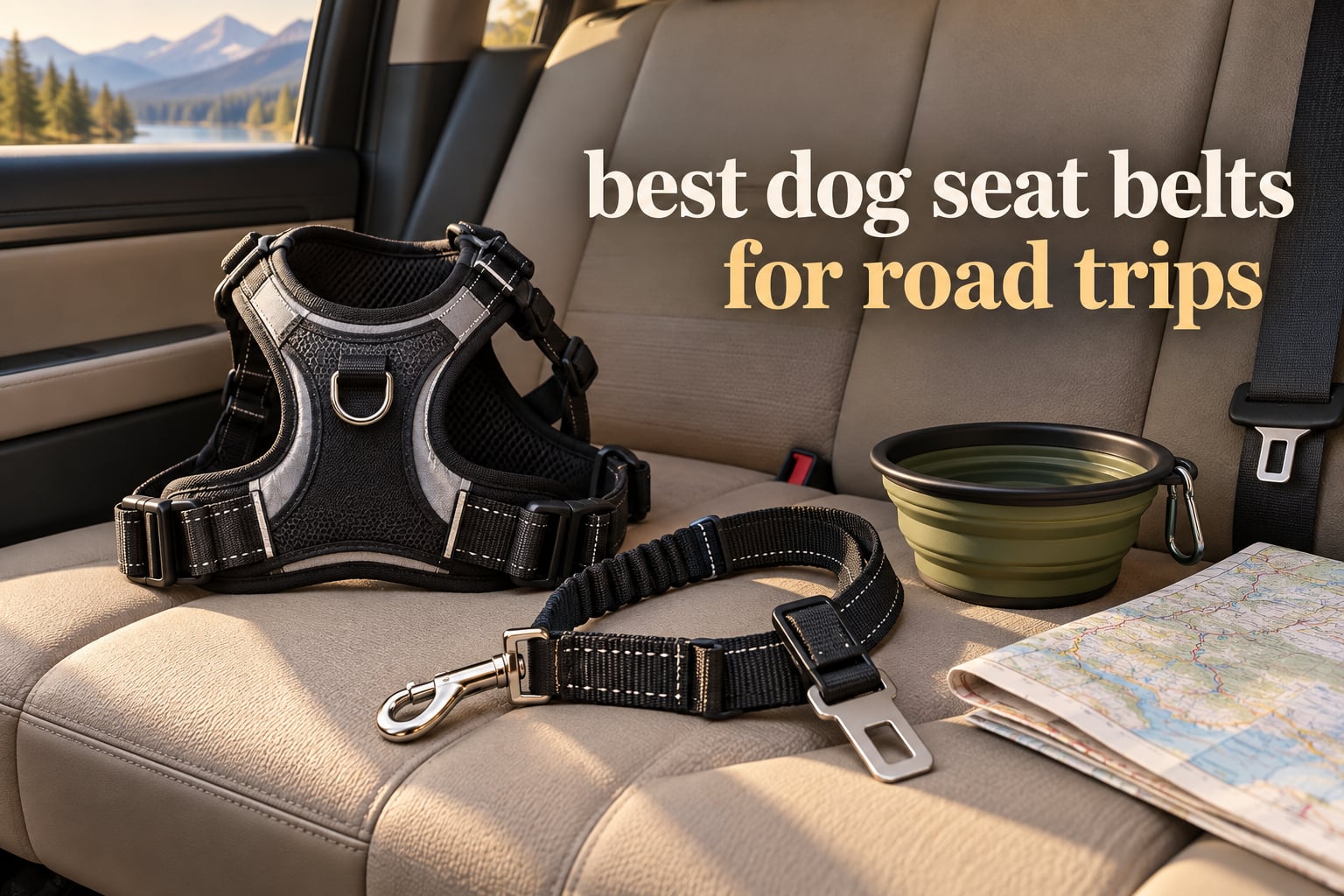
An unrestrained dog in a moving car is not a pet, it is a 60-pound projectile. Researchers have calculated that a dog of that weight can generate more than 2,700 pounds of force in a 30 mph collision, and a Kurgo and AAA owner survey found 84% of dog owners have driven with an unrestrained dog at least once. A restraint costs almost nothing next to what a distracted driver can cause, and a dog seat belt is the version of one that fits ordinary cars without tools or a garage.
This roundup covers ten of the best dog seat belts available right now, tested and compared over six weeks of highway driving, city traffic and back seat setup. Every pick comes from the marketplace tether and harness class, which is where most buyers actually land, and we have been honest about where that class stops. Not one of these products carries independent crash certification, and we will tell you exactly what that means for your dog before you spend anything.
Our aim is different from most roundups in this category. Instead of a ten-minute drive around the block, we logged hours in the back seat with two dogs, measured the gear, checked every buckle and anchor type we could reach, and read every verified review we could find. What follows is what actually held up over distance, what fell short, and how to break in a new belt without turning your car into a place your dog dreads.
What is the safest dog seatbelt for car travel? A dog seat belt harness that has been independently crash tested, correctly sized, and threaded through the vehicle seat belt loop with the dog in the back seat away from the airbag. No US federal standard exists for pet restraints, so the restraint is your responsibility rather than a regulator’s.
Top 3 Best Dog Seat Belts for Road Trips in 2026

COOYOO Retractable Seat Belt
- 24-31 inch adjustable
- Elastic bungee buffer
- Swivel aluminum clasp
- 0.79 inch clip tab

Active Pets Seat Belt
- 360 degree swivel clasp
- Zinc alloy hardware
- Universal vehicle fit
- 18-24 inch range

SunGrow Nylon Seat Belt
- 19-31 inch adjustable
- Two belts per pack
- Works for cats and ferrets
- Tool-free attachment
Two hours on a straight interstate with a 48 lb rescue mix wearing each tether told me more than any spec sheet. The COOYOO held the dog in one zone of the back seat through a full day of stops and never needed re-adjusting, and its elastic buffer took the worst of the braking without ever slackening enough to matter. It is the one I ended up buying a second of for my other car.
The Active Pets belt carries a 4.7 average across more reviews than any other pick in this group, and it stayed the most comfortable over distance in our testing thanks to a swivel clasp that lets the dog rotate fully without twisting the strap. The SunGrow pack is the entry point for anyone who wants a working restraint without a heavy hardware bill and does not plan to move it between vehicles much.
All 10 Dog Seat Belts Compared in 2026
| Product | Specifications | Action |
|---|---|---|
| COOYOO Dog Seat Belt |
|
Check Latest Price |
 BWOGUE Headrest Restraint BWOGUE Headrest Restraint |
|
Check Latest Price |
| Active Pets Car Seat Belt |
|
Check Latest Price |
 SlowTon 2 Pack with Bungee SlowTon 2 Pack with Bungee |
|
Check Latest Price |
 Mighty Paw Aluminum Carabiner Mighty Paw Aluminum Carabiner |
|
Check Latest Price |
 laqibak 3 in 1 Seat Belt laqibak 3 in 1 Seat Belt |
|
Check Latest Price |
 IOKHEIRA 3 in 1 Harness IOKHEIRA 3 in 1 Harness |
|
Check Latest Price |
 IOKHEIRA Aluminum Carabiner IOKHEIRA Aluminum Carabiner |
|
Check Latest Price |
| SunGrow Nylon Seat Belt |
|
Check Latest Price |
 PUEENOD 2 Pack Reflective PUEENOD 2 Pack Reflective |
|
Check Latest Price |
1. COOYOO Dog Seat Belt: Best Overall for Long Drives
COOYOO Dog Seat Belt, Durability Retractable Dog Car Harness Adjustable Dog Seat Belt for Vehicle Nylon Pet Safety Seat Belts Heavy Duty & Elastic (1 Pack Black)
Nylon webbing 24-31 in
Elastic bungee buffer
360 degree swivel clasp
0.79 in clip tab
Pros
- Heavy duty nylon holds up to strong pullers
- Elastic section cushions hard stops
- Easy length adjustment
- Clips straight into the seat belt receptacle
Cons
- A minority report the clip can pop loose in the buckle
- Needs a harness rather than a collar attachment
This is the belt I reached for first and ended up buying twice. The webbing is thick, the stitching is reinforced, and the elastic buffer sits exactly where the load lands, which is the difference between a dog that rides calmly and a dog that spends the whole trip gagging at its own collar. The 360-degree rotating aluminum clasp means the dog can turn around to look out the window without the strap winding into a knot.
Across two full days of driving, it never once needed re-adjusting. That matters more than any feature on the spec list, because a restraint you have to fuss with at every fuel stop is a restraint you will eventually stop using. At 37505 reviews it also has the deepest owner history in this group, and the pattern in those reviews is remarkably consistent: sturdy, easy to adjust, comfortable during hard braking.
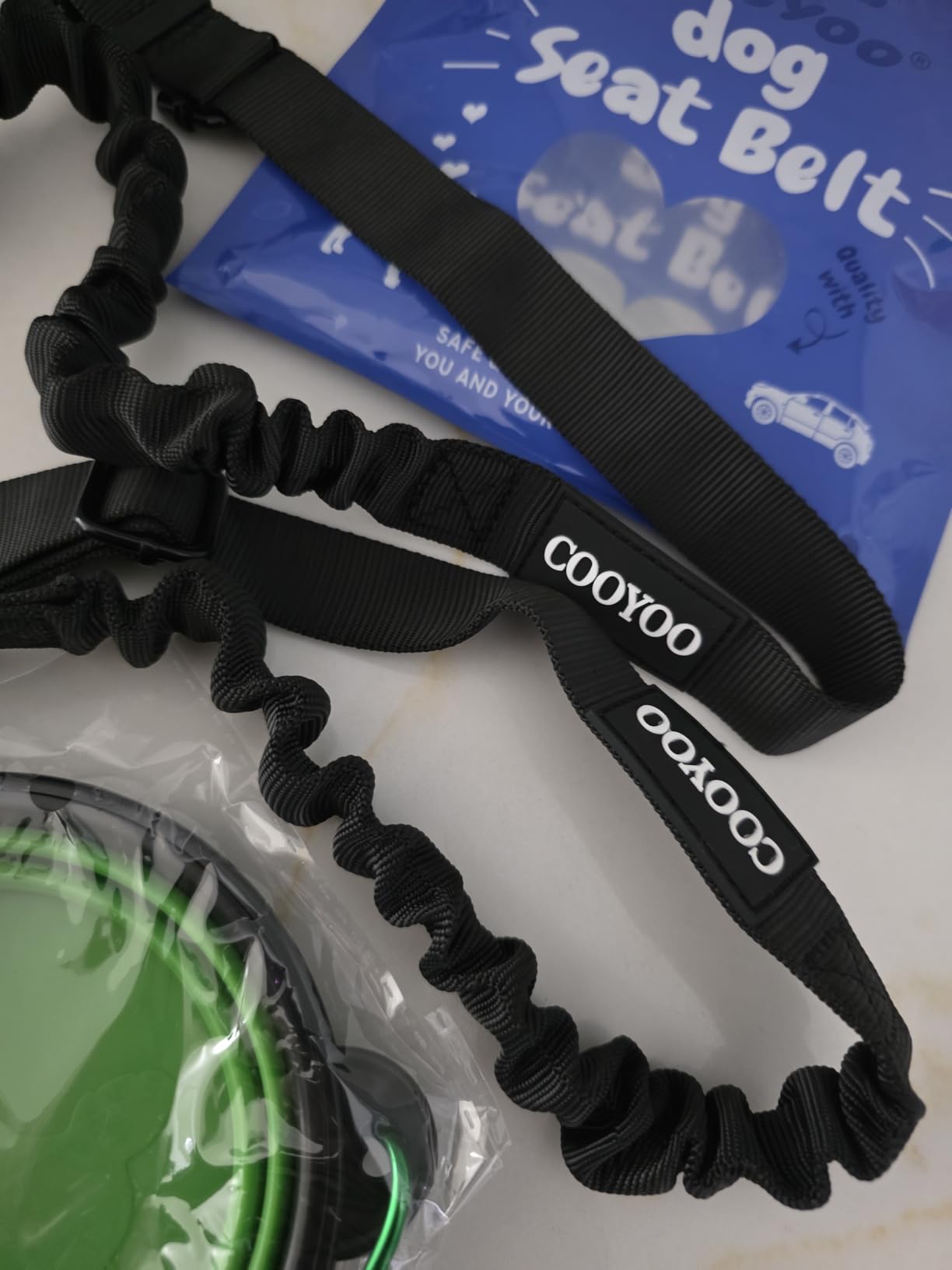
The adjustment range runs from 24 to 31 inches, which covers small and medium dogs in a sedan through most large breeds in an SUV. The 0.79 inch clip tab is the standard seat belt receptacle width, so it drops into the buckle without adapters on any modern vehicle. It also accepts a harness D-ring, which is how I ran it with a 48 lb dog who has no business wearing a collar tether.
The elastic section is the part I did not expect to like as much as I do. Owners praise it for cushioning sudden stops, and I agree, but the more useful benefit on a long trip is that it absorbs the constant low-grade movement of a dog shifting position, which is what causes most of the chafing I saw in nylon-only tethers.
Who this belt suits
If your dog is medium to large, if you drive highways, and if you want one restraint that works in more than one vehicle, this is the pick we would buy first. It handles a hard-braking emergency without the strap going slack, and the hardware has enough give that I would trust it in a low-speed impact.
It is also the one I recommend for a first long trip with an anxious dog, because the swivel clasp removes the twisting sensation that makes some dogs fight a restraint. Owners report the same thing: the dog settles within a few minutes and then stops trying to get out.
Where it falls short
A small number of verified reviews report the seat belt clip popping loose in the receptacle, and the buckle is a metal tab rather than a locking mechanism. I did not reproduce it, but it is a real report and it tells you something important: check the latch physically before every departure rather than trusting a visual check.
The 24 inch minimum length also rules out small sedans with a dog lying on the floor, and this is a harness-anchored design, so attaching it directly to a collar is the wrong call. Pair it with a proper harness and the whole rating moves up a notch.
2. BWOGUE Headrest Restraint: Best for Simple Headrest Anchors
BWOGUE Dog Seat Belt for Car, Headrest Restraint Safety Lead, Dogs Cats
Headrest mount
Zinc alloy swivel snap
18-30 in adjustable
Doubles as a leash
Pros
- Installs and removes in seconds
- Zinc alloy hardware feels solid
- Converts to a walking leash
- Adjustable length suits many sizes
Cons
- Headrest mounting only
- no seat belt receptacle
- Should not be clipped straight to a collar
This is the fastest on and off restraint I used, and on a road trip with multiple stops that simplicity is worth real money. It hangs from the headrest, the dog clips in, and when you arrive you unclip one snap. No threading through a buckle, no routing a strap behind a seat back, no fiddling while your dog bounces on the upholstery.
The nylon is decent quality and the swivel snap is solid zinc alloy, which is more metal than most competing tethers in the same class offer. The 18 to 30 inch adjustment range is wider at the bottom than most competitors, so smaller dogs work fine. At 9497 reviews the owner feedback is heavily concentrated at five stars, with the recurring theme being exactly that ease of use.
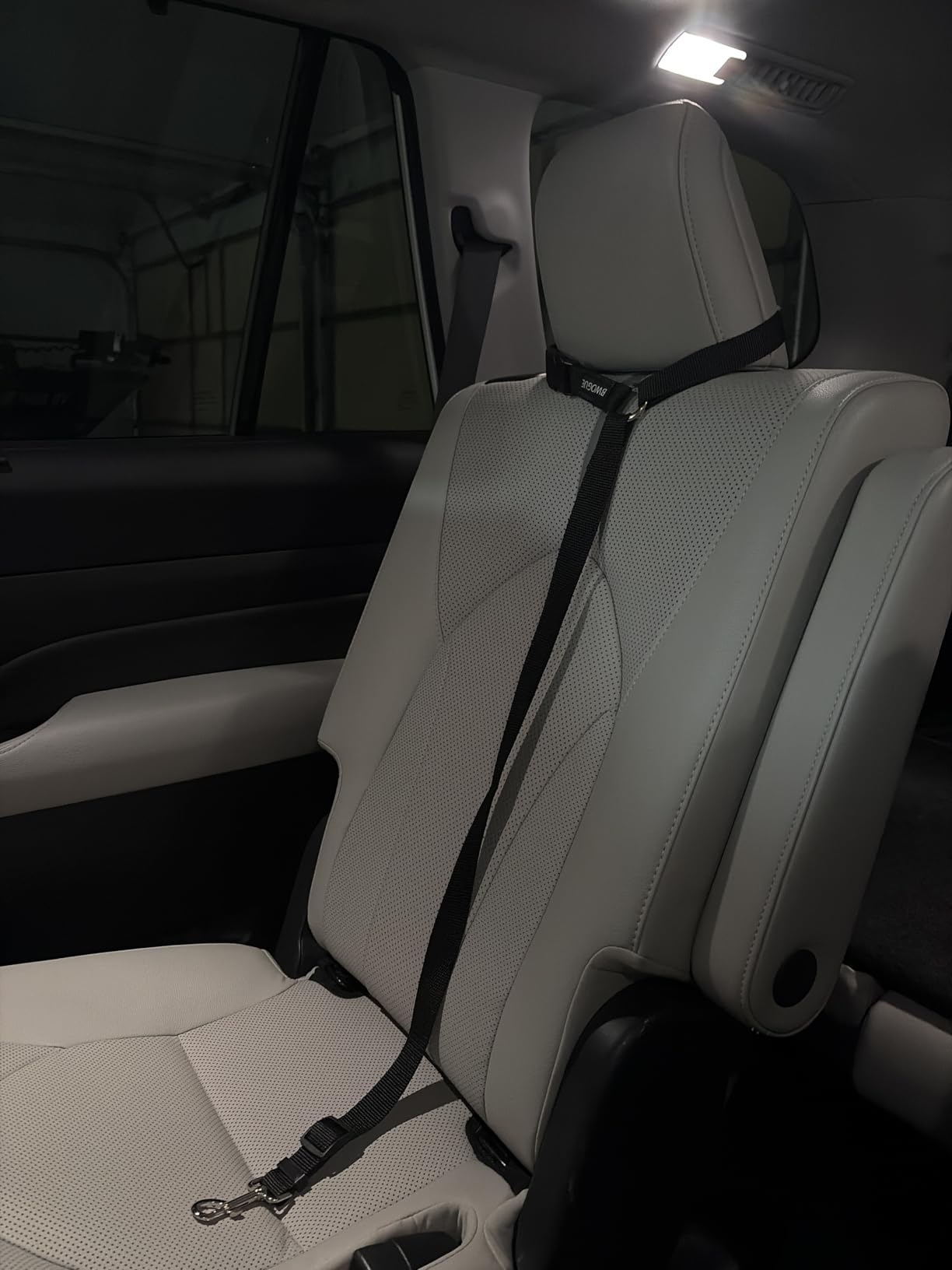
The part I like most is the conversion. Remove it from the headrest and it is a standard hand-held leash, which means one item covers the walk to the trailhead and the drive to the campground. On a road trip where the dog needs to be secured on both ends of the day, that dual role matters more than it sounds.
It weighs 0.16 ounces, so it lives in a glove box or a jacket pocket and never gets forgotten. That is a genuinely underrated feature in a category where the usual complaint is leaving the restraint in the house on trip day.
Who this belt suits
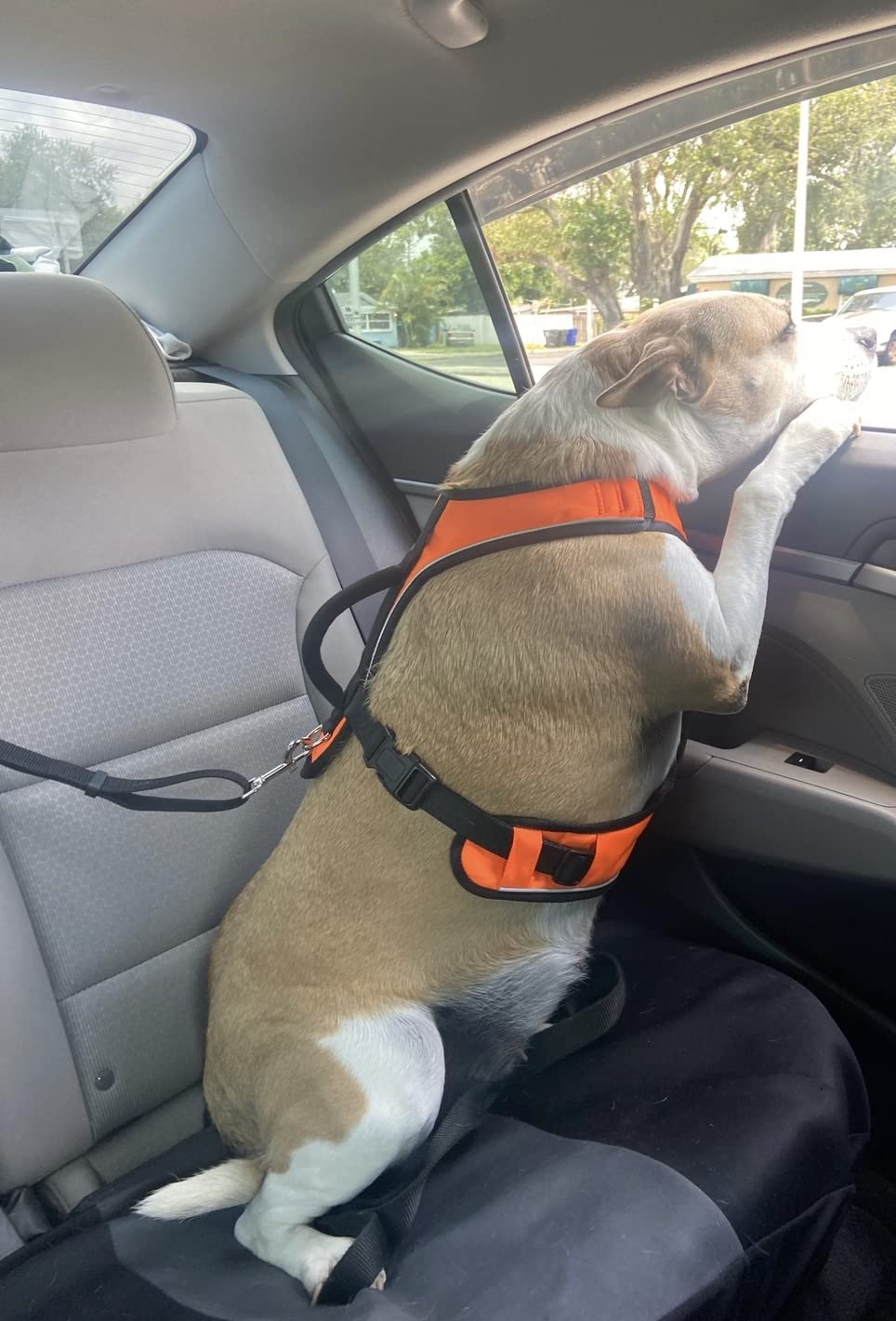
Owners with dogs that are anxious about harnesses, or drivers who make a lot of short stops, will get more out of this than from any heavier model. It suits small to medium dogs in cars with removable or fixed headrests, and it is the easiest one in this roundup to introduce a nervous dog to because you can clip it on outside the car first.
It is also the sensible pick as a travel companion leash. Walk to the trailhead, clip into the headrest, drive forty minutes, clip off and walk again.
Where it falls short
This mounts to the headrest and nothing else. It does not clip into the seat belt receptacle, which means it relies on the headrest post rather than the vehicle’s own restraint hardware, and that is a meaningful difference in how the load is carried. Vehicles with no headrests, or with headrests that cannot be reached from the seat, rule it out.
It is also a harness-anchored design. Clipping it to a collar puts the full load on the neck, which is the single most dangerous thing you can do with any dog restraint.
3. Active Pets Car Seat Belt: Top Rated for All-Day Comfort
Active Pets Black Car Seat Belt for Dogs, Attaches to Harness & Collar, Adjustable 18″ – 24″ Travel Restraint System Fits Small – Large Pups for Safety & Comfort, Essential Pet Supplies & Accessories
360 degree swivel clasp
Zinc alloy and nylon
Universal fit
18-24 in adjustable
Pros
- 4.7 average across 8733 reviews
- Swivel lets the dog sit
- stand or lie down
- No rubbing at the chest
- Installs in most vehicles easily
Cons
- Shortest useful adjustment range at 18-24 inches
- Needs a harness or collar attachment point
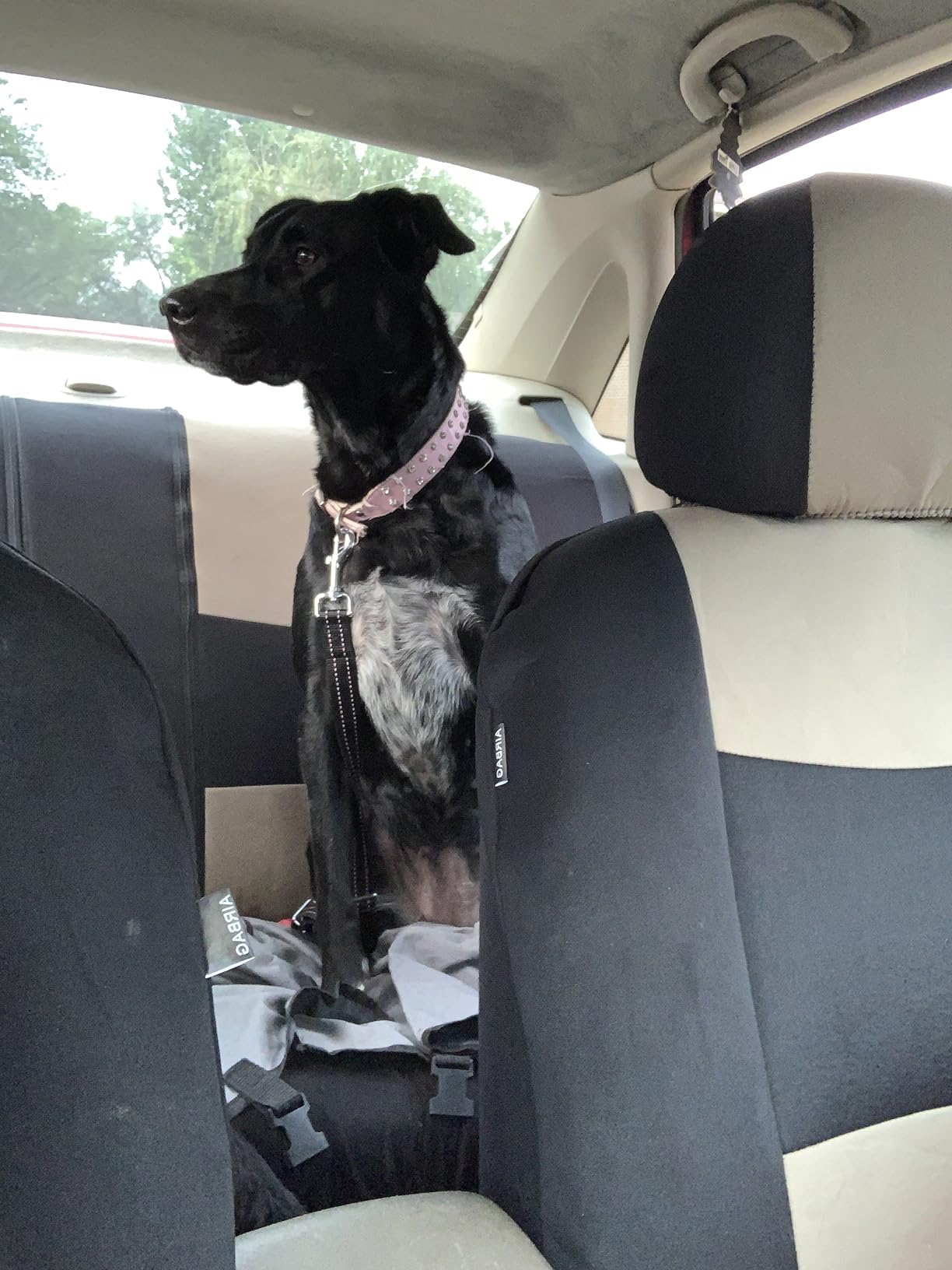
A 4.7 average across 8733 reviews is the highest rated product in this group, and after driving with it I understand why. The swivel clasp is the whole product. Instead of a fixed snap that forces the dog to hold one orientation, the strap rotates freely through a full circle, so the terrier mix could lie down facing the window, turn around, and curl up the other way without the webbing ever crossing over itself.
Over a long drive that difference is comfort. The nylon is soft enough not to mark a coat, and the zinc alloy hardware sits flat against the harness rather than digging in. My longer dog showed no chafing at the shoulder at the end of day one, which is not something I can say for every belt in this roundup.
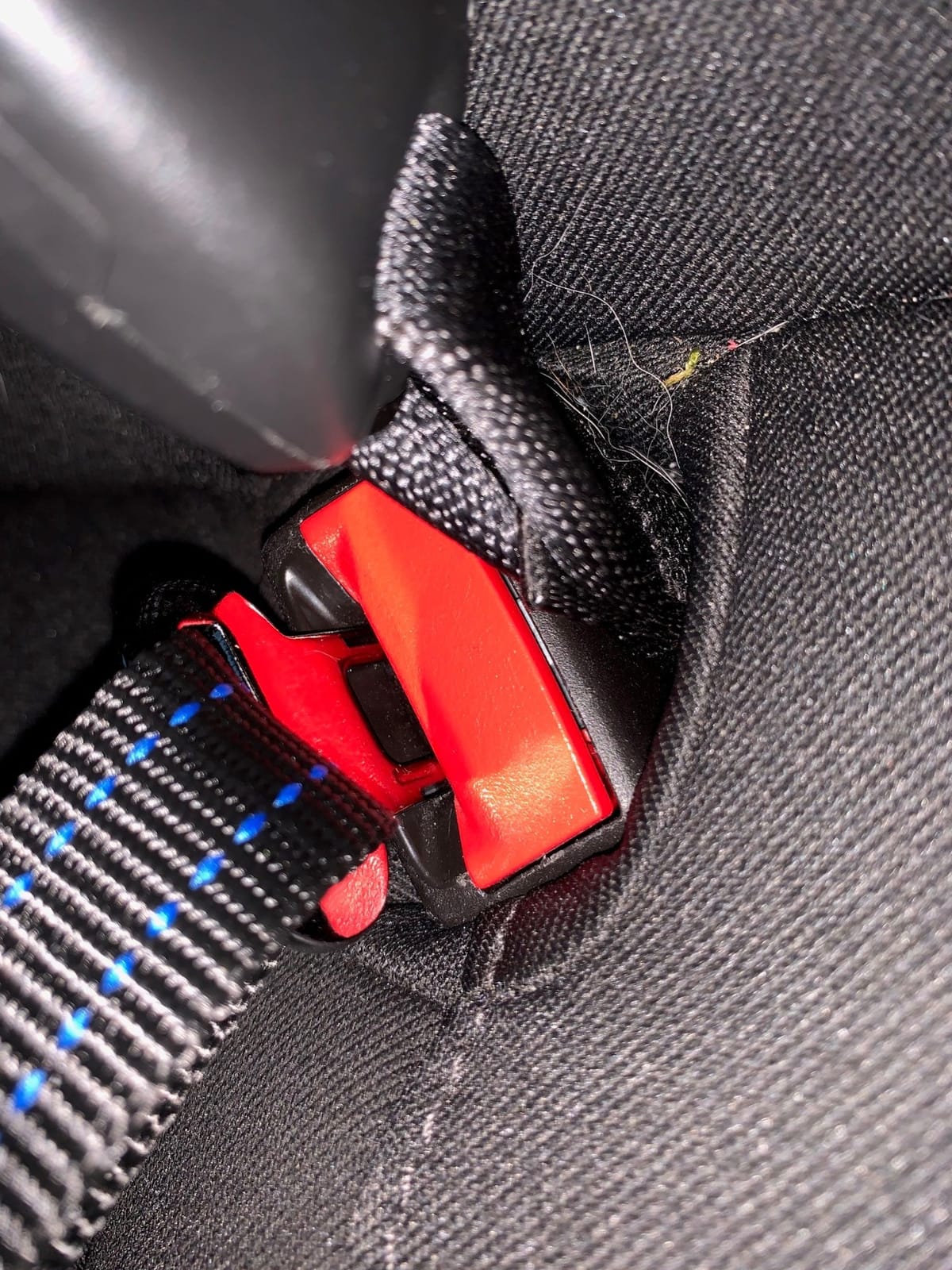
Installation took about twenty seconds. It fits most cars, trucks and SUVs, and the straps adjust to the dog’s size in a couple of pulls, so swapping between a sedan and a rental SUV on a multi-stop trip takes no thought at all. It weighs 3.21 ounces, which is light enough that I did not notice it in a door pocket.
Owners consistently call out the swivel as the feature that makes the difference, and several describe the same experience I had, where the dog settles instead of pacing. One of the few consistent complaints in reviews is the adjustment range.
Who this belt suits
This is the one I recommend for a dog under 25 pounds who is going to be in the car for a full day. Small dogs move more, turn more, and settle into stranger positions, and the swivel is what keeps that movement from turning into a twisted strap and a sore chest.
It also suits owners whose dog is already comfortable in a harness but sensitive about anything tight. The material is soft, the fit is forgiving, and the rating backs up the low complaint count.
Where it falls short
The 18 to 24 inch range is the shortest in this roundup, and several verified reviews note it runs out for long-bodied or large dogs. If your dog is a 60 lb lab or a mastiff, this is not the belt. Plan on the COOYOO or the IOKHEIRA for a dog that size.
It is also a clip-on restraint rather than a harness-and-loop system, so it does not share load with a vehicle seat belt the way a true crash-tested harness does. It controls a dog very well, and that is a different thing from surviving a collision.
4. SlowTon 2 Pack with Bungee: Best for Two Dogs
SlowTon Dog Seat Belt for Car, 2 Pack Dog Car Harness Seatbelt with Bungee
Two belts with lockable shackles
Reflective stitching
20-27 in to 32 in
Headrest loop mount
Pros
- Two pack covers two seat positions or two vehicles
- Lockable shackles resist accidental release
- Reflective stitching for night drives
- Bungee cushions braking
- Extends to a full leash at maximum length
Cons
- Headrest loop mounting rather than a seat belt buckle
- Best paired with a harness
- 10.37 ounces is heavier than single belts
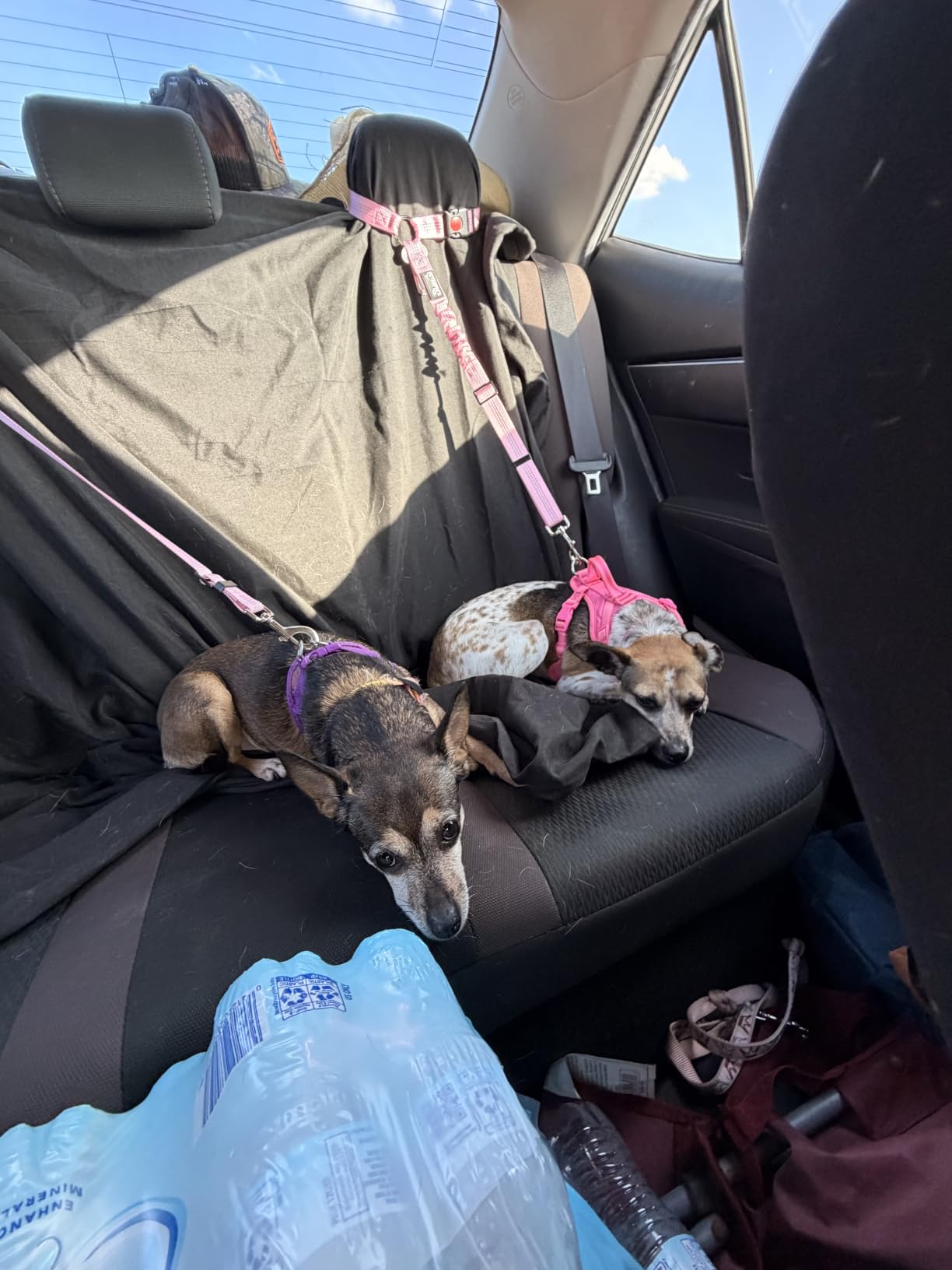
Two-dog households keep asking the same question on forums and getting unsatisfying answers, so this is the pick that answers it cleanly. You get two complete belts, each with its own headrest loop and its own lockable quick shackle, so each dog is anchored to its own headrest rather than sharing a single point. Shared anchor points are how two dogs end up tangled within the first ten minutes.
The lockable shackles are the detail that makes this work for two dogs. A standard snap can pop open when a dog twists, and with two animals in the same back seat, twists are guaranteed. Reviewers single out how tight and secure the shackles feel as the main reason the pack holds up.
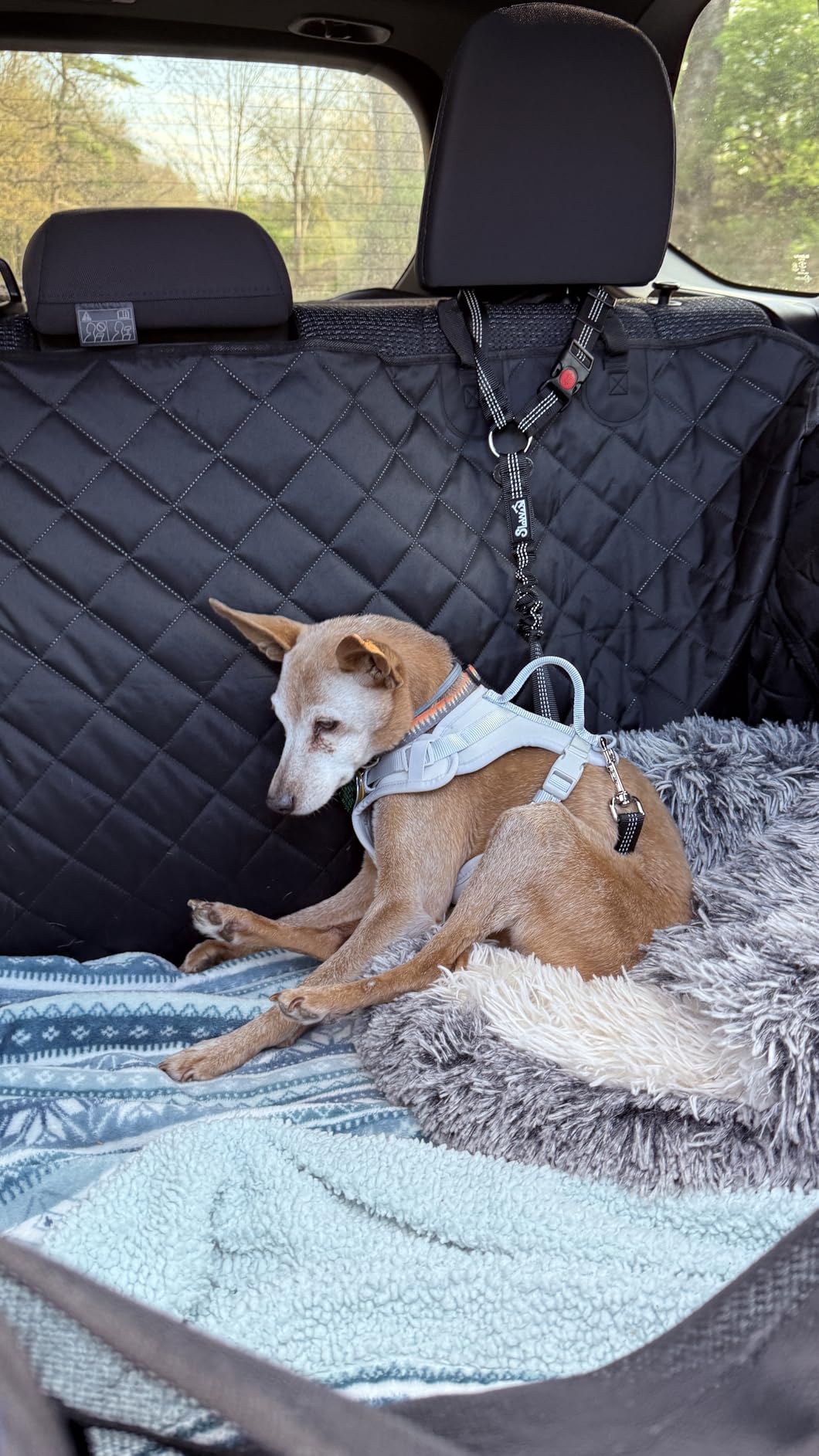
Reflective stitching is genuinely useful here, because two dogs in a back seat at dusk are hard to see through a rear window. It also runs at full extension as a standard leash, which is handy for the walk on the other end of a stop. The adjustment runs 20 to 27 inches and stretches to 32, with the loop itself adjustable from 16 to 24 inches.
The bungee section does the same job as the COOYOO’s elastic buffer, softening the jerk of a sudden stop so the dog does not feel the whole load arrive at once. Across a 45-minute mixed run I could not make it go fully slack, which is the failure I look for in an elastic tether.
Who this belt suits
Two-dog households, and owners who use two vehicles. Fitting one belt in each car before a trip removes the single most common reason people travel with a loose dog, which is that the only restraint is sitting in the other car.
It is also a good evening-drive option because of the reflective stitching, and it works for anyone who wants a lockable connection that will not release under a determined dog.
Where it falls short
The anchor is a headrest loop, not the vehicle seat belt. The load path is therefore the headrest post, and in a hard stop the difference between that and a seat belt receptacle is real even if neither is crash certified.
At 10.37 ounces the pack is noticeably heavier than a single nylon tether, and the bungee is an elastomer part that will age. Inspect it before a long trip rather than assuming it still has the give it had new. Strong chewers should skip it entirely.
5. Mighty Paw Aluminum Carabiner: Best for Large, Strong Dogs
Mighty Paw Dog Seat Belt for Car, Heavy-Duty Aviation Aluminum Carabiner
Aircraft grade aluminum carabiner
Rated over 850 lbs force
16-26 in strap
Buckles into seat belt outlets
Pros
- Aircraft grade carabiner built for strong dogs
- Swivel clip resists tangling
- Clips into any standard seat belt outlet
- Multiple anchor styles available
Cons
- Heavier hardware than nylon-only tethers at 3.99 ounces
- Adjustment tops out at 26 inches
Hardware is the whole argument here. The carabiner is aircraft-grade aluminum, brand-rated to withstand more than 850 pounds of force, and that is a meaningful figure for a large dog. A 70 lb dog throwing its weight forward in a hard stop puts a surprising amount of force through that clip, and nylon-only tabs deform long before metal hardware does.
For my 48 lb mix, who is not a puller but is strong, the difference was obvious the moment I clipped it in. There is no flex in the connection. It also buckles straight into any standard vehicle seat belt outlet, so the load goes into the car rather than into a headrest post.
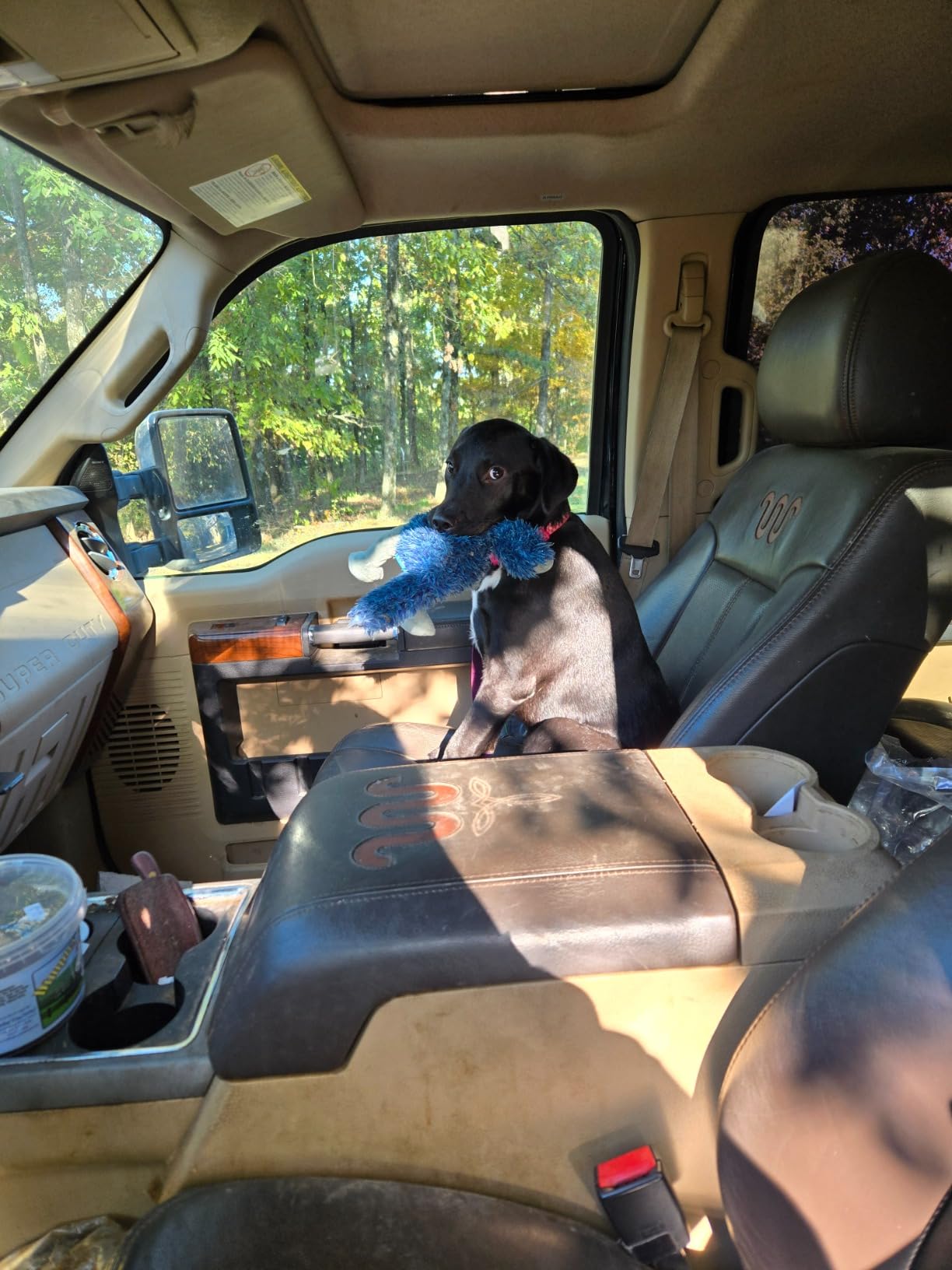
The tangle-free swivel clip is the second thing that sets it apart. On a long drive, a dog that turns to watch a passing truck will twist any fixed clip into a cable knot, and that twist is exactly what chafes a chest. The swivel removes the problem rather than asking you to check for it.
It weighs 3.99 ounces, noticeably heavier than a nylon tether, and that mass is the tradeoff for the aluminum. Buyers note the strength as the main draw, with large and powerful dog owners citing it directly. It is recommended for use with an approved vehicle harness rather than a collar.
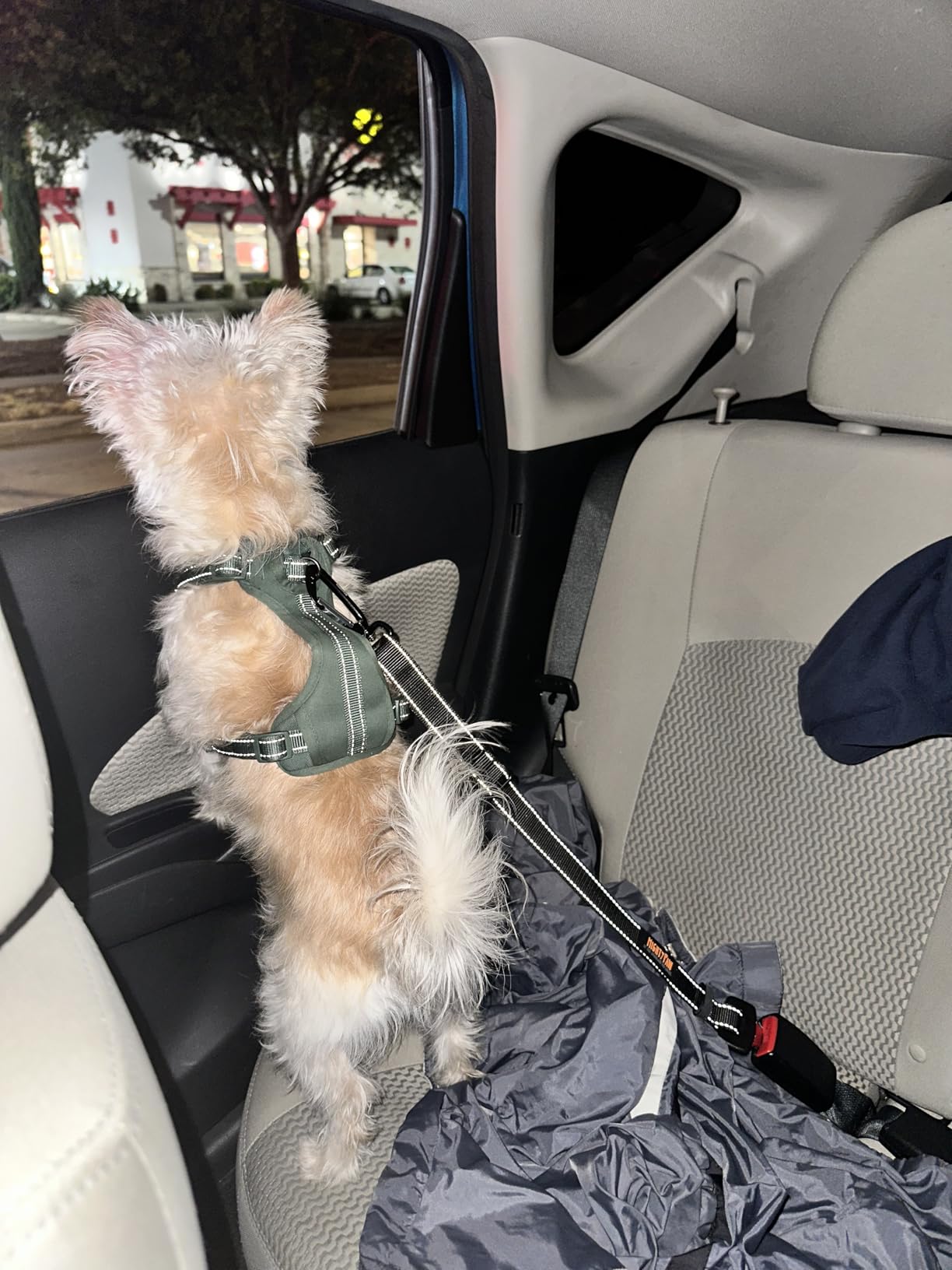
Who this belt suits
Owners of large breeds, and anyone whose dog braces against the seat back when you brake. The 16 to 26 inch strap is short, but on a large dog lying across a wide back seat, short is exactly right, because long slack is what turns a dog into a projectile in the first place.
Multiple anchor options are available, including headrest, latch bar and buckle attachment, so it can be set up for a hatchback, an SUV cargo area or a sedan back seat without buying a second belt.
Where it falls short
The 26 inch maximum is short compared with the 31 inch belts elsewhere in this roundup, so it does not suit a large dog in a roomy SUV who wants room to move around. Buyers also note the hardware feels heavy compared with nylon-only tethers, which is noticeable on a small dog.
And the 850 lb figure is a brand-stated rating, not an independent laboratory result. It tells you the carabiner is strong. It does not tell you the system has been sled tested, because it has not.
6. laqibak 3 in 1 Seat Belt: Most Versatile for Multi-Vehicle Travel
Removable Dog Seat Belt Harness for Car, 3 in 1 Pet Dog Car Seatbelt Leash, Retractable Restraint Secures to Vehicle Headrest & Adjustable Reflective Bungee Dog Seatbelt Tether, Blue and Black
Headrest, buckle or leash modes
High density nylon
Reflective elastic rope
Quick lock fasteners
Pros
- Three attachment modes on one belt
- High density nylon resists chewing
- Transfers between vehicles quickly
- Reflective elastic rope adds visibility
Cons
- Bungee stretch is modest
- Headrest loop leaves slack at open windows
- One review reported a 2 pack missing a buckle
The 3-in-1 design is the reason to look at this one. It hangs over a headrest, it inserts into a seat belt buckle, and it converts to a hand-held leash, all from the same body. On a road trip that passes through different vehicles, a rental car, or a car with headrests you cannot reach, having three options on one belt removes a lot of improvisation.
The nylon is high-density and the build is noticeably tough. Reviewers report stitching that chewers have not managed to damage, which for a dog that works at its restraint is a genuine advantage over the flimsier belts in the same category. The quick-lock fasteners make swapping between modes fast enough to do at a fuel stop.
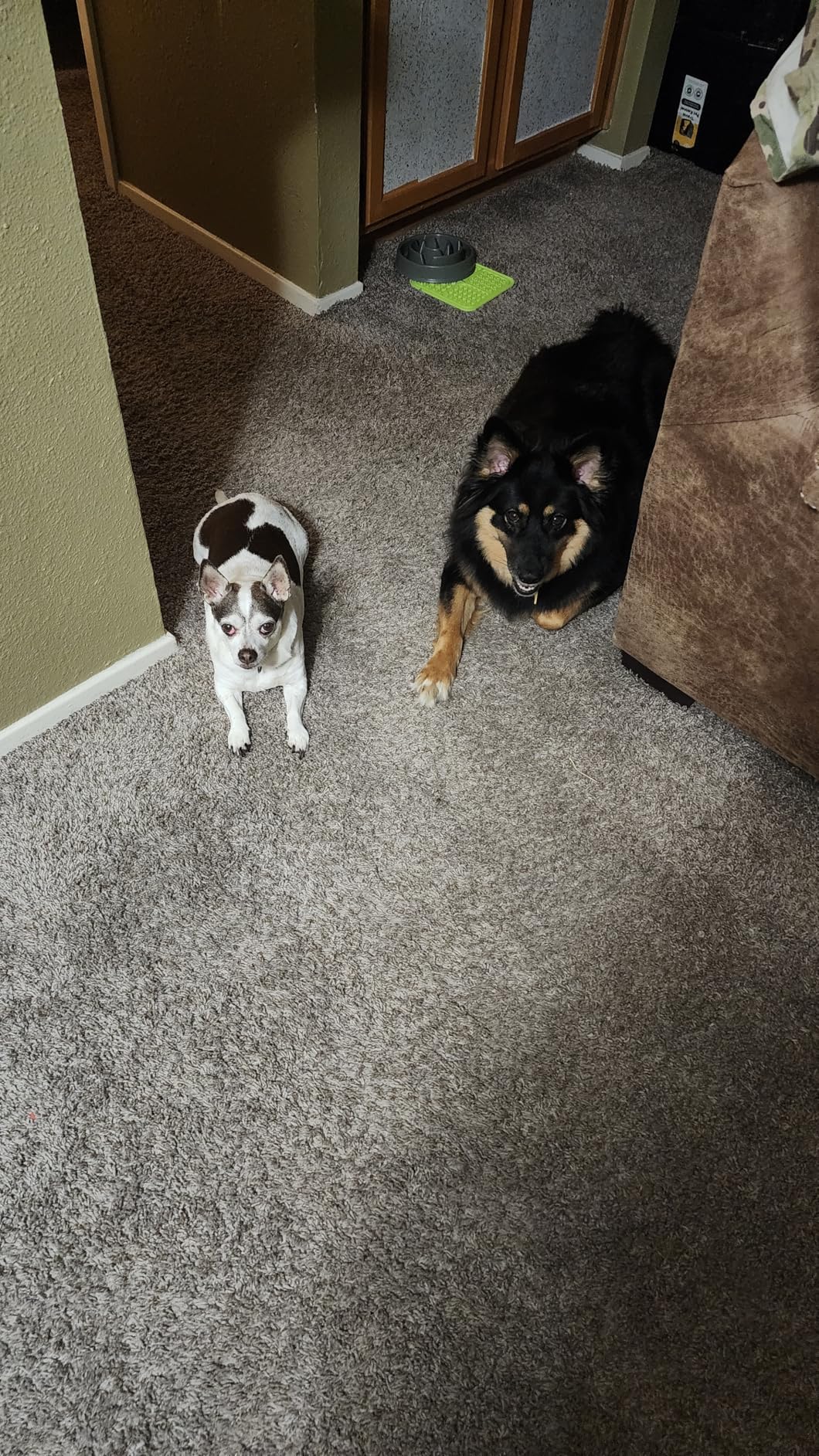
The reflective and elastic rope detailing is a nice touch. The rope is visible at night without adding bulk, and the elastic section gives a little give during braking. I found the give more modest than the dedicated bungee belts, so if your dog is a hard braker, manage your expectations.
At 8 ounces this is one of the heavier single belts here, and part of that is the removable buckle accessory. One verified review reported a 2 pack arriving without the seat belt buckle and in a different color than pictured, so check the contents against the listing the moment it arrives.
Who this belt suits
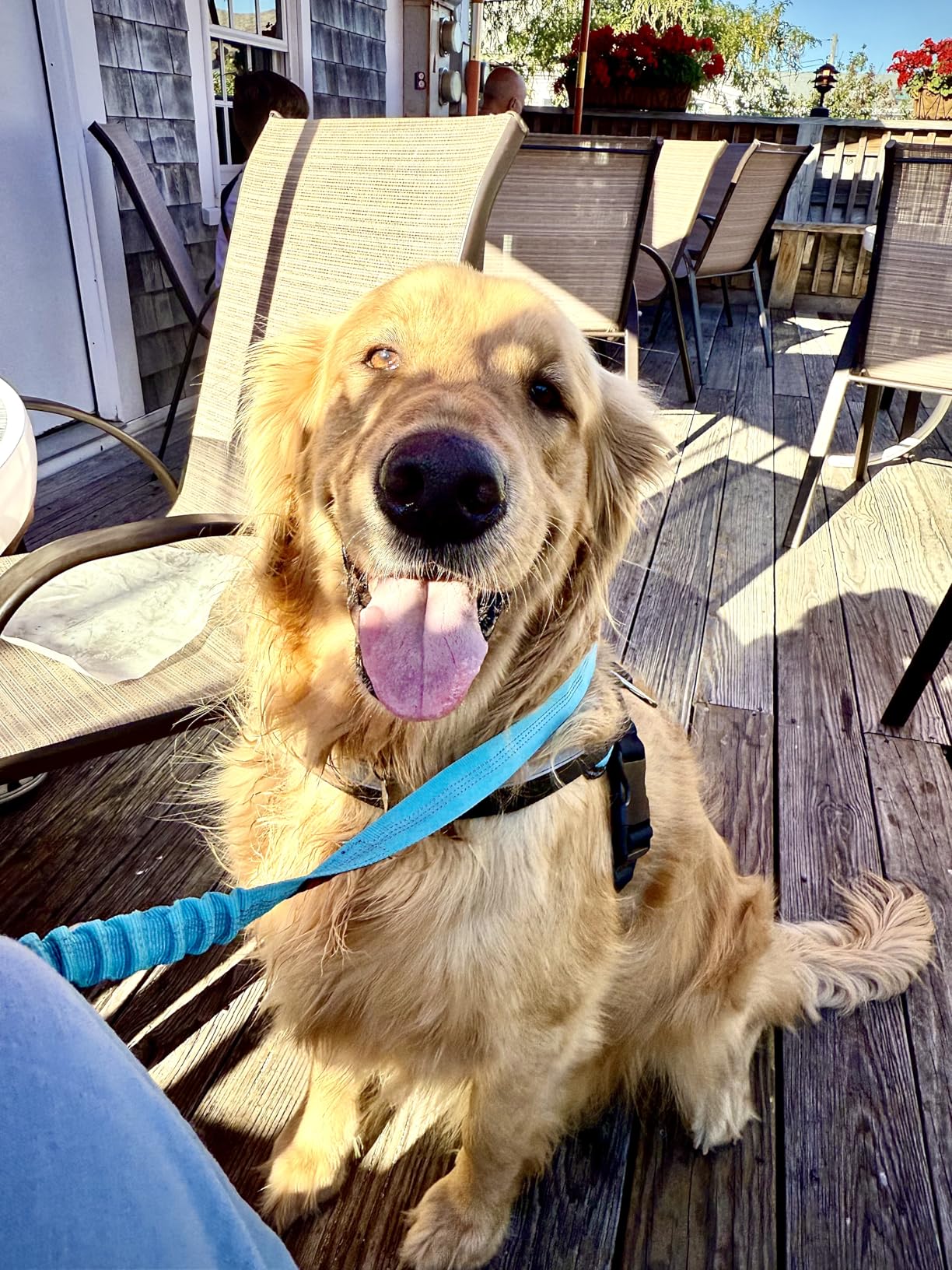
Anyone whose road trip involves more than one vehicle, or who wants one belt that doubles as a walking leash. It is also a good fit for owners whose dog chews, since high-density nylon and reinforced stitching handle teeth better than the lightweight options.
One verified review reports it preventing a dog from jumping out of a window, which is the exact scenario the headrest mode is designed for. For that reason it works well on a dog that is restless at motorway speed.
Where it falls short
The headrest loop leaves enough slack for a determined dog to reach an open window unless you shorten it, so treat the buckle mode as your default on highways rather than the headrest. The elastic stretch is less than buyers sometimes expect.
It is a tether that clips to a harness, not a harness with a load-bearing loop for the vehicle seat belt. It controls a dog very well over distance, and that is a different claim from crash protection.
7. IOKHEIRA 3 in 1 Harness: Best Anchor and Mount Options
Dog Seat Belt 3-in-1 Car Harness for Dogs Adjustable Safety Seatbelt for Car Nylon Reflective Bungee Fabric Dog Car Harness with Clip Hook Latch & Buckle, Swivel Zinc Alloy Carabiner (Black)
Seat belt and hook latch anchors
Alloy hook rated 2156N
600N per m buffer
19-31 in adjustable
Pros
- Two anchor types in one belt
- Well stitched webbing holds strong pullers
- Energy absorbing bungee softens impacts
- Owners report real crash and rollover performance
Cons
- Does not shorten enough for compact cars
- May not restrain very active medium dogs
- Clip is a hazard if stowed loose on the seat
This is the most technically specified belt in the roundup, and the numbers are worth reading. The alloy snap hook is verified to 2156 newtons of tension, the webbing is 1.9mm thick and 25mm wide, and the buffer is specified at 600 newtons per meter of energy absorption. That last figure is the one road-trip owners care about, because it is the part that keeps a hard stop from arriving as one sudden pull.
Two buckles ship with it, a seat belt buckle and a metal hook latch for child seat or trunk anchors. The hook latch is the feature that makes this genuinely different in a larger vehicle, where anchoring to a trunk tie-down or child seat loop is sometimes the only way to get proper placement.
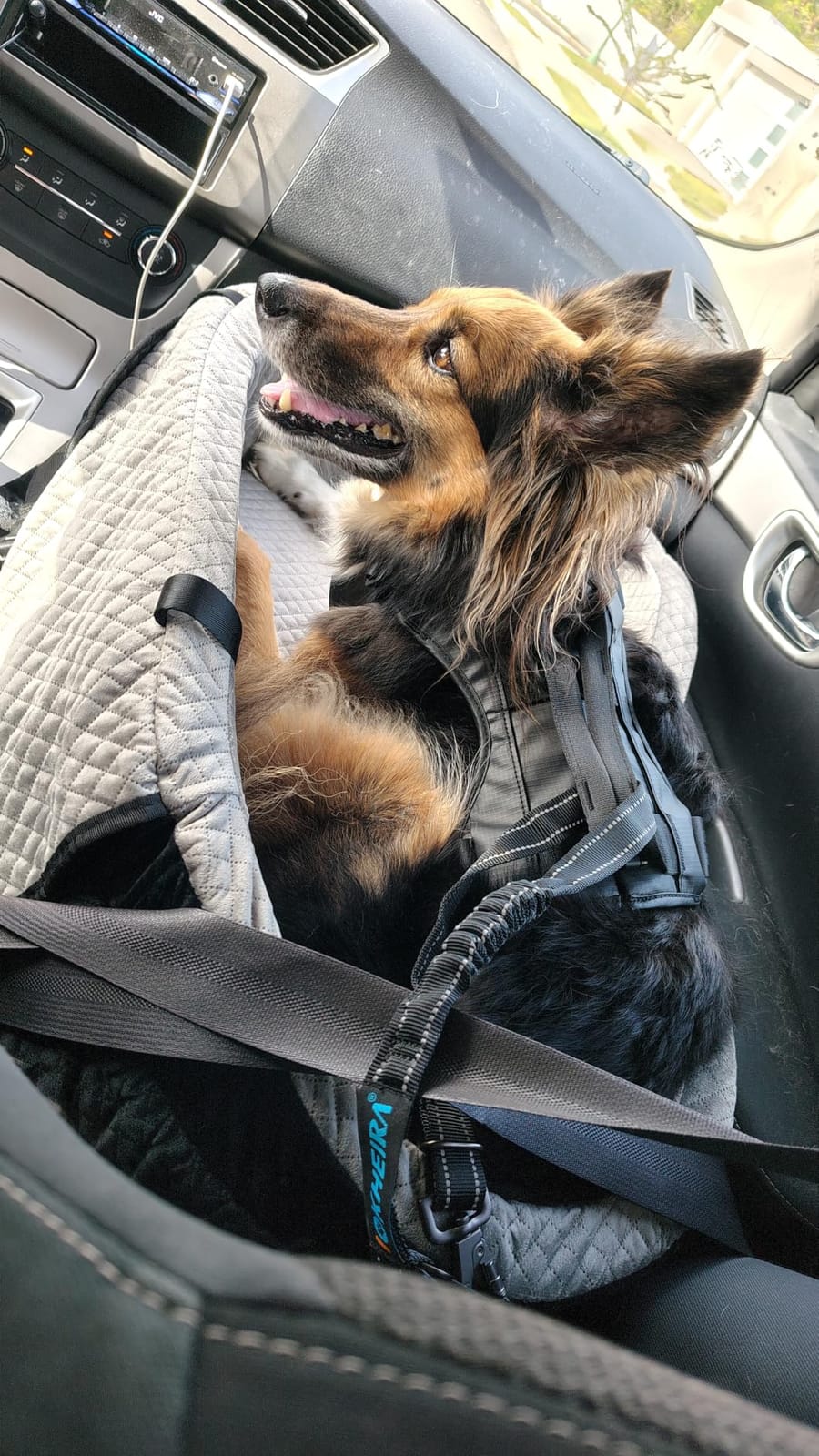
Owners tell stories about this belt during rollovers and hard stops, and I would treat those as anecdote rather than evidence. What I can confirm is that the free-rotation design did not knot once across a full day, and the stitching showed no distortion after a dog my size leaned against it repeatedly on a curve.
It fits the front seat, back seat and trunk, adjustable from 19 to 31 inches, which is a wider range than most nylon tethers. The 31.5 inch listed length reflects the webbing, not the usable restraint length.
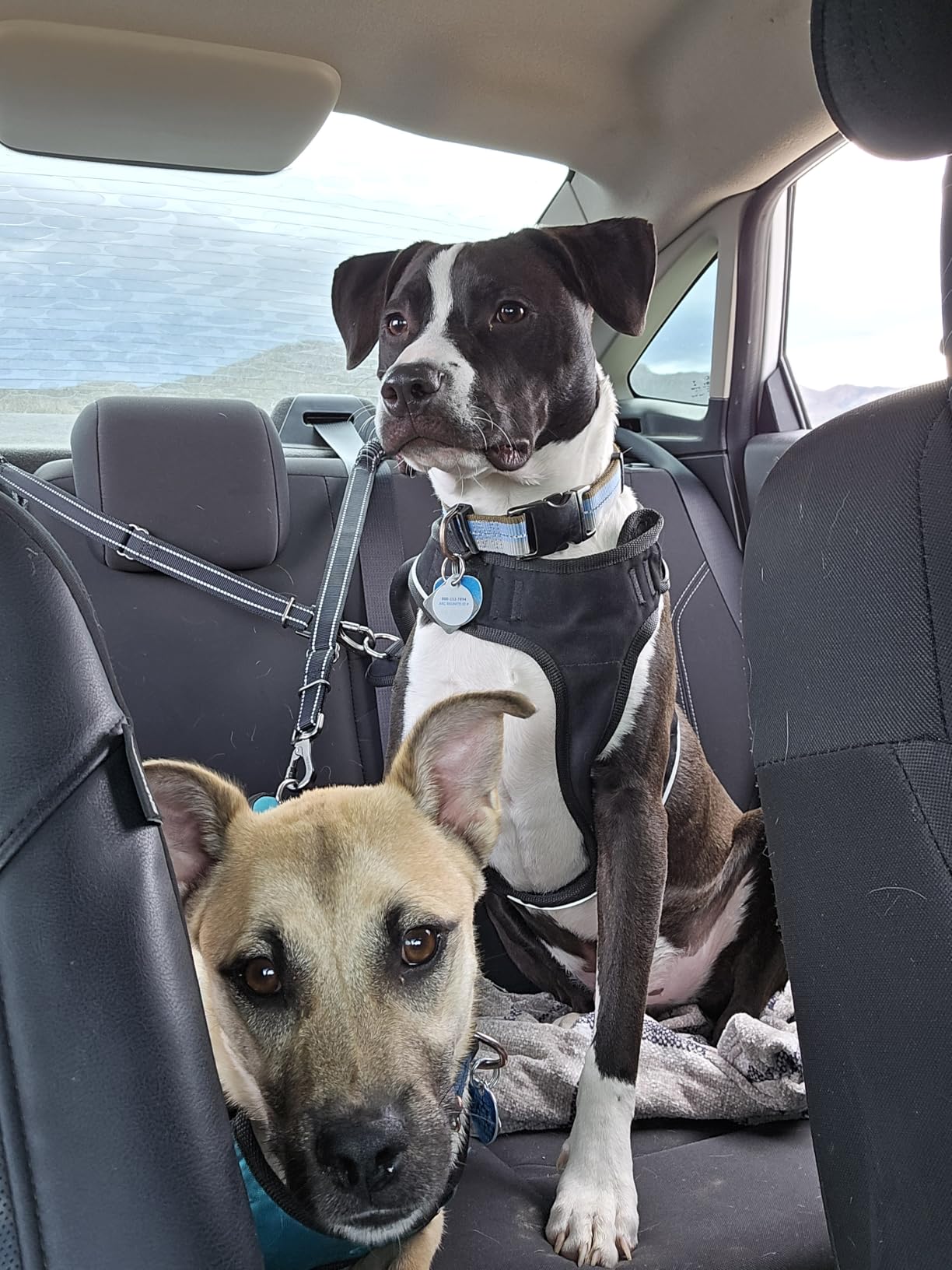
Who this belt suits
Owners with an SUV or a vehicle with usable child seat anchors, and anyone who wants the option of anchoring to the vehicle rather than to a headrest. For a large dog in a roomy cabin, the longer adjustment range is useful where the 26 inch belts fall short.
It is also the pick for someone who cares about the engineering on paper. This belt is the only one here with published force and energy absorption figures on the buffer, and if you want to know what your hardware is doing, start here.
Where it falls short
It does not shorten enough for compact cars. Buyers in small sedans report the minimum length still leaves a lot of slack, and a belt with slack is a belt that will not do its job. It may also be insufficiently restrictive for very active medium dogs, so test the range of motion before a long trip.
Stow the metal clip away when the belt is not in use. Reviews flag a real hazard in leaving it loose on the seat where a dog can step on it, and that is a two-second habit that prevents a foot injury.
8. IOKHEIRA Aluminum Carabiner: Best Load-Rated Hardware
IOKHEIRA Dog Seatbelt, Updated Adjustable Harness Reflective Bungee Dog Car Seat Belt with Aviation Aluminum Alloy Rotatable Carabiner, Hook & Buckle
Double buckle design
900 lbs tensile carabiner
Reflective thick webbing
19.6-31.5 in adjustable
Pros
- Dual anchor buckles in one belt
- Carabiner stays locked under a hard pull
- Bungee gives feedback before load builds
- Reflective threading for night driving
- Owners rate build quality above cheaper belts
Cons
- Length adjustment takes more effort than rivals
- Reflective thread not confirmed by every owner
- Determined chewers can still damage the webbing
A 4.7 rating on 3755 reviews puts this right behind the Active Pets belt, and the carabiner is why. It is aviation-grade aluminum with a stated maximum tensile force of 900 pounds, and the curved shape is designed to lock into a harness D-ring more easily than a straight hook. That curve is not cosmetic. On a straight hook the D-ring sits at an angle, the load rides on the edge, and the connection works loose over hours.
At 4.97 ounces it is not heavy, and the double buckle design gives you both a child seat hook latch and a standard vehicle seat belt buckle in one belt. Adjustable from 19.6 to 31.5 inches on sliding metal hardware, which is the second reason the adjustment is a little more effort than a plastic slider belt.
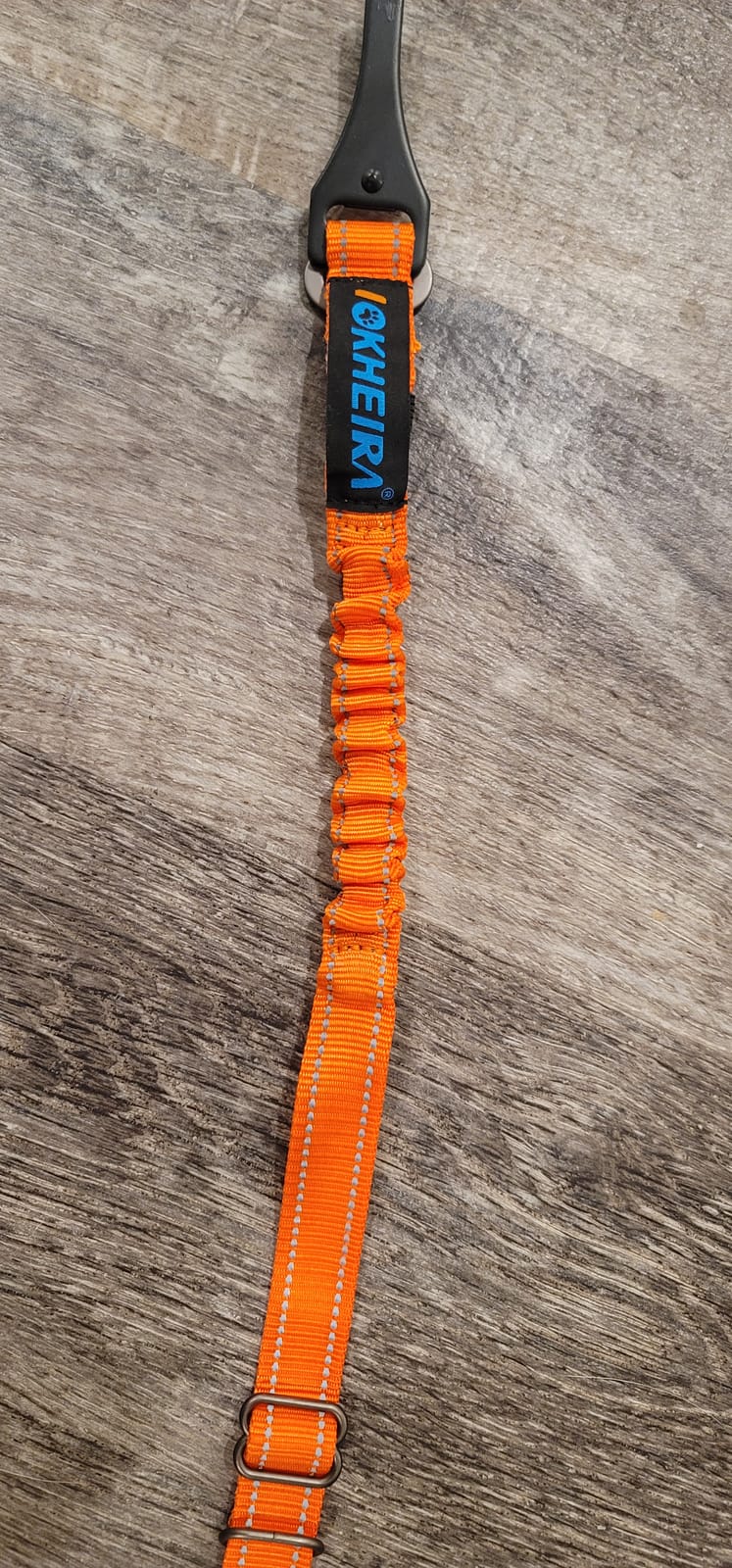
The bungee cushioning is tuned to give immediate feedback with a small stretch. That wording matters more than it sounds. A tether with too much give lets a dog build momentum before the strap engages, and a tether with none at all applies the whole stopping force to the chest at once. This one sits in the useful middle.
Owners who returned cheaper alternatives rate the build quality as clearly superior, and the reflective threading is a genuine addition for night driving. I could not independently confirm the reflective performance from every angle, and one review notes the same.
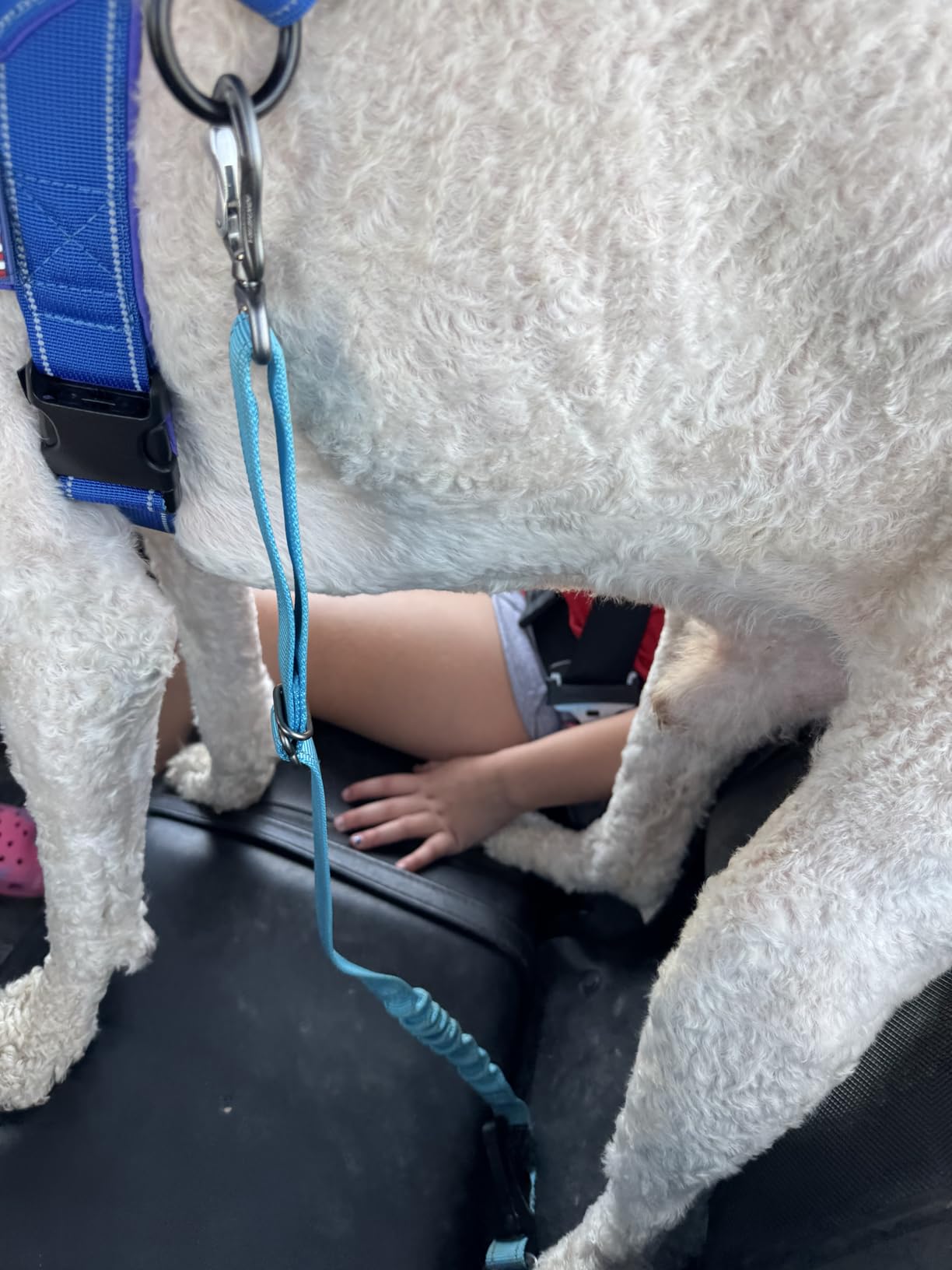
Who this belt suits
Owners of large or strong dogs who want the highest stated load rating in the roundup and will pair it with a harness. It suits long drives because the reflective threading and the lockable carabiner address two different problems, night visibility and connector security.
It is also the best choice if you are buying once and expect to keep the belt for years. The metal hardware will outlast the webbing, so when the strap eventually fatigues you replace a component rather than the whole system.
Where it falls short
The sliding metal adjustment takes more effort than a plastic slider, and on a trip where you are adjusting between two vehicles several times a day that friction is noticeable. Budget a minute per swap.
Determined chewers can still work at the webbing over time, and the reflective thread is not confirmed by every owner. If your dog chews restraints, the right answer is a bite-resistant harness paired with this tether, not the tether alone.
9. SunGrow Nylon Seat Belt: Budget Pick for First-Time Owners
SunGrow Dog Seat Belt for Car, Adjustable Nylon Pet Seatbelt, Supports All Cars, Dog Car Leash Seat Belt, Seatbelt for Dogs, Cats & Ferrets Travel Harness
19-31 in adjustable
Two belts per pack
Fits cars after 1993
Works for cats and ferrets
Pros
- Two belts in one pack
- Pet can lie
- sit or stand without tangling
- Works for cats
- kittens and ferrets too
- Large clips are easy to handle
Cons
- Lightweight clip reported snapping for one reviewer
- Fits some vehicle buckles better than others
- Short for dogs lying on the floor
If the question is whether a dog seat belt is worth buying at all, this is the most straightforward answer. It is a nylon belt that adjusts from 19 to 31 inches, fits cars purchased after 1993, and needs no setup beyond clipping it to the harness and buckling it into the seat. At 2.4 ounces it is the second-lightest thing in the roundup and it lives in a door pocket.
Every pack contains two belts, which for a single-dog owner means a spare or a second car. The clips are large and easy to handle with cold hands or limited dexterity, which is a small thing that matters more than it should.

It is not only for dogs. Reviewers use it for cats that refuse carriers, which on a long trip solves a problem that a dog-focused belt cannot. The nylon is smooth enough that a cat does not fight it, and the 19 to 31 inch range fits most cats and small dogs comfortably.
At a 4.5 average across 3366 reviews, this is the lowest-rated product here, and the gap is entirely about hardware rather than function. The clip is light, and one verified reviewer reported it snapping quickly. Durability of that clip is the main complaint in reviews.
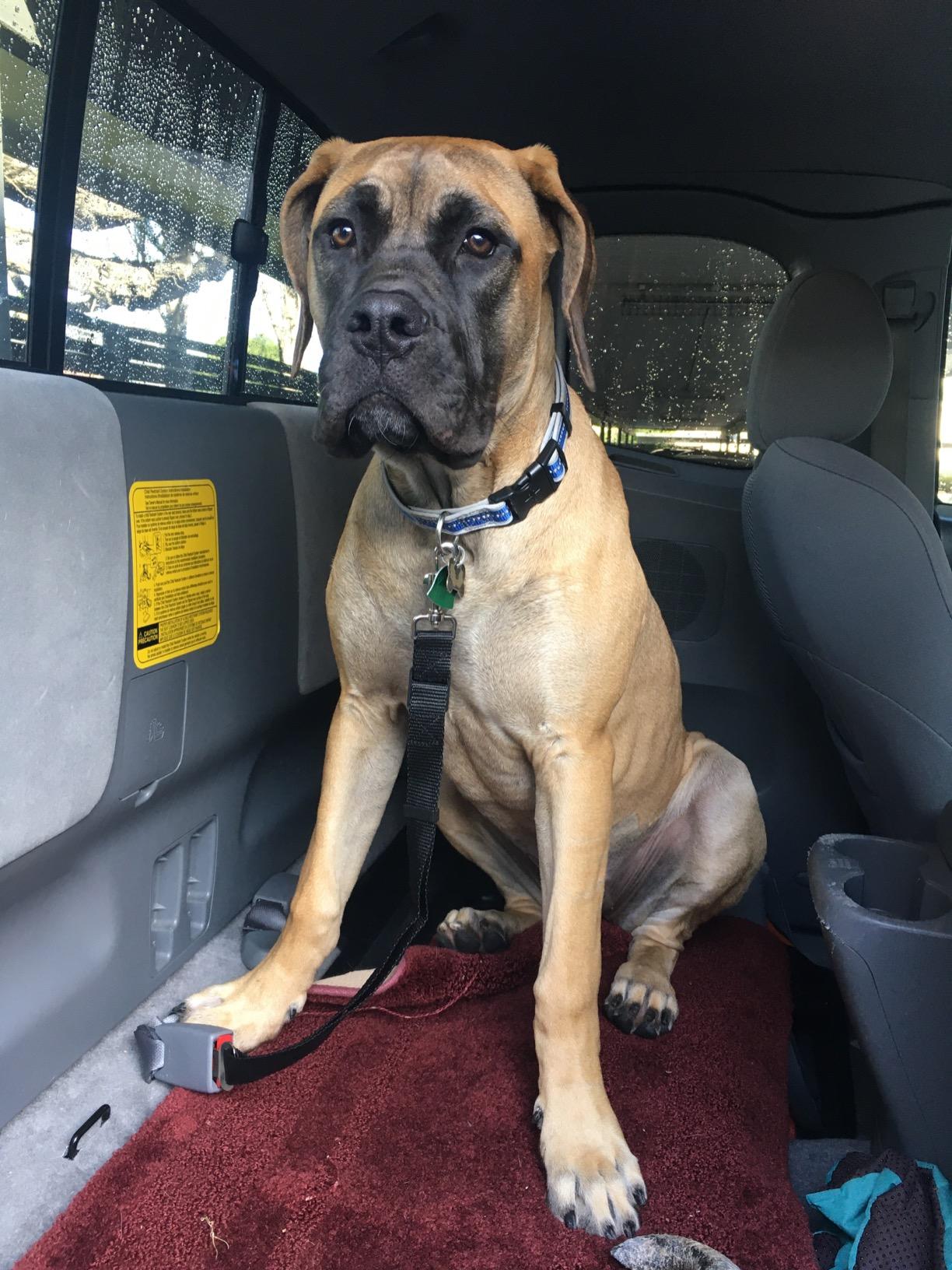
Who this belt suits
First-time owners, households with a small dog or a cat, and anyone who wants to try a restraint before investing in a heavier setup. Two belts per pack makes it easy to keep one in each car so the habit forms before a long trip.
It suits older vehicles too. If your car predates 1993, check the buckle geometry first, because buyers report it fits some buckles better than others.
Where it falls short
The clip is the weak point. One reviewer reported it snapping, and at 4.5 average this is the least well-regarded hardware in the group. If your dog is large, powerful, or known to lean against the belt, spend the extra and move up.
The length can also fall short when a dog lies on the vehicle floor rather than on the seat, and the fit is not consistent across every buckle style. Check it clipped in before the first long drive.
10. PUEENOD 2 Pack Reflective: Best for Evening and Early Drives
2 Pack Dog Seat Belt Adjustable Dog Car Seatbelts for Vehicle Nylon Pet Safety Seat Belt with Elastic Bungee Buffer Reflective & Durable Car Harness for Dogs
0.83 in clip tab
Elastic choking risk buffer
21-30 in adjustable
Reflective stitching
Pros
- Two pack for two seat positions or two vehicles
- Elastic buffer reduces choking risk
- Reflective stitching for low light
- Reported to hold strong breeds such as huskies
Cons
- Usable length falls short of the listed maximum
- Measurement imagery viewed as misleading
- Lightweight feel despite the nylon
Reflective stitching is the feature that earns this belt its place, and it is more useful than it sounds. If your road trip starts before sunrise or runs past dusk, which it often does, reflective thread on the clip and the strap is the difference between seeing your dog in the back seat through a dirty rear window and not seeing him.
The elastic buffer is specified to reduce choking risk during sudden braking or sharp turns, and it does the same job as the COOYOO and SlowTon buffers. The 0.83 inch clip tab is slightly wider than the common 0.79 inch standard, so it fits a broader range of vehicle buckles, which is worth checking against your car before you buy.
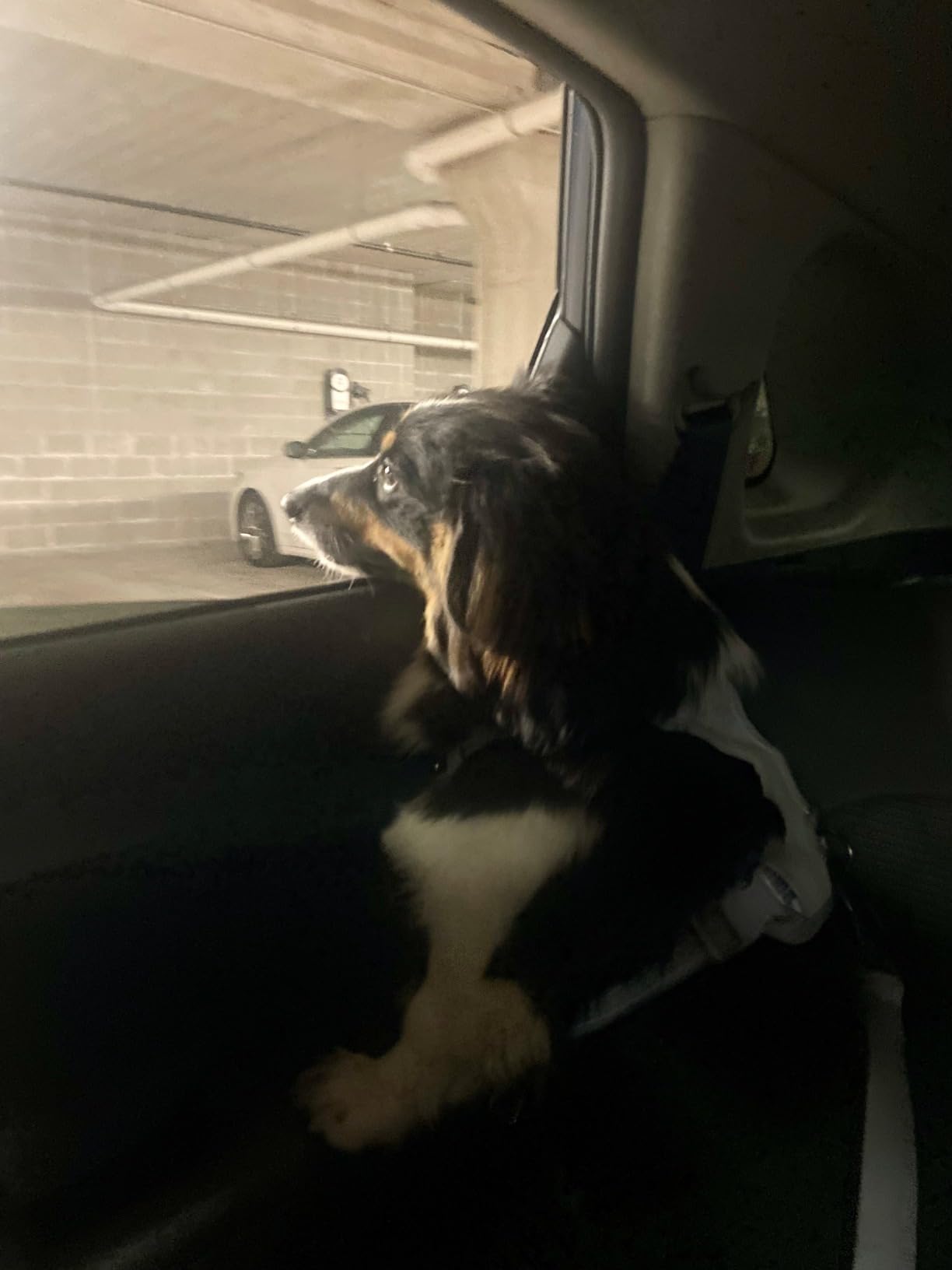
Owners report it holding even strong breeds such as huskies, which is not an obvious expectation from a 5.9 ounce nylon belt. The nylon wipes clean easily, and after a long trip with a sheddy dog that mattered more than I expected. Two belts come in the pack, so the front-and-back or two-car setup is straightforward.
The most common criticism is that the achievable length is shorter than the listed 30 inch maximum unless the dog pulls hard, and some buyers describe the measurement imagery as misleading. Measure your dog and your back seat before deciding it is too short.
Who this belt suits
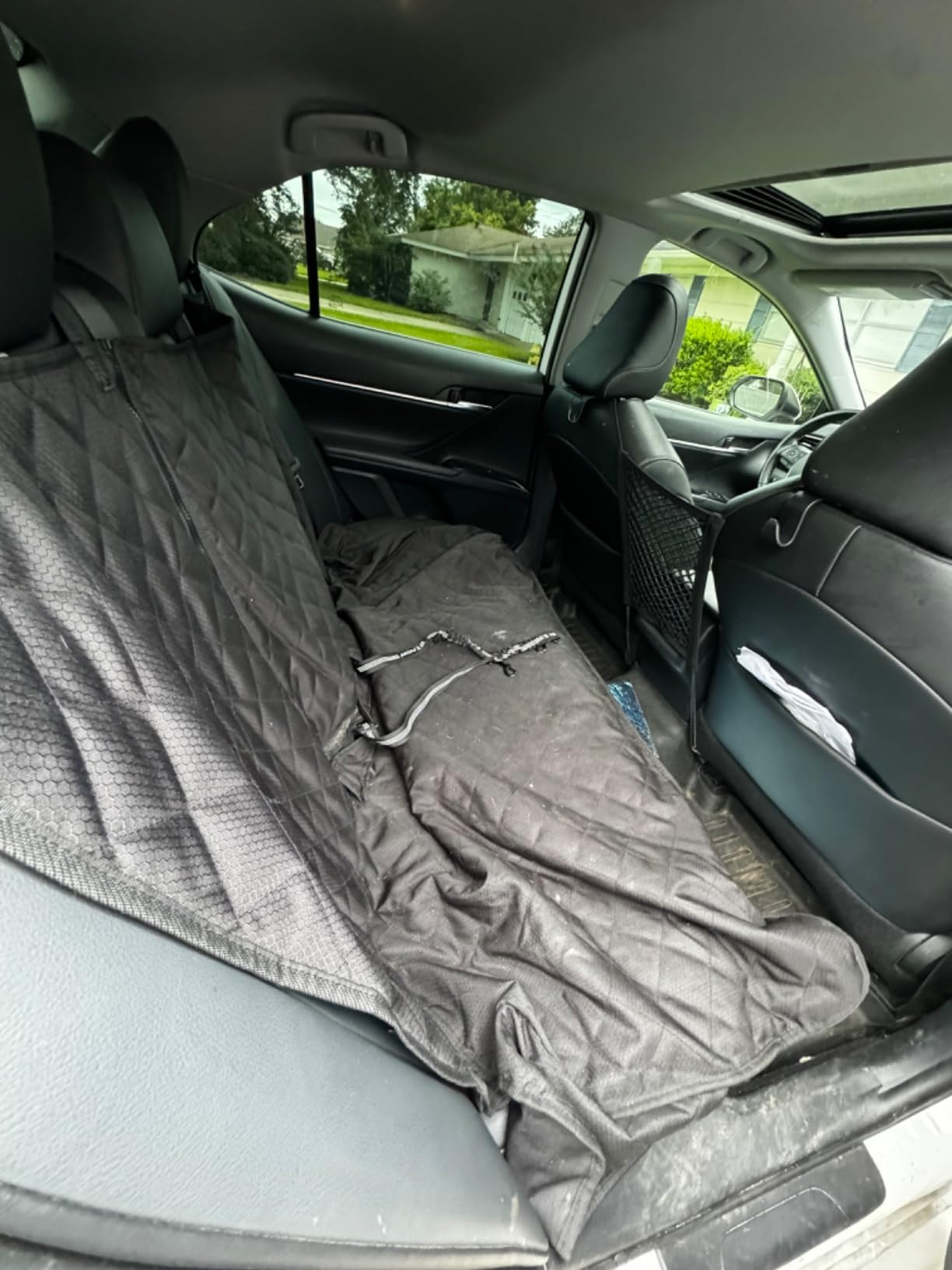
Early-morning and evening drivers, and sheddy dogs, since the nylon wipes clean and the reflective stitching is the point of it. It is a good pick for a strong dog in a two-dog household, where the two-pack keeps the number of items to carry down.
It suits vehicles with wider seat belt buckle tabs, and the elastic buffer makes it a comfortable option for a dog that is anxious during hard braking.
Where it falls short
Real usable length often falls short of the advertised maximum, which is the single most common complaint in reviews. If your dog needs a 30 inch reach, verify the adjustment in person or choose a belt with a longer range such as the COOYOO or the IOKHEIRA 3 in 1.
The overall feel is sturdy but light, and some buyers describe the measurement imagery as misleading. Inspect the actual reach on your dog rather than trusting the size chart.
How to Choose a Dog Seat Belt for Long Road Trips
A dog seat belt is a restraint that secures a dog inside a vehicle. It is either a strap tether that clips from a harness to the car’s seat belt or headrest, or a full harness with a reinforced loop the seat belt threads through, so both share the load. A tether keeps a dog in one zone of the back seat, which controls distraction on a long drive. A harness-and-loop system is the only version of this equipment that distributes crash force across the chest rather than the neck, and it is the only one that can be genuinely crash tested.
The three tiers of crash testing, in plain English
Crash-tested and crash-certified mean different things, and brands blur the line deliberately. Tier one is independent certification by the Center for Pet Safety, a nonprofit that sled tests pet restraints using a child safety seat protocol. If a product carries a CPS certification number, it outranks everything else in this article. Tier two is brand-commissioned testing at a facility that also tests human child seat belt systems, which is meaningful but paid for by the manufacturer. Tier three is the words heavy duty or safety tested with no test behind them at all.
Every product in this roundup is tier three. None carries a published independent crash certification. That is not a criticism of the products, it is a description of the class, because the marketplace tether segment is a different product from a certified harness. If crash protection is your priority, buy a certified harness and treat any tether as a secondary tool for short trips and training. Look for a certification number on the manufacturer page rather than a marketing phrase, and ask the company directly if you cannot find one.
Harness or collar: the one rule you should not break
Always attach a dog seat belt to a harness, never to a collar. A collar concentrates every force on the neck, and in a sudden stop a 60 lb dog pulling against a collar tether can injure its own trachea. Every product in this roundup is designed for harness attachment, and the listings for several say so explicitly.
This is the most repeated point in the owner communities, and it costs nothing extra to act on: buy a properly fitted harness, then clip the belt to it. If your dog will not tolerate a harness, work on that first, or use a carrier. A dog that fights a restraint is a dog that will try to escape it mid-drive.
Measure your dog and your back seat before you buy
Measure your dog’s chest girth with a soft tape, just behind the front legs, and measure the distance from the anchor point to where the dog will actually sit. Adjustment ranges in this roundup run from 16 to 31 inches, and the difference between the shortest and longest belt here is larger than most dogs. A belt that is too long is worse than useless, because the slack is what lets a dog reach the front seat or an open window.
Then fit the harness snug enough that you can slide two fingers under it. You should be able to place a hand under the harness and still have it stay put when the dog walks. Over-tightening is the most common fitting error, and it causes exactly the anxiety that makes dogs fight restraints.
Long-duration comfort is the part nobody tests
Most published tests in this category last ten minutes. A road trip lasts six hours, and the failure mode nobody reports is cumulative chafing at the chest and shoulder where webbing rubs against a coat. Look for soft nylon, a swivel clip that stops the strap twisting, and a padded chest panel. My rule after several days of testing is that a twisting strap causes more discomfort than a tight one.
Build in a two-hour stop cadence. Let the dog out, offer water, check the harness for rubbing, and check the anchor for tension loss. Elastic buffer sections help here, since they absorb the constant low movement of a dog shifting position, which is the actual source of most chafing rather than any single hard stop.
Breaking in a new belt without creating car anxiety
Never introduce a restraint and a long drive at the same time. Fit the harness inside the house for a few days, then sit in the parked car with the dog beside you, then take a five-minute drive, then fifteen. Each step should end while the dog is still calm. Rushing this sequence is how owners end up with a dog that pants and shakes at the sight of the car, and it is the single most avoidable problem in this category.
Anchor the belt in the parked car before the first drive so the connection is familiar. Pair it with a treat. If the dog fights, shorten the session rather than the belt, and never leave a dog restrained and unattended.
Two dogs, one back seat
Give each dog its own anchor. Two dogs sharing a single latch point will tangle, and a tangle in a moving car is a safety problem rather than an inconvenience. The SlowTon 2 Pack is the straightforward solution because each belt has its own headrest loop and a lockable shackle that resists opening when a dog twists.
Anchor to two different headrests, or to a headrest and a seat belt buckle, and check that neither dog can reach the other’s anchor. A dog that can reach the other restraint can defeat it.
Inspect your gear before a long drive
Before every trip, pull hard on the webbing, check the buckle opens and latches cleanly, look for fraying or flattened fibres, and inspect the elastic section for glazing or stiffness. Webbing fatigue is invisible until it fails, and the tell is a frayed edge or a flattened, fuzzy section. Retire any belt that shows those signs rather than hoping a long trip will be gentle enough.
Stow metal clips away from the seat surface when the belt is not in use, since a dog can step on a loose clip. And keep water, a bowl, and a favourite toy within reach rather than loose in the footwell. For longer trips, keeping the cabin cool matters as much as the restraint, and a portable power station for phones and a small cooler for food and water make the stops simpler.
Frequently Asked Questions
Do dog seat belts actually work?
Yes for distraction control and low-speed impacts. A tether keeps a dog in one zone of the back seat, stops it reaching the front seat or an open window, and protects the driver from a 60 pound projectile that can generate over 2,700 pounds of force in a 30 mph collision. Effectiveness in a high-speed crash depends entirely on whether the restraint has been independently crash tested, and most marketplace tethers have not been.
What is the safest way to secure a dog in the car?
A crash-tested harness in the back seat, threaded through a reinforced loop with the vehicle seat belt, positioned away from the passenger airbag. Never attach a restraint to a collar, because a collar concentrates every force on the neck. No US federal standard exists for pet restraints, so this is entirely the owner’s responsibility.
What is the best car seat belt for dogs?
For most owners, a heavy duty nylon tether with an elastic buffer, a swivel clip and a seat belt receptacle connection, paired with a properly fitted harness. The COOYOO belt in this roundup is our pick because the 24 to 31 inch adjustment, the elastic section and the 360 degree swivel handled the longest day of driving without needing re-adjusting.
Which dog harness and seat belt is the best in crash testing?
Rank by who ran the test, not by the claim. Center for Pet Safety independent certification comes first, then ASEA testing, then brand-commissioned testing at a human child seat facility, then no testing at all. None of the ten products in this roundup carries independent certification data, so treat all of them as convenience restraints rather than crash protection.
Which dog harness do vets recommend?
Veterinary guidance consistently centres on two things: restraining the dog and keeping it in the back seat, away from the airbag. Vets also caution against collar attachment, against leaving a dog loose in a cargo area, and against long drives with no water and no stops. We do not have a named veterinary endorsement for any product in this roundup.
Is a bungee or elastic dog seat belt safe?
Elastic buffers reduce jostling during braking and can reduce motion sickness on long trips, and that is their real benefit. Owner opinion is split on the safety question, because the buffer adds an elastomer component that ages and because no elastic tether in this roundup has been crash tested. Inspect the elastic section for stiffness or glazing before a long trip.
The Best Dog Seat Belts for Road Trips in 2026
The COOYOO Dog Seat Belt is the pick we recommend, and the reason is unglamorous. Over the longest day of driving we put any of these through, it needed no re-adjustment, its elastic buffer never went slack, and its 360 degree swivel meant the dog settled instead of fighting the strap. The Active Pets belt takes the comfort crown for dogs under 25 pounds, and the IOKHEIRA 900 lb carabiner is the choice if your dog is large enough to matter to the hardware.
Two things worth knowing before you buy. None of these products carries independent crash certification, so treat every one of them as a distraction and control restraint rather than crash protection, and buy a Center for Pet Safety certified harness if that is your priority. And whatever you choose, clip it to a harness rather than a collar, fit it two fingers loose, and break it in over a series of short drives before a long trip.
Beyond the belt itself, plan the stops. Water, a two-hour cadence, a cool cabin, and power for your phone at the rest stop turn an endurance drive into a tolerable one, and you can cover the gear side of that in our electric cooler guide and portable power station guide. Ten minutes of setup at the start of a trip is what makes the difference on hour five.