
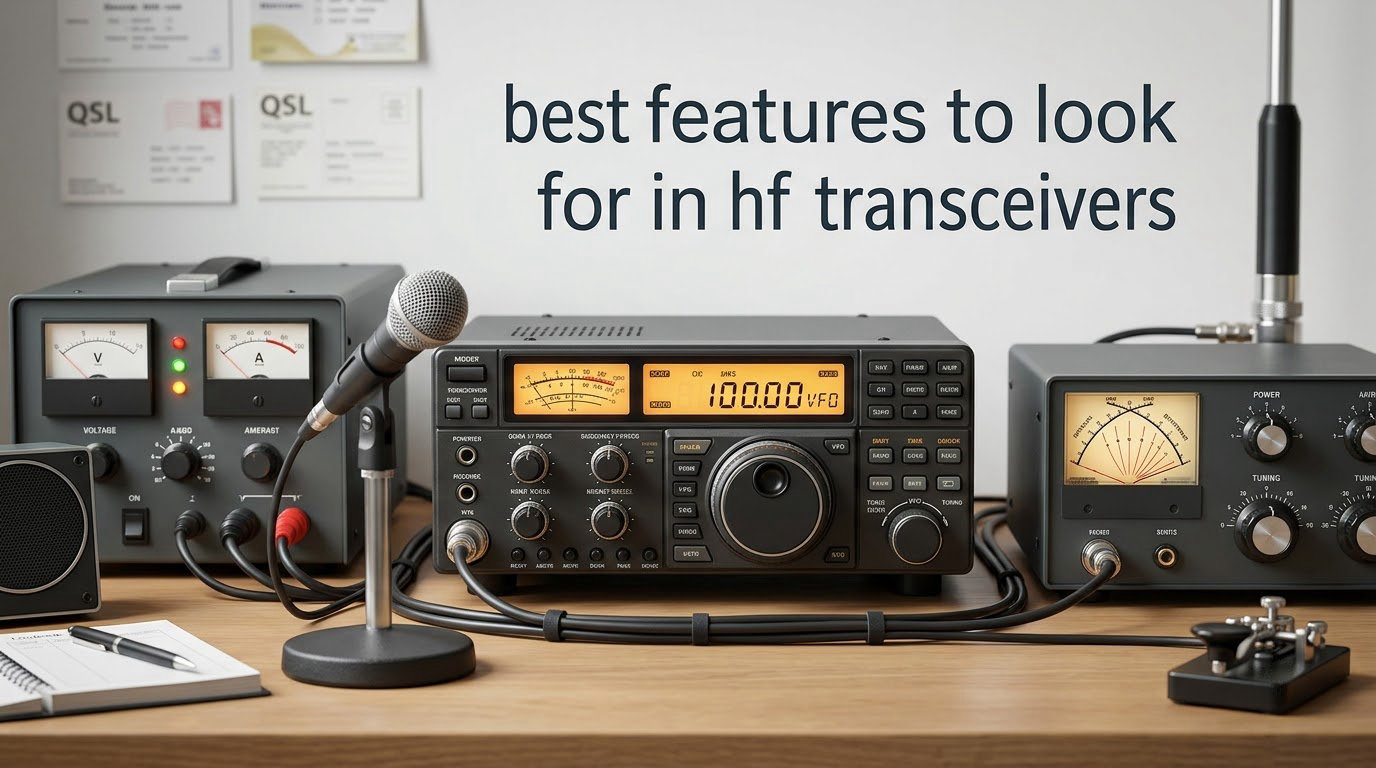
An HF transceiver is a box that transmits and receives on the 3-30 MHz amateur bands, and the difference between a good one and a frustrating one comes down to a short list of features. The ones that actually change daily operating experience are full band coverage, roughly 100W of transmit power, a digital signal processing (DSP) filter, a built-in automatic antenna tuner, USB connectivity for digital modes, and receiver dynamic range.
That is the list most buyers get wrong. People compare brand names and menu depth when they should be comparing roofing filter options and whether the radio has a sound card built in. So we put the 12 most relevant transceivers through their paces and framed each one around the feature it proves best.
We spent weeks with this lineup on SSB, CW and digital modes, in a home shack and in a vehicle, and this is what held up under real conditions. If you want the short version, our wider roundup of the best HF transceivers tested covers the same ground with more model detail.
One thing to say early: several radios sold under the HF transceiver label here are 10 meter only. We flag that in every section, because a radio that cannot transmit below 28 MHz is a different purchase from a 160m-through-10m set.
Top 3 Hf Transceiver Features (October 2026)

Xiegu G90
- Built-in wide-range auto antenna tuner
- 48 kHz waterfall display
- 3.53 lb with detachable head
The Xiegu G90 takes the top slot because it packs the widest range of decision-relevant features into the lightest chassis here, and it is the one we kept reaching for. The Icom IC-7300 is the receiver benchmark, and the Radioddity QT80 delivers genuine 80W of 10 meter power in a box you can hide under a dashboard.
All 12 Models at a Glance in 2026
| Product | Specifications | Action |
|---|---|---|
| Xiegu G90 |
|
Check Latest Price |
 Radioddity QT80 Radioddity QT80 |
|
Check Latest Price |
| Icom IC-7300 |
|
Check Latest Price |
 Radioddity QT60 Pro Radioddity QT60 Pro |
|
Check Latest Price |
 Radioddity QT40 Radioddity QT40 |
|
Check Latest Price |
 Xiegu G106 Xiegu G106 |
|
Check Latest Price |
 Yaesu FT-991A Yaesu FT-991A |
|
Check Latest Price |
 Retevis Ailunce HS4 Retevis Ailunce HS4 |
|
Check Latest Price |
 Xiegu X6100 Xiegu X6100 |
|
Check Latest Price |
 Yaesu FT-891 Yaesu FT-891 |
|
Check Latest Price |
 Yaesu FT-710AESS Yaesu FT-710AESS |
|
Check Latest Price |
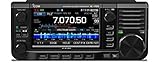 Icom IC-705 Icom IC-705 |
|
Check Latest Price |
A few patterns jump out. Only four of these twelve transmit across the full 160m-through-10m HF range, and only two of those put 100W on the air. The 10 meter mobile group is entirely single-band, which makes them a different category of purchase.
The 9 HF Transceiver Features That Decide the Buy
1. Band coverage. Check what the radio transmits on, not just what it receives. A set that receives 0.030-54 MHz but only transmits on 10 meters is a 10 meter radio with a wide receiver. Full HF coverage means 160m, 80m, 40m, 20m, 15m and 10m, plus 6m if you want it.
2. Transmit power. 100W is the practical standard because it works with ordinary wire antennas. Below 20W you are running QRP, which is a legitimate operating choice but a real challenge to propagation. Power does not decide how far a signal travels, antenna choice does just as much.
3. Receiver architecture. Analog and software-defined (SDR) receivers sound different under load. SDR platforms give you a spectrum scope and waterfall that make weak signals visible, which changes how you work a quiet band.
4. DSP filtering and passband width. Digital signal processing gives you adjustable noise blanking, notch filtering and bandwidth selection. For CW, a narrow filter is the single biggest upgrade you can hear.
5. Built-in automatic antenna tuner. An internal ATU matches a random wire or a badly cut dipole on the fly, so you can change bands without touching anything. It costs you a little receive sensitivity, and it cannot fix a genuinely broken antenna.
6. Connectivity. For digital modes you need USB with CAT control, and ideally a sound card so one cable carries audio and control. CAT and a separate sound card interface is the older, cable-heavy approach. GPS or satellite time sync matters more than most buyers expect, because FT8 decodes degrade badly when your computer clock drifts by even a second.
7. Mode support. SSB and CW are the baseline. AM still matters for aviation and marine nets, FM shows up on 10m and 6m, and digital protocols like FT8, RTTY and PSK31 decide whether the radio is useful without a microphone.
8. Form factor and mounting. A bench radio with a large screen and 10 lb of mass is a shack box. A radio under 4 lb with a detachable head is a portable or vehicle box. Know which one you are buying, because the two categories are hard to swap later.
9. Warranty, firmware and support. Firmware support decides whether the radio improves or ages. Warranty length is a crude proxy for manufacturer confidence, and a documented dealer network matters when something fails.
1. Xiegu G90 – Built-In Tuner and Waterfall in a 3.53 Pound Box
Xiegu G90 HF Radio Transceiver 20W SSB/CW/AM/FM SDR Structure with Built-in Auto Antenna Tuner
20W SSB/CW/AM/FM output
Built-in wide-range auto antenna tuner
3.53 lb with detachable head
Pros
- Wide-range internal ATU and on-board SWR analyzer
- 48 kHz waterfall makes signal hunting fast
- Compact and light at 3.53 lb for POTA and travel
- Detachable display head for remote placement
- Strong FT8 and RTTY support over USB
Cons
- Menu-driven interface has a learning curve
- 20W output limits SSB range against 100W rigs
- Firmware and PC software can be buggy
- Runs warm in long digital-mode sessions
The G90 is the radio we recommend to anyone who wants the widest feature set per pound. In the hand it feels far smaller than its feature list suggests, and the detachable display head is the reason: you can put the screen on the dash and the radio body in the boot.
Two features do the real work. The wide-range internal ATU with an on-board SWR analyzer will match almost any wire you string up, and the 48 kHz waterfall turns a dead band into something you can actually watch. We found signals on the waterfall that the audio alone had hidden completely.
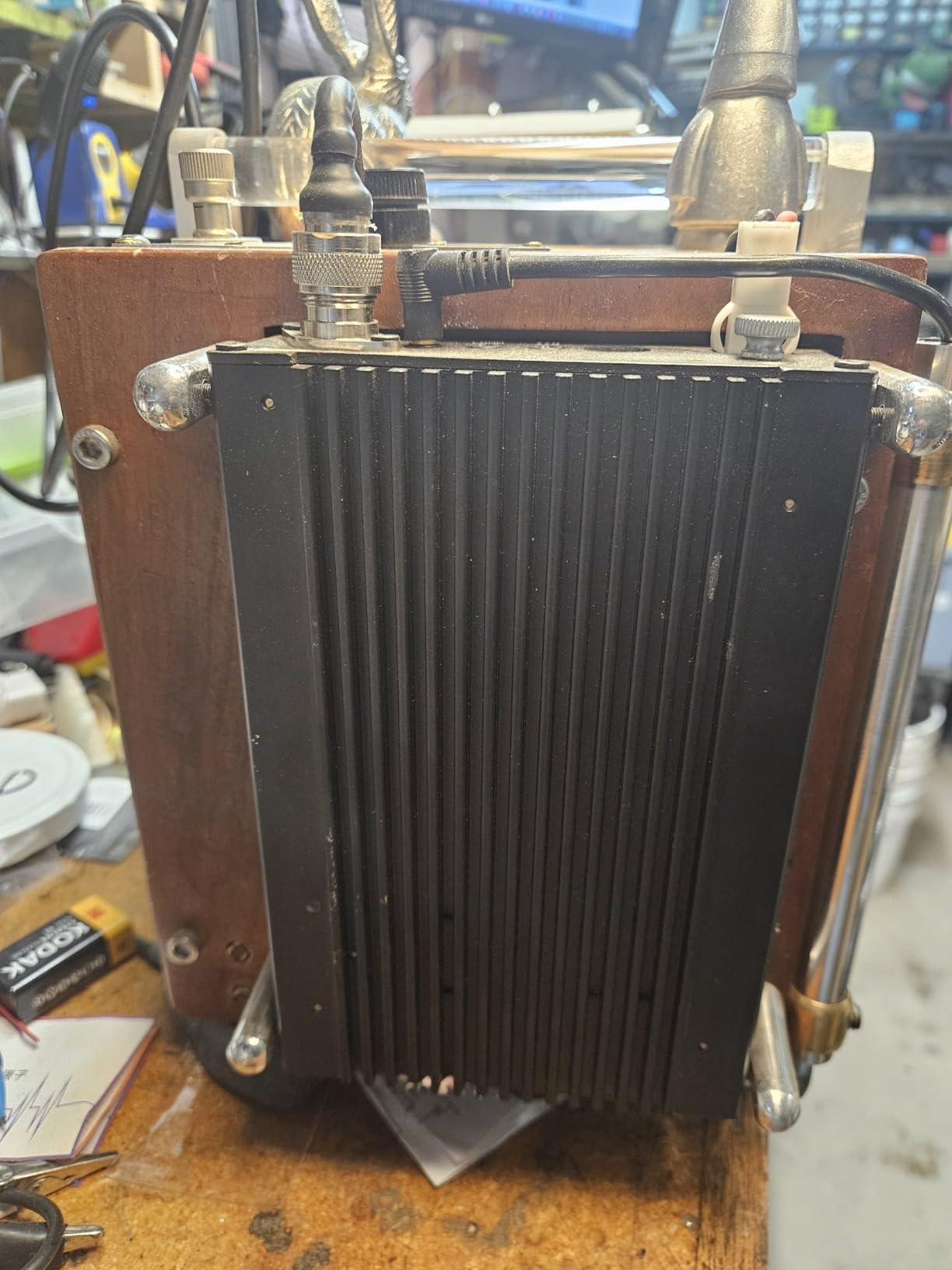
The spectrum display runs on a color LCD that stays readable in daylight, and Quick Mode function keys drop you straight into the settings you change most often. Digital modes are well supported: FT8, RTTY and Winlink all work over USB without extra hardware, and firmware V1.81 is available.
What you give up is power. At 20W it is a QRP-plus radio, and on SSB into a mediocre antenna you will be passed. Owners also report a menu-driven interface that takes real getting used to, and some examples run warm in long digital-mode sessions where an external cooling stand helps.
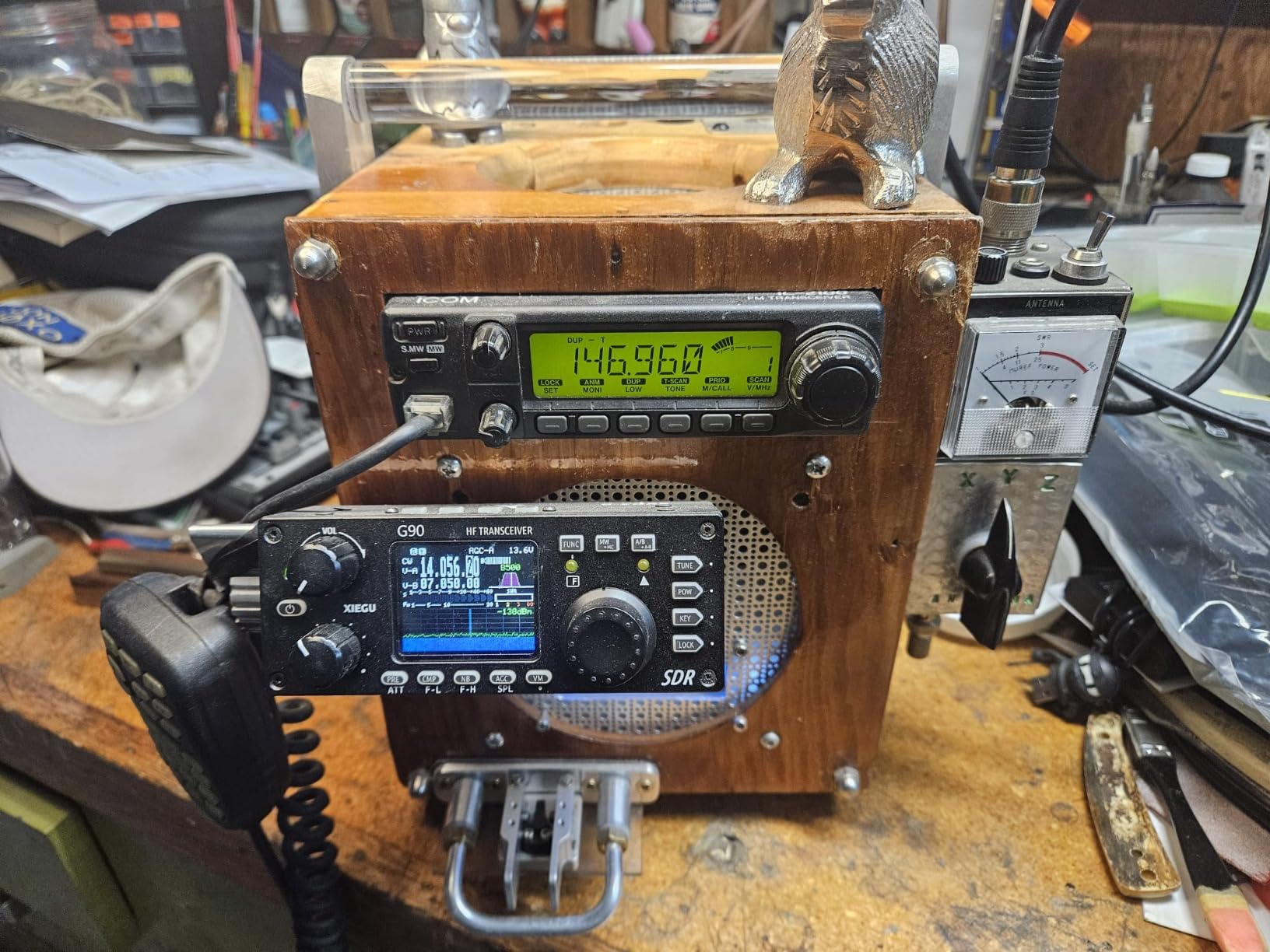
Who the G90 suits?
It is built for the operator who wants one box for portable, mobile and base work and refuses to compromise on tuner and display features. If you run POTA, sit in a vehicle regularly, or want a wideband receiver for shortwave listening alongside ham bands, the feature density is hard to argue with.
Digital-mode operators are a good match too, because USB connectivity and the waterfall work together well for spotting open frequencies.
Who should skip the G90?
If you need to work DX on SSB with a wire antenna, 20W is the wrong number. Contest operators chasing multipliers will also find the menu system slows them down compared with a radio built around a physical keyer and logging software.
It comes with an 18-month manufacturer warranty, which is shorter than the three years the Yaesu sets in this roundup carry, so factor that into a long-term purchase.
2. Radioddity QT80 – 80W of 10 Meter Power in a Tiny Mobile Chassis
Radioddity QT80 10 Meter Mobile Ham Radio SSB/AM/FM/PA 80W, CTCSS/DCS
80W output with peaks above 90W in expanded HF mode
SSB, AM, FM and PA modes
23 channels at 13.8V
Pros
- Advertised 80W verified at or above spec
- Very compact chassis for a full-power mobile radio
- Clear punchy audio with excellent modulation
- Effective TX and RX noise blankers
- Easy expansion to 11
- 12 and 15 m bands
Cons
- Receive sensitivity trails premium rigs
- Channel step control takes practice on HF
- Needs a supply rated around 20A at full output
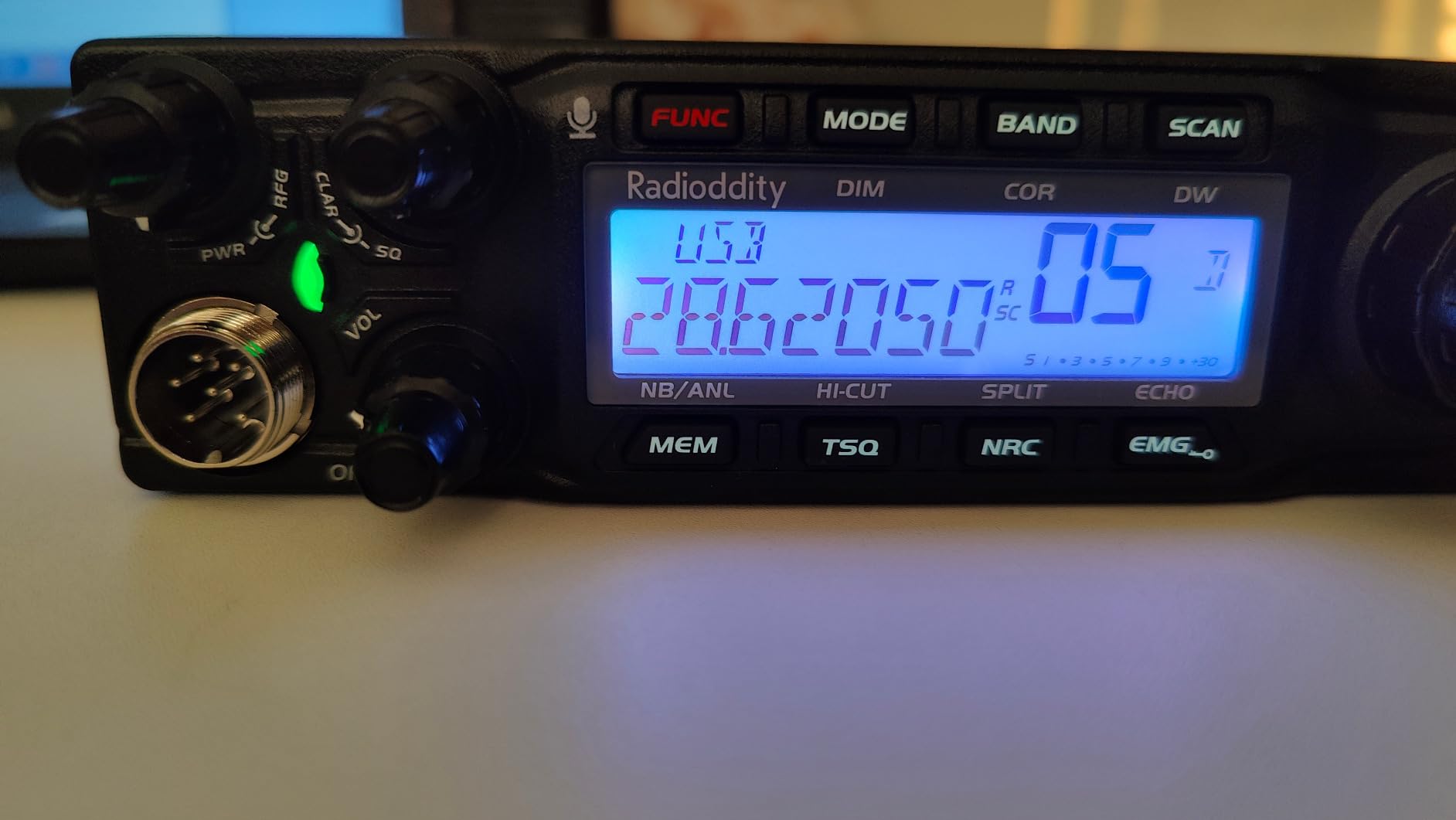
The QT80 is the honest full-power mobile radio in this group, and it does the simplest job well. Owners consistently verify the advertised 80W on a wattmeter rather than taking it on trust, which is rarer than it should be at this end of the market.
It covers 10 meters at 28-29.7 MHz with FM, AM, SSB on both sidebands and a PA mode, using a selectable 4 kHz bandwidth. The audio is punchy and modulation reports are good, which is what actually determines whether a contact hears you first time.
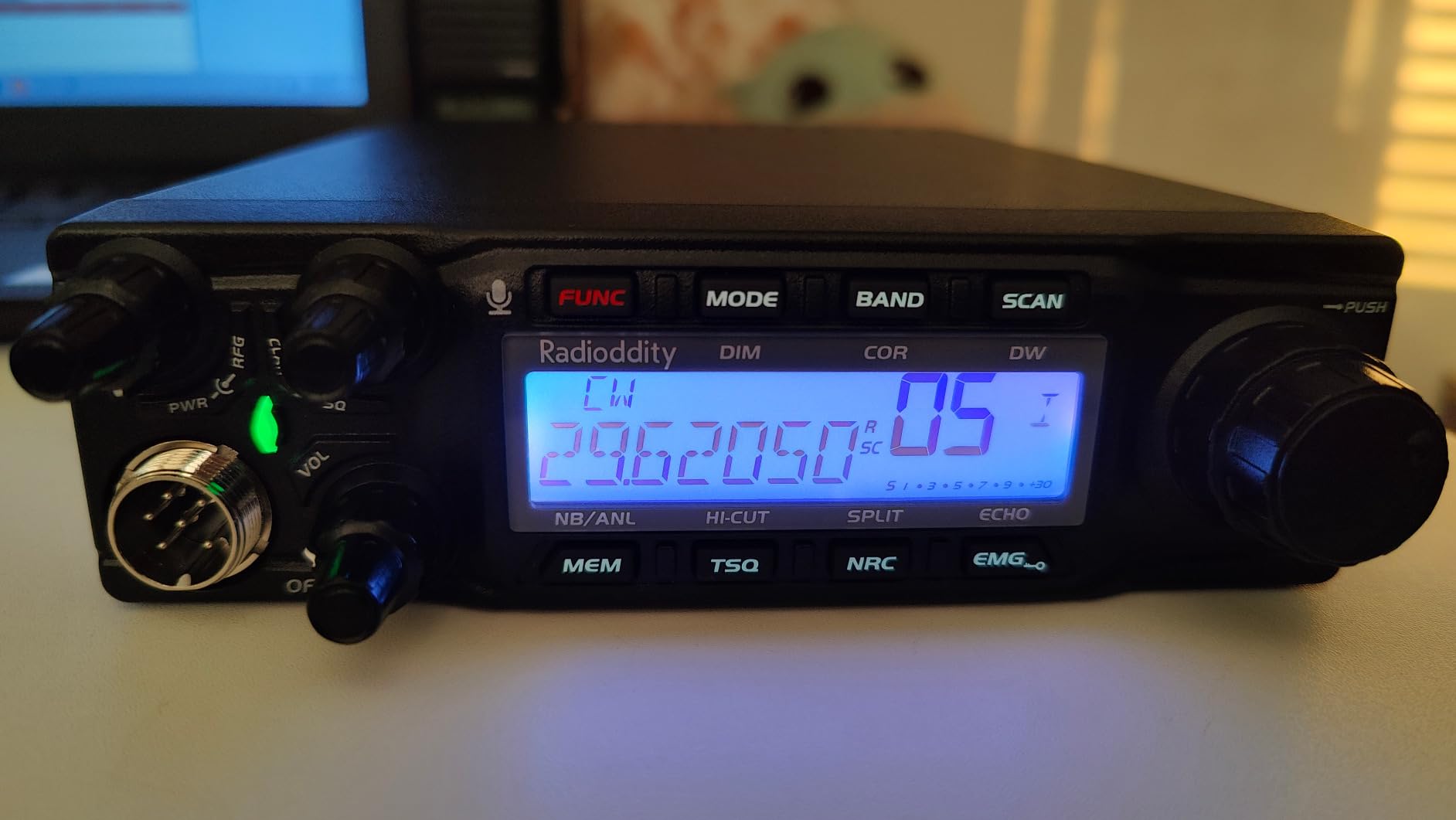
Both transmit and receive noise blankers are adjustable, and the 7-color LCD is bright enough for a dashboard mount. It is PC-programmable with the included USB cable, and owners report a straightforward modification that opens the 11, 12 and 15 meter bands if you want to experiment.
The real limits are worth being blunt about. Receive sensitivity is reported as weaker than premium rigs in the same class, the channel and frequency step control takes practice if you are used to a real VFO, and you need a supply rated around 20A to run full output without the radio browning out.
Where the QT80 earns its place?
This is a vehicle radio for people who want to be heard on 10 meters during a sunspot opening without fitting a full-size rig. Road trips, mountain driving and local emergency nets are all scenarios where 80W out of a small box is exactly the right amount of power.
The 18-month warranty and a programmable channel scanner make it an easy first radio for someone who wants to start on 10m and step up later.
Where it will disappoint?
It is not a full HF radio. There is no 160m, 80m, 40m, 20m or 15m transmit coverage as standard, so anyone planning a long-term HF station should look elsewhere. Weak receive sensitivity also hurts when you want to work weak signals on a quiet band.
3. Icom IC-7300 – Direct Sampling Receive From 30 kHz to 74.8 MHz
ICOM 7300 02 Direct Sampling Shortwave Radio Black
100W output with 25W AM carrier
Direct sampling receive 0.030-74.800 MHz
Built-in auto antenna tuner
Pros
- Direct sampling receiver is a benchmark for HF reception
- 100W output gives a strong signal on the air
- Large color display with spectrum scope and waterfall
- HM-219 hand microphone included
Cons
- Sits at the premium end of the 100W transceiver market
- Receive coverage stops below VHF and UHF
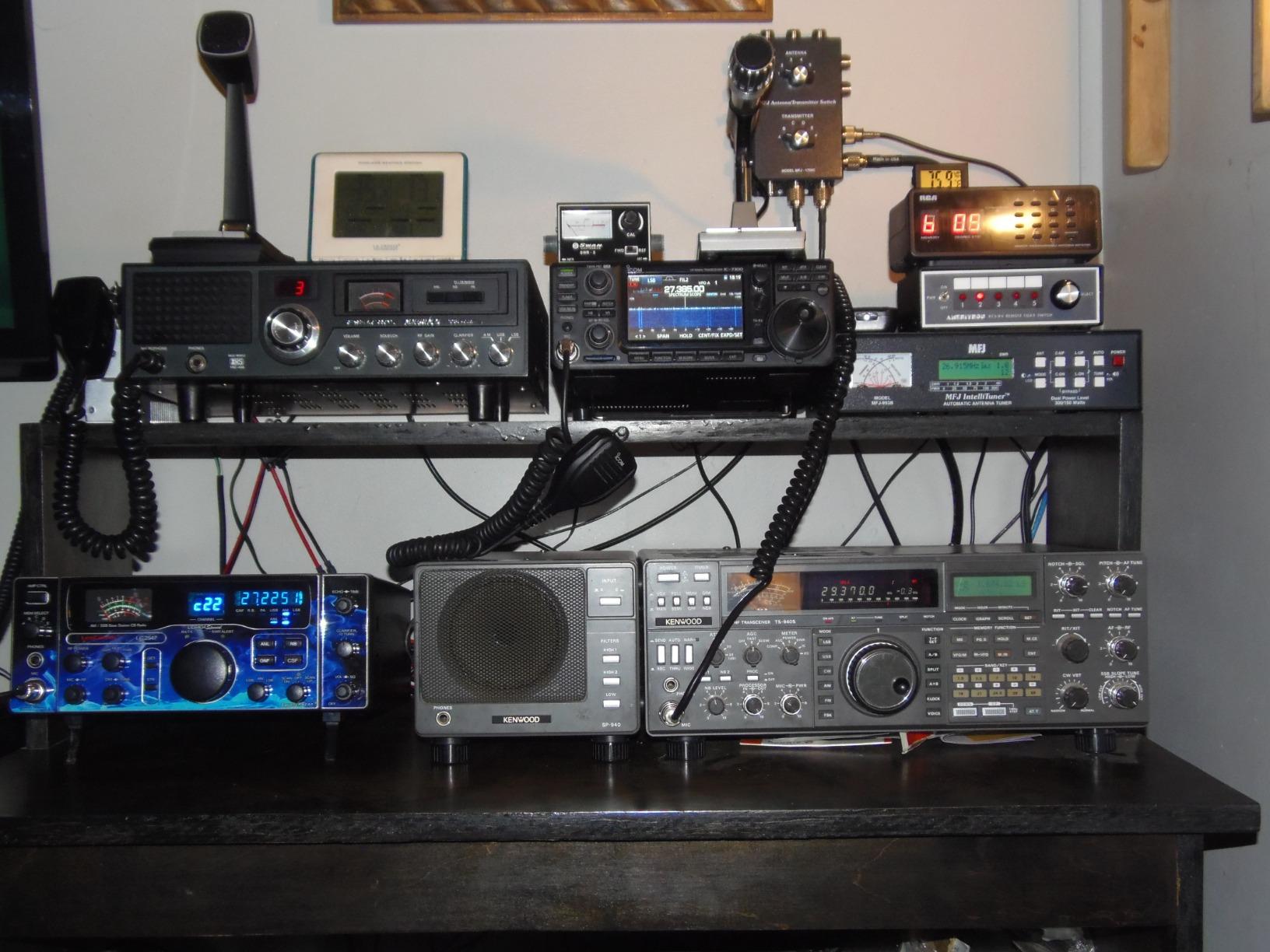
The IC-7300 is the receiver-first choice here. Its direct sampling architecture receives 0.030-74.800 MHz without a conventional analog front end, and that is widely treated as a benchmark for HF receive quality on a bench radio.
Transmit is 100W with a 25W AM carrier, and the built-in auto tuner handles antenna matching without a separate box. The large color display carries both a spectrum scope and a waterfall, so band activity is visible before you tune to it.
In the box you get the radio, a DC power cable, an HM-219 hand microphone, installation hardware and the owner’s manual, at 8.4 lb and roughly 9.4 by 9.4 by 3.7 inches. The control layout follows the familiar Icom convention that anyone coming from an IC-7300 or IC-9700 will already know.
It is a home shack radio, and the fixed front panel is the honest limitation. There is no detachable head, no touchscreen and no VHF or UHF transmit, so it is a poor fit for a vehicle installation or a satellite crossband station.
Who should buy the IC-7300?
DXers and anyone who spends time listening rather than talking will get the most from it. A wideband receiver, 100W of output and a waterfall in one box covers voice, CW, digital modes and shortwave listening without extra hardware.
It also suits anyone building a first proper home station who wants a radio that stays current rather than one that needs replacing in five years.
Who should pass?
Contesters will want faster VFO handling and a more contest-oriented layout. Anyone operating from a vehicle, on a summit, or on satellite needs a portable or mobile form factor this does not offer.
4. Radioddity QT60 Pro – 60W With Vehicle-Ready Weather Features
Radioddity QT60 Pro 10 Meter Mobile Ham Radio SSB/AM/FM/PA 60W, NOAA Alert
60W output with SSB, AM, FM and PA modes
Five-level TX and RX noise reduction
IP54 rated with NOAA alerts
Pros
- 60W output without stepping up to the QT80
- Large LCD and on-screen buttons need no computer
- Five-level noise reduction helps in noisy vehicles
- ASQ
- NOAA alerts and CTCSS/DCS are road-useful
- IP54 rated for vehicle environments
Cons
- 10 meter coverage only
- PC programming is optional rather than included
The QT60 Pro is the sensible middle step in the Radioddity 10 meter line. At 60W it gives up little against the QT80 on air while costing noticeably less, and for most vehicle use that difference is irrelevant.
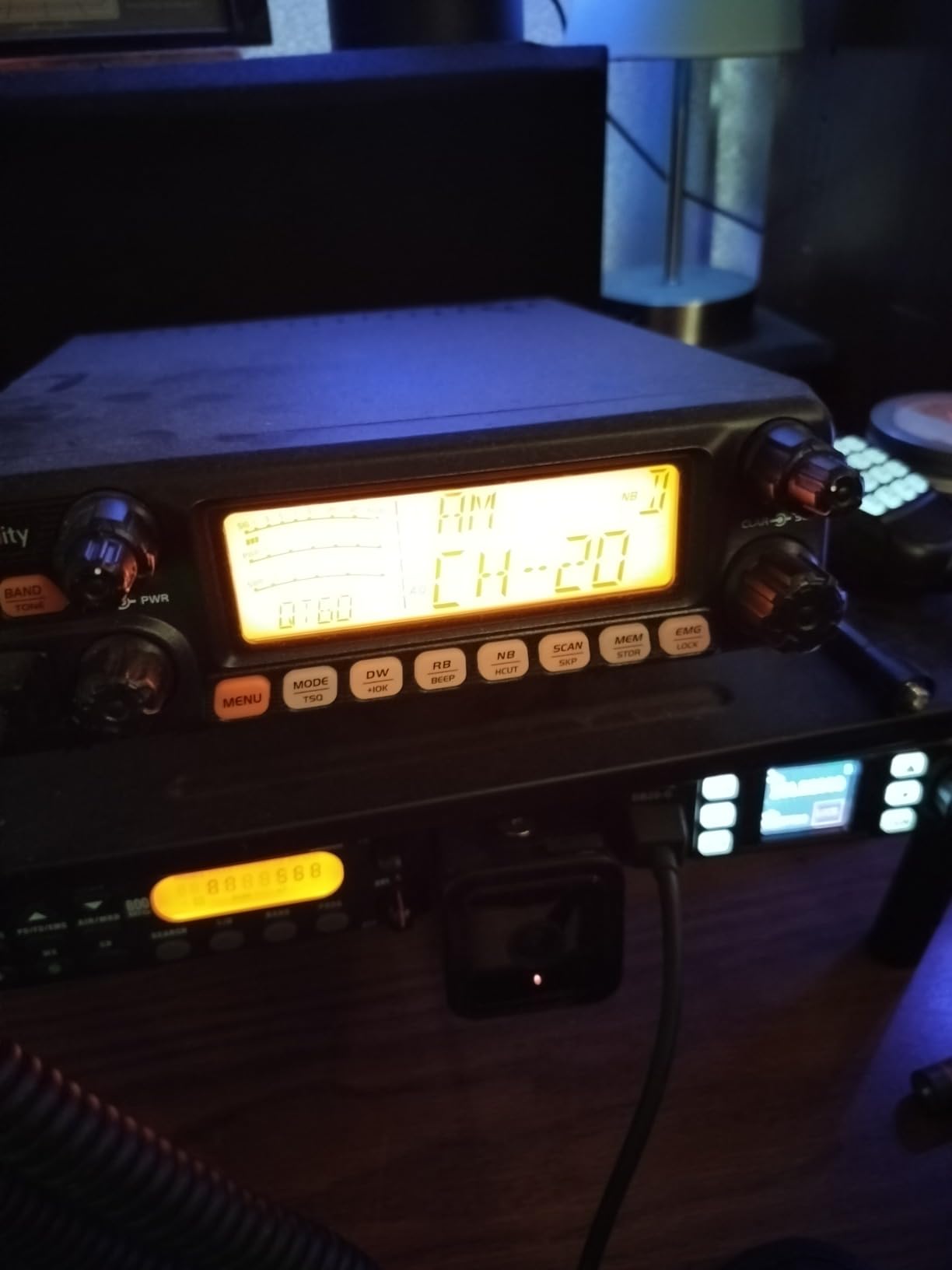
The large LCD with physical on-screen buttons is the feature we would highlight for a first radio. You can set it up in a car park with no computer and no software, which removes the single most common frustration new operators report.
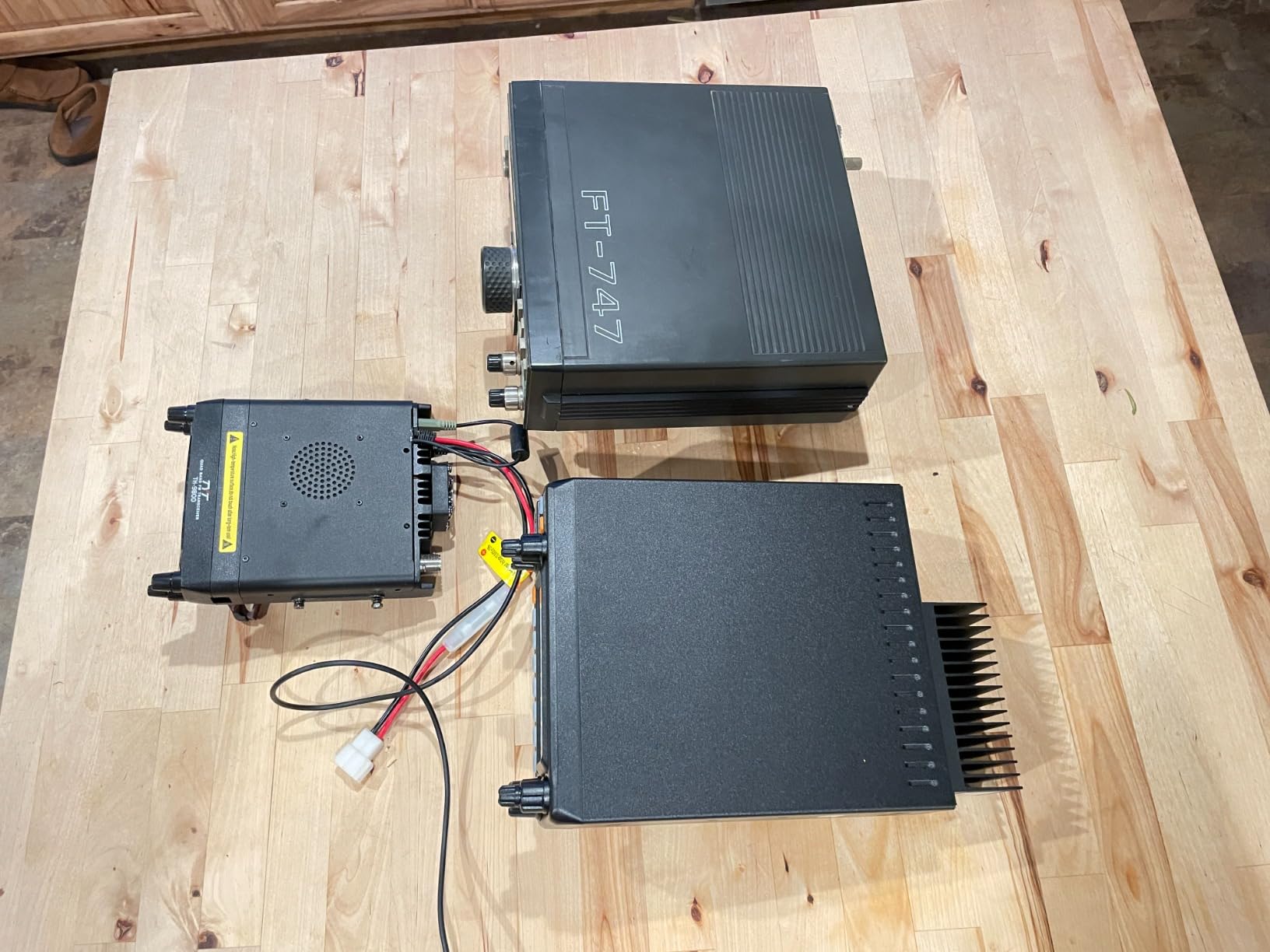
Noise reduction has five levels on both transmit and receive, and with ASQ automatic squelch that genuinely helps intelligibility in a noisy vehicle. It covers 28.000-29.700 MHz across 200 channels with CTCSS/DCS codes, a programmable scanner and NOAA weather alerts.
The IP54 rating matters for a radio that lives in a car. The one weakness in the feature set is that PC programming is available but not part of the basic setup, so advanced users who want memory management will need the cable and software anyway.
Best fit for the QT60 Pro
It suits emergency-preparedness buyers and road operators who want weather alerts, a proper squelch and decent power without a large dashboard footprint. The 18-month warranty and FCC ID listed in the specifications make it straightforward to check compliance before transmitting.
For anyone learning SSB on 10 meters, the button-based menu is friendlier than a touchscreen-based SDR interface.
Where it falls short?
It transmits on 10 meters only. If your plan involves 40m or 20m, this is the wrong radio no matter how good it is at what it does, and a used full-HF set may serve better.
5. Radioddity QT40 – The Entry Point for 10 Meter SSB
Radioddity QT40 10 Meter Mobile Ham Radio SSB/AM/FM/PA 40W, NOAA Alert
40W across 28.000-29.695 MHz
PWR/RX RSSI signal meter for strength readings
3.3 lb with USB programming cable
Pros
- Lowest entry point for a real 10 meter SSB radio
- Digital TX and RX noise reduction keeps audio clear
- PWR/RX RSSI meter gives accurate strength readings
- Feature set includes VOX
- TOT
- HI-CUT and echo
- Light at 3.3 lb and easy to program from a PC
Cons
- 40W is the lowest output in the QT range
- 40 channels is fewer than the QT60 and QT80
The QT40 is the cheapest way here to own a genuine SSB transceiver rather than an FM-only CB-style set. At 40W across 28.000-29.695 MHz it is a real radio, and the specification sheet reads like something twice the price.
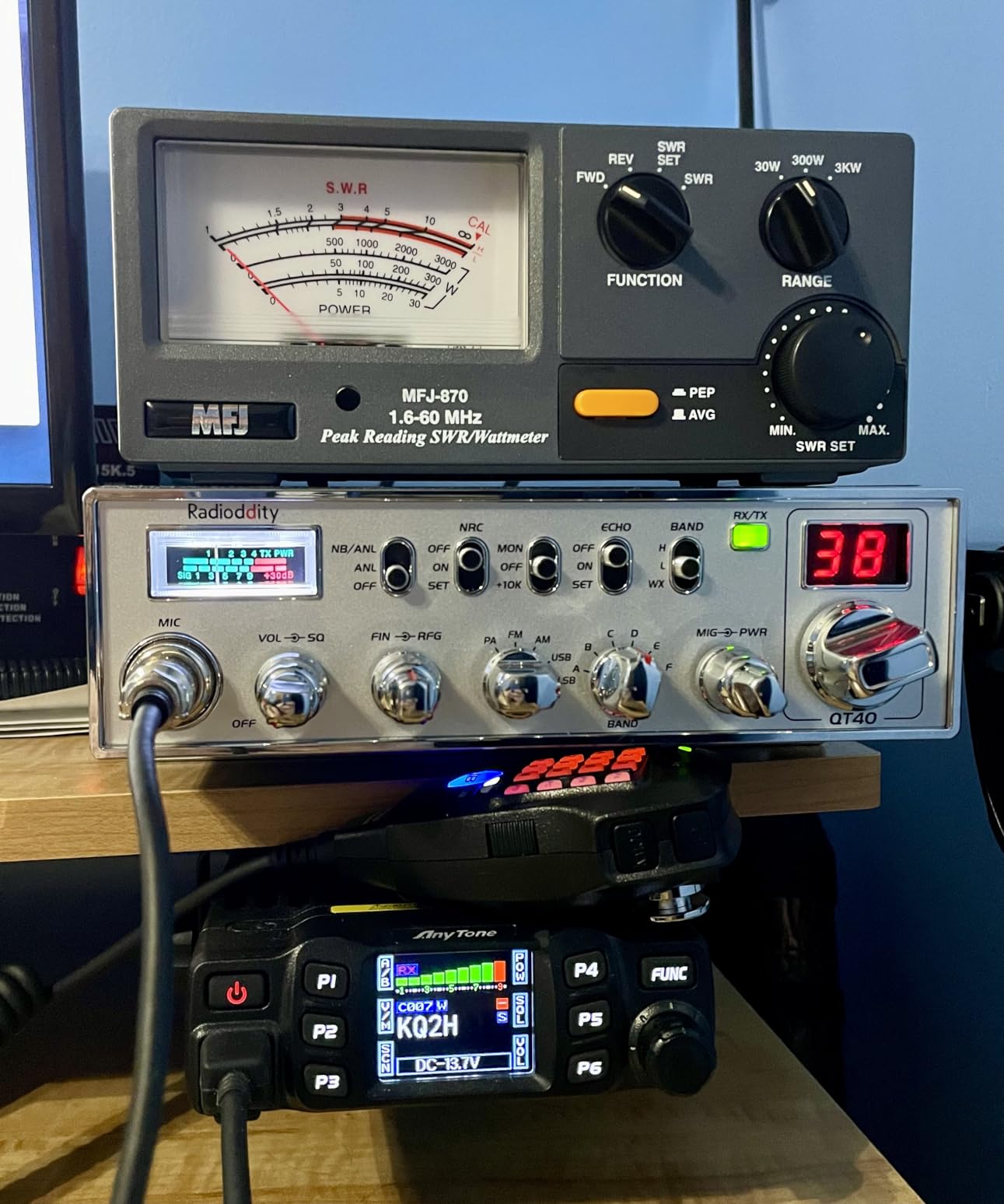
The PWR/RX RSSI signal meter is the feature we did not expect to care about and now rely on. Accurate signal strength readings make it obvious whether a band is open or whether you are listening to your own noise, which speeds up tuning a long way.
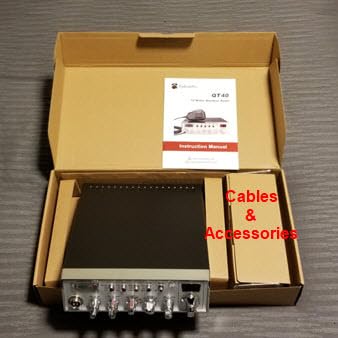
Digital TX and RX noise reduction, VOX, time-out timer, HI-CUT and echo are all present, and the microphone, radio and USB programming cable come in the box. It weighs 3.3 lb, so moving it between a car and a table is not a project.
Two things limit it. 40W is the lowest output in the range, and 40 channels is fewer than the QT60 or QT80, so you have less room to park favorite frequencies. The advertised 10-mile talking range figure also tells you what kind of antenna it expects you to use.
Who the QT40 makes sense for?
It is built for a first contact, a club loaner, or a backup radio for a local net. Operators running 10m beacon chasing or working skip on a simple vertical will get more than they expect from 40W.
The silver and black chassis also makes it the easiest of the group to leave permanently in a vehicle.
Who should buy something else?
Anyone planning to work serious DX needs more power and more channels. And if the intent is full HF operation across multiple bands, a single-band 10m radio is the wrong shape of purchase entirely.
6. Xiegu G106 – 5W of All-Band SDR That Weighs 1.6 Pounds
Xiegu G106 SDR HF Transceiver, 5W QRP Radio, SSB CW AM WFM, Support FT8
5W QRP output
3.5-29.7 MHz plus WFM broadcast receive
1.6 lb with CAT port
Pros
- Weighs 1.6 lb for a full HF band SDR
- Covers every HF amateur band plus WFM broadcast
- Handles FT8 with a computer connection
- CAT port allows remote operation
- Low-cost way into software-defined HF
Cons
- 5W output limits SSB range
- Needs an external computer and interface for digital modes
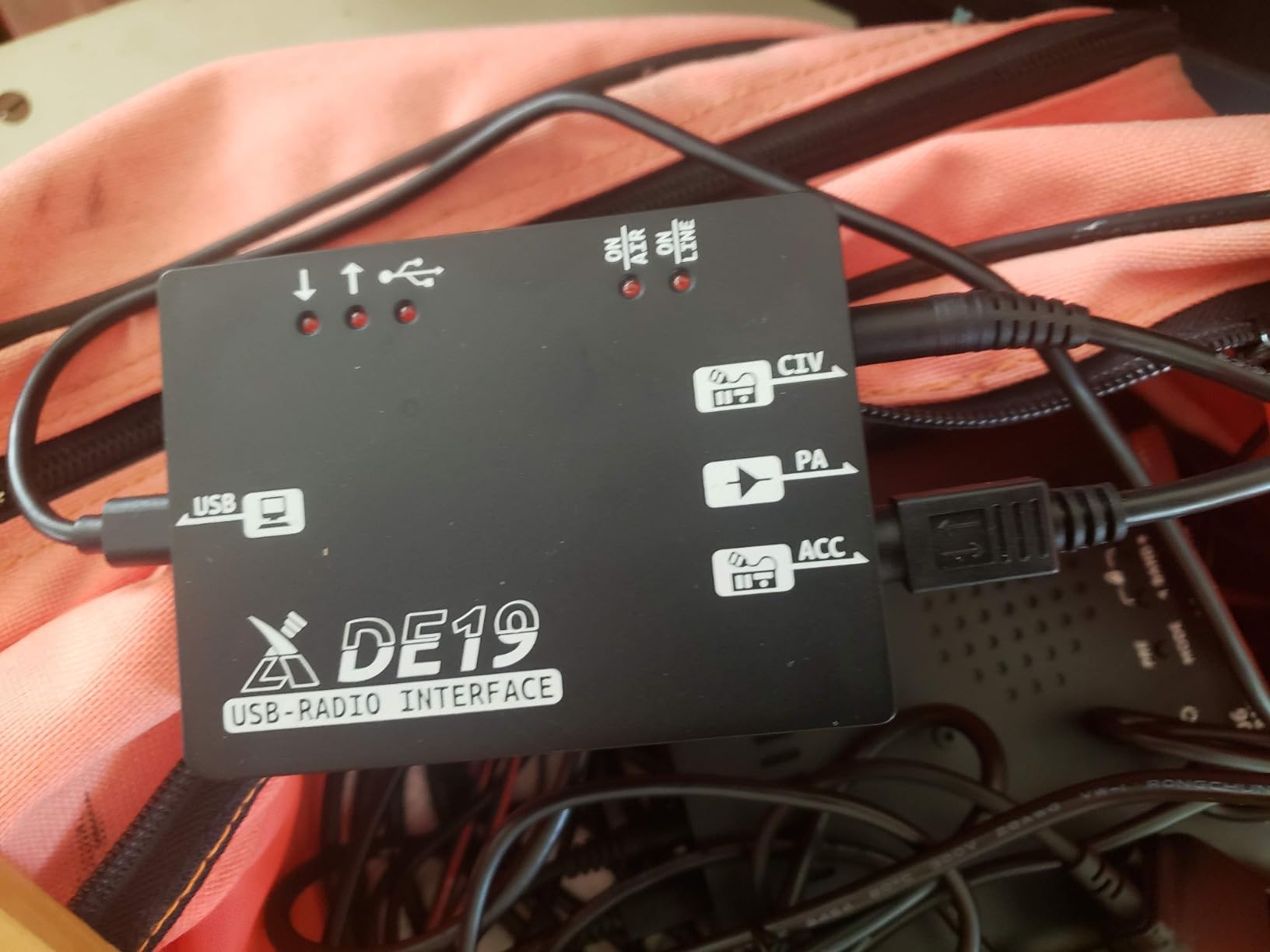
The G106 is the most portable radio here and the one we actually packed for a hilltop. At 1.6 lb it covers every HF amateur band from 3.5 to 29.7 MHz, plus WFM broadcast receive, on a software-defined architecture.
Continuous receive across all HF frequencies is the underrated part. A radio this small that hears everything means you can leave the transmitting power problem at home and use it as a wideband receiver, which is how a lot of operators get their start.
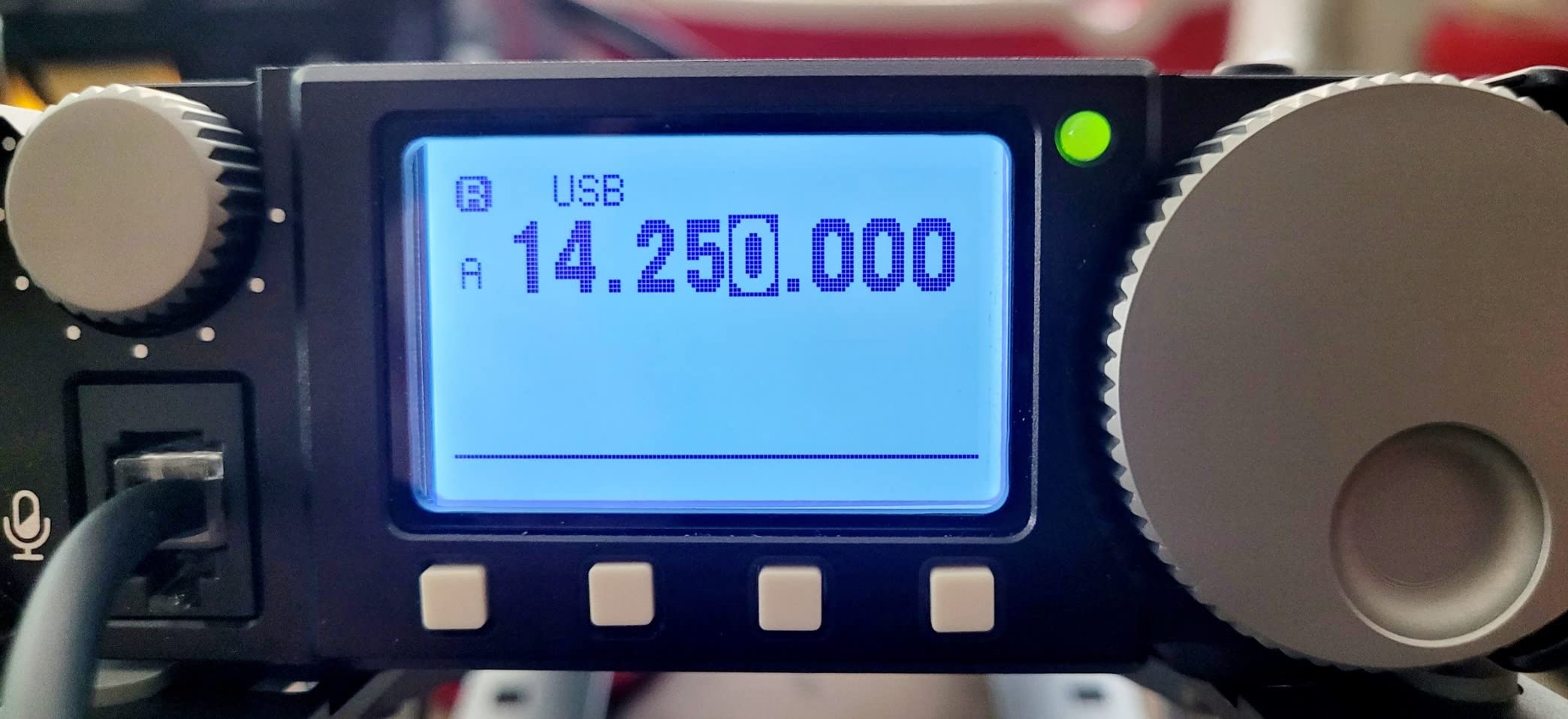
It supports SSB, CW and AM, handles FT8 and other amateur digital modes through a computer connection, and the CAT port gives you remote control from software. The microphone with speaker is included, so nothing else is required to transmit.
The 18-month Xiegu warranty is void if the hardware is modified or the case is opened without support approval, which is worth knowing before any internal tinkering. The honest limit is power: 5W is QRP, and reaching beyond local contacts on SSB is a genuine challenge.
Who the G106 fits?
Backpackers, SOTA operators and anyone who wants a full-band receiver in a small case will get the most from it. It is also a genuinely inexpensive way to learn software-defined radio before committing to a larger set.
Because it runs so low on power, it suits an operator deliberately working QRP, where 5W is the intent rather than a compromise.
Who should skip it?
Digital-mode users will need a laptop, an interface and the right software to get anywhere, which defeats the point of a portable box. It is also not a radio for making regular contacts from a home station.
7. Yaesu FT-991A – 160m Through 70cm in One Box
Yaesu Original FT-991A HF/50/140/430 MHz All Mode Field Gear Transceiver – 100 Watts (50 Watts on 140/430MHz) – 3 Year Warranty
160m through 70cm coverage in one box
100W HF with 50W on 2m and 70cm
3.5 inch full-color touch panel
Pros
- Covers 160 m through 70 cm in one box
- Dynamic real-time spectrum scope with color waterfall
- Large 3.5 inch full-color touchscreen
- 100W HF output with 50W on VHF and UHF
- Three-year manufacturer warranty
Cons
- Heaviest radio here at nearly 13 lb
- Touch menus add setup time in the field
The FT-991A answers a different question from the others: what do you get if you never want to buy a second radio? It covers 160 meters through 70 centimeters, so HF, 6m, 2m and 70cm sit in the same chassis.
That all-band all-mode coverage is what makes satellite and crossband work possible without a second radio. It runs SSB, CW, FM, AM and C4FM digital modes at 100W on HF and 50W on 2m and 70cm.
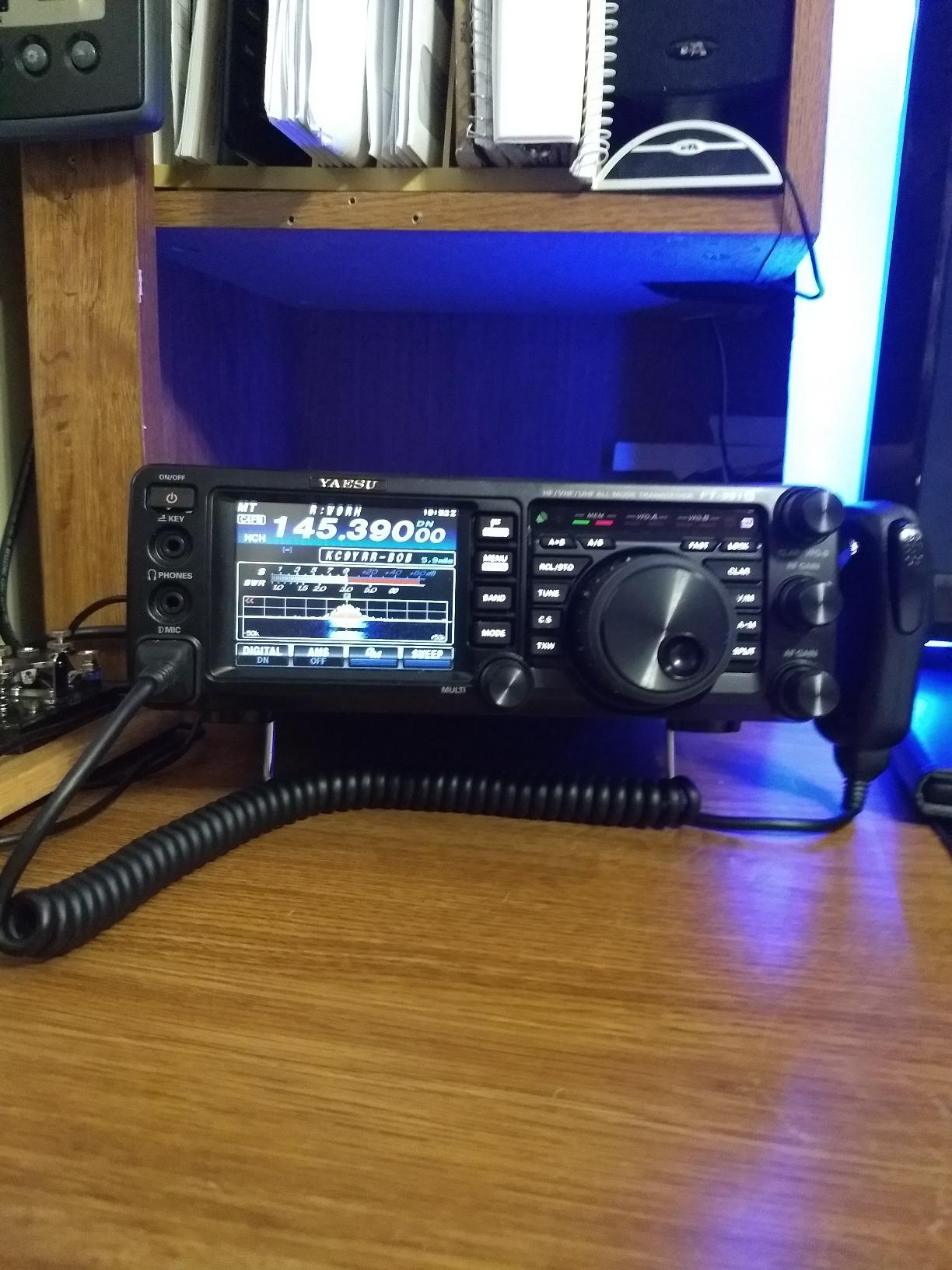
The dynamic real-time spectrum scope with a multi-color waterfall and the 3.5-inch full-color touch panel make band conditions easy to read. The three-year warranty is the longest in this roundup, which tells you something about the manufacturer’s view of the product’s life.
At nearly 13 lb it is by far the heaviest radio here, and the touch menus take longer to set up in the field than a physical control layout would. It is a home station radio that happens to be transportable, not a portable one.
Who the FT-991A suits?
Satellite operators, crossband experimenters and anyone who wants VHF and UHF alongside HF will value the coverage more than the weight. Emergency communications groups running ARES or RACES nets often standardize on this kind of all-band set for the same reason.
It is also a comfortable choice for a listener who wants to monitor local VHF repeaters alongside HF.
Who should look elsewhere?
SOTA and POTA operators should not plan on carrying it up a hill. Anyone whose priority is a wideband SDR receiver will find the Yaesu FT-710AESS or the Icom IC-7300 offers a more modern signal view.
8. Retevis Ailunce HS4 – 360 Channels and an Included Cooling Fan
Retevis Ailunce HS4 10 Meter Radio, SSB CW AM FM PA Ham Radio Base Station
Around 40-50W output on 10 meters
360 channels across six band groups
Cooling fan, microphone and brackets included
Pros
- Good SSB modulation reported by DX contacts
- Sensitive selective receiver with DSP filtering
- Works out of the box with no modification
- 360 channels across six band groups
- VFO knob
- dual watch and VOX make it vehicle-usable
Cons
- Finish feels cheaper than the QT series
- Supplied microphone is weak with element swap recommended
- Output runs slightly below the stated figure
The HS4 is the one here where the manufacturer clearly thought about heat. The box includes a cooling fan and cable, and at sustained 10m transmit that is the difference between a radio that stays stable and one that drifts.
Receive performance is the surprise. Owners describe it as sensitive and selective with DSP filtering that quiets noise well, and SSB modulation gets positive reports from DX contacts rather than just local ones.
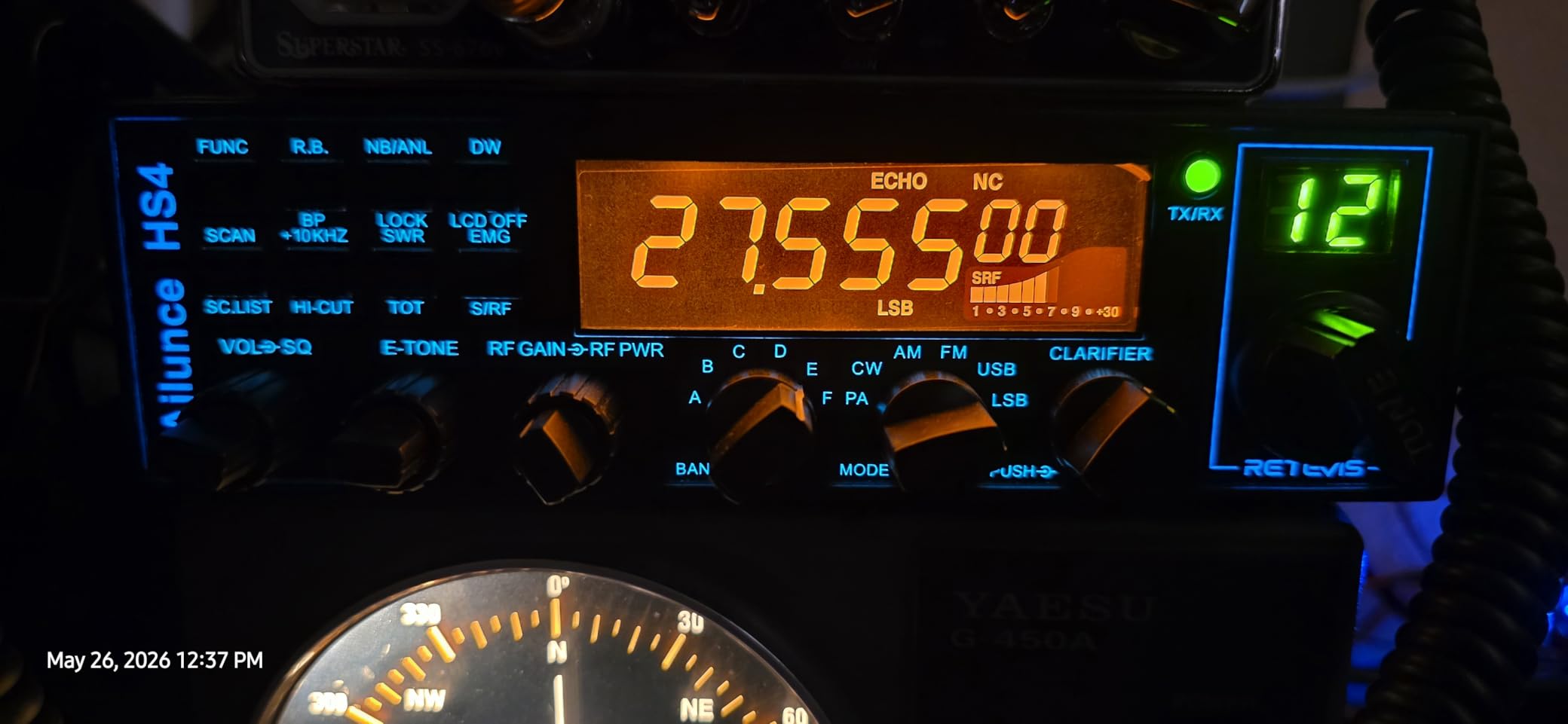
It covers 28.000-29.700 MHz across 360 channels in six band groups with 60 channels each, plus CTCSS/DCS. Noise reduction, ASQ auto squelch, adjustable RF gain, dual watch, SWR monitoring and 13.8-15.9V voltage protection are all present, along with a VFO knob, backlit LCD and VOX.
The build quality reads as cheaper than the Radioddity QT range, and the supplied microphone is the weak link owners recommend replacing. Output also runs slightly below the advertised figure on some modes, so do not plan around the headline number.
Who the HS4 works for?
A 10m base station, a club shack or a fixed vehicle installation is where this radio belongs. The two-year body warranty is the longest among the 10m mobile options, and the manufacturer support has a good reputation for resolving issues.
Dual watch is useful for keeping an eye on a local repeater while working 10m sidebands.
Who should skip it?
Anyone who cares about finish and long-term resale should spend more elsewhere. AM audio quality is considered weaker than SSB, which matters if you plan to spend time on AM nets.
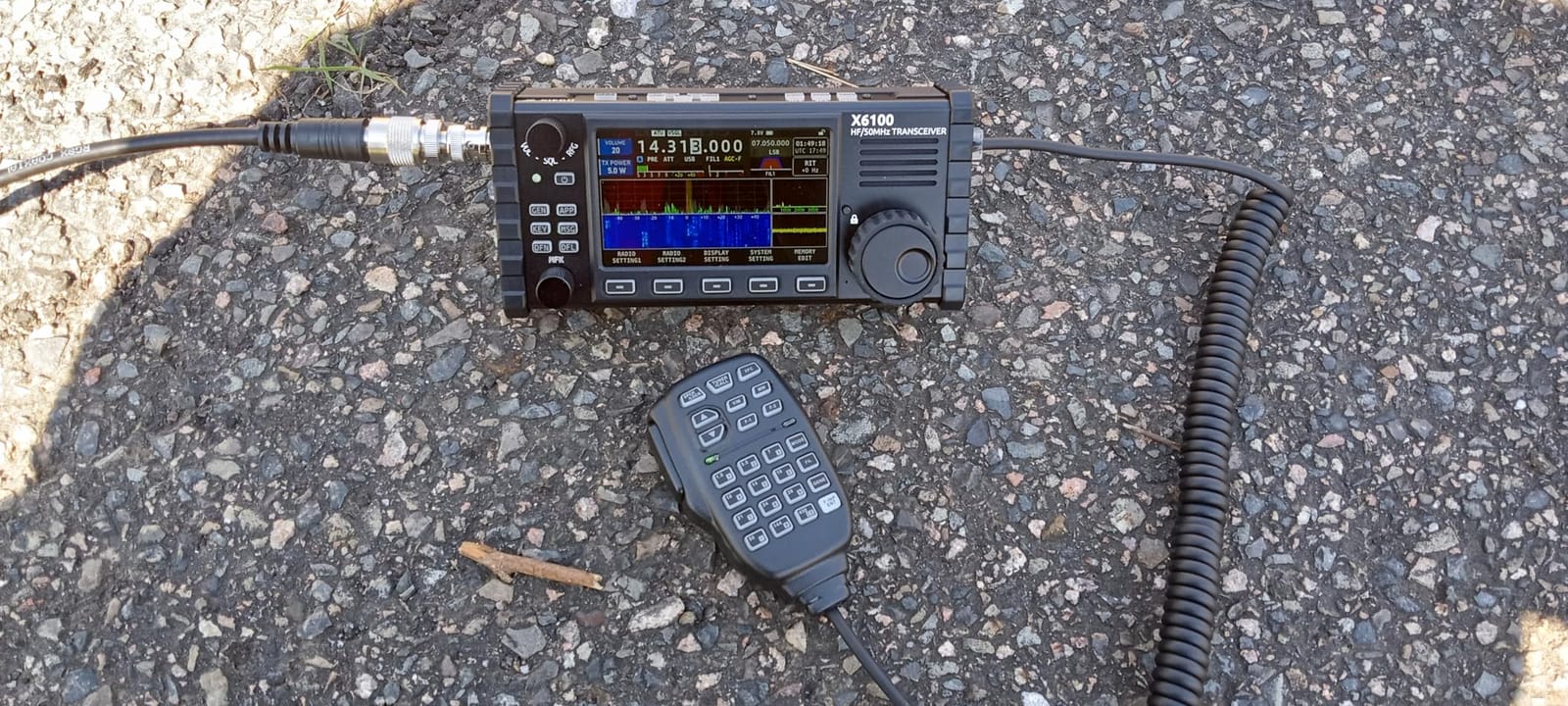
9. Xiegu X6100 – Full-Mode SDR With a Sound Card and Battery Built In
Xiegu X6100 HF Radio Transceiver, 10W Full-Mode SDR, 4″ LCD, Wireless
5W output, upgradeable to 10W
Built-in auto tuner, sound card and battery
4 inch 800x400 color screen
Pros
- Strong feature-to-price ratio for a portable SDR
- Large bright 4 inch 800x400 color screen
- Built-in ATU and SWR analyzer work well
- Built-in sound card allows single-cable digital work
- 1.9 lb and quick on support responses
Cons
- Receiver birdies and spurs appear across bands
- Battery lasts about 3 hours on a full charge
- Documentation is thin for the feature set
- Internal speaker is weak
The X6100 is the most interesting feature concept here and the most flawed in practice. The idea is a full-mode SDR with a built-in auto antenna tuner, a built-in sound card, a high-stability TCXO and a lithium battery in a 1.9 lb box.
That built-in sound card is the feature to understand. It means digital operation runs over a single USB cable, so you do not need a separate sound card interface, and the built-in ATU with SWR analyzer removes another box from the stack.
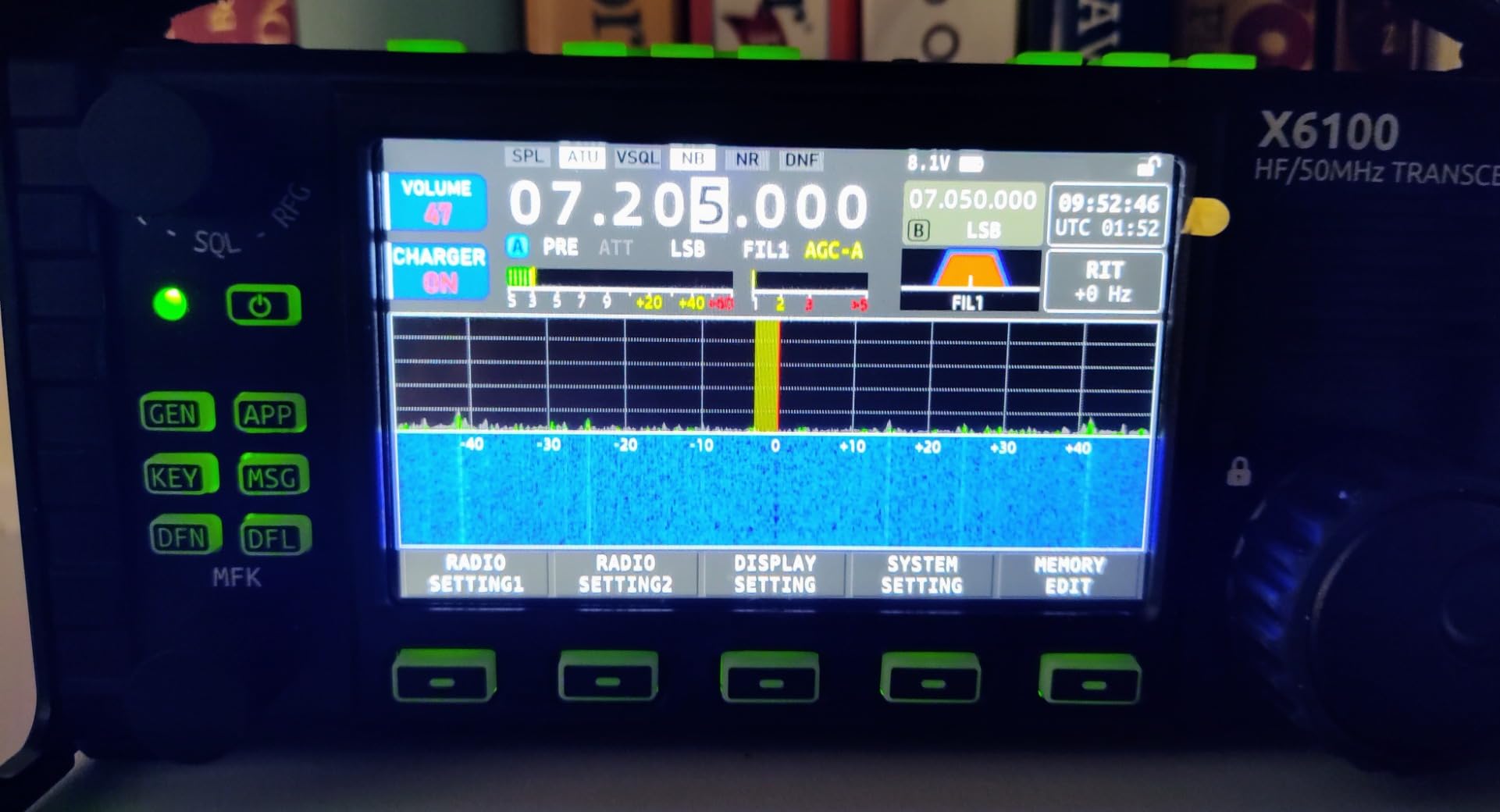
The 4-inch 800×400 color screen is bright and readable, output starts at 5W and is upgradeable to 10W, and it works with the XPA125B external amplifier if you need more. Bluetooth mouse and keyboard control is supported for remote operation.
It also carries the lowest average rating in this roundup at 3.9 across 79 reviews, and the reasons are consistent. Owners repeatedly cite birdies and spurs on receive across bands, battery life of roughly three hours with about four hours to recharge, and documentation that does not match the feature count.
Who should consider the X6100?
Digital-mode operators on a budget should care most about the built-in sound card, because it removes a purchase and a stack of cables. POTA operators benefit from 1.9 lb, the built-in ATU and the readability of the screen in daylight.
Support has also been responsive, with replacements issued when needed, and the 18-month warranty is straightforward.
Who should avoid it?
Contesters and DXers on a quiet band will be frustrated by receive spurs. Anyone depending on battery-only operation will be disappointed by a three-hour runtime, and the weak internal speaker means you will want a wired speaker or earbuds.
10. Yaesu FT-891 – The Compact 100W Workhorse for Vehicles
FT-891 FT891 Yaesu Original FT-891 HF/50 MHz All Mode Analog Ultra Compact Mobile/Base Transceiver – 100 Watts – 3 Year Warranty
100W HF and 50 MHz output
160m to 6m coverage
8.27 x 6.1 x 2.05 inch chassis
Pros
- Stable and clean 100W output
- Ultra-compact chassis for a full-size HF mobile radio
- Covers 160 m through 6 m in one box
- All-mode analog operation across SSB
- CW
- AM and FM
- Three-year warranty and long-standing Yaesu support
Cons
- Analog platform with no touchscreen or spectrum display
- No built-in automatic antenna tuner
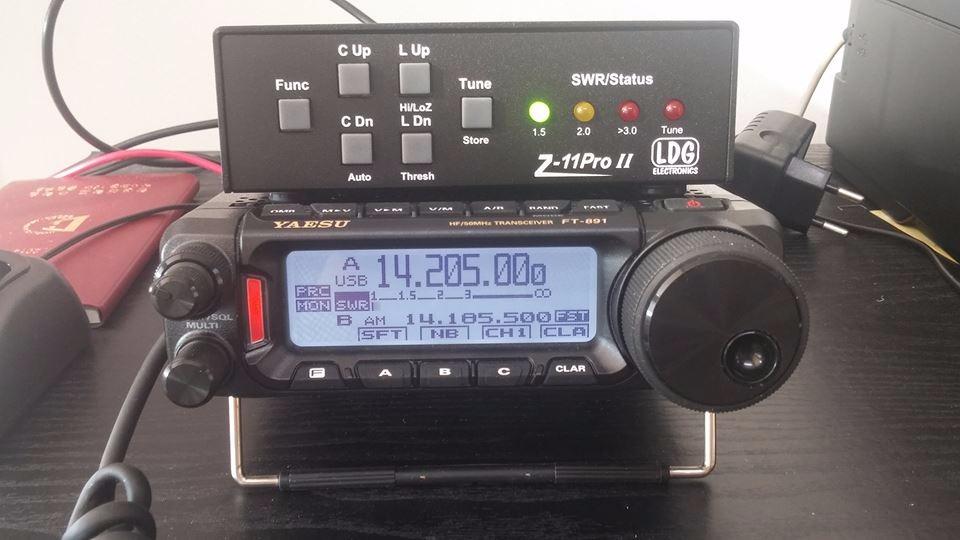
The FT-891 is the mobile radio that shows up most often in first-rig advice, and after using one it is easy to see why. It delivers stable, clean 100W of RF output from a chassis that is 8.27 by 6.1 by 2.05 inches and weighs 8.4 lb.
Coverage runs 160m through 6m, with AM, FM, USB, LSB and CW all supported, and receive extends from 1.8 to 54 MHz. That makes it a genuine all-band all-mode HF radio rather than a single-band set.
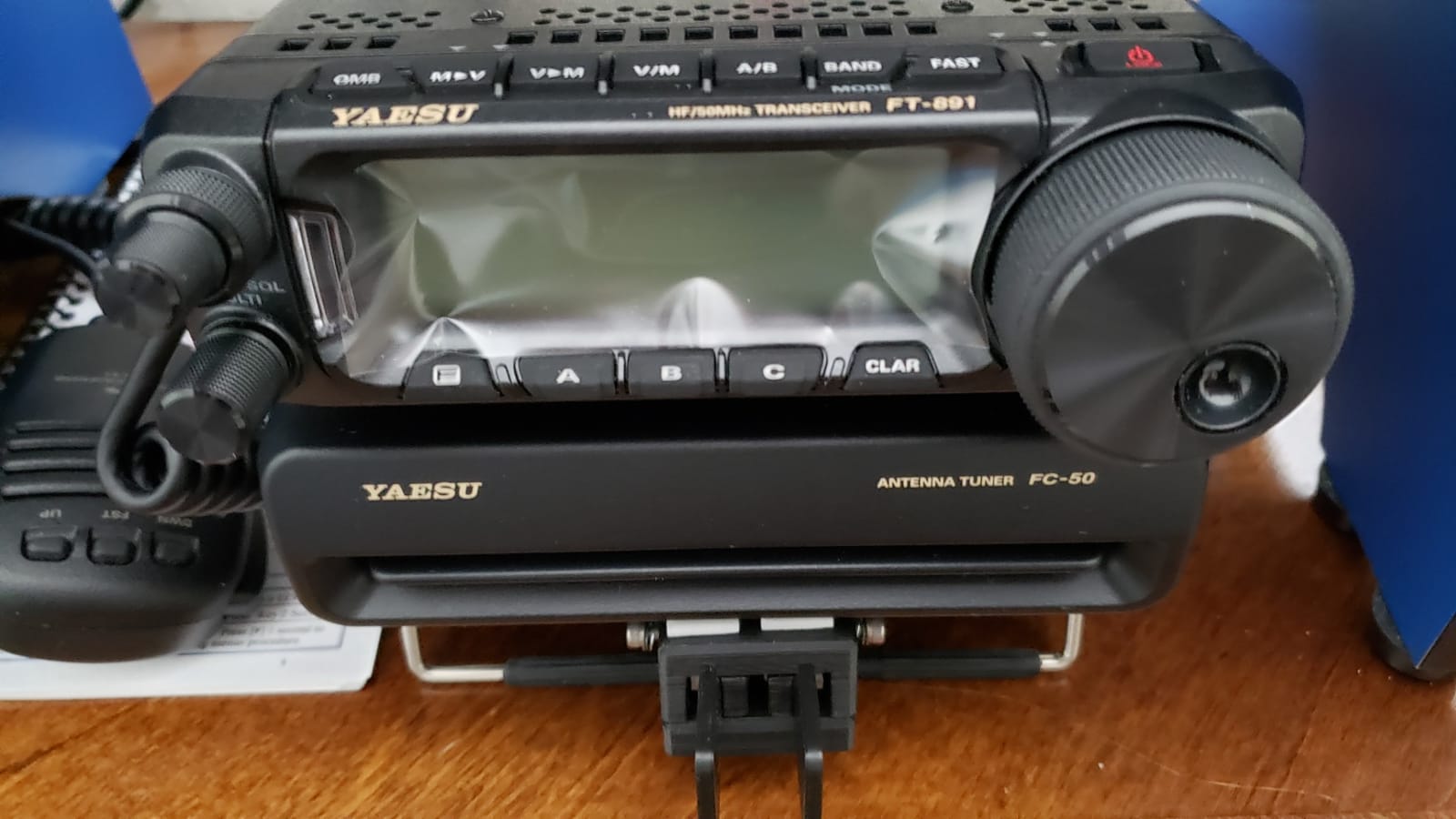
The IPX2 rating and the three-year warranty both point to a radio designed to live in a vehicle. It also pairs with the ATAS-120A automatic tune antenna, which gives you a built-in-tuner-style experience on a mobile installation.
It is an analog platform, so there is no touchscreen and no spectrum display, and no internal ATU. Operators who like a waterfall and want to see band activity before tuning will find that a real limitation rather than a preference.
Why the FT-891 still wins vehicle installs?
Power and size in that ratio is the whole argument. A 100W radio that fits under a dashboard or in a small mount changes what mobile operating is practical, and the 12V supply requirement is straightforward compared with 13.8V desktop sets.
It is also forgiving. Physical controls, an established menu and long-standing Yaesu support mean fewer weekend projects after purchase.
Where it falls short?
Contesters will miss the spectrum view, and anyone who works FT8 heavily may want CAT control options checked carefully before committing. It also carries the highest weight per watt in a car of any radio here.
11. Yaesu FT-710AESS – Fast Auto Tuner and a 4.3 Inch Touch Panel
Yaesu FT-710AESS 100 Watt Deluxe SDR DSP HF and 6M Transceiver
100W HF and 6m SDR output
Built-in high-speed automatic antenna tuner
4.3 inch TFT touch panel with 3DSS
Pros
- Receiver performance often compared favorably to the IC-7300
- Bright 4.3 inch touch screen with accessible menus
- Built-in high-speed ATU matches quickly
- 3DSS real-time color spectrum display
- SP-40 deluxe speaker included
Cons
- TX audio setup has a learning curve
- Does not decode CW out of the box
- Deluxe package sits at the higher end of the 100W class
The FT-710AESS carries the highest average rating among the 100W sets here at 4.7, and the receiver is why. Owners frequently compare its SSB and CW performance favorably against the Icom IC-7300, which is not a comparison anyone makes lightly.
The 3DSS real-time color spectrum display is the feature that changes operating habits. Band activity is visible at a glance, so you find an open frequency before you hear it rather than after.
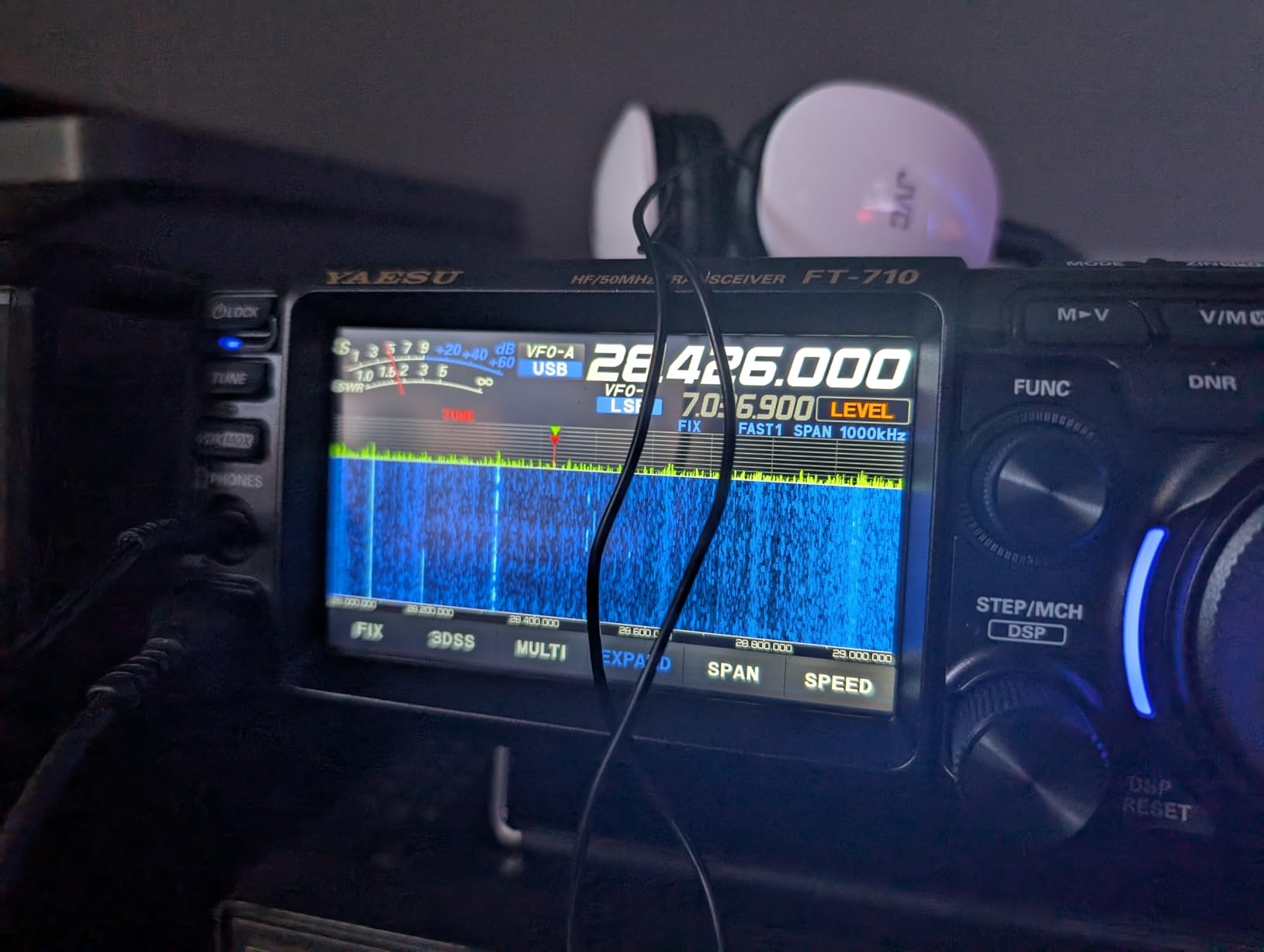
The built-in high-speed automatic antenna tuner matches almost anything quickly, dual-core 32-bit DSP with amateur band pass filters handles noise and weak signals, and the RF front end uses a 250MHz HRDDS high-resolution direct digital synthesizer. Output is adjustable from 5 to 100W on SSB, CW and FM, and 5 to 25W AM carrier.
You get two USB ports, an SD card slot, optional remote display over DVI-D, and an SP-40 deluxe speaker in the box at 10 lb. The software has a learning curve around transmit audio setup, and it does not decode CW out of the box, which matters if you plan to buy it primarily for CW.
Best fit for the FT-710AESS
It suits a home shack operator who wants fast band switching, a waterfall that shows conditions as they change, and enough power to work ordinary wire antennas. Digital noise reduction and band pass filters help most on noisy urban bands.
Portables have managed it as well, since it is compact enough for POTA operation despite the 10 lb weight.
Where it is not the right pick?
Touchscreen-only operation is a genuine obstacle for some users, and the setup menu is the deepest here. Anyone who wants CW decoding out of the box or a lighter portable should look at the Xiegu options instead.
12. Icom IC-705 – HF, VHF and UHF Coverage in a 5 Pound Field Box
Icom IC-705 HF/VHF/UHF All Mode Portable QRP 5W/10W Transceiver
10W with 13.8V supply, 5W from battery
Receive 0.030-199.999 and 400-470 MHz
4.3 inch color touchscreen with Wi-Fi
Pros
- Highest average rating in this group at 4.9
- Enormous feature set in a very small footprint
- Transmits on HF plus 50
- 144 and 430 MHz
- Wi-Fi and Bluetooth for remote control and phone linking
- BP-272 battery and HM-243 speaker mic included
Cons
- IF filter bandwidth tops out at 3 kHz
- Costs a lot for a 10W portable
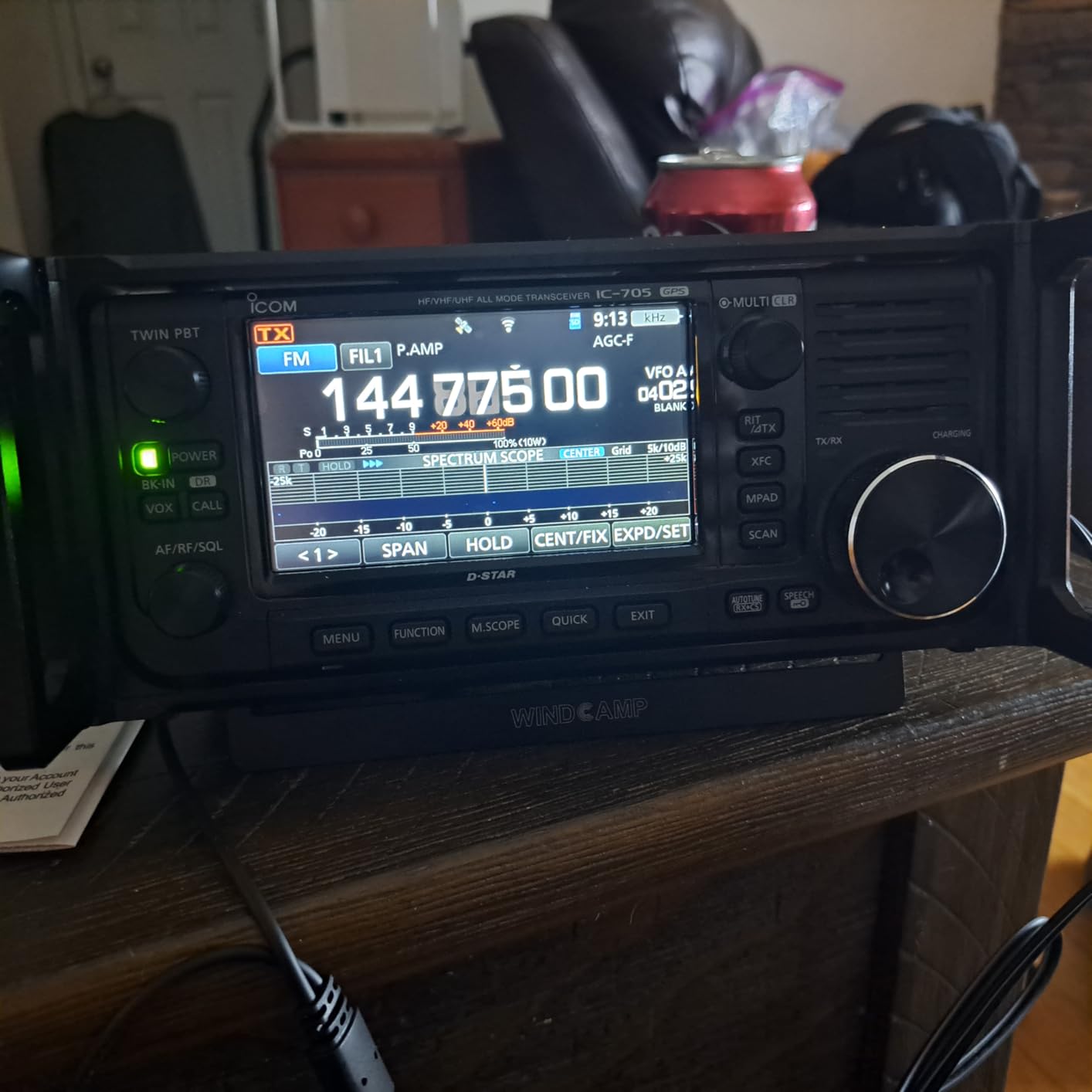
The IC-705 is the most complete portable radio in the roundup and the highest rated at 4.9 across 34 reviews with no ratings below four stars. It is 5 lb, measures about 3.2 by 3.29 by 3.23 inches, and is frequently described as a shack in a box.
It transmits on HF amateur bands plus 50, 144 and 430 MHz, and receives 0.030-199.999 MHz and 400.000-470.000 MHz. That receive range makes it a wideband listening receiver as much as a transmitter, which is the underrated part of owning it.
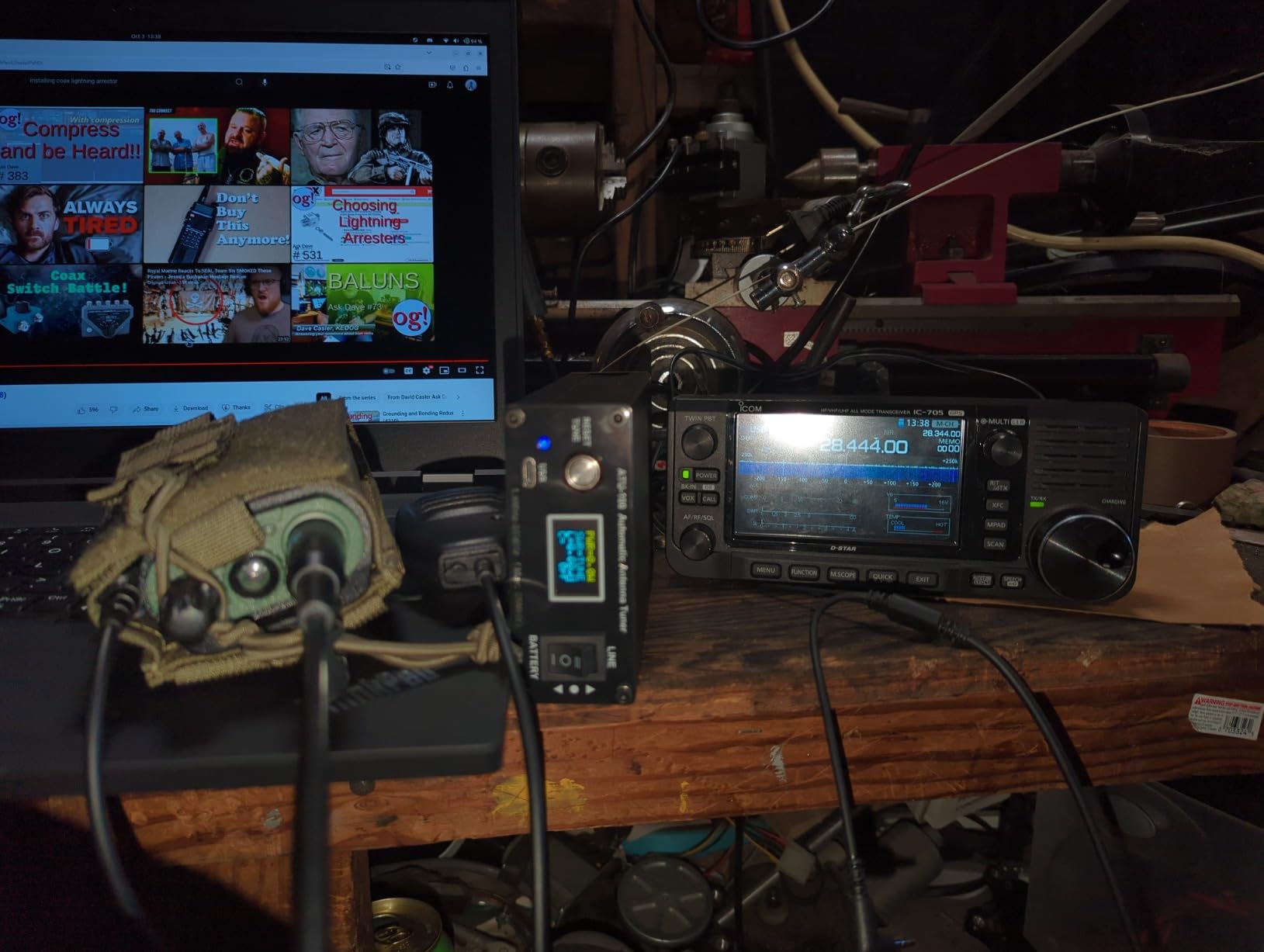
Output is 10W from a 13.8V external supply and 5W from the included BP-272 Li-ion battery, with 500 memory channels. The 4.3-inch color touchscreen is readable in the field, and the control ergonomics follow the IC-7300 and IC-9700, so Icom users will feel at home immediately.
Wi-Fi and Bluetooth are built in for remote control and smartphone linking, and firmware upgrades are straightforward. The two limitations to weigh are the 1-year warranty, the shortest here, and an IF filter bandwidth that tops out at 3 kHz, which some operators want widened for SSB.
Who the IC-705 is for?
It is built for the operator who wants HF, VHF and UHF in a packable box, which means portable operations, travel and emergency-preparedness kits where band coverage matters more than wattage. D-Star takes time to master, so budget a weekend with it before judging.
Anyone coming from an Icom desktop radio will find the learning curve almost flat.
Who should buy something else?
Anyone needing real power from a portable setup will want an external amplifier alongside it, which changes the weight and battery picture entirely. The cost also sits high for 10W, so QRP-focused operators should weigh cheaper alternatives.
Matching Features to the Way You Actually Operate
The features that matter change completely depending on what you plan to do, which is where most buying guides go wrong. Here is how the same shortlist maps to different operating styles.
Your first HF radio at home. Prioritize full 160m-through-10m transmit coverage, 100W of output, a built-in auto tuner and a spectrum display you can learn quickly. The Icom IC-7300 and Yaesu FT-710AESS fit this well; the Xiegu G90 is the value route if 20W is acceptable on a good antenna.
Portable SOTA and POTA. Weight and battery life decide everything. The Xiegu G106 at 1.6 lb and the Xiegu G90 at 3.53 lb are the practical answers, and both have auto tuners so you can work a random wire without an accessory. The Icom IC-705 wins on band coverage if you can live with 5W on battery.
Digital modes and FT8. Look for USB with CAT control, and check whether a sound card is built in. The Xiegu X6100’s single-cable design and the G90’s USB connectivity are the practical picks, and GPS or satellite time sync is worth adding if you run long FT8 sessions where clock drift costs decodes.
Contesting. You want fast VFO handling, a physical keyer, band pass filters, split operation and a spectrum scope that updates quickly. The Yaesu FT-710AESS and the Icom IC-7300 fit, and neither touchscreen nor menu depth will slow you down if you already know them.
Vehicle installation. Form factor and supply voltage rule. The Yaesu FT-891 runs from 12V in a compact chassis at 100W, and the Radioddity QT80 or QT60 Pro give you 80W or 60W of 10m power in a small box with a cooling fan or IP54 rating for the dashboard.
Shortwave listening and wideband reception. Receive range beats transmit power. The Icom IC-705 reaching 199.999 MHz and 400-470 MHz, and the IC-7300 covering 0.030-74.800 MHz, hear far more than a 10 meter mobile ever will.
Emergency preparedness and off-grid work. All-band all-mode coverage and independent battery power matter more than wattage. The Yaesu FT-991A covers 160m through 70cm in one box, and a dedicated backup radio with its own battery, like the IC-705, is a sensible addition to a go-bag.
Two practical warnings that cost buyers real money. First, power supply sizing: a 100W transceiver paired with a 10-15A supply is underpowered and will show it under sustained transmit, so size the supply for the radio rather than the other way round. Second, accessories are rarely included. Microphones, external antenna tuners, sound card interfaces and coax all add to the real cost of the first station, and the radio’s manual tells you which of those you already have.
Receiving needs no licence anywhere, but transmitting does. Before you key up, check your national regulator’s rules, band privileges for your licence class and the power limits that apply to your band. Grounding, surge protection and a good coax run matter for the radio’s lifespan in ways no specification sheet covers.
Frequently Asked Questions
What is the best HF transceiver?
The best HF transceiver is the one whose features match how you operate. For general home station use, the Icom IC-7300 and Yaesu FT-710AESS lead on receiver quality and spectrum display. For portable work the Xiegu G90 wins on feature density at low weight. Judge band coverage, transmit power, DSP filtering, auto tuner and USB connectivity before brand name.
What is the best HF transceiver for beginners?
Beginners usually do best with a radio that covers the full HF bands at around 100W and has a built-in auto tuner, because those two features remove the most common first-time frustrations. Pick a simple front panel over a deep touchscreen menu. Remember to budget separately for a power supply, microphone, coax and antenna, none of which are typically included.
Which HF SDR transceiver is considered the best?
The Icom IC-7300 is frequently treated as the benchmark here, with a direct sampling receiver covering 0.030-74.800 MHz, 100W of output and a built-in auto tuner. The Yaesu FT-710AESS is often compared directly against it and offers a 3DSS real-time color spectrum display with a high-speed built-in tuner.
Is a built-in antenna tuner necessary?
Not strictly, but it makes band changing far easier with simple wire antennas. A built-in ATU will match most random or poorly cut antennas on the fly, so you can move between bands without touching anything. It cannot fix a broken or badly installed antenna, and it costs a small amount of receive sensitivity, so serious operators often still prefer an external tuner.
What should I look for in an HF transceiver for digital modes?
Look for USB connectivity with CAT control, and a built-in sound card so audio and control share a single cable. Check support for FT8, RTTY and PSK31, and consider GPS or satellite time sync, since clock drift of even a second reduces FT8 decodes noticeably. Receiver dynamic range and a notch filter also matter more on digital modes than many buyers expect.
Do I need a license to operate an HF transceiver?
Receiving does not require a licence, but transmitting does. You need an amateur radio licence from your national regulator, and your licence class determines which band segments and frequencies you may use. Power limits, permitted modes and station identification rules all apply, so check the current rules for your country before your first transmission.
Final Verdict
The best features to look for in HF transceivers are unchanged for 2026: full 160m-through-10m transmit coverage, about 100W of output, real DSP filtering, a built-in auto tuner, USB connectivity for digital modes and receiver dynamic range. Everything else is preference.
Our Xiegu G90 is the all-round choice for most people, because the auto tuner, 48 kHz waterfall and 3.53 lb weight cover portable, mobile and base work in one box. The Icom IC-7300 is the receiver benchmark for a home station, and the Yaesu FT-891 is the mobile radio that makes 100W practical in a vehicle.
Before you buy, decide your bands, your power and your operating style, then check the accessories you still need. The right radio is the one whose features you will actually use every day.