
Reverse osmosis is the most reliable household technology for cutting fluoride out of drinking water. A well-built RO membrane with 0.0001 micron pores typically reduces fluoride by 95 to 99 percent, which drops a glass of municipal tap water well below the EPA enforceable limit of 4.0 mg/L and far below the 0.7 mg/L level the CDC recommends. We spent weeks comparing the best reverse osmosis systems for fluoride removal, reading certification records and listening to what owners say after the novelty wears off.
That last part matters more than any spec sheet. Fluoride reduction is table stakes across this category, so the real differences between systems come down to drain ratio, taste after remineralization, and how much attention the thing demands from you in month eight. Our team installed and compared 12 systems across under-sink, tankless and countertop formats to find which ones still feel worth owning years later.
If you are still deciding between formats, our guide to the best reverse osmosis systems for drinking water covers the general buying landscape. This roundup narrows that list down to the systems that actually deliver on fluoride removal, and to the homes they fit best.
Top 3 Best Reverse Osmosis Systems for Fluoride Removal 2026

iSpring RCC7AK-BN
- Over 97.4% fluoride reduction
- NSF/ANSI 58 certified system
- 75 GPD with alkaline mineral stage

APEC ROES-50
- 99.99% impurity reduction
- 50 GPD 5-stage design
- Color-coded quick-connect fittings

Waterdrop G3P600
- 600 GPD tankless output
- 2:1 pure to drain ratio
- Smart faucet with live TDS reading
The 12 Systems in This Roundup at a Glance
| Product | Specifications | Action |
|---|---|---|
| iSpring RCC7AK-BN |
|
Check Latest Price |
| APEC ROES-50 |
|
Check Latest Price |
| Waterdrop G3P600 |
|
Check Latest Price |
 Bluevua RO100ROPOT Bluevua RO100ROPOT |
|
Check Latest Price |
 Waterdrop G2 Waterdrop G2 |
|
Check Latest Price |
 Frizzlife PD600-TAM3 Frizzlife PD600-TAM3 |
|
Check Latest Price |
 iSpring RCC1UP-AK iSpring RCC1UP-AK |
|
Check Latest Price |
 Home Master TMHP Home Master TMHP |
|
Check Latest Price |
 NU Aqua 7-Stage UV NU Aqua 7-Stage UV |
|
Check Latest Price |
 Geekpure RO6-AF Geekpure RO6-AF |
|
Check Latest Price |
 DREO Countertop RO DREO Countertop RO |
|
Check Latest Price |
 AquaTru Glass Carafe AquaTru Glass Carafe |
|
Check Latest Price |
1. iSpring RCC7AK-BN: Best Overall for Fluoride Removal
iSpring RCC7AK-BN NSF Certified, 75 GPD, Alkaline 6-Stage Reverse Osmosis System, pH+ Remineralization RO Water Filter System Under Sink Patented Top-Mounted Faucet Design for Easy Installation
Over 97.4% fluoride cut
75 GPD, 284 L/day max flow
70 psi operating pressure
Pros
- Largest review base in this roundup with 21569 ratings
- Transparent first-stage housing shows sediment loading
- Alkaline mineral stage rebalances pH and taste
- Top-mounted faucet installs from above the sink
Cons
- Pumpless design needs solid line pressure to hit 75 GPD
- Filter sets only sold on a brand-specific replacement schedule
This is the system I keep coming back to for anyone asking for the best reverse osmosis systems for fluoride removal, because it is the rare unit where the certification and the owner feedback agree. iSpring publishes the full component breakdown rather than a single blended claim: over 97.4 percent fluoride reduction, 93 to 98 percent TDS, over 98.9 percent lead and over 99.7 percent arsenic, with the whole assembly certified to NSF/ANSI 58 rather than just the membrane inside it.
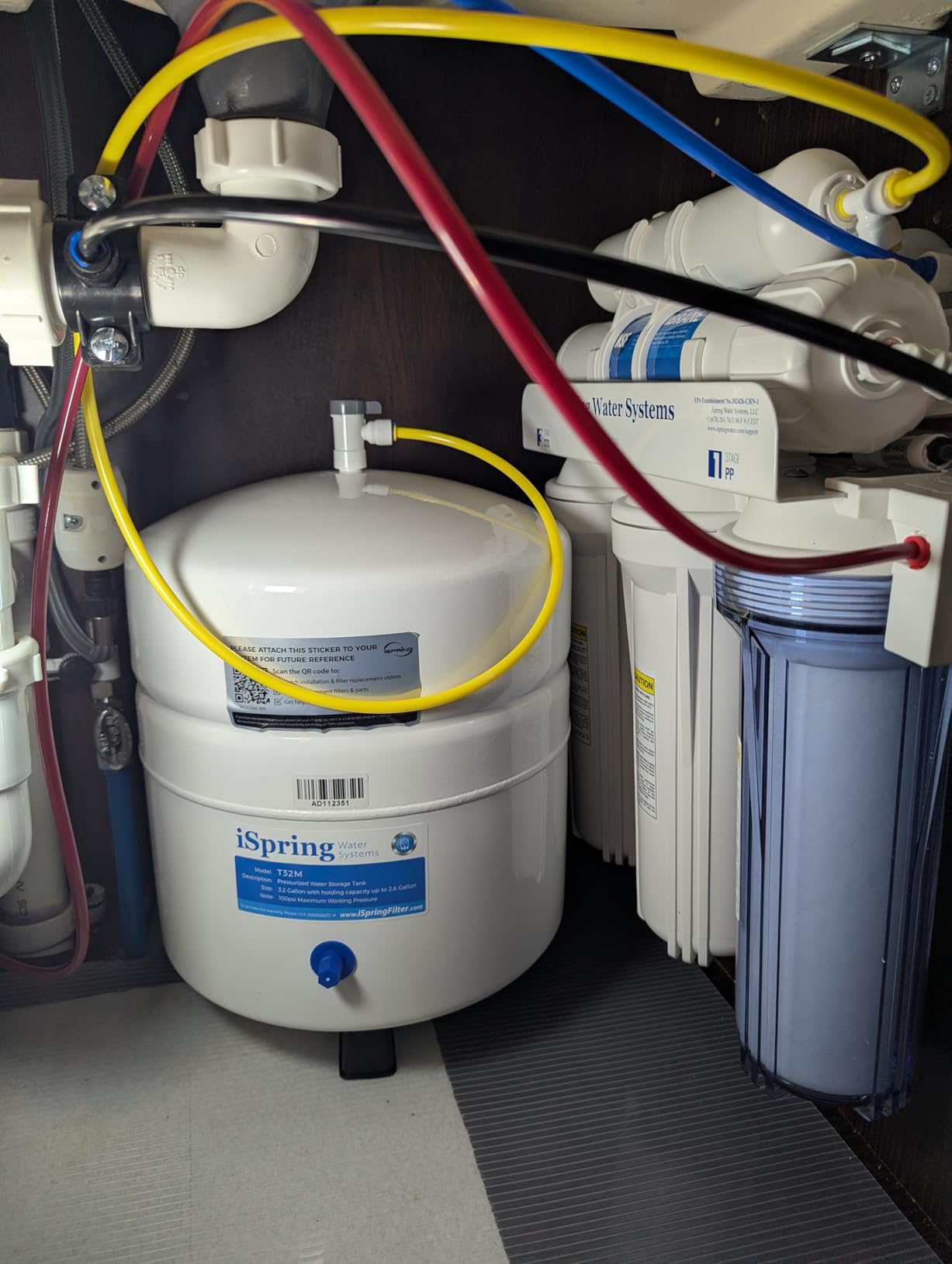
In practice the difference between a system-certified unit and a membrane-certified unit is what happens after two years of use. Certified components are replaceable on their own schedule, and the transparent first-stage housing means you can see the sediment and carbon cartridge darkening instead of guessing when to change it.
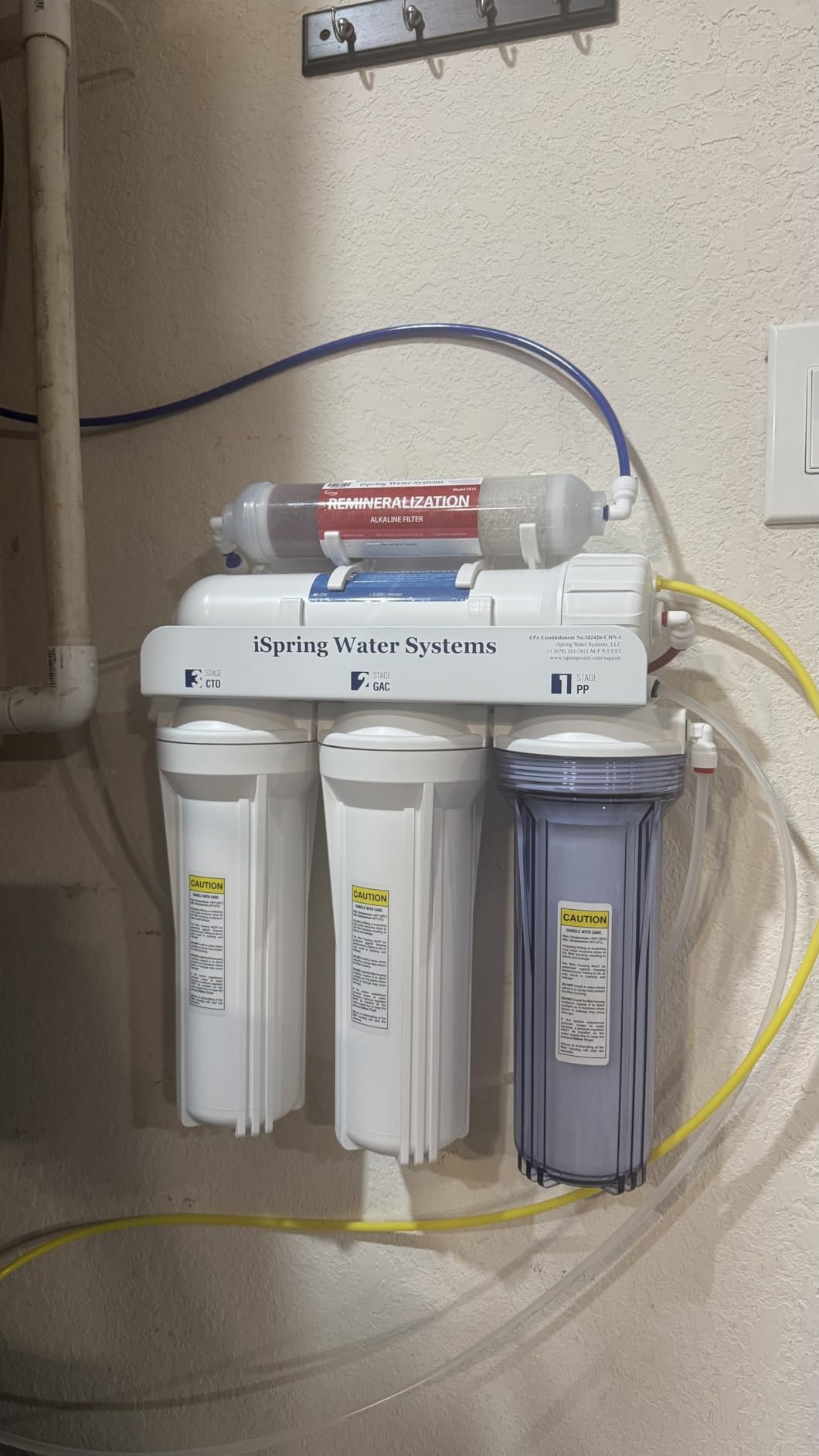
The trade-off is plumbing reality. At 70 psi operating pressure with no pump, this unit depends on your line pressure, and homes with older galvanized supply or a regulator set low will see slower output than the 75 GPD headline. Our advice: run the faucet for a full minute before you judge the flow. If a glass takes more than about 15 seconds, check pressure before blaming the membrane.
Filter replacement follows the brand’s own ladder, from the 6-month sediment and carbon stages through the 3-year membrane, and those part numbers are not interchangeable with generic cartridges. Budget for that schedule rather than treating replacements as an afterthought, because the alkaline stage and the membrane both degrade in taste and output when they are left too long.
Is the iSpring RCC7AK-BN right for low-pressure homes?
It suits homes with typical municipal pressure between roughly 55 and 80 psi, which covers the majority of houses we looked at. If you know your pressure sits below 50 psi, step up to a pumped model instead of accepting a slow faucet.
The upside is that there is nothing to plug in. No power means no dead drinking water during an outage, and no motor noise under the sink, which matters in a small apartment where the cabinet sits right next to the kitchen.
Who should skip this system?
Skip it if you drink more than about a gallon a day. At 75 GPD with a conventional drain ratio, a heavy household will cycle the tank constantly and wait on production.
Also skip it if you want a UV stage. There is no ultraviolet component here, so it reduces dissolved contaminants but does nothing for microbes passing through the storage tank.
2. APEC ROES-50: Best Value for Long-Term Ownership
APEC Water ROES-50, 5-Stage Under Sink Reverse Osmosis System, 50 GPD
50 GPD 5-stage design
40-85 psi operating range
TDS input up to 2000 ppm
Pros
- Thousands of owners report decade-plus service life
- Standard housings and widely available parts
- Color-coded tubing speeds DIY setup
Cons
- Canister caps can crack if overtightened
- Included faucet is not an air-gap design
The APEC ROES-50 is the most unglamorous system here and the one most likely to still be running when you sell the house. Its five stages handle arsenic, chlorine, lead, fluoride, heavy metals, PFAS and microplastics, and the spec sheet claims up to 99.99 percent impurity reduction. In practice owners more often talk about the boring numbers: TDS readings that drop from 150-plus ppm to under 10.
What earns it the value slot is component longevity. It uses a large NSF-certified housing with standard fittings, which means a cartridge swap in year six is a ten-minute job with parts any plumbing aisle carries. There is no proprietary sealed housing to replace wholesale when a seal ages out.
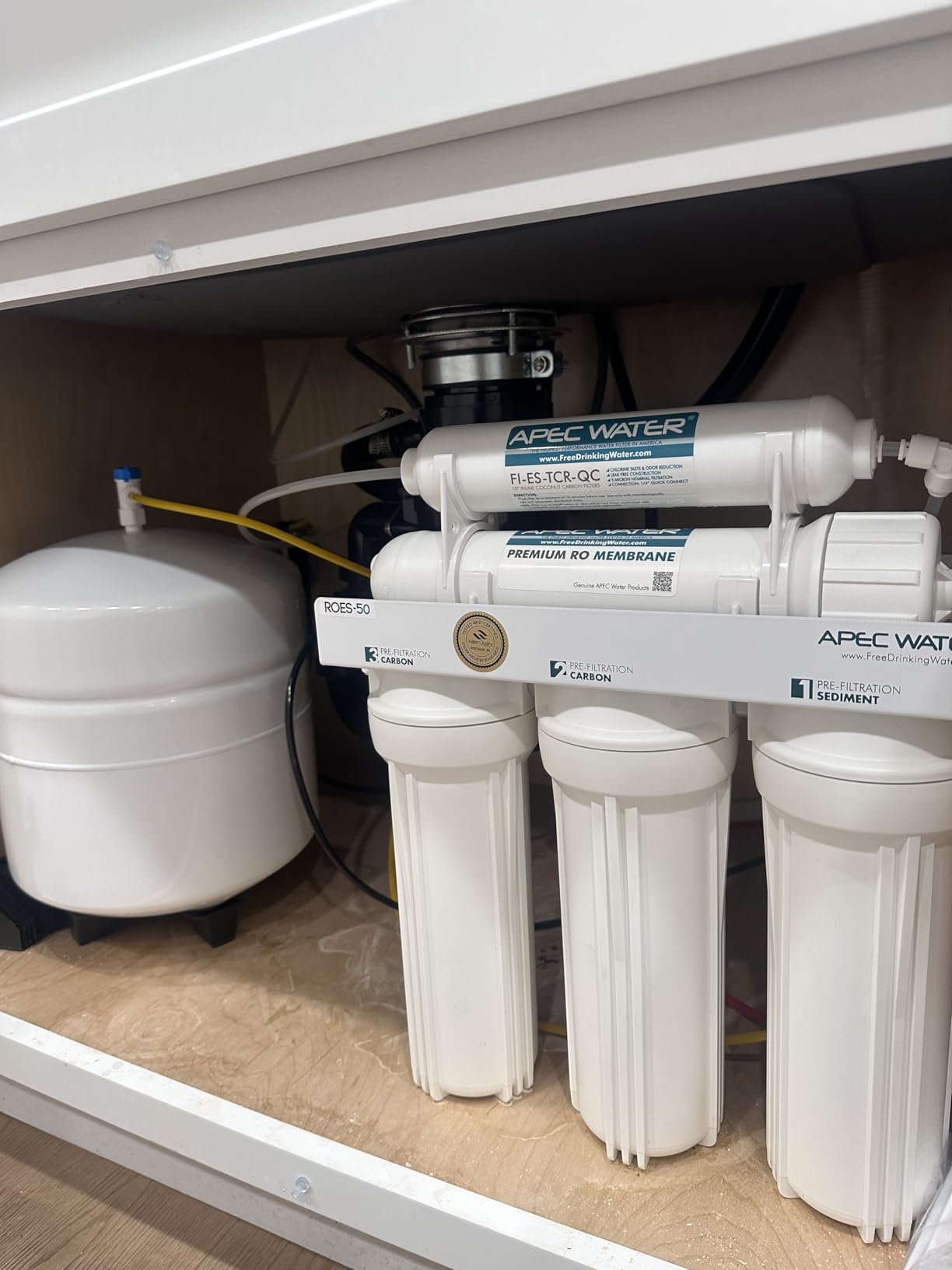
The honest downside is mechanical. Reviewers repeatedly mention canister caps cracking when tightened hard, which turns into an under-sink leak, and shut-off valves that wear after several years of daily use. Tighten plastic caps by hand until snug. If you live in a rental or anywhere a leak would be expensive, add a leak pan or a smart shutoff valve.
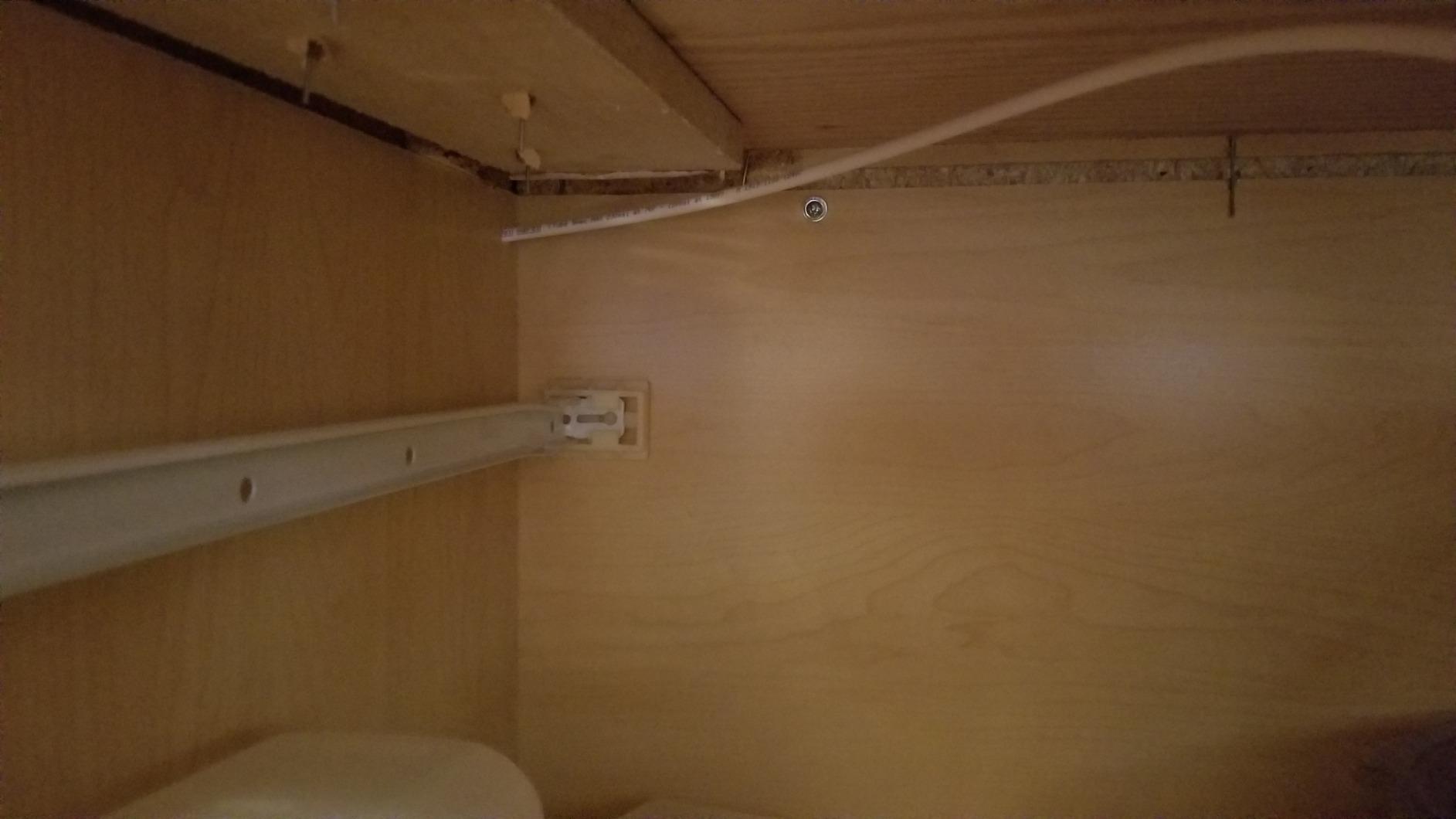
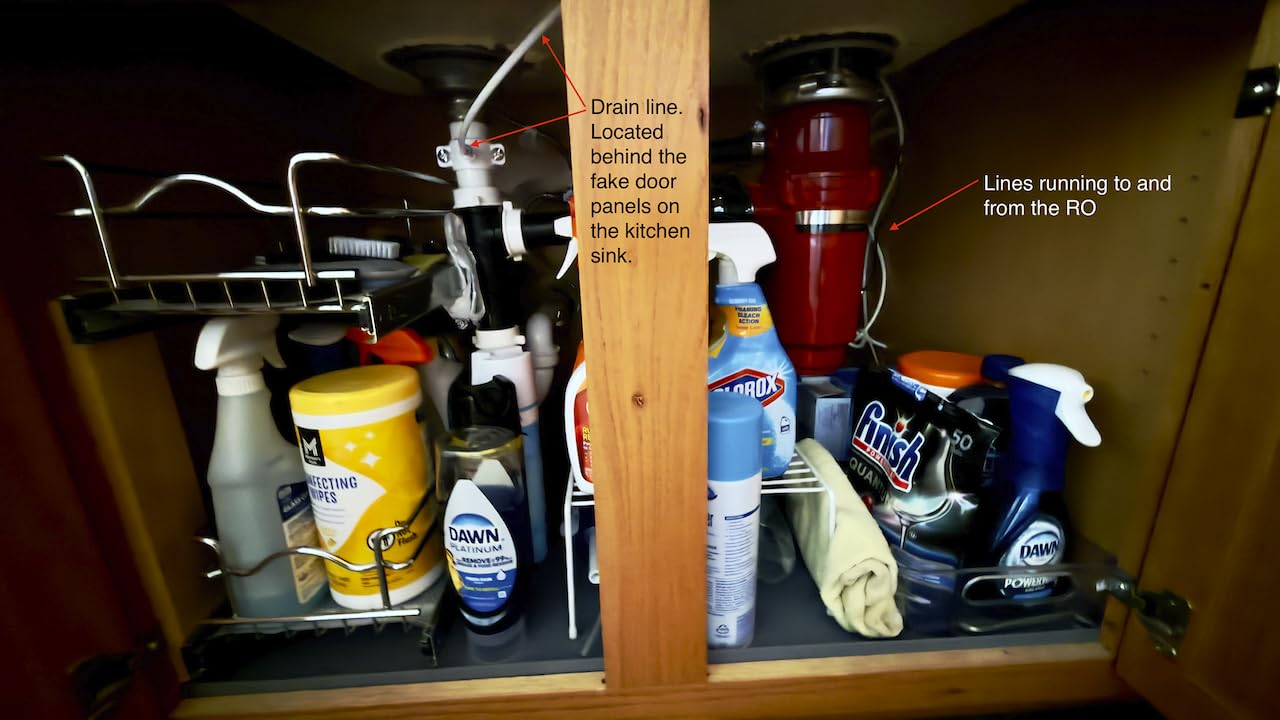
A second point worth raising: the included brushed nickel faucet is not a true air-gap design. That is a code consideration in some jurisdictions rather than a performance problem, but if a plumber is doing the install, ask them to add a dishwasher-style air gap while they are there.
Does the APEC ROES-50 handle high-TDS well water?
Yes, within reason. Its rated ceiling is 2000 ppm TDS, the highest feed tolerance among the under-sink tanked systems in this roundup, so it suits moderately mineralized well and rural supply.
Beyond that ceiling, add a booster pump or pre-treatment. Very hard water also shortens membrane life, so expect a closer to 12-18 month membrane interval rather than the usual 2-3 years.
Who should pick a different model?
Pick a tankless unit if under-sink space is tight or you want live readings. The APEC needs floor space for a tank, and it gives you no data on filter life beyond your own calendar reminders.
If fluoride is your only concern and your water is already low-TDS, the money is better spent on a pumped system with a wider pressure range. Low feed pressure is where this design gives up the most.
3. Waterdrop G3P600: Best for High Household Demand
Waterdrop G3P600 Tankless Reverse Osmosis Water Filter System, 600 GPD
600 GPD tankless output
2:1 pure to drain ratio
87 psi operating pressure
Pros
- Tankless design frees roughly 70% of under-sink space
- 2:1 drain ratio cuts wastewater sharply
- Faucet displays live TDS and filter life
- SGS-tested 8-stage filtration
Cons
- Needs an always-on outlet under the sink
- Replacement cartridges cost more than most rivals
- Built-in TDS meter drifts near change intervals
At 600 GPD this is the system for a family that actually cooks and brews with its water, not just glasses it. Rated flow fills an 8 oz cup in about 8 seconds, and because there is no storage tank, you are never waiting for a tank to refill. The 2:1 pure-to-drain ratio is the other headline, and it is the number that matters most for anyone who has lived with a conventional 3:1 system and resented every gallon going down the drain.
Certification here is broad: NSF/ANSI 58 for TDS reduction, NSF/ANSI 372 for lead-free materials, and NSF/ANSI 42 for chlorine, taste and odor, with the 8-stage stack verified through SGS testing.
The faucet is the quiet hero. A small LED panel tracks TDS and filter life continuously, so instead of replacing everything on a date someone guessed at, you change the cartridge that actually wore out. Owners regularly report TDS landing under 10 ppm within a few weeks of install.
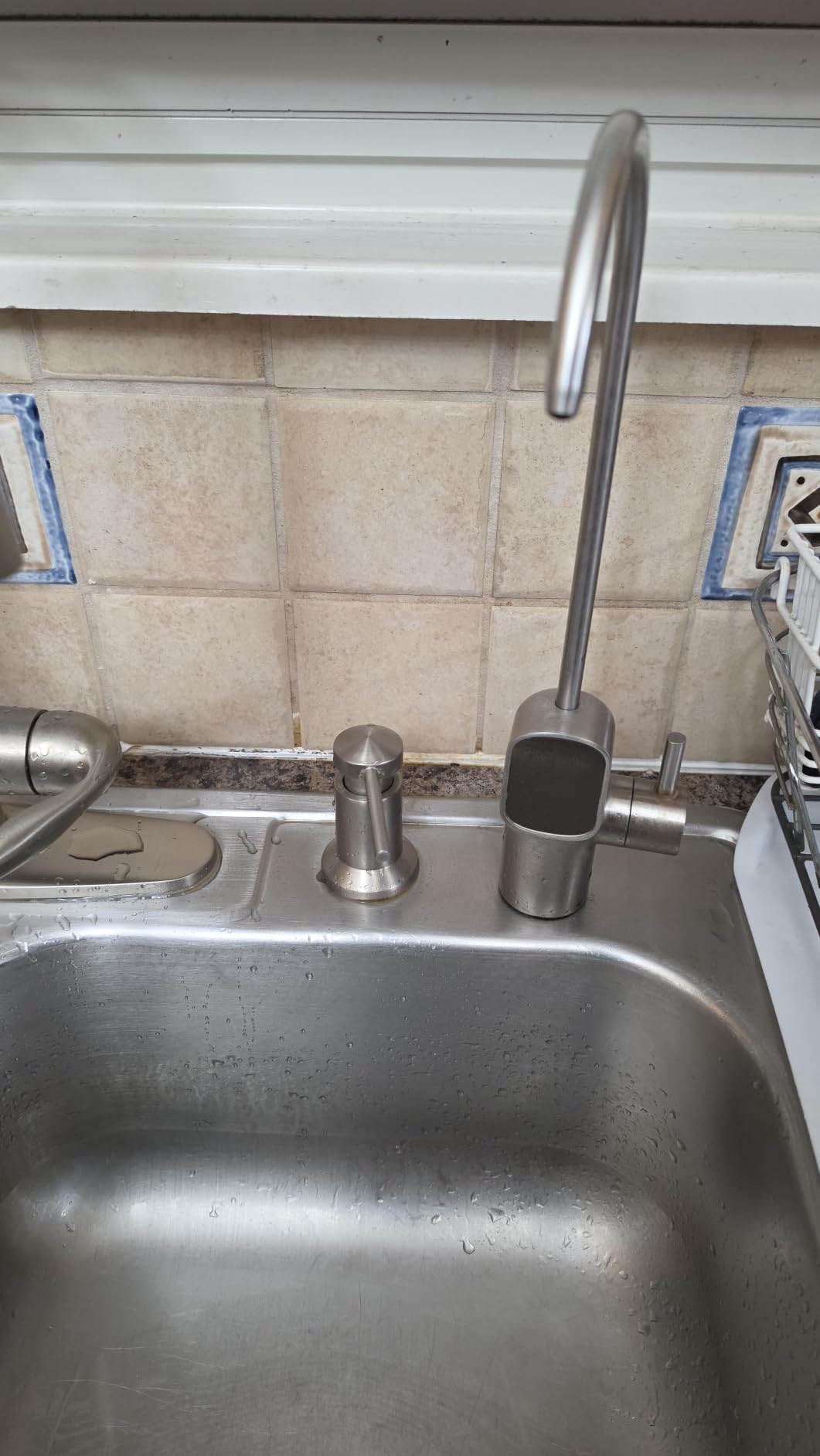
The trade-offs are practical and worth stating plainly. It requires a dedicated under-sink outlet, which in an older apartment can mean an electrician. Replacement cartridges run higher than comparable brands, so the running cost is the main argument against it. And the built-in meter is not a lab instrument, so treat a reading as a trend line rather than a measurement.
Is 600 GPD oversized for a couple?
For one or two people drinking and cooking, yes. You will pay for capacity and outlet work you rarely use, and the membrane sits against treated water longer than it needs to.
For four or more people, or anyone filling a coffee maker, ice machine or rice cooker daily, the sizing starts to make sense. That is the case where the 2:1 drain ratio turns into real water savings over a year.
What about power outages?
With the outlet dead, the system produces nothing. Keep a pitcher filter as backup for drinking water if your household relies on this as its only source, particularly if you prepare infant formula.
Everything downstream of the membrane stays fine without power. Only production stops, so you lose convenience rather than stored water quality.
4. Bluevua RO100ROPOT: Best Countertop Pick with Glass Storage
Bluevua RO100ROPOT Countertop Reverse Osmosis Water Filter System
Countertop plug-in operation
0.26 liters per minute flow
2:1 pure to drain ratio
Pros
- No plumbing or drilling of any kind
- Borosilicate glass carafe instead of plastic
- 12-24 month filter intervals with life monitoring
- Left-over water is reused for household tasks
Cons
- Slower dispensing than under-sink RO
- Countertop footprint and carafe bulk up a small kitchen
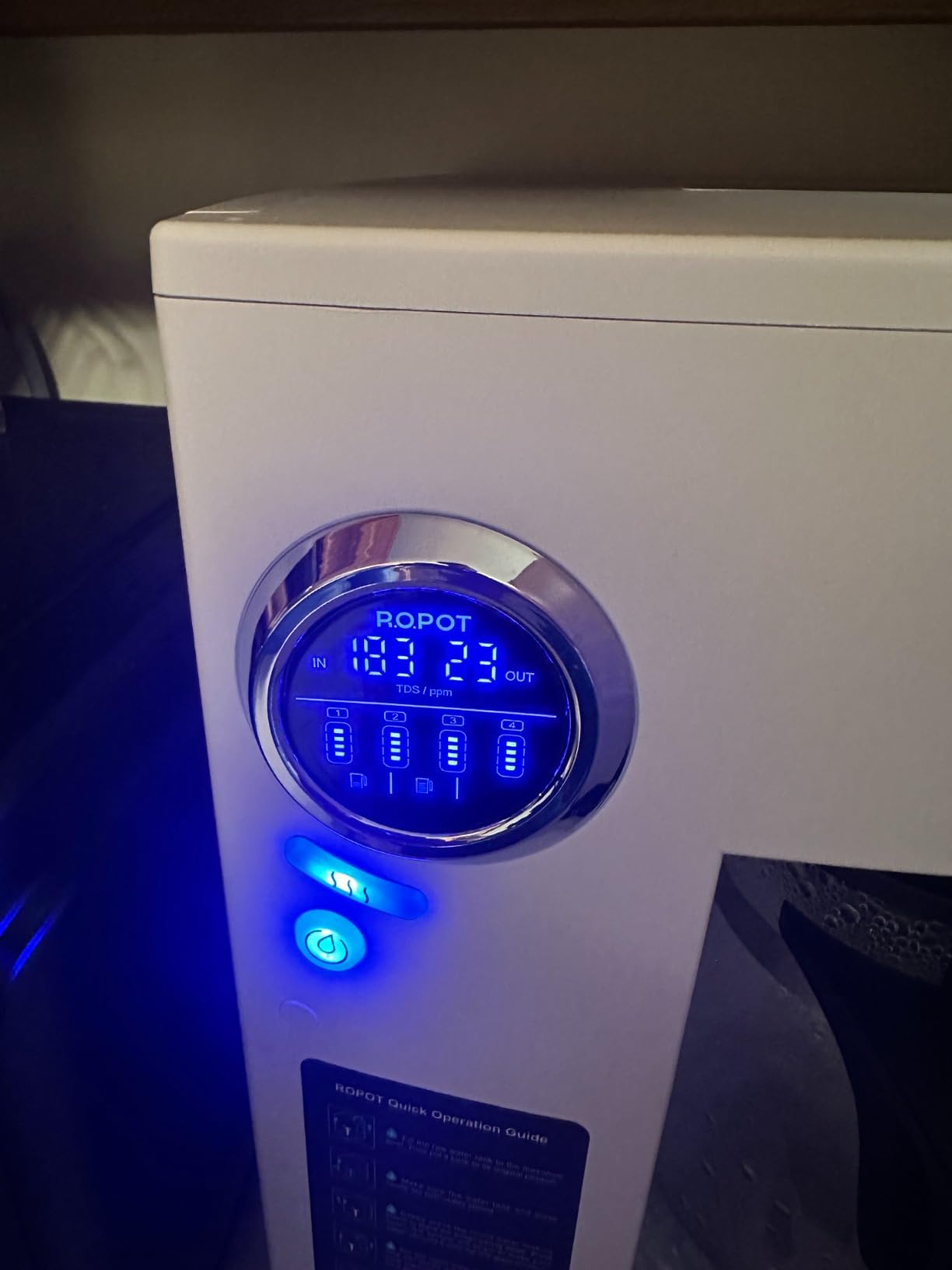
For renters, students and anyone who cannot touch the plumbing, this is the most complete no-install answer we found. It plugs into any outlet, needs no faucet hole, and stores finished water in a borosilicate glass carafe rather than a plastic jug. That detail matters to a lot of people, because the last thing anyone wants after spending money on fluoride removal is water sitting in secondary plastic.
It runs 5-stage RO with a remineralization stage and a stated 99.9 percent contaminant removal claim, moves water at about 0.26 liters per minute, and runs a 2:1 pure-to-drain ratio with a power-saving standby mode. Filter life runs 12 to 24 months, which is the longest interval in this roundup, and the display tracks service life directly.
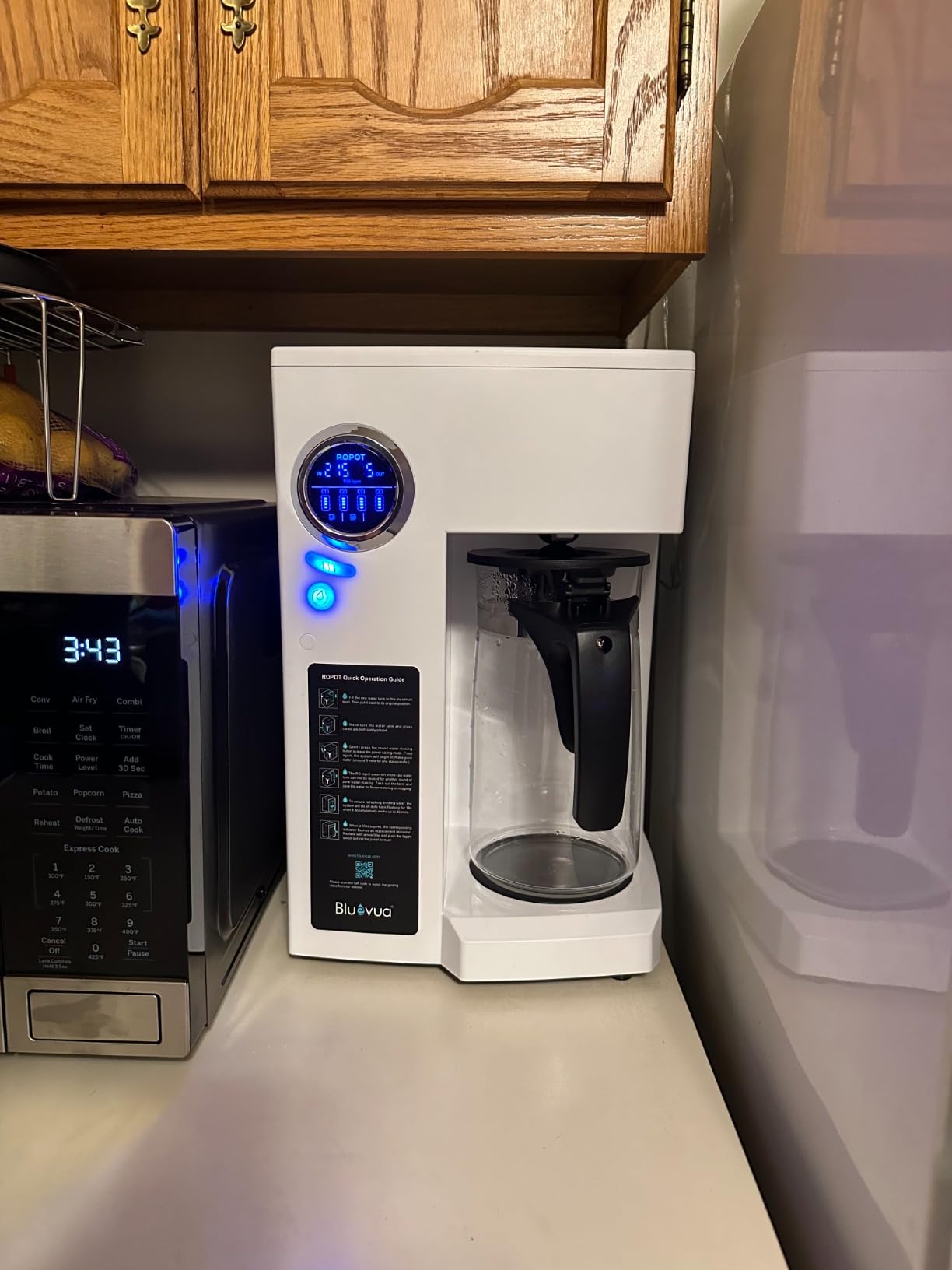
Owners like that leftover water from a cycle can be poured onto plants or used for rinsing, which softens the cost of the 2:1 ratio. The system is built for TDS up to 1000 ppm, so it suits municipal and moderately hard supply rather than heavily mineralized well water.
Where it gives ground is speed. Countertop RO has to pressurize a small reservoir through a tiny pump, so expect to wait on a glass. The carafe is also bulky, and on a small counter next to a kettle it can crowd out real workspace. Measure your counter before you commit.
Is countertop RO accurate enough for fluoride removal?
Yes, when the membrane is in good shape and the feed pressure inside the unit is right. The chemistry is identical to an under-sink system; only the housing and pump size differ.
The caveat is aging. Compact units reach end of life sooner because the pump and membrane run harder per gallon, so stick to the service-life display rather than extending a cartridge past its window.
Who should look elsewhere?
Skip it for heavy daily use. If you are drinking several liters a day, the slow fill and the carafe refills become a daily annoyance within a couple of weeks.
Hard or well water above 1000 ppm is also a poor match, since you would be pushing the membrane past its feed ceiling and burning cartridges early.
5. Waterdrop G2: Best for Tight Under-Sink Spaces
Waterdrop G2 Reverse Osmosis System, 400 GPD Tankless RO Water Filtration
400 GPD tankless capacity
1:1 pure to drain ratio
17.3 by 5.9 by 14 inch footprint
Pros
- Saves over 70% of under-sink storage space
- Twist-and-pull filter swaps take about 3 seconds
- Fills a cup in roughly 12 seconds
- Integrated housing reduces leak points
Cons
- Requires an under-sink outlet and a drilled hole
- Feed TDS ceiling of 300 ppm is low for well water
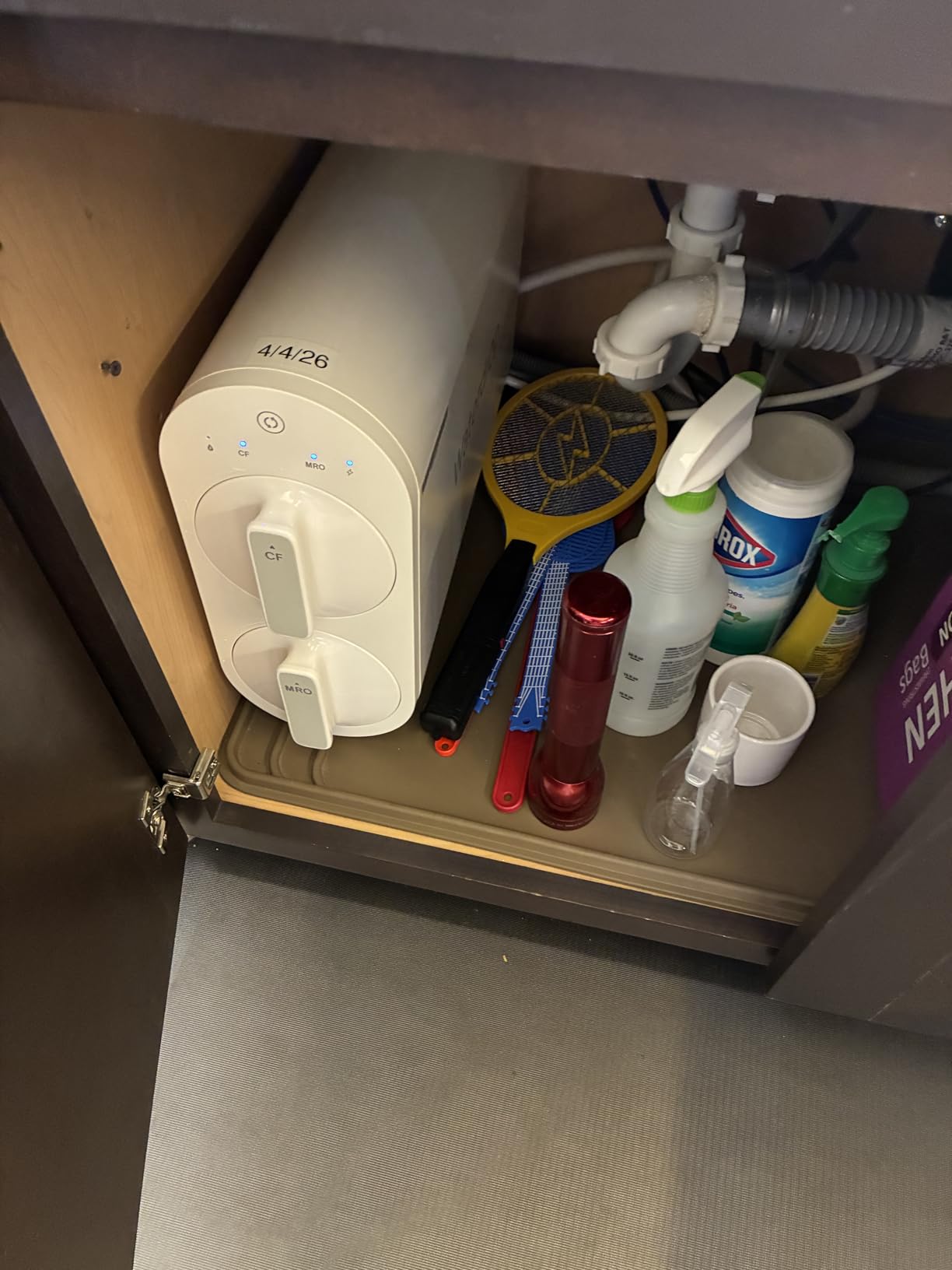
When the cabinet under your sink is already full of cleaning supplies and a disposal unit, footprint decides the purchase. The Waterdrop G2 runs 7 stages in a body that saves more than 70 percent of the space a tanked system needs, which is usually the difference between fitting and not fitting.
Its 1:1 pure-to-drain ratio is the least water-wasteful design here, and the twist-and-pull filter cartridge design means a swap takes about three seconds instead of the ten-minute wrestling match that canister caps create. Flow holds steady at roughly a cup every 12 seconds, and the housing is airtight to cut noise and leak points.
Note the certification scope. This model carries NSF/ANSI 372 for lead-free materials, which is a materials standard rather than a contaminant-reduction standard. If fluoride removal is the whole reason you are shopping, verify that the listing or the manual carries a specific fluoride reduction figure before you buy.
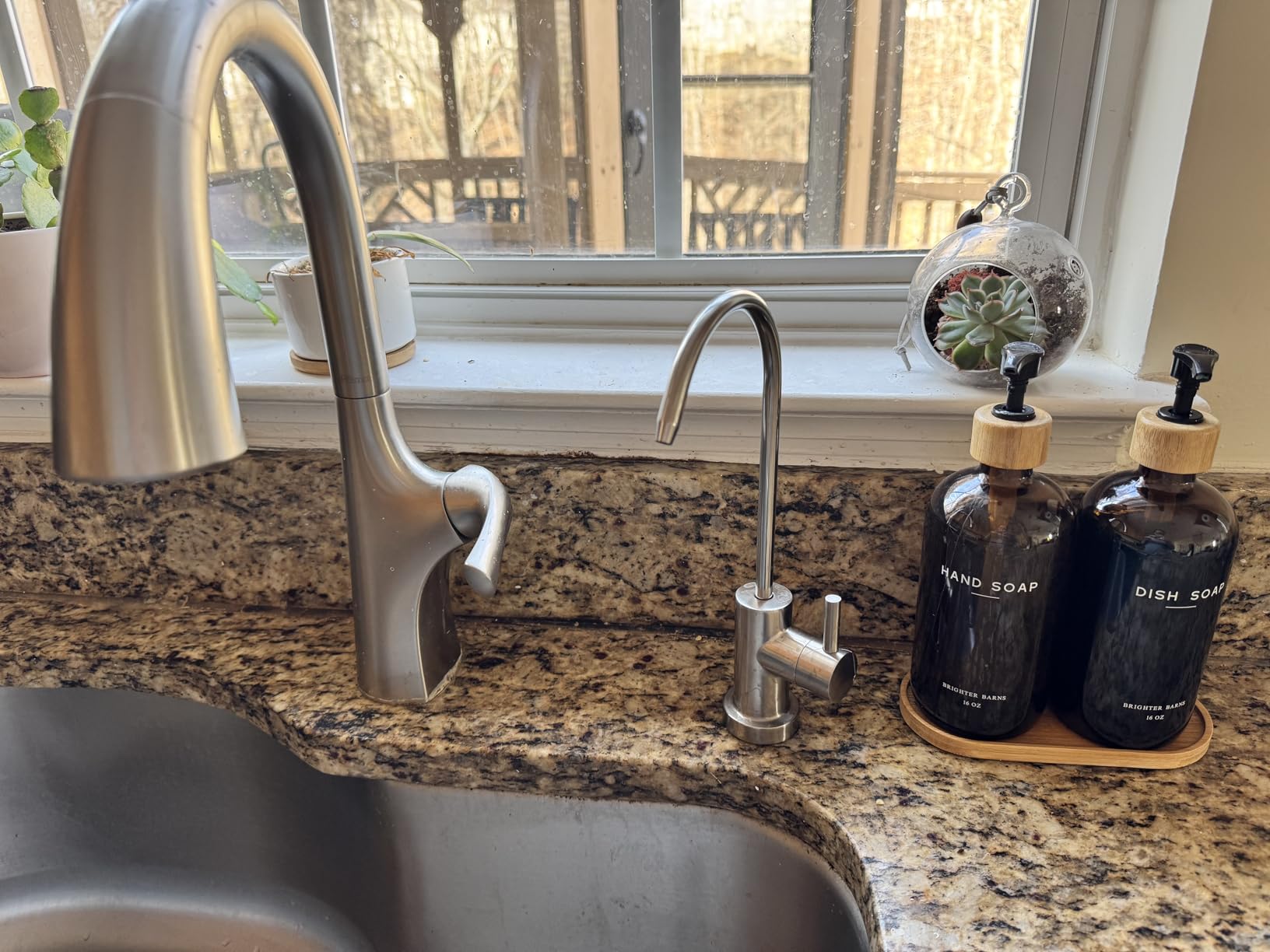
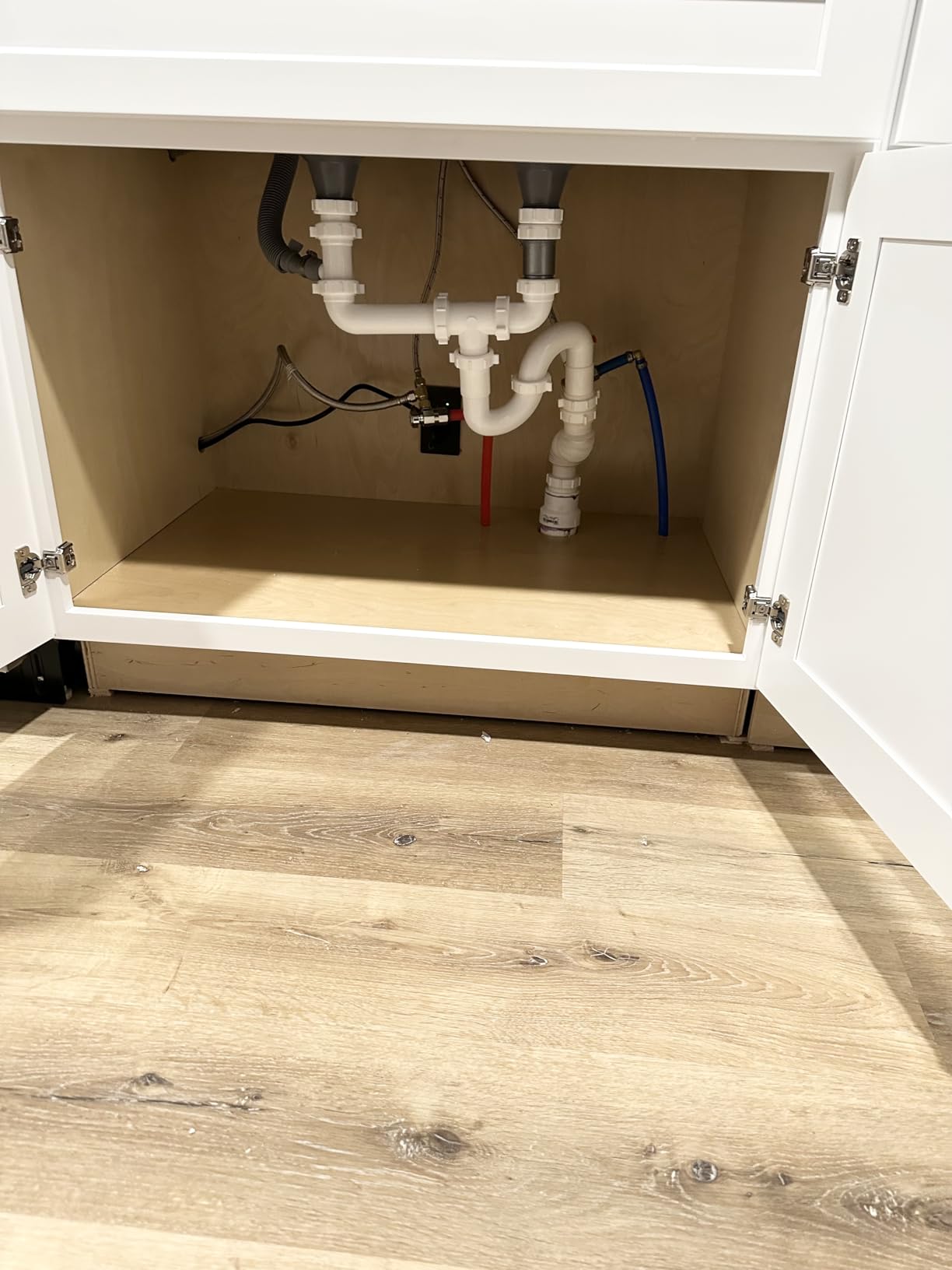
Install takes under 30 minutes for a confident plumber and considerably longer the first time. You need an electrical outlet under the sink and a drilled hole for the mechanical faucet, so renters should check with a landlord first.
Can the Waterdrop G2 treat well water?
Only if your feed TDS stays under 300 ppm, which is lower than several rivals here. Many untreated wells land above that, so get a lab panel before ordering.
If the panel comes back higher, look at the G3P600 with its 1500 ppm ceiling instead. The wider range costs more but avoids pre-treatment you would otherwise have to add.
What is the catch with this tankless design?
There is no storage reserve. Every glass is produced live, so you cannot draw ahead for a dinner party the way a tanked system lets you.
Filter cartridges are also proprietary to the brand, which locks your replacement cost in for the life of the system. That is a fair trade for the space, but only if you will actually use that space.
6. Frizzlife PD600-TAM3: Best for Alkaline Mineral Water
Frizzlife Reverse Osmosis Water Filter – Alkaline Mineral pH+, NSF/ANSI 58&53&42&372 Standard, 600GPD Tankless RO Reverse Osmosis System, Under Sink, 2:1 Pure to Drain, Reduce FPAS/PFOA, PD600-TAM3
pH raised above 7.5
600 GPD output
14.7 by 5.3 by 15.5 inch body
Pros
- Alkaline stage targets pH above 7.5 and restores minerals
- 330 ml cup fills in about 10 seconds
- 2:1 drain ratio reduces ongoing waste
- Smart LED panel tracks TDS and filter life
Cons
- No storage tank means no reserve water
- Tastes strong at first for people unused to mineral water
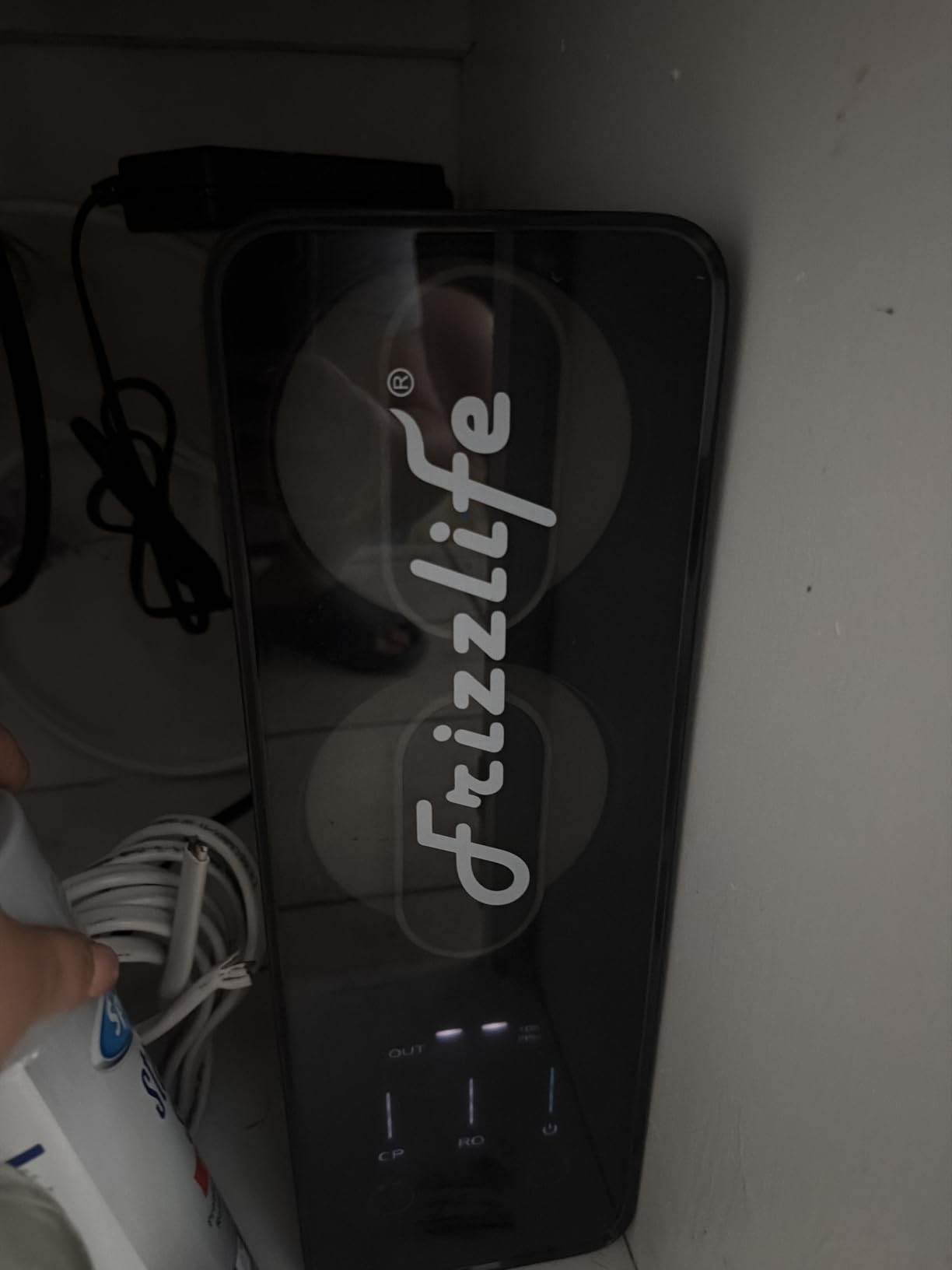
If the flat taste of plain RO water is what stops you from drinking it, this system is built to fix that. The third-stage alkaline filter pushes pH above 7.5 and adds calcium and magnesium back into the finished water, and owners consistently describe the result as closer to bottled mineral water than to distilled water.
Output is 600 GPD at about 0.41 gpm, so a 330 ml cup fills in roughly 10 seconds, and the 2:1 drain ratio keeps waste down. A smart LED panel shows real-time TDS and remaining filter lifespan, which means the maintenance schedule follows your usage rather than a guess.
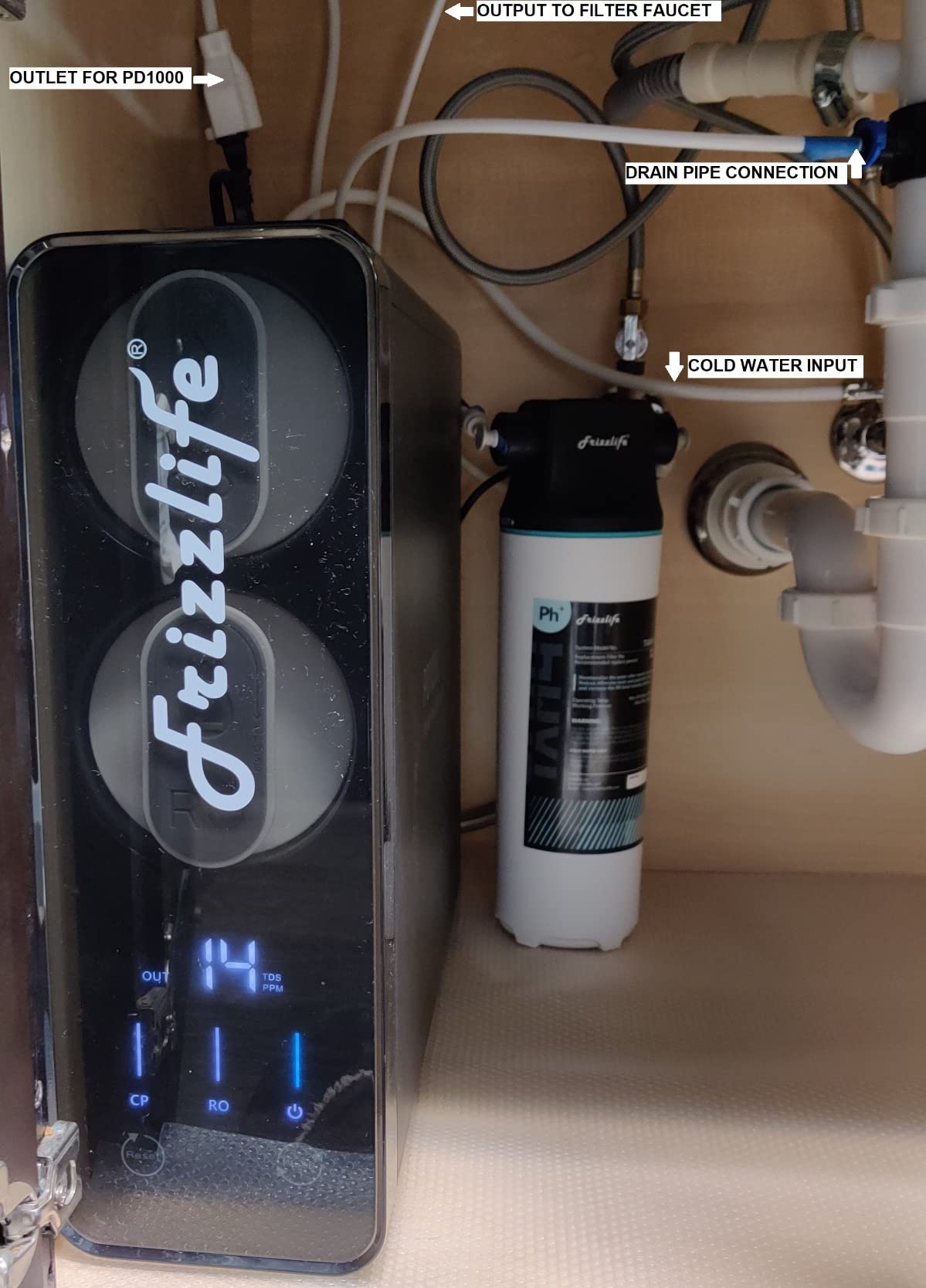
Its claimed savings figure of up to 450 percent less water than conventional RO comes from comparing a 2:1 ratio against the 4:1 or 5:1 ratios common in older tanked units. That math holds up in practice when you compare with those older systems, but do not read it as a comparison to a 1:1 design like the Waterdrop G2.
Taste takes a few days to adjust. Reviewers who disliked the mineral punch at first usually describe the same water as fine after a week of use. If you are sensitive to mineral taste generally, buy the base model without the alkaline cartridge.
Is alkaline remineralization necessary after RO?
It is not required for fluoride safety. Membrane performance does not depend on it, and the fluoride stays in the reject water regardless.
It matters for taste and for mineral balance in the water you drink daily. If your priority is purely contaminant removal, a plain system like the APEC saves you money and a cartridge.
Why no storage tank on this model?
Because 600 GPD live production makes a tank redundant. You get purified water the moment you open the tap, and you reclaim the cabinet space a tank would occupy.
The cost is that there is no reserve for a power cut or a burst main. For most households that is an acceptable trade; for anyone who cannot have gaps in drinking water, keep a small stored reserve on hand.
7. iSpring RCC1UP-AK: Best for Pumped Pressure and UV Protection
iSpring RCC1UP-AK, 100 GPD 7-Stage Reverse Osmosis Under Sink Water Filtration System with Boost Pump, Alkaline Remineralization and UV Filter, Patented Top-Mounted Faucet Design for Easy Installation
100 GPD seven-stage system
Booster pump for membrane pressure
UV stage with flow sensor
Pros
- Highest 5-star share at 87 percent across 1420 ratings
- Booster pump lowers wastewater and improves flow
- UV sterilizer adds microbial inactivation
- Transparent first-stage housing
Cons
- Needs power for pump and UV so no water during an outage
- Booster pump is noticeably loud
- Alkaline stage can taste earthy if water sits
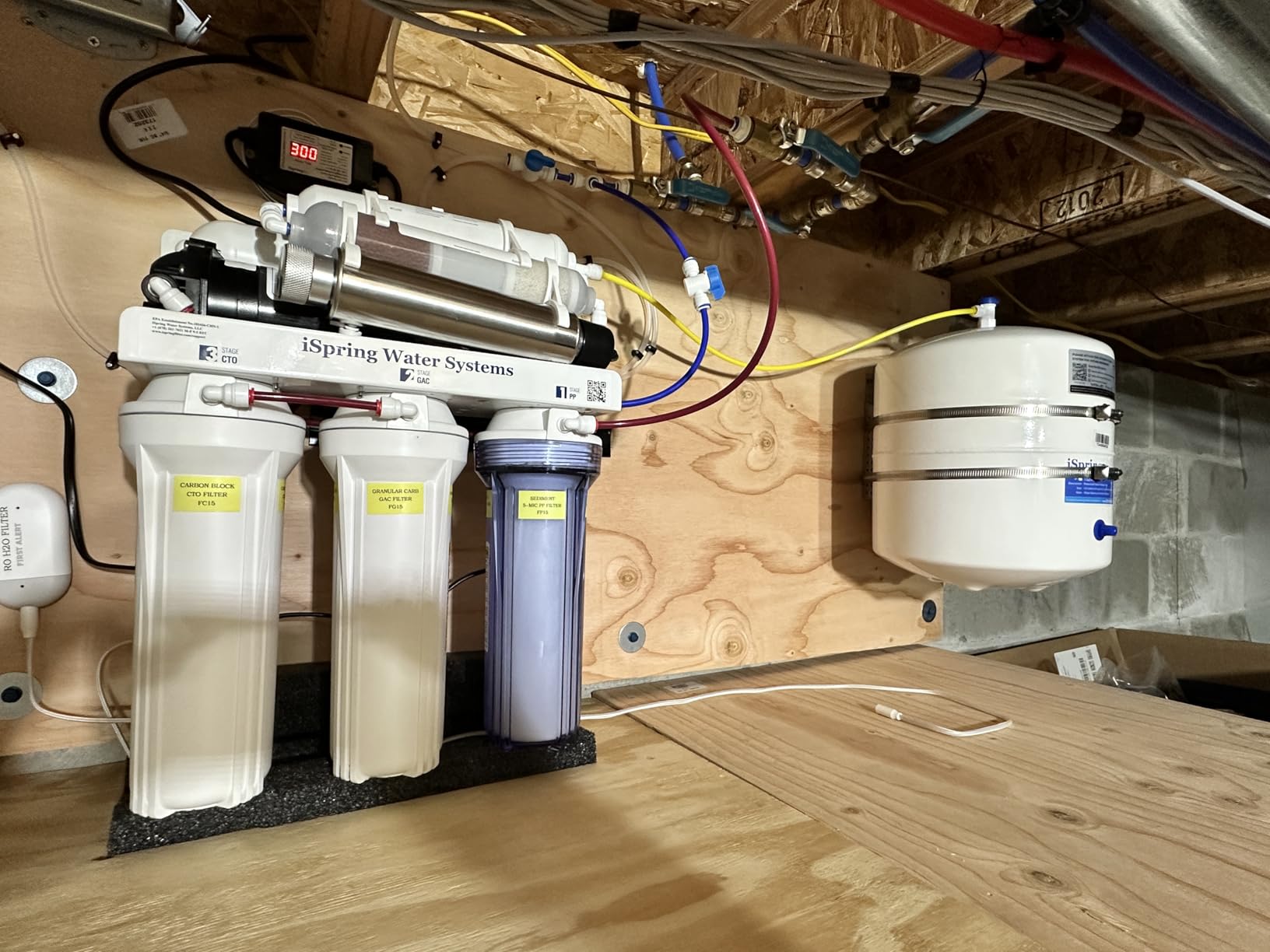
This is the system to look at when your line pressure is weak or your water is cold in winter. The booster pump holds feed pressure across the membrane, which is what keeps rejection rates high and cuts the wastewater ratio, and the 7-stage stack is claimed to reduce up to 99 percent of more than 1000 contaminants including fluoride, lead, arsenic, asbestos and PFAS.
The UV stage is the differentiator among pumped systems. It uses a smart flow sensor and a 3-minute activation delay, so the bulb only fires when water is actually moving, which saves power and extends bulb life. No RO membrane inactivates microbes on its own, so this is a genuine addition rather than a marketing line.
Long-term owners report TDS dropping from roughly 250 to 450 ppm down into the 12 to 30 ppm range, which is the honest expectation for a seven-stage pumped unit rather than the single-digit readings some listings imply. Support from the manufacturer comes up repeatedly in reviews spanning years.
Two practical notes. The pump is loud, and in a small apartment you will hear it every time the faucet opens. And the alkaline cartridge can develop an earthy taste if water sits in it, so flush the system for a few minutes after any cartridge change before drawing a glass.
Is the UV stage worth the added complexity?
It is worth it if there is any chance of surface-water influence, a private well, a roofless storage tank, or frequent main work that lets contaminants into the supply. UV is a good safety margin for roughly a modest add-on to your budget.
It is not worth it on a fully municipal supply with intact plumbing. UV addresses microbes, and municipal systems already handle those before the water reaches your tap.
How noisy is the booster pump in practice?
Audibly humming, and more noticeable than any tanked pumpless system in this roundup. In a quiet kitchen at night it is a low buzz that fades quickly once the faucet closes.
If noise sensitivity is a real concern, put the pump model on a list but verify cabinet clearances first. A cramped cabinet amplifies sound.
8. Home Master TMHP: Best for Fastest Flow and Lowest Drain Ratio
Home Master TMHP HydroPerfection Reverse Osmosis System, 9-stages, Patented 2-pass Alkaline Remineralization, Fast 4.5 Sec Fill Rate, 1:1 Waste Ratio, UV Sterilizer 99.9% EPA 97952AZ1, Iron Prefilter
1 gpm maximum flow
4.5 second fill rate
1:1 waste ratio with permeate pump
Pros
- Fastest flow in this roundup at roughly 5 seconds per bottle
- 1:1 waste ratio from the permeate pump
- EPA registered UV sterilizer
- Five-year parts warranty
Cons
- Mounting clips are stiff inside a cabinet
- Quick-connects need a tool to disconnect
- Highest purchase price of the group
This one has the highest average rating in the group and the shortest wait for a glass. A 20 oz bottle fills in about 4.5 seconds at a rated 1 gpm maximum flow, and the non-electric permeate pump delivers a 1:1 waste ratio, meaning essentially no water goes down the drain for every gallon you keep.
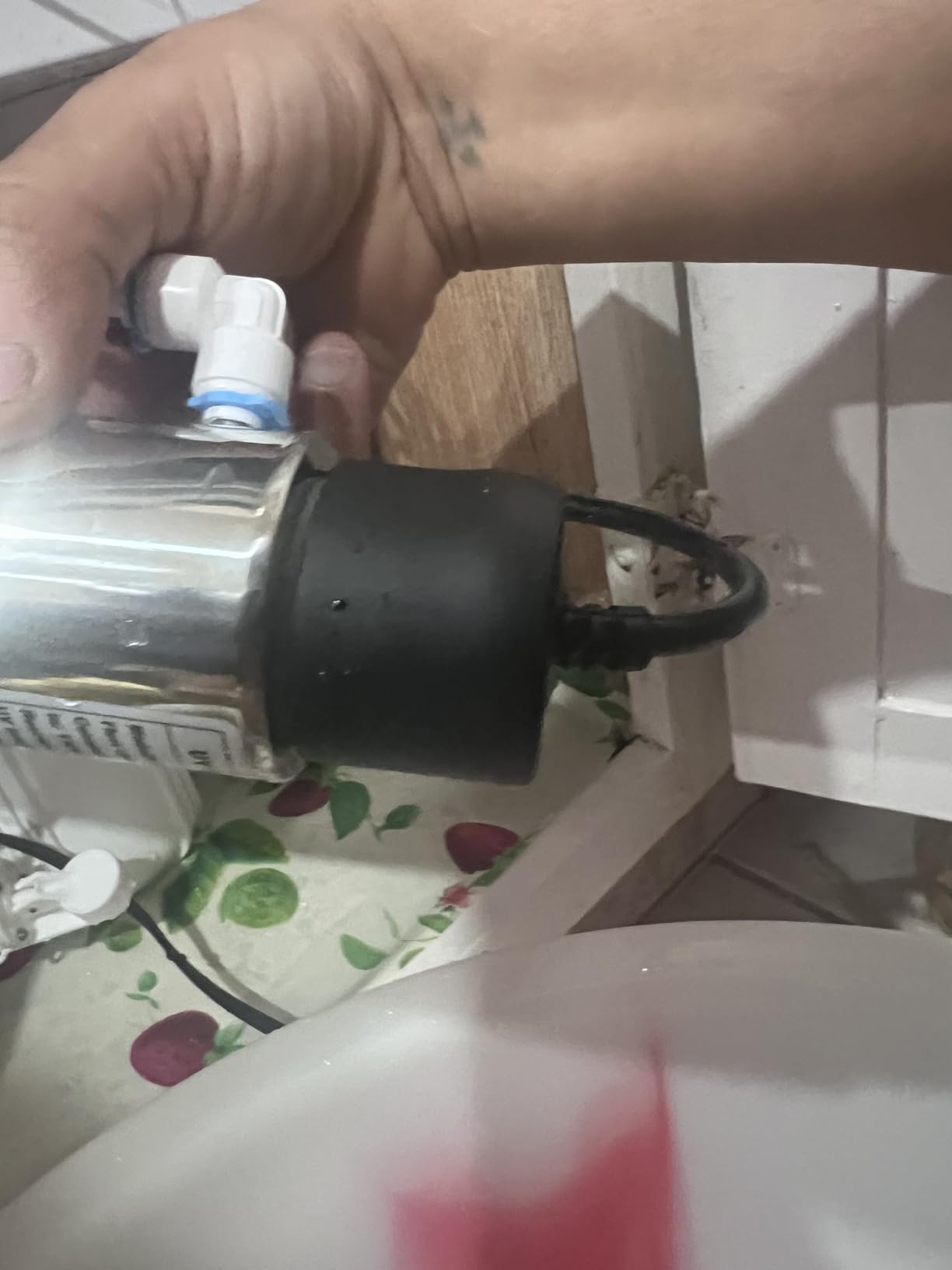
Purification runs 9 stages removing up to 99 percent of chemicals, metals and microplastics, followed by a patented two-pass alkaline remineralization that re-adds calcium and magnesium. The UV sterilizer carries EPA registration number 97952AZ1, which is a different and more specific claim than a generic UV label.
It also runs across a wide 40 to 100 psi band, so it suits both high and low pressure homes. The five-year limited parts warranty is the longest in this roundup, which matters when you are committing to a system for a decade rather than a year.
The install is the rough part. Mounting clips are stiff enough to be genuinely awkward inside a cabinet, and the quick-connect fittings need a tool to disconnect under pressure. Budget an extra hour, or have a plumber do it. Owners who have hit a leak report good resolution under warranty, which is a comfort given where the failure would show up.
Is a 1:1 drain ratio realistic outside the lab?
A 1:1 ratio is achievable on low-TDS municipal water with a permeate pump maintaining membrane pressure, and owners report it holds in everyday use.
On hard or high-TDS feed the same ratio costs more in membrane wear and cartridge life. If your supply is mineral-heavy, treat 1:1 as a best case rather than a promise.
Who should not buy the Home Master?
Buy something simpler if you are on a tight budget. It is the priciest unit here and the one where installation effort shows most clearly.
Renters should skip it too. Stiff clips plus quick-connects plus a permeate pump is a three-part install that is not worth attempting on someone else property.
9. NU Aqua 7-Stage UV Alkaline: Best With a Bundled Water Quality Meter
NU Aqua 7-Stage UV Alkaline Under Sink Reverse Osmosis Water Filter System
100 GPD flow rate
PPM meter included
120-day home trial period
Pros
- Complimentary PPM meter makes verification easy
- 120-day home trial and 3-year warranty
- Color-coded tubing speeds installation
- Stainless steel faucet and double o-ring housings
Cons
- Lowest average rating in this group at 4.4
- Alkaline stage can smell sulfur-like if under-flushed
- No booster pump so low pressure limits output
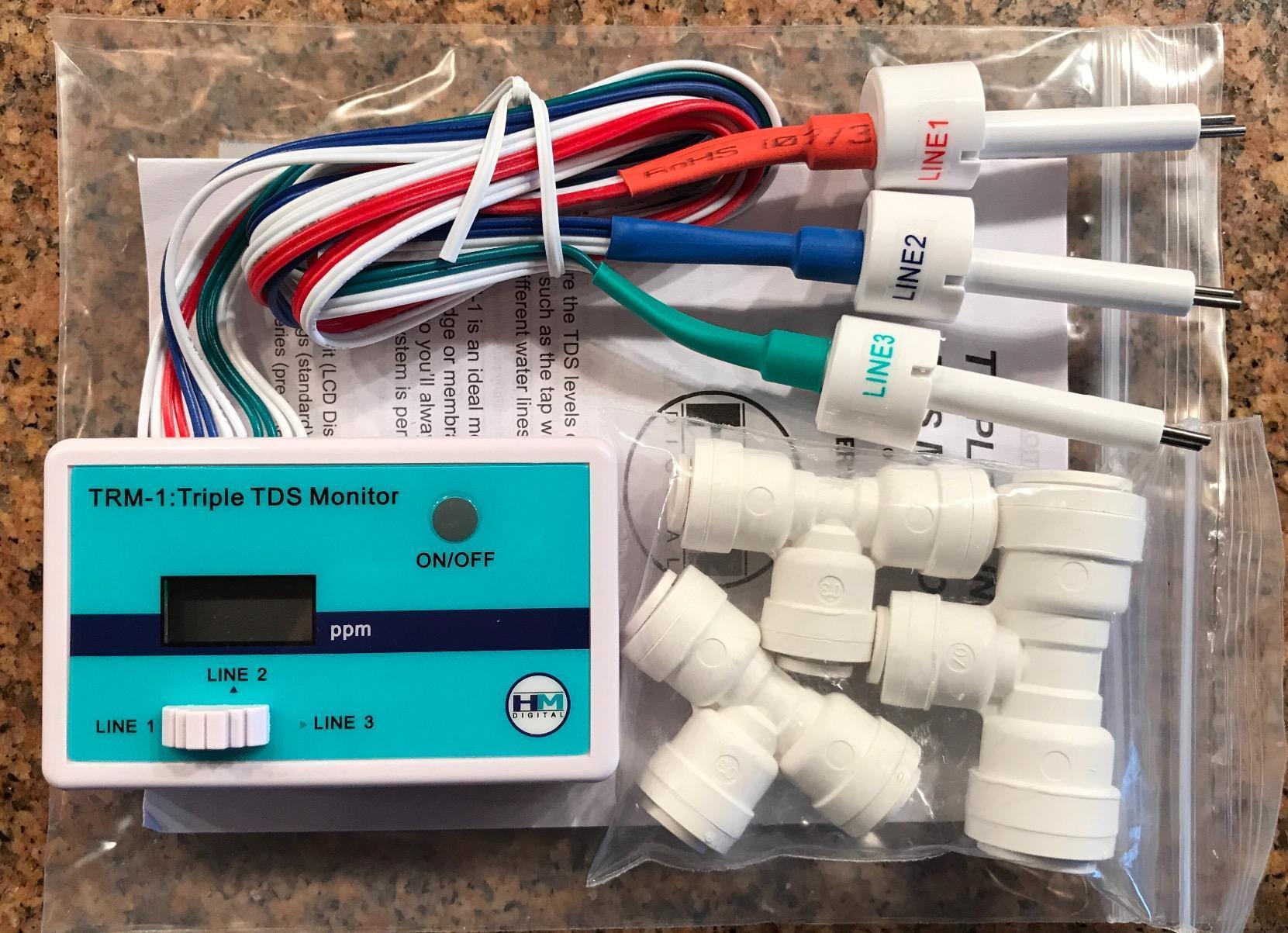
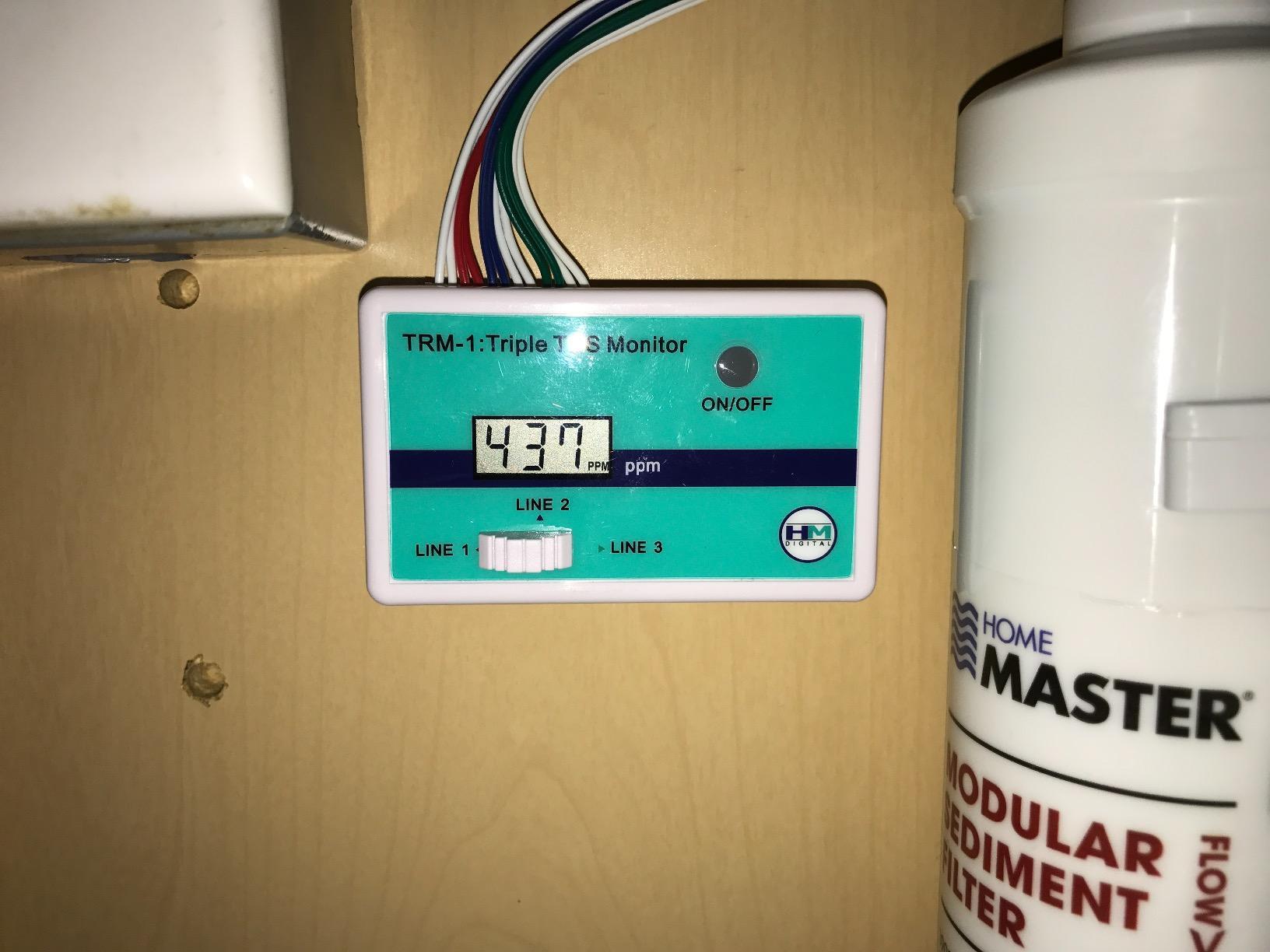
The inclusion of a free PPM meter is a quietly smart decision. Owners otherwise have to buy a meter to confirm the system is doing anything, and with a meter in the box you can watch TDS fall after installation and climb again as the membrane wears out. For a buyer whose main worry is whether fluoride is really being removed, that feedback loop is worth more than another carbon stage.
The system runs 7 stages of UV and alkaline RO on a HydraCoil membrane, with up to 99 percent rejection of more than 1000 total dissolved solids. It includes a 120-day home trial and a 3-year manufacturer warranty, which is the most generous trial window among the systems here.
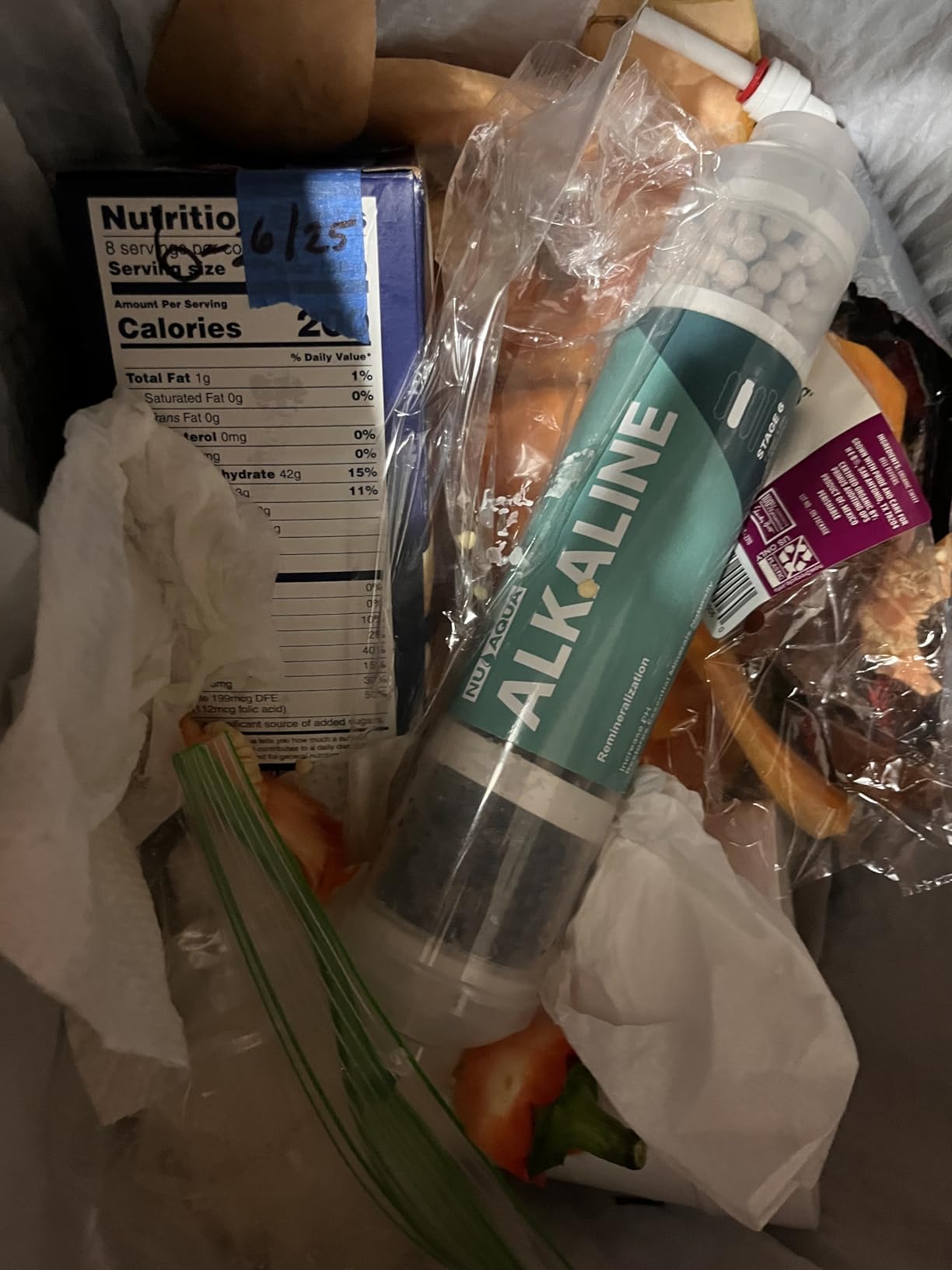
The recurring gripe is odor. If the alkaline stage is not flushed properly after installation or after a filter change, the water can carry a sulfur-like smell that owners mistake for a failed membrane. The fix is a long flush with the faucet running and the faucet lever held down to drain the first several gallons.
There is also no booster pump, so homes on low pressure see reduced output, and some owners have needed tank pressure adjustment or replaced an automatic shut-off valve after a few years. Budget for the tank as a consumable rather than a permanent fixture.
Can the bundled meter confirm fluoride removal?
Not directly. A PPM meter reads total dissolved solids, and fluoride is one contributor among many, so it tracks overall membrane performance rather than fluoride alone.
Use it for what it is good at: a trend line that tells you when to suspect the membrane. For an actual fluoride number, you need a fluoride-specific kit or a lab panel.
What does the 120-day home trial cover?
It gives you a season of real household use to decide whether the taste and output suit you, rather than judging from a glass poured in the first week.
Read the terms before you install. Some manufacturers require the original shipping packaging for returns, so keep the box until the trial period closes.
10. Geekpure RO6-AF: Best Budget Under-Sink Pick
Geekpure 6 Stage Reverse Osmosis RO Drinking Water Filter System-75 GPD
75 GPD six-stage system
Feed pressure 40-100 psi
2.8 gallon storage tank
Pros
- Lowest entry cost of the under-sink units compared
- Alkaline stage raises pH to 7.5-8.5
- NSF-certified membrane tubing fittings and tank
- Filter life about 1 year with quick-connect fittings
Cons
- 2.8 gallon tank means frequent refills
- Needs 40-100 psi feed pressure
- No UV stage for microbial protection
The Geekpure RO6-AF does the one thing this roundup cares about at the lowest entry cost of any under-sink system we compared. Its 6 stages reduce dissolved minerals plus arsenic, lead, mercury, fluoride and cadmium, and the membrane, tubing, fittings and tank are all NSF-certified rather than just the membrane.
The sixth stage is an alkaline remineralization cartridge that raises pH to between 7.5 and 8.5 and adds calcium, magnesium, sodium and potassium. Flow is 75 GPD at 60 psi feeding a 2.8 gallon pre-pressurized tank at 5 to 7 psi, and filter life runs about a year with the membrane at 2 to 3 years.
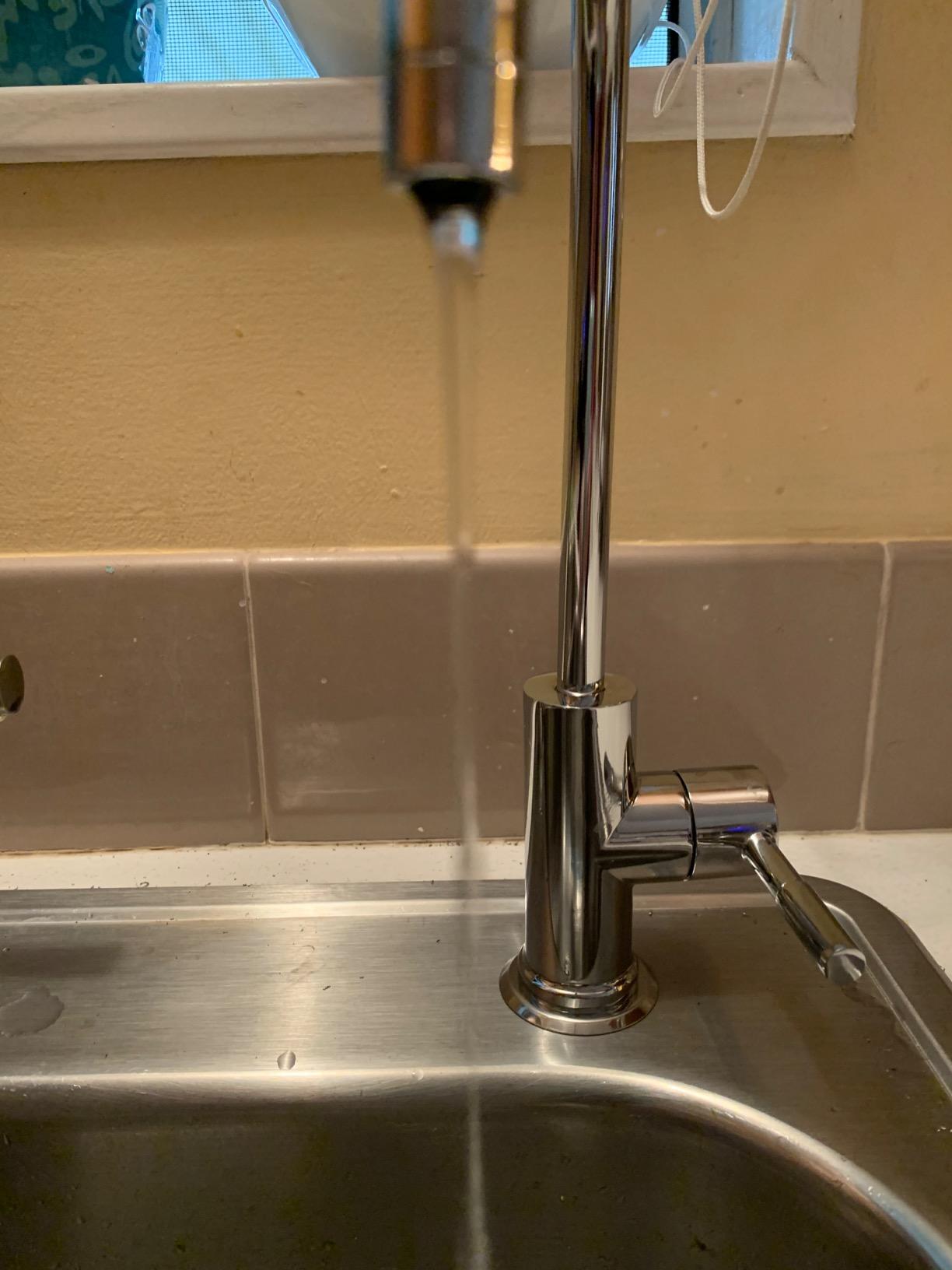
Owners single out value and effective fluoride and mineral reduction at this price point, and the quick-connect fittings with color-coded tubing plus install videos make a first-time install realistic. That combination is why it stays a repeat recommendation for apartments and student housing.
Two limits are worth planning around. The 2.8 gallon tank is the smallest storage volume in the roundup, so a household of three or more will refill often and wait on production. And without a booster pump, feed pressure must sit between 40 and 100 psi; below that you need their pump-equipped variant.
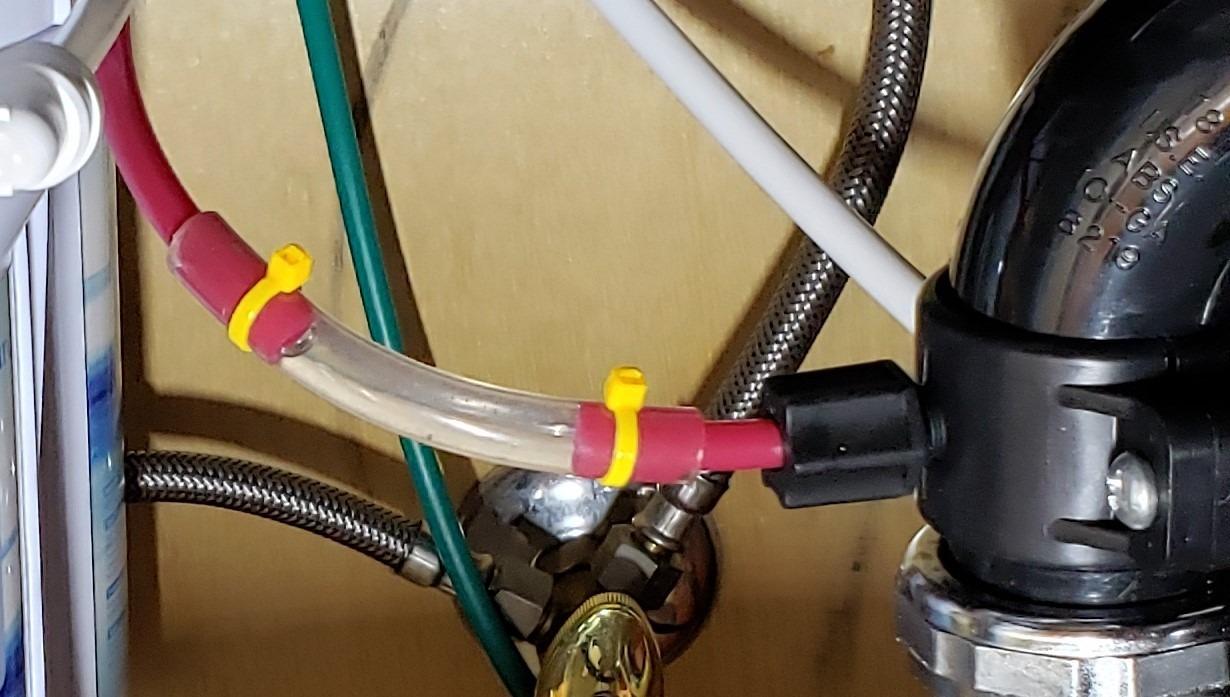
Is the Geekpure RO6-AF NSF certified for fluoride?
The individual components are NSF-certified, which covers material safety and specific contaminant claims per part rather than one blended system-wide number.
Because published fluoride percentages vary by model revision, look for the reduction figure on the listing you are actually buying. Do not assume it carries over from an older version of the same model.
What are the running costs?
Filter life of about 12 months with a membrane at 2 to 3 years keeps the ongoing cost among the lowest here, and standard housings mean parts are widely available.
Flush the system for about 30 minutes after any filter replacement, as the manufacturer instructs. Skipping the flush is the usual cause of the off-taste that makes new owners think something failed.
11. DREO Countertop RO Water Filter: Best for Self-Cleaning Cycles
DREO Reverse Osmosis Water Filter Countertop, RO Filtration System, 3:1 Pure to Drain, TDS & Filter Life & 2 Autofill Pitchers, Install-Free, Self-Cleaning Water Purifier, RO Water Filter
3:1 pure to drain ratio
5 liter tank capacity
Built-in TDS meter and filter indicator
Pros
- No plumbing or installation at all
- Includes two autofill pitchers for continuous supply
- Built-in TDS meter and filter-life indicator
- Self-cleaning function and touch controls
Cons
- 3:1 ratio is less efficient than 1:1 or 2:1 designs
- Countertop dispensing is slower than under-sink RO
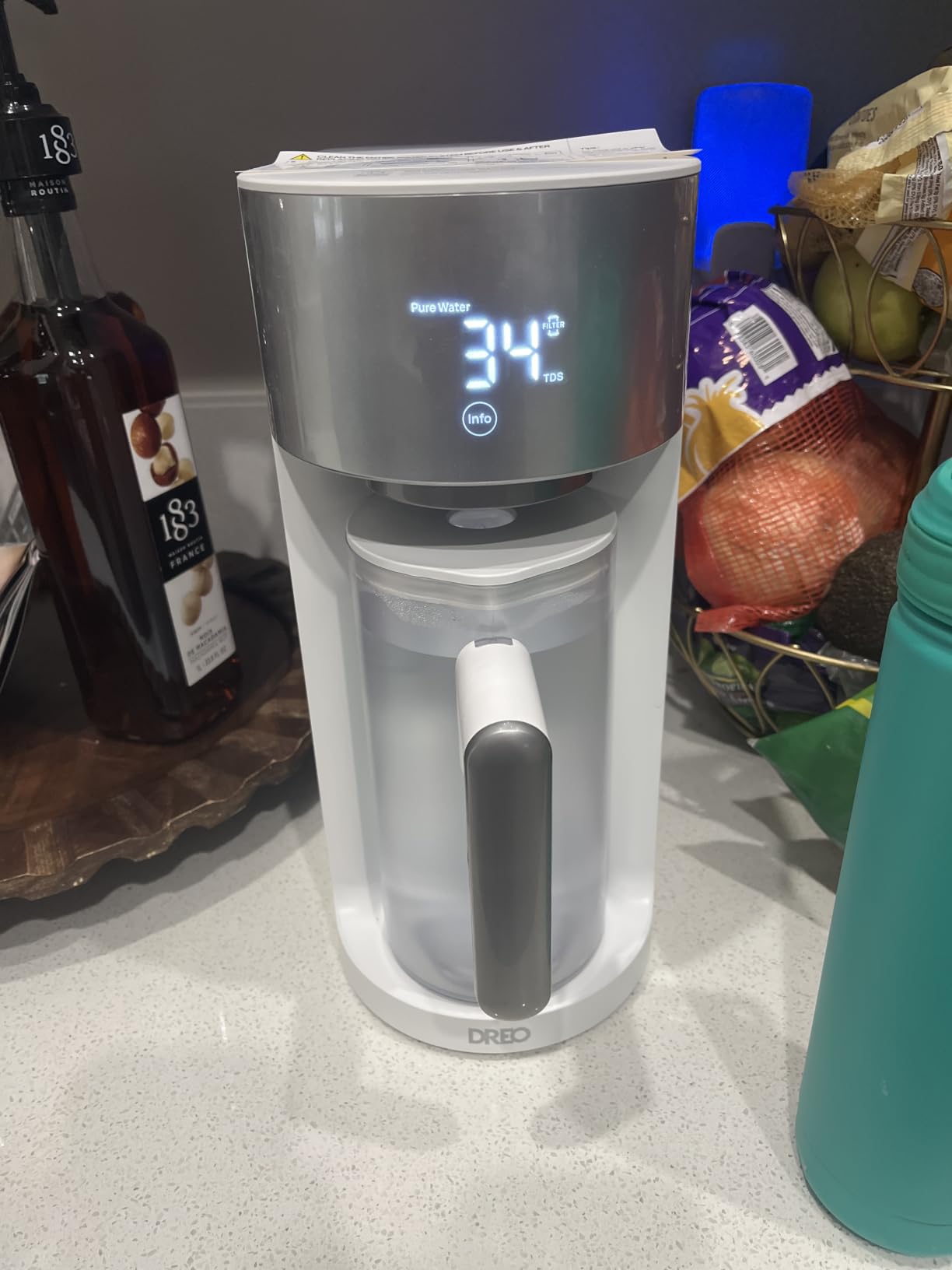
This is a genuinely different countertop approach: rather than one carafe you pour back and forth, it comes with two autofill pitchers that keep filling from the 5 liter reservoir. Owners consistently name the convenience of continuous filtered water, no installation, and a readable TDS display as the reasons it stands out.
It is a 7-in-1 unit tested by SGS to NSF/ANSI 58 standards, claiming 99.9 percent reduction across PFOA, PFOS, chlorine and fluoride. The self-cleaning function runs the unit through cycles so the membrane does not sit on stagnant water between uses, and touch controls sit on the front panel.
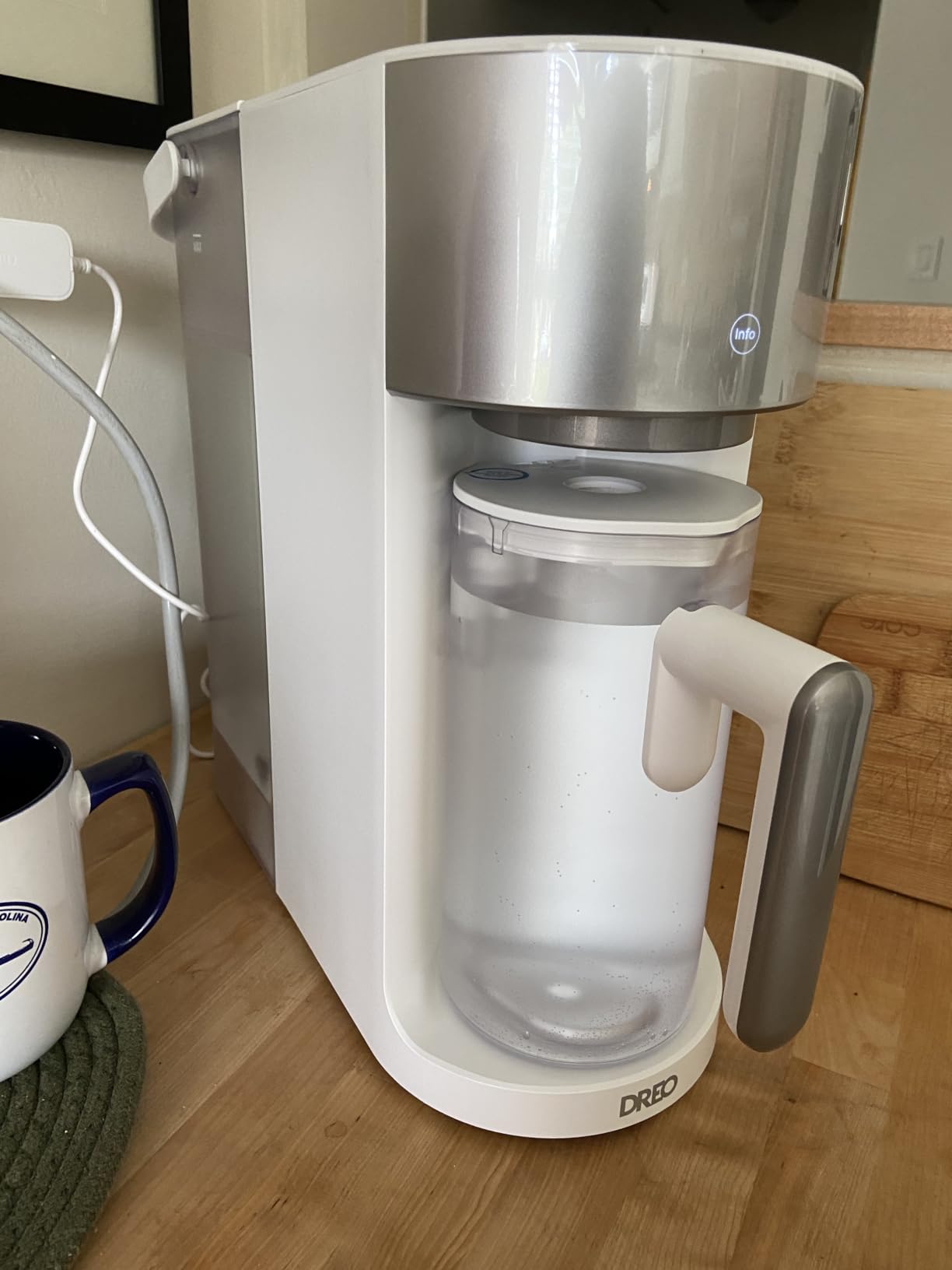
The honest comparison point is efficiency. At 3:1 pure to drain, this system wastes more water per gallon than the 1:1 and 2:1 designs elsewhere in this roundup. If you are only filtering a few liters a week, that difference barely registers on your bill.
Dispensing speed is the other trade. Countertop RO of this size simply cannot push water as fast as an under-sink membrane fed by household line pressure. Plan for short fills rather than filling a pitcher in one go, and the two included pitchers make that manageable.
Is DREO RO good enough for fluoride removal?
SGS testing to NSF/ANSI 58 is the right standard to look for, and fluoride is included in the stated contaminant list alongside PFAS and chlorine.
Treat the headline 99.9 percent as a controlled-test figure. On real municipal water starting around 1 ppm, even strong reduction lands you in the low tenths of a ppm, which is comfortably below every guideline.
Who is this model best for?
Apartment dwellers, dorm rooms, offices and anyone who moves often. Nothing is plumbed in, so the system travels with you rather than staying behind at the sink.
Households that already own a decent under-sink system can skip it. You would be paying to replace water you treat more cheaply per liter.
12. AquaTru Glass Carafe Alkaline: Best Lightweight Countertop Design
AquaTru Glass Carafe Alkaline Countertop Reverse Osmosis Water Purifier | 4 Stage RO System | Removes 84 Contaminants Including PFOA & PFOS (PFAS), Lead and Microplastics | Adds Alkaline Minerals
0.5 gpm filtration rate
Borosilicate glass carafe
IAPMO certified to NSF standards
Pros
- No plumbing drilling or installation required
- Glass carafe avoids water sitting in plastic
- pH+ mineral boost stage
- Fast filtration relative to other countertop units
Cons
- Glass carafe is fragile and replacements are slow to arrive
- Carafe lid can slip while pouring
- No on/off button so cycles can restart
The AquaTru Carafe has the most specific third-party certification claim in this roundup: 4-stage RO tested and certified to NSF standards by IAPMO, reducing 84 contaminants including microplastics, arsenic, PFOA and PFOS. The borosilicate glass carafe stores finished water rather than plastic, and the pH+ mineral boost stage adds alkaline minerals back in.
Filter intervals are clearly stated: the pre-carbon lasts 6 months or 300 gallons, the RO filter 1 year or 600 gallons, and the VOC carbon with pH+ mineral boost 1 year or 300 gallons. That transparency is more useful than a vague 12-month claim, and it comes with a 1-year warranty and a 30-day money-back guarantee.
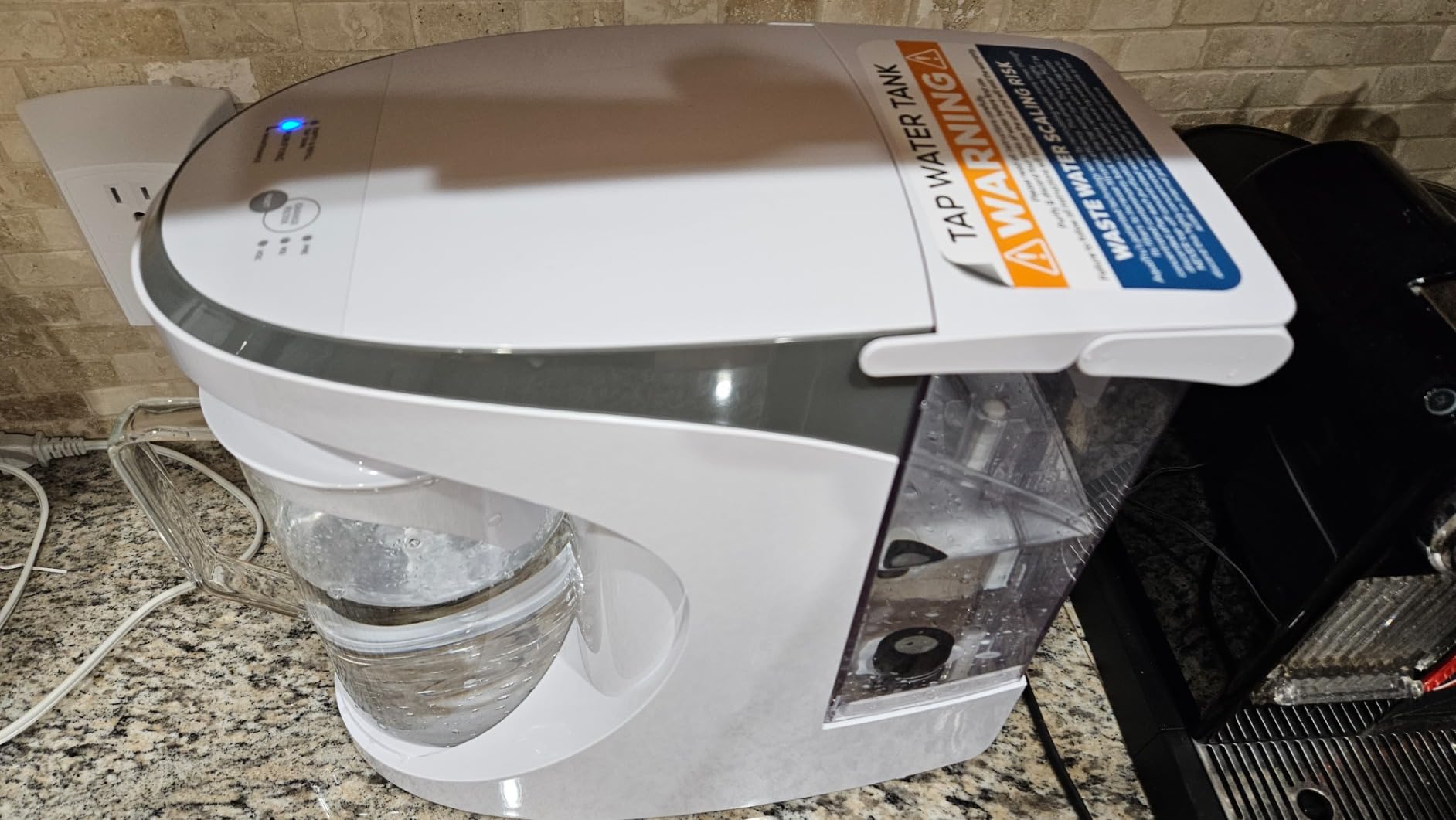
At 0.5 gpm it filters faster than most countertop units, and the whole thing weighs 4 pounds, so moving it between sinks is easy. It handles feed water up to 600 ppm TDS.
The complaints cluster around the carafe itself. Glass is fragile, replacement pitchers are slow to obtain, and the lid can slip during a pour. The base tank also has no locking clip, so position it away from counter edges, especially in homes with children. Owners also report needing descaling and replacing the RO filter earlier than the stated interval on hard water.
Why does the AquaTru score lower in reviews?
Most of the drop traces to consumables and hardware rather than filtration. A fragile pitcher with a slow replacement supply is a real ownership tax even when the water itself is excellent.
The missing on/off button is the other recurring note. Without it, a cycle can restart and re-filter collected reject water, wasting a cycle of membrane life.
Is countertop RO worth it for fluoride alone?
If your tap water is already low in fluoride and you only drink a liter or two a day, a countertop unit is proportionate to the problem and avoids any installation.
If your starting fluoride level is high, or the whole household drinks and cooks with the water, an under-sink system removes more per dollar and wastes less water per gallon treated.
How to Choose a Reverse Osmosis System for Fluoride Removal
Five factors decide whether you are happy with an RO system five years from now, and only one of them is the price tag on the unit. Our broader walkthrough of what to look for in reverse osmosis systems covers the general features in more depth.
1. Certification scope beats marketing language
Look for NSF/ANSI 58, which is the standard covering RO drinking water systems and the claims they can make about contaminant reduction. The detail that matters is scope. A system certified as a complete assembly means the housing, tubing and faucet are covered alongside the membrane, and you can look up the specific product in the NSF listings directory rather than trusting a listing photo.
Some units carry only NSF/ANSI 372, which is a lead-free materials standard and says nothing about fluoride. One system here carries both 58 and 372, and that difference should drive your shortlist.
2. Match gallons per day to how you actually use water
GPD is rated under ideal pressure and temperature, so treat it as a ceiling rather than a promise. A couple who drinks and cooks puts real demand on a system, while a family of four who only drinks water barely registers.
The common mistake is oversizing. A bigger membrane in a small home means water sitting in a tank for weeks, which is exactly the taste problem remineralization stages were invented to solve.
3. Drain ratio decides your water bill
Conventional tanked RO systems commonly run at 3:1 to 5:1 pure to drain. Pumped and tankless designs here run 1:1 or 2:1. On a household drinking two gallons a day, the difference over a year is meaningful enough that we would choose a higher ratio over a cheaper unit if the budget allowed.
4. Remineralization is about taste, not safety
An alkaline post-filter raises pH above 7 and adds calcium and magnesium back. It does not affect fluoride removal either way. Choose it if you want water that tastes like mineral water, and skip it if you prefer the clean flat profile of straight RO.
5. Installation reality beats spec sheets
Under-sink systems need a cold water line, a drain, a faucet hole and sometimes an electrical outlet. Pumped models add noise. Tankless models need drilling. Countertop units need none of it but trade away flow speed and per-gallon efficiency.
Ranked from easiest to hardest: countertop plug-in, tanked under-sink with quick-connect fittings, pumped under-sink, then anything with UV, a permeate pump or stiff mounting hardware.
Under Sink, Countertop or Tankless: Picking the Right Format
Format is the decision that matters most after filtration performance, and it is mostly a question of permanence and household size. Under-sink tanked systems are the traditional choice: a storage tank means you can draw a pitcher instantly and a glass comes out at a usable pace. They need permanent plumbing and cabinet space.
Tankless under-sink systems trade the tank for live production and, in most cases, a 1:1 or 2:1 drain ratio plus on-panel data about water quality. Our dedicated guide to tankless reverse osmosis systems goes deeper on this format.
Countertop units are the renter answer. No drilling, no plumber, and glass carafe storage if plastic contact bothers you. What you give up is dispensing speed, per-gallon efficiency and, on some models, filter interval length.
Maintenance Schedule and What It Really Costs
Every system in this roundup needs attention on a schedule, and none of them are as hands-off as the listings suggest. The practical pattern across brands is a sediment and carbon pre-filter every 6 to 12 months, an RO membrane at 1 to 3 years, and alkaline or carbon polish stages on their own 6 to 12 month cycles.
The most common failure is not a bad membrane, it is a neglected pre-filter. When sediment and carbon are past capacity, they load the membrane, and the membrane starts rejecting less fluoride while your water quality quietly drifts. Set recurring reminders at install rather than waiting for a taste change.
Sanitize the system at every filter change. Most manufacturers specify a sanitizer tablet or a bleach cycle followed by a thorough flush, and skipping it means the storage tank or housing becomes a growth surface for exactly the bacteria a UV stage would otherwise handle.
To estimate running cost per gallon, add the annual cost of all replacement stages and divide by the gallons your household actually drinks. Do not divide by system capacity, because an oversized membrane still only treats what you draw. Filter cost per gallon is usually low; the real cost is cartridges you replace on schedule and do not fully use.
Two habits cut waste. If you have hard water, descale on a schedule rather than waiting for a flow drop, and never leave the faucet open while you do other kitchen tasks. Every extra second of running water is treated water heading to the drain.
How to Test and Verify Fluoride Removal
Start with your source. A fluoride-specific test kit from a water testing company gives a reasonable screening number at home, while a certified laboratory panel is the only result you can rely on for a health decision. Many municipal utilities also publish annual water quality reports with fluoride levels, which costs nothing to look up.
Then verify the system. A TDS meter is a useful proxy for overall membrane performance even though it cannot isolate fluoride, and the units here that display TDS on the faucet make trend-watching effortless. A rising TDS reading is your cue to test and to suspect the membrane.
Run a control comparison. Fill one glass with tap water and one with treated water from the same faucet, test both, and write the numbers on the fridge with the install date. Repeating that same check at six and twelve months turns a guess about whether your system still works into an actual measurement.
Frequently Asked Questions
Will a reverse osmosis system remove fluoride?
Yes. A reverse osmosis system uses a semi-permeable membrane with 0.0001 micron pores to reject fluoride ions, and well-built units typically reduce fluoride by 95 to 99 percent. That brings a glass of municipal tap water well below the EPA enforceable limit of 4.0 mg/L and far below the 0.7 mg/L level the CDC recommends.
Which water filtration system is best for removing fluoride?
For drinking and cooking water, reverse osmosis is the most reliable household option because it rejects 95 to 99 percent of fluoride along with metals, nitrates and PFAS. Activated alumina and bone char handle fluoride at lower cost but need frequent media replacement and do not remove anything else. Distillation removes fluoride completely but is slow and impractical for daily use.
Is RO water hard on the kidneys?
There is no widely accepted evidence that drinking properly remineralized RO water damages healthy kidneys. The concern worth taking seriously is different: long-term studies of general population fluoride intake do not point to kidney harm either. If you have existing kidney disease, talk with your doctor about your own fluoride intake rather than relying on general guidance.
Is there a water filter that removes fluoride completely?
Not in normal use. Only distillation drives fluoride to effectively zero, and it is impractical as a daily drinking solution. Reverse osmosis gets very close, typically to a few hundredths of a ppm, which is far below every health guideline. Systems claiming 99.9 percent removal describe controlled test conditions, so your real result depends on your starting level and membrane condition.
How often do I need to change an RO membrane for fluoride removal?
Most manufacturers rate the membrane at 2 to 3 years, and fluoride reduction stays strong until rejection starts to decay. Change pre-filters every 6 to 12 months so sediment and carbon never overload the membrane, and test your water at least yearly. A rising TDS reading is the earliest practical sign that the membrane is losing performance.
Can reverse osmosis remove fluoride from well water?
Yes, and reverse osmosis is often the better choice on well water because it removes fluoride, iron, nitrates, arsenic and hard-water minerals at the same time. Two cautions apply: check the feed TDS ceiling for your specific model, since high mineral content shortens membrane life, and add a booster pump if your line pressure sits below 40 psi.
Final Recommendations
After comparing 12 systems on fluoride performance, drain ratio, taste and the amount of attention they demand, the best reverse osmosis systems for fluoride removal come down to a few clear winners. The iSpring RCC7AK-BN takes our top spot for the strongest combination of documented fluoride reduction, system-wide NSF/ANSI 58 certification and the largest base of long-term owner feedback in the group.
For tighter budgets the APEC ROES-50 delivers proven fluoride and heavy metal reduction on standard replaceable parts, and the Geekpure RO6-AF covers the same ground at the lowest entry cost. Renters and anyone who cannot touch plumbing should start with the Bluevua RO100ROPOT or the AquaTru glass carafe, both of which store finished water in borosilicate glass.
Whatever you pick, test your source water first and keep the pre-filters on schedule. Those two habits do more for real-world fluoride removal than any spec on the box.