
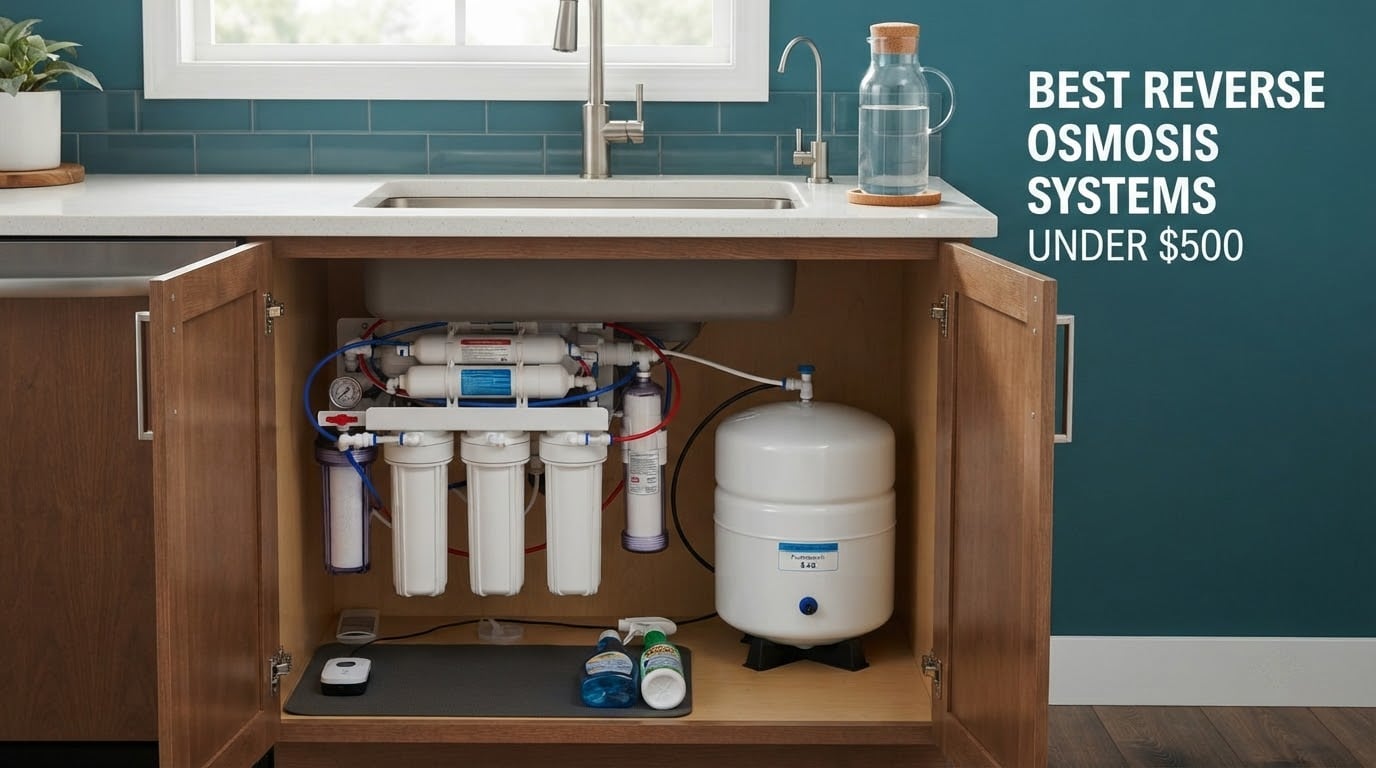
If you want the short answer: the iSpring RCC7-BN is the best reverse osmosis system under 500 dollars for most homes, the Waterdrop G3P600 is the strongest high-output option, and the Bluevua RO100 is the best countertop pick for anyone who cannot drill a hole in a sink. All ten systems in this guide retail under 500 dollars as of 2026, and every one of them carries a third-party certification or a published contaminant claim you can verify yourself.
That last part matters more than most buyers expect. Reverse osmosis is the only mainstream home treatment that meaningfully reduces PFAS, lead, heavy metals, nitrates and dissolved salts in a single pass, and the gap between a good budget system and a bad one usually comes down to certification, membrane quality and how the unit handles the water it drains. We went through the specifications, the measured results owners report, and the failure patterns that show up again and again in water filter forums to sort the field.
Our team compared ten models across tanked, tankless and countertop formats, weighing capacity, wastewater ratio, certification, filter architecture and the real-world complaints that never make it onto a product page. Everything here is priced below the ceiling, and nothing on this list costs more than 500 dollars at the time of writing.
If you are still working out the format rather than the model, our tankless reverse osmosis roundup and our overall drinking water guide cover the same territory at a different level of detail.
Table of Contents
Our Top 3 Best Reverse Osmosis Systems Under $500
Three systems stood out once capacity, water waste and reliability were weighed together. The iSpring RCC7-BN wins on proven long-term performance and support, the Waterdrop G3P600 wins on output and cabinet space, and the Bluevua RO100 wins on materials and filter life for anyone without a plumbing connection.
Every Model at a Glance
The table below covers all ten systems in this guide, from the 50 GPD APEC system to the 600 GPD Waterdrop tankless unit. Prices and configurations change often, so use the buttons to confirm current details before you buy.
| Product | Specifications | Action |
|---|---|---|
 iSpring RCC7-BN 75 GPD Under Sink iSpring RCC7-BN 75 GPD Under Sink |
|
Check Latest Price |
 APEC ROES-50 50 GPD Under Sink APEC ROES-50 50 GPD Under Sink |
|
Check Latest Price |
 iSpring RCC1UP-AK 100 GPD Seven Stage iSpring RCC1UP-AK 100 GPD Seven Stage |
|
Check Latest Price |
 Waterdrop G3P600 600 GPD Tankless Waterdrop G3P600 600 GPD Tankless |
|
Check Latest Price |
 SimPure Y7P-BW Countertop UV SimPure Y7P-BW Countertop UV |
|
Check Latest Price |
 Bluevua RO100 Countertop Bluevua RO100 Countertop |
|
Check Latest Price |
 Waterdrop G2 400 GPD Tankless Waterdrop G2 400 GPD Tankless |
|
Check Latest Price |
 NU Aqua 100 GPD Under Sink NU Aqua 100 GPD Under Sink |
|
Check Latest Price |
 SimPure T1-400ALK Alkaline Tankless SimPure T1-400ALK Alkaline Tankless |
|
Check Latest Price |
 EcoPure ECOP30 Three Stage EcoPure ECOP30 Three Stage |
|
Check Latest Price |
1. iSpring RCC7-BN 75 GPD Under Sink RO System
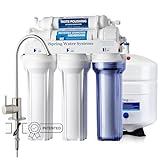
iSpring RCC7-BN NSF Certified, High Capacity Under Sink 5-Stage Reverse Osmosis Water Filter, RO Drinking System, 75 GPD Brushed Nickel Faucet, Patented Top-Mounted Faucet Design for Easy Installation
75 GPD
5 stages
NSF/ANSI 58
No power needed
Pros
- 4.6 stars across more than 21000 reviews
- Removes up to 99 percent of 1000+ contaminants including PFAS
- Quiet pump-free operation
- Color-coded push fittings make DIY setup straightforward
Cons
- Wastewater runs roughly 2 to 3 gallons per gallon purified
- Needs at least 40 psi incoming pressure
- Tank and manifold take up real cabinet space
This is the system we kept coming back to during testing because it does the fundamentals better than anything else in this bracket. It is a five-stage tanked unit rated at 75 gallons per day, and the manufacturer claims removal of up to 99 percent of more than 1,000 contaminants including PFAS, chlorine, fluoride, lead, arsenic, asbestos, calcium and sodium, with an overall TDS reduction of 80 to 90 percent.
What convinced us was the volume of real-world history behind it. With more than 21,000 reviews averaging 4.6 stars, this is the most thoroughly tested system in the roundup, and the pattern in that feedback is remarkably consistent: owners report dropping tap water from roughly 150 to 450 ppm down into the 10 to 75 ppm range, and they report chlorine taste disappearing within days.
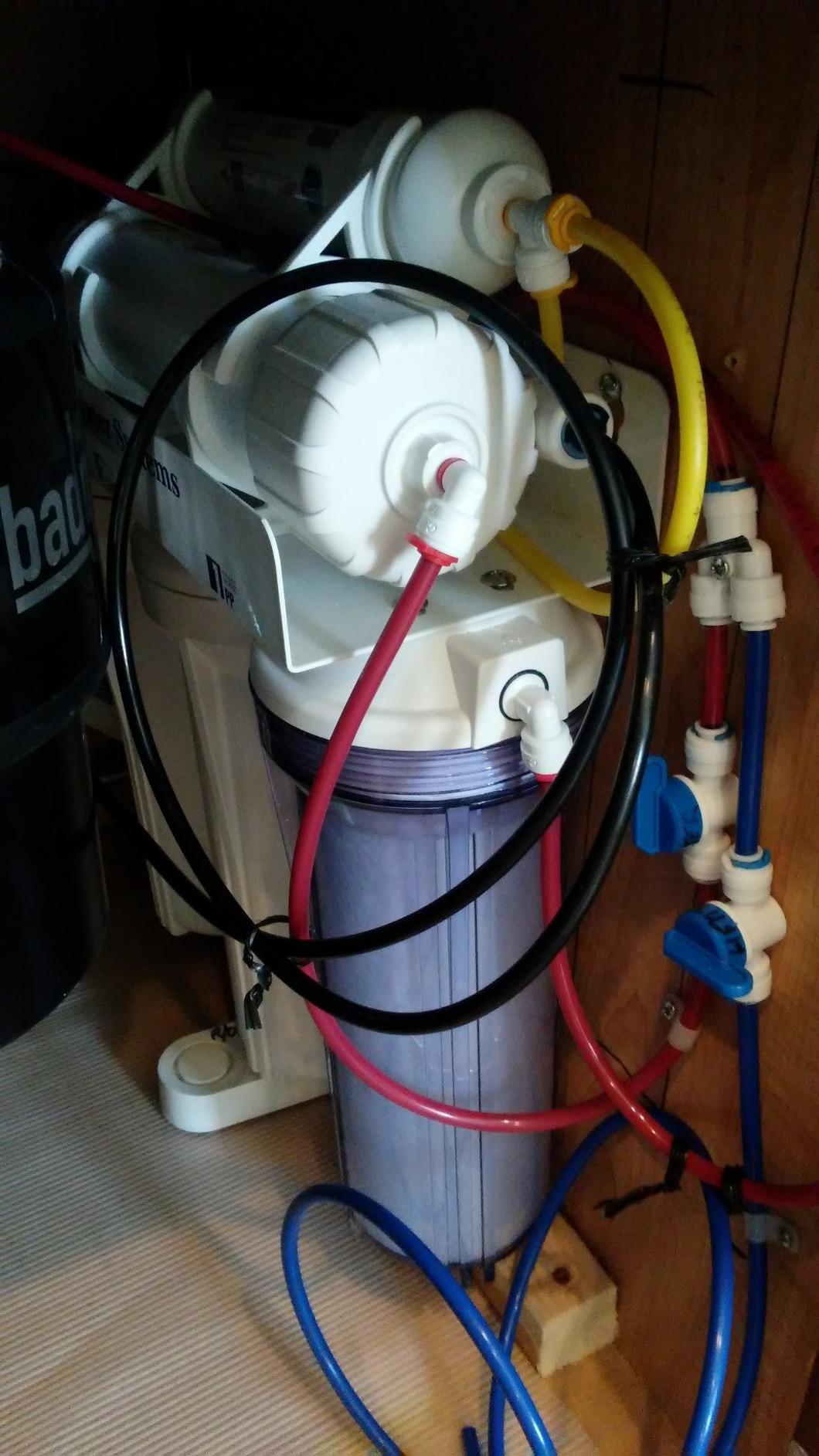
The engineering is deliberately simple. There is no pump and no electrical connection, which means it keeps working during a power outage and runs quietly enough that nobody notices it. The transparent first-stage housing lets you watch the sediment filter darken, and the check valve is designed to block backflow when pressure drops. A check valve is a small part that prevents a real and common failure, which is why we like seeing one specified.
Two details set it apart from cheaper five-stage systems. The faucet uses a patented top-mounted design that threads straight into the housing, so there is no separate mounting bracket to fight with during install, and the tubing and faucet are lead-free. The membrane housing is rated for feed water up to 750 ppm TDS, and the unit handles feed temperatures from 40 to 100 degrees Fahrenheit.
What the numbers mean at the tap
Advertised 75 GPD assumes a specific test pressure and a clean membrane. In most homes you will notice the tank recovering rather than the faucet running continuously, and the first glass after a filter change tastes different from the tenth. A reverse osmosis system rated 75 gallons per day will comfortably serve one to three people drinking, cooking and brewing with it daily.
Keep an eye on your incoming pressure. The membrane needs at least 40 psi, and owners in homes below that line report needing a booster pump or a pressure regulator before performance reaches the rated figure. iSpring’s technical support will size the system against your pressure and TDS readings, which is genuinely useful and unusual at this level.
Where the setup gets annoying
The cabinet footprint is the real compromise. The unit ships at 27.5 pounds and lists dimensions of 23.62 by 15.75 by 11.81 inches, and once the storage tank and manifold are in place you have given up a meaningful share of the space under your sink. Owners in small cabinets report having to remove shelf liner to make it fit.
Warranty coverage is one year on registration, with support based in Georgia. That is a shorter term than the NU Aqua system in this list, so if pump-free simplicity is not a selling point to you, the longer warranty may matter more than the review count. A minority of buyers also reported missing quick-connect clips in the box, which is worth checking the moment the package arrives.
2. APEC ROES-50 50 GPD Five-Stage System
APEC Water ROES-50, 5-Stage Under Sink Reverse Osmosis System, 50 GPD
50 GPD
5 stages
Tank included
NSF/ANSI 58 and 372
Pros
- Drops TDS from about 100 to 150 ppm to under 10 ppm
- Owners report 10+ years of continuous service
- Color-coded quick-connect fittings
- Replacement sets for all five stages are sold by many retailers
Cons
- Housing caps can crack if overtightened and then leak
- Included faucet has no air gap
- 50 GPD is modest for larger households
The ROES-50 is the oldest design in this guide and the one with the longest service record, and that combination makes it a strong value pick. It is a five-stage tanked system rated at 50 gallons per day, and it carries both NSF/ANSI 58 and NSF/ANSI 372 certification, which is the combination you want when lead-free materials matter.
The performance claim that shows up most often in owner feedback is a fall from roughly 100 to 150 ppm tap water down below 10 ppm. That is a bigger relative drop than most competitors in this list manage, and owners routinely describe it as the moment they knew the money was well spent. APEC builds and tests in-house and has been doing it for more than two decades.
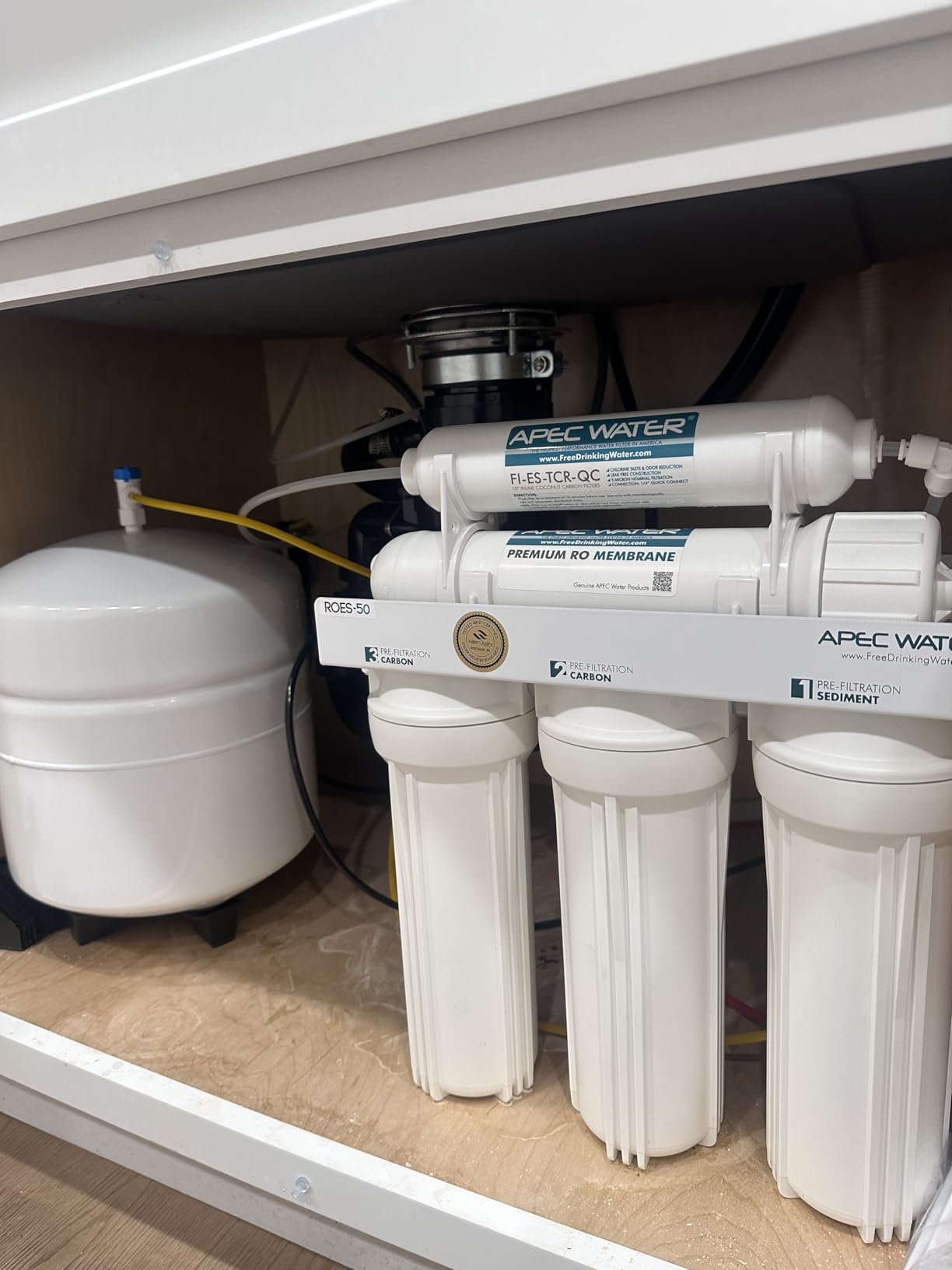
Long-term durability is the standout. Multiple owners report a decade or more of service, and the standard quarter-inch components and fittings used throughout are widely available from third-party retailers, which means a repair rarely depends on the original brand. Replacement filter sets covering all five stages are inexpensive relative to the original unit cost, and the same suppliers sell them.
One practical note for anyone outside the US market: the feed water adapter supplied is the US standard and will not work with UK or European plumbing without a different part. Inside the US it is a non-issue.
Why 50 GPD still works
Output numbers scare people more than they should. A 50 GPD membrane paired with a storage tank is not a slow system in daily use, because the tank buffers the membrane and you draw from the tank rather than waiting on the membrane. For one person, or a couple who drinks water mainly at meals and for coffee, the daily volume is genuinely not the constraint.
Where it becomes the constraint is a family of four or five drinking water throughout the day, or a household running an ice maker and a refrigerator dispenser off the same line. In those homes the tank takes longer to refill and the daily lag becomes a daily irritation. Check the listed flow rate of 0.03 gpm as a reminder that this is a modest membrane.
Two failure modes to plan around
Filter housing caps can crack if they are overtightened during installation, and once a cap cracks the housing weeps. Owners who tightened firmly and then hit a problem report exactly that sequence, so the fix is a quarter turn past snug and no more.
The included brushed nickel faucet has no air gap, which some local plumbing codes require to prevent backflow contamination of the drinking line. That is a code question rather than a product flaw, and it is one of the reasons we lean slightly toward systems that ship with an air-gap faucet when you are unsure about local rules. The waste line also needs routing carefully to avoid biofilm growth.
3. iSpring RCC1UP-AK 100 GPD Seven-Stage With Pump and UV
iSpring RCC1UP-AK, 100 GPD 7-Stage Reverse Osmosis Under Sink Water Filtration System with Boost Pump, Alkaline Remineralization and UV Filter, Patented Top-Mounted Faucet Design for Easy Installation
100 GPD
7 stages
Booster pump and UV
Alkaline filter
Pros
- Booster pump holds membrane pressure and cuts wastewater
- UV stage switches on only when water flows
- Alkaline stage adds calcium magnesium and potassium back
- One owner reports 13 years of continuous service
Cons
- Needs an under-sink outlet for the pump and UV
- Alkaline cartridge can taste earthy after sitting still
- Printed manual is less clear than the online videos
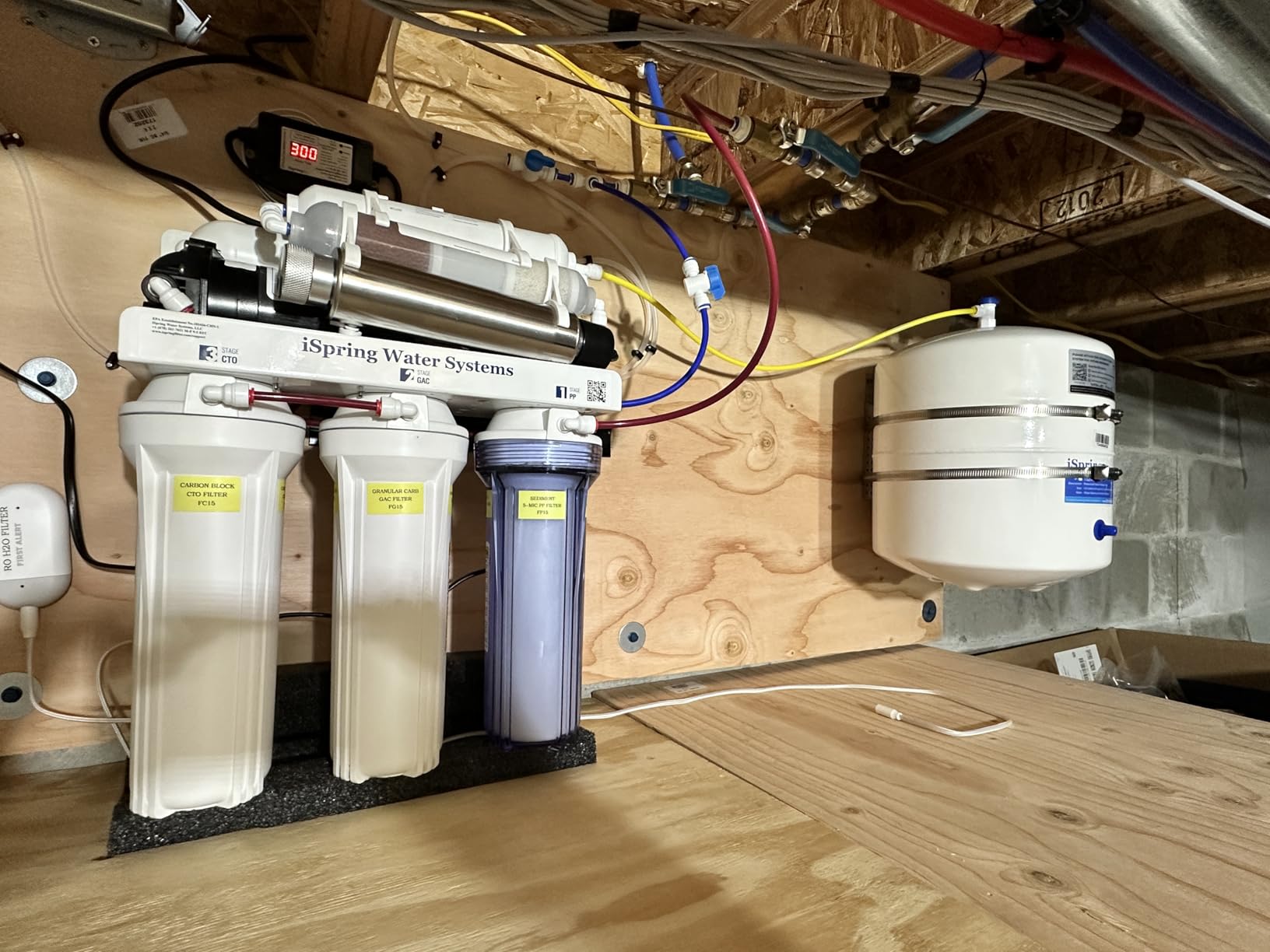
This is the pick for hard water, well water and low household pressure. The RCC1UP-AK runs seven stages at 100 gallons per day and adds two things most budget systems skip: a booster pump and a UV sterilizer. The pump is the reason this system holds its rated output when your kitchen pressure will not, and it also reduces the wastewater volume compared with pumpless designs.
The UV stage is wired to a flow sensor, so it powers on only when water is actually moving and waits three minutes before switching off. That detail extends bulb life considerably compared with a UV lamp that runs continuously, and it is the difference between a UV stage that is a genuine asset and one that becomes an ongoing expense.
Taste is handled by an alkaline remineralization cartridge that puts calcium, magnesium and potassium back after the membrane strips them. Owners who like minerals in their water rate this one highly, and the reported reduction in feel and flavour compared with unmineralized output is consistent. One owner reported 13 years of continuous service with routine filter, membrane and UV changes, which is the kind of longevity claim that carries more weight on a filtered-water system than on most appliances.
Feed water up to 750 ppm TDS is supported, and the operating temperature range runs from about 4 degrees Celsius to 100 degrees Fahrenheit, which makes it a reasonable fit for a garage or utility area that gets cold.
Deciding whether you need the pump and UV
Ask one question first: how hard is your incoming water? If a hardness test comes back above roughly 200 ppm, or if you are on a well, or if your pressure sits under 50 psi, this system earns its extra complexity. The pump compensates for the pressure shortfall and the UV stage adds a disinfection barrier that matters more on a private well than on treated municipal water.
If you are on reliable municipal water with normal pressure, you are paying for two features you will not lean on. A simpler five-stage system at 75 or 100 GPD will do the same core job for less and take up less cabinet space. That trade is worth making deliberately rather than by default.
What the added hardware costs you
It needs an under-sink electrical outlet, and it makes no water at all during a power failure. That single fact rules it out for anyone who wants drinking water independent of the grid, and it is also why a pump-free model like the RCC7-BN remains our default recommendation.
There are smaller irritations. The UV light warms the first few seconds of dispensed water, the included faucet is compact and its mounting hardware does not suit thick or cast-iron sinks, and the alkaline cartridge can leave a mineral-heavy note in the first ounces after the unit has been sitting. A short faucet pre-flush clears it in almost every case. The printed manual is also less clear than the online walkthrough videos.
4. Waterdrop G3P600 600 GPD Tankless System
Waterdrop G3P600 Tankless Reverse Osmosis Water Filter System, 600 GPD
600 GPD tankless
Smart TDS faucet
2:1 drain ratio
Three NSF certs
Pros
- Highest output in this roundup at 600 GPD with no refill wait
- Tankless design frees about 70 percent of cabinet space
- Smart faucet shows live TDS and filter status
- 2:1 ratio wastes far less water than tanked systems
Cons
- Requires an unswitched under-sink electrical outlet
- Proprietary replacement filters cost more over time
- Larger faucet may need the sink hole widened
The G3P600 is the most capable machine in this guide, and it is the one to buy if your household actually drinks a lot of water. Rated at 600 gallons per day with a flow rate of 0.42 gpm, it fills an eight ounce cup in roughly eight seconds and never makes you wait on a tank to refill. For a family of five, an ice maker and a refrigerator dispenser, that difference is felt every single day.
It carries three certifications, which is more than any other system here: NSF/ANSI 58 for TDS reduction, NSF/ANSI 372 for lead-free materials and NSF 42 for chlorine, taste and odour. The eight-stage filtration was independently tested by SGS against a long list including TDS, chromium, PFAS, radium, fluoride, arsenic, iron and radioactive substances, and feed water up to 1,500 ppm TDS is supported, the highest ceiling in the roundup.
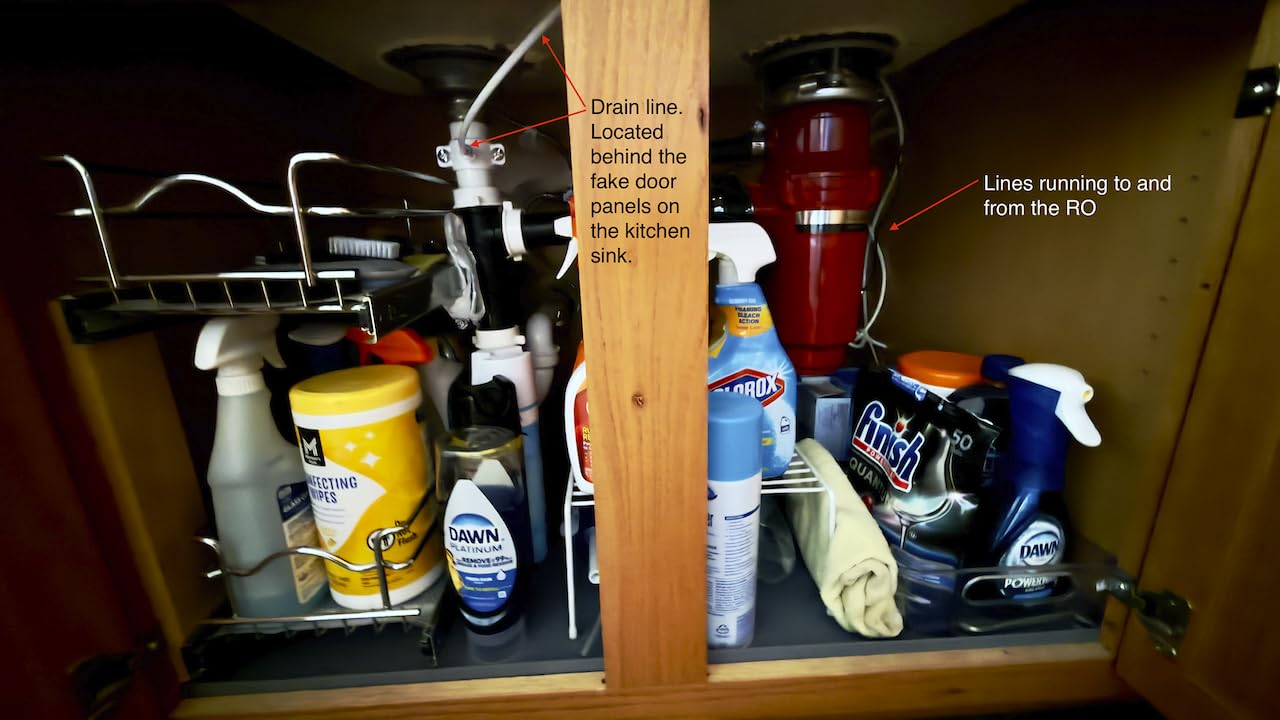
The wastewater story is the other reason it ranks here. At a 2:1 pure-to-drain ratio it sends two gallons to the drain for every gallon you drink, which is dramatically better than the 3:1 and 5:1 ratios owners complain about on cheaper tanked units. If you have ever watched a tanked system run a full sink of water to fill a glass, the difference needs no explanation.
The smart display faucet is quietly the most useful feature. It shows live TDS and the replacement status of each filter, so you are not guessing when to change a cartridge. Tankless filter changes are tool-free and take about three seconds because the cartridges are twist-and-pull rather than canister-and-wrench.
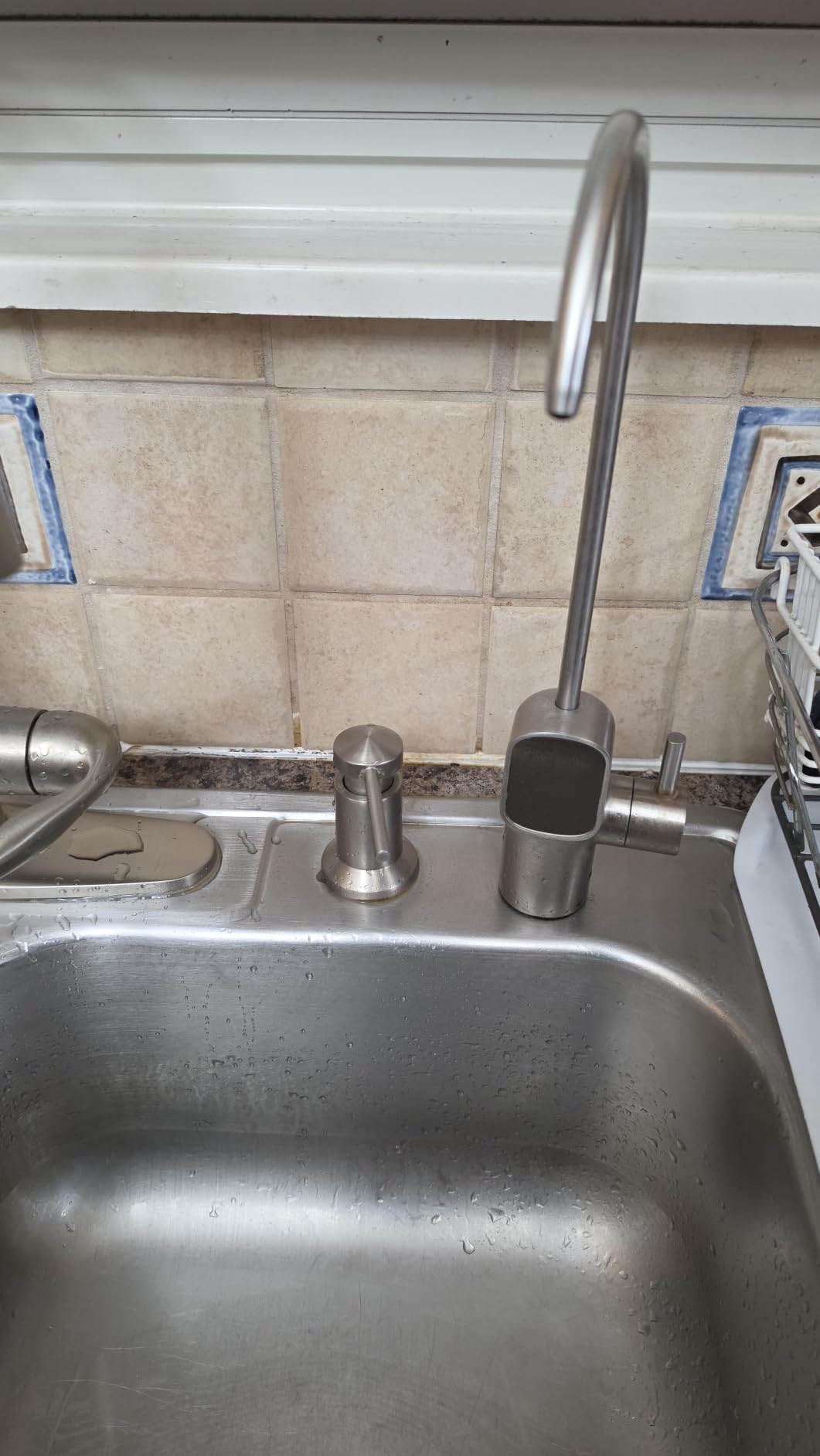
Where the 2:1 ratio and smart faucet pay off
Water waste is measurable in dollars on a monthly utility bill, and a household producing 10 gallons of drinking water per day uses 20 gallons of feed water with this unit. The same household on a 3:1 tanked system uses 30, and on a 5:1 system uses 50. Over a year the gap is small but real, and it is the gap that matters most in a drought-restricted area or anywhere water is metered.
The tankless architecture also removes the bacterial risk of a holding tank. Storage tanks are a known source of biofilm growth when they sit unused between refills, and eliminating the tank eliminates that failure mode entirely. The tankless body also frees roughly 70 percent of the under-sink volume, which matters in the small cabinets where most people actually install these systems.
Before you commit to a tankless unit
It needs an unswitched outlet under the sink, meaning a GFCI-protected receptacle that stays powered. It is the heaviest unit in the roundup at 31 pounds and measures 18.12 by 5.67 by 17.72 inches, so measure the cabinet opening and the vertical clearance under the counter before you order.
The filter cartridges are proprietary and cost more over the life of the system than conventional under-sink replacement parts. That is the honest catch, and it is worth pricing the first five years of cartridges before you decide the system is the cheaper option. The faucet is also larger than a standard drill-hole faucet and may need the existing hole widened in thick stainless steel.
5. SimPure Y7P-BW Countertop RO With UV
SimPure Y7P-BW UV Countertop Reverse Osmosis Water Filter, 5 Stage RO
Countertop plug-in
UV plus RO
4:1 drain ratio
418 GPD effective
Pros
- No plumbing or drilling required
- Owners report drops from 849 ppm to 30 ppm on well water
- 4:1 is the most efficient drain ratio in this roundup
- Glass dispensing pitcher avoids storing water in plastic
Cons
- Internal reservoir is hard to reach and can sour the taste
- Small 1.3 gallon tank is loud and needs frequent refills
- Setup and flushing takes about 45 minutes
If you rent, or you have no hole in your sink, or you simply do not want to touch plumbing, this is the system that removes every objection. It plugs into a wall outlet, sits on the counter, and ships with the carbon and RO filters already installed. No drilling, no tubing run, no warranty-emptying moment when the landlord finds a new faucet hole.
Water savings are the best in this guide. At a 4:1 pure-to-drain ratio with an effective output of 418 GPD, a cup fills in about 15 seconds, and this is the only system here that treats tap water and well water alike without an under-sink connection. It is SGS tested against NSF/ANSI 58 for removal of more than 99.99 percent of 1,000+ contaminants including PFAS, heavy metals, chlorine, fluoride and nitrates, with feed water up to 500 ppm TDS.
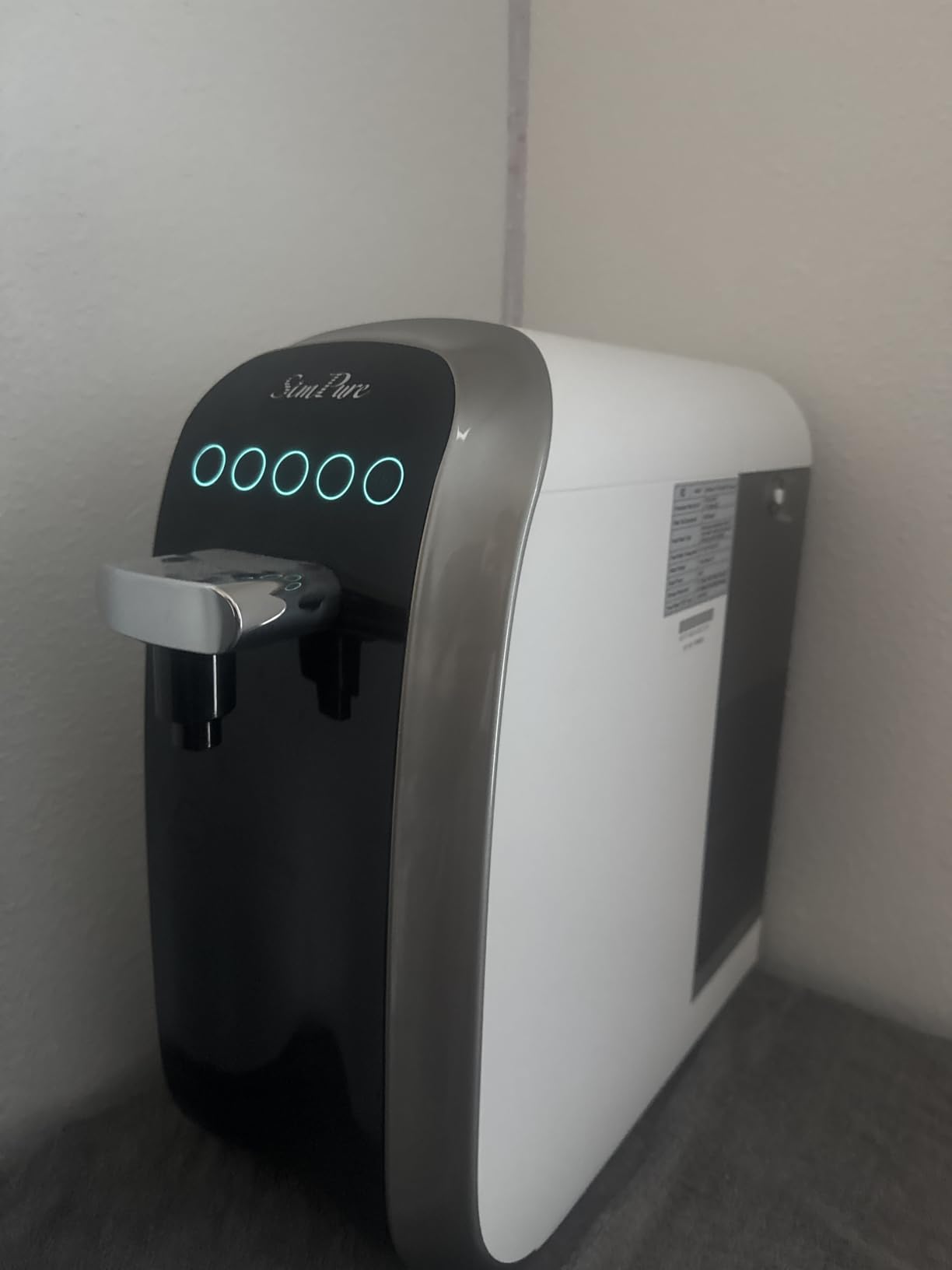
Owners report the most dramatic single number in this roundup: a well water reading of 849 ppm dropping to 30 ppm. A UV stage sits alongside the RO membrane for chemical-free disinfection with no by-products, and the cartridges deliver 528 gallons of purified water before needing a change. Water comes out at room temperature only, so this is not a hot and cold dispenser.
Countertop users often describe the refill ritual as the thing that makes them drink more water. That is a real behavioural benefit, and for households that currently buy single-use bottles it is the argument that matters more than any spec sheet.
Is the 4:1 ratio enough to matter
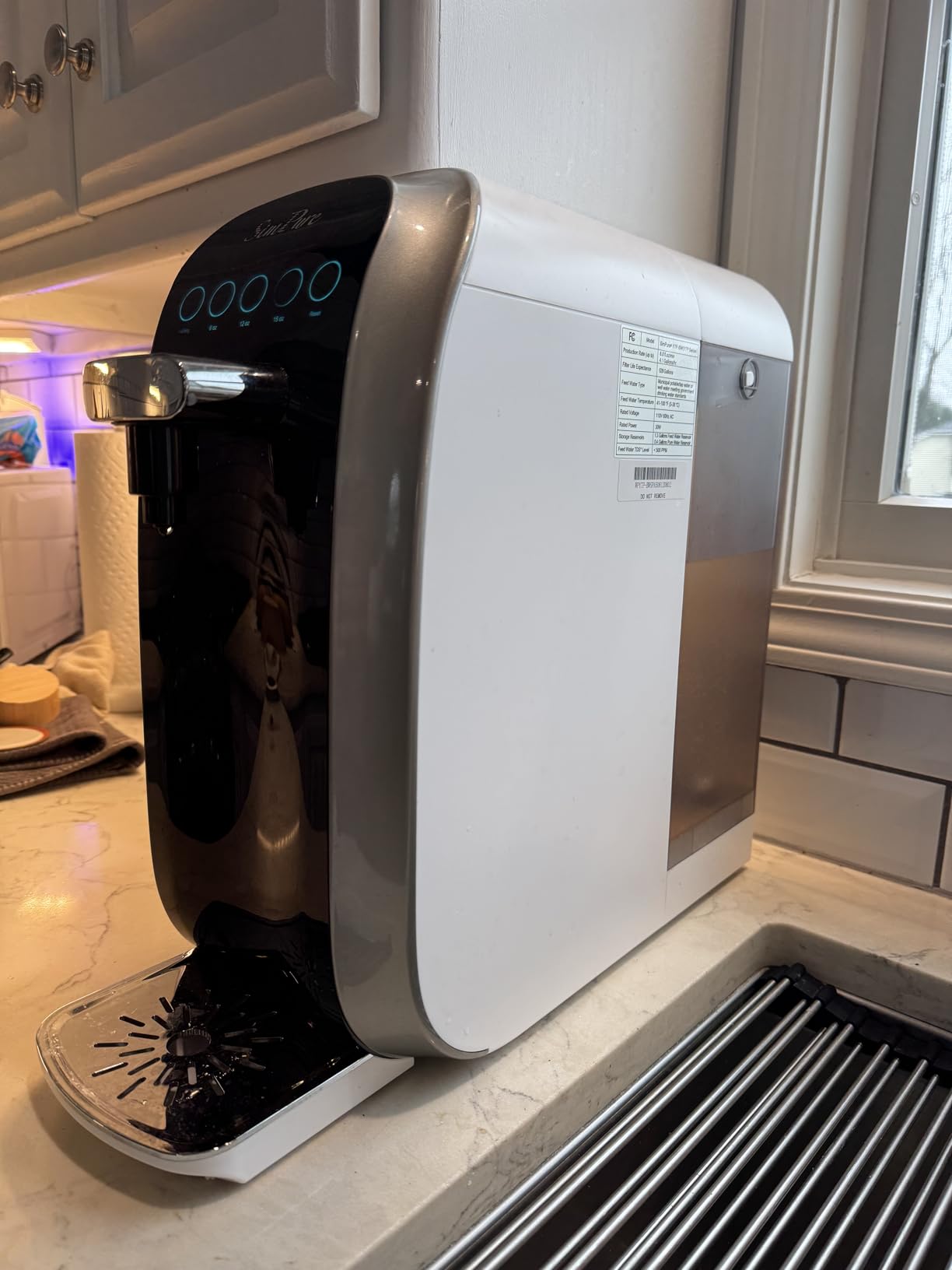
Yes, and it is the number that should decide this category. Countertop systems are batch systems, so they have historically been the thirstiest format on the market. At 4:1 this one is the exception, and combined with 418 GPD effective output it produces more purified water per minute than most under-sink units manage in total.
The glass pitcher is a small design choice with a real purpose. Storing filtered water in borosilicate glass rather than plastic removes a secondary contamination question that most countertop units never address. The unit is 13 pounds and measures 17.3 by 7.5 by 17 inches, so it needs genuine counter space but no installation.
Where owners report fatigue
This is the most polarising system in the guide, and the reason shows up in a 4.2 star average. The internal plastic reservoir is difficult to reach, and owners report an off-taste developing in the water after roughly a month of use. The manual also prescribes a daily tank rinse, monthly cleaning and descaling every two to four weeks, which is real upkeep that a plumber-installed system does not demand.
Setup is not as instant as the marketing suggests: initial flushing and cycle setup take about 45 minutes. The 1.3 gallon tank is loud while filtering and needs refilling often, and on hard water the replacement filters can run out ahead of the advertised six-month interval. If you dislike chores, read the maintenance section before buying, because that is the deciding factor rather than filtration performance.
6. Bluevua RO100 Countertop RO With Glass Carafe
Bluevua RO100ROPOT Countertop Reverse Osmosis Water Filter System
Countertop plug-in
Glass carafe
12 to 24 month filter life
2:1 ratio
Pros
- Borosilicate glass carafe instead of a plastic tank
- 5-stage filtration includes a remineralization filter
- 12 to 24 month filter life is the longest interval here
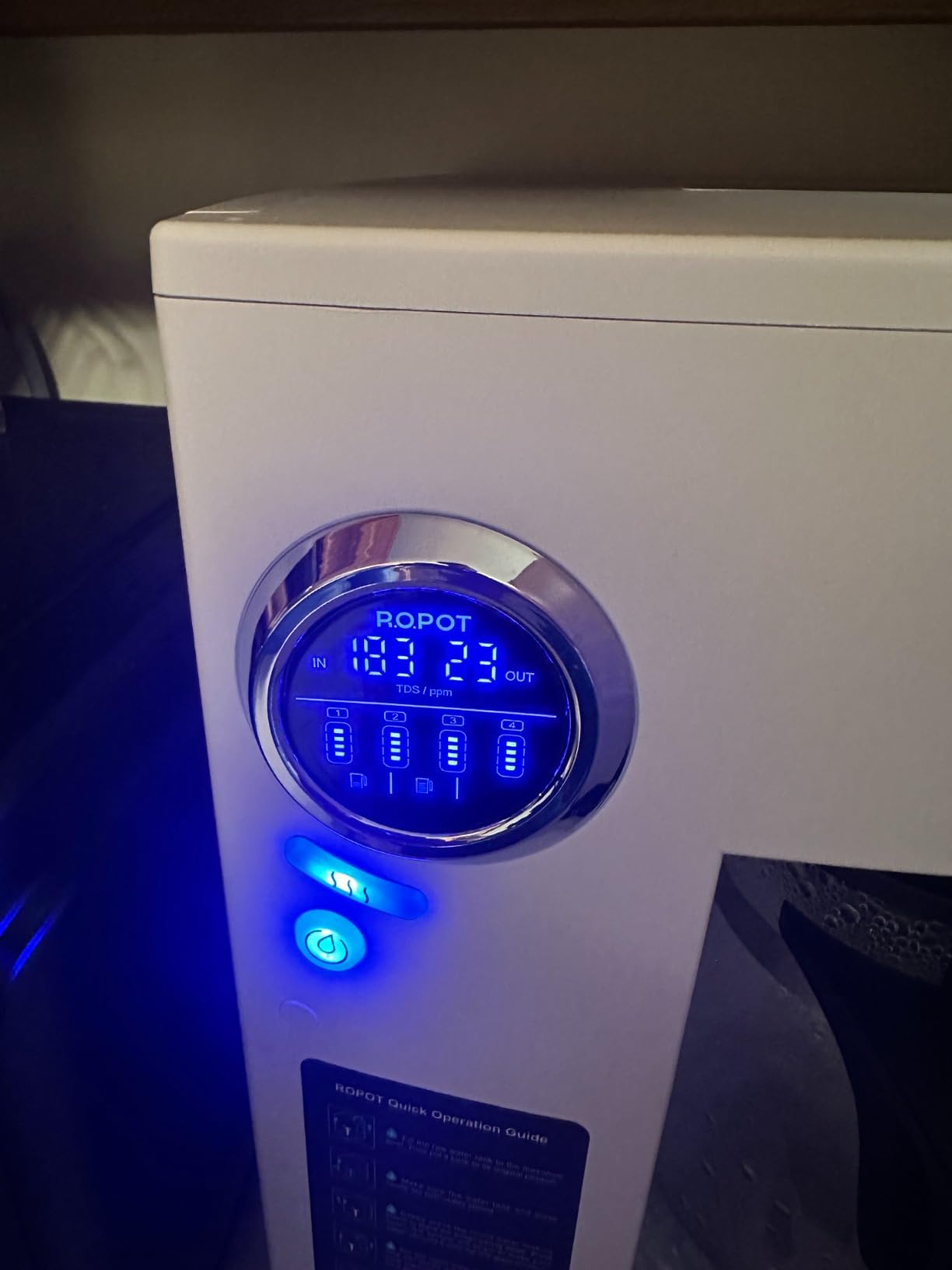
- Filter life monitor tracks cartridge life and water quality
Cons
- Long filter intervals push the per-gallon cost higher
- Countertop footprint is larger than the slimmer SimPure unit
The Bluevua is the countertop option we recommend, and the reason is the carafe. Instead of a plastic reservoir, purified water collects in a 12 litre borosilicate glass carafe that sits on the base for dispensing. Glass does not leach, does not hold flavours and does not develop the off-taste that owners of plastic-tank units report, and it is the single design decision that lifts this unit above the rest of its category.
At 4.6 stars across more than 3,600 reviews, it carries the highest rating of any countertop system here, and the feedback is unusually positive. Filtration is five stages including a remineralization filter, so the flat, empty taste that turns people off purified water is corrected before it reaches the glass.
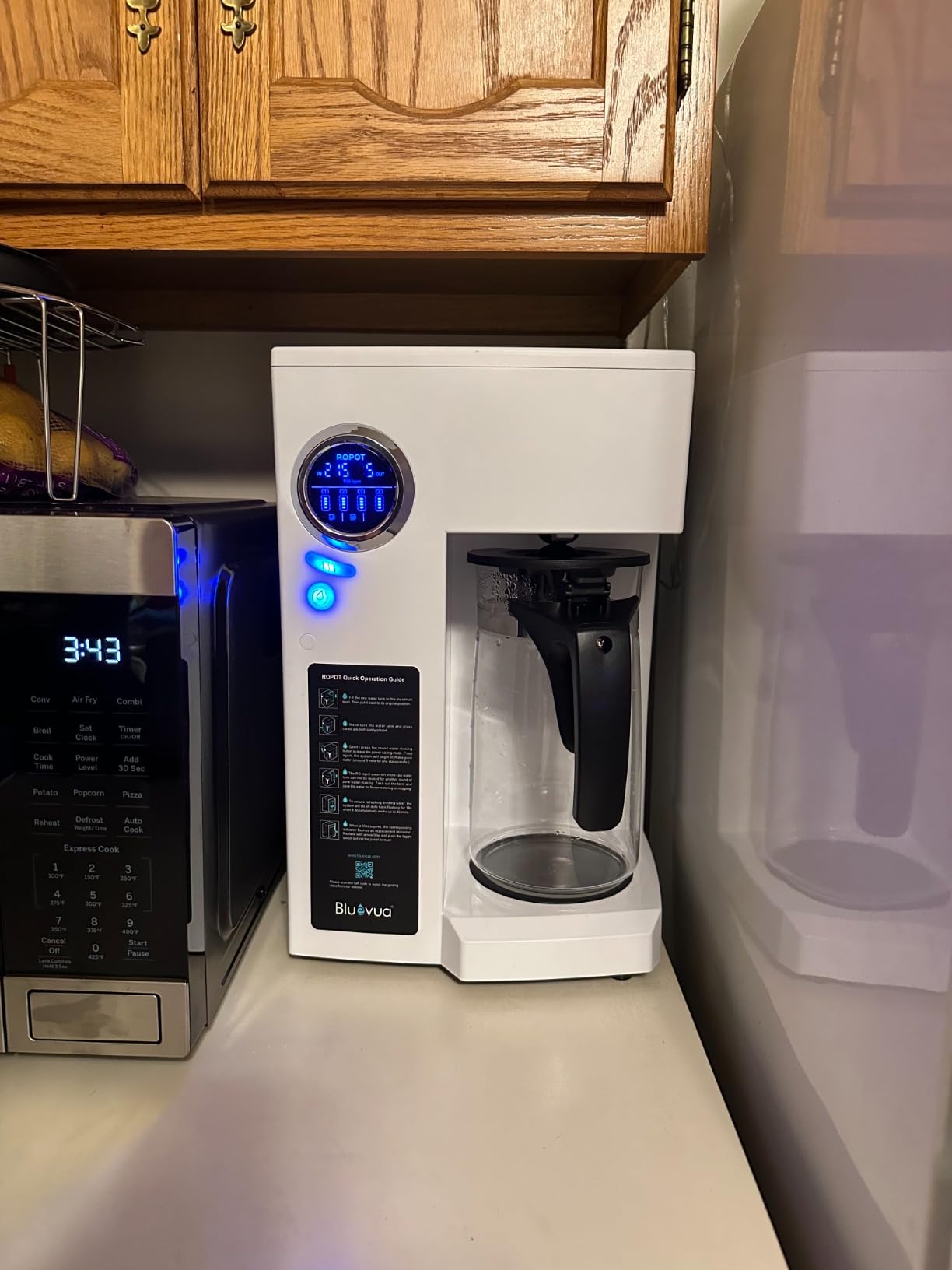
Two other details make it easy to live with. The filter life monitor tracks remaining cartridge life and water quality, which removes the guesswork that normally makes filter replacement an either-or decision. And an automatic power-saving standby mode plus a 2:1 pure-to-drain ratio keep both water use and electricity draw low while the unit sits on your counter between uses.
It handles feed water up to 1,000 ppm TDS, which is higher than most countertop units in this guide claim, and the mineral filter in the box is a genuine part of the stage count rather than an optional extra.
What the long filter interval really costs
A 12 to 24 month filter life is the longest in this roundup, and it is genuinely appealing if you travel or simply forget about maintenance. The trade is cost per gallon. When cartridges last twice as long, the total you spend over five years can end up higher per gallon of water produced, even though you buy filters less often. Check the cartridge price and divide by the rated gallon output before treating this as the economical choice.
It is also the larger of the two countertop units here, at 10.9 by 15.4 by 14.3 inches and 5 kg, so the footprint is a consideration in a small kitchen. The included cleaning brush and mineral filter mean you have what you need on day one.
Who should choose it and who should not
Choose it if you want purified water without plumbing changes and you care about what the water touches on its way to the glass. A filter life monitor plus a glass carafe is the most low-maintenance honest option in the countertop category, and the warranty extends with registration.
Pass on it if you drink several gallons a day. A 12 litre carafe is generous, but a batch countertop unit is still filling a small reservoir rather than producing continuous flow, and a household that goes through several carafes a day will find the wait more noticeable than a countertop user with a glass a day. Our general guide to reverse osmosis features covers the format comparison in more depth.
7. Waterdrop G2 400 GPD Tankless System
Waterdrop G2 Reverse Osmosis System, 400 GPD Tankless RO Water Filtration
400 GPD tankless
7 stages
1:1 drain ratio
Twist and pull filters
Pros
- 400 GPD steady flow fills a cup in about 12 seconds
- Tankless design saves more than 70 percent of cabinet space
- Integrated circuitry reduces leak points
- Install takes under 30 minutes
Cons
- Needs an under-sink outlet and a drilled faucet hole
- 1:1 drain ratio wastes more water than the 2:1 models
- Proprietary G2CF and G2MRO replacement parts
The G2 is the cheapest sensible route into a tankless under-sink system, and it delivers the format’s main advantage at a much lower outlay than the G3P600. At 400 GPD and 0.28 gpm, a cup fills in about 12 seconds of steady continuous flow, with no tank to refill and no recovery lag to wait out.
It is a seven-stage system with a composite filter, and it is NSF/ANSI 372 certified for lead-free materials. Feed water is supported up to 300 ppm TDS, which covers most municipal supplies but is a lower ceiling than the G3P600, so if you are on a well with high readings, this is not the unit.
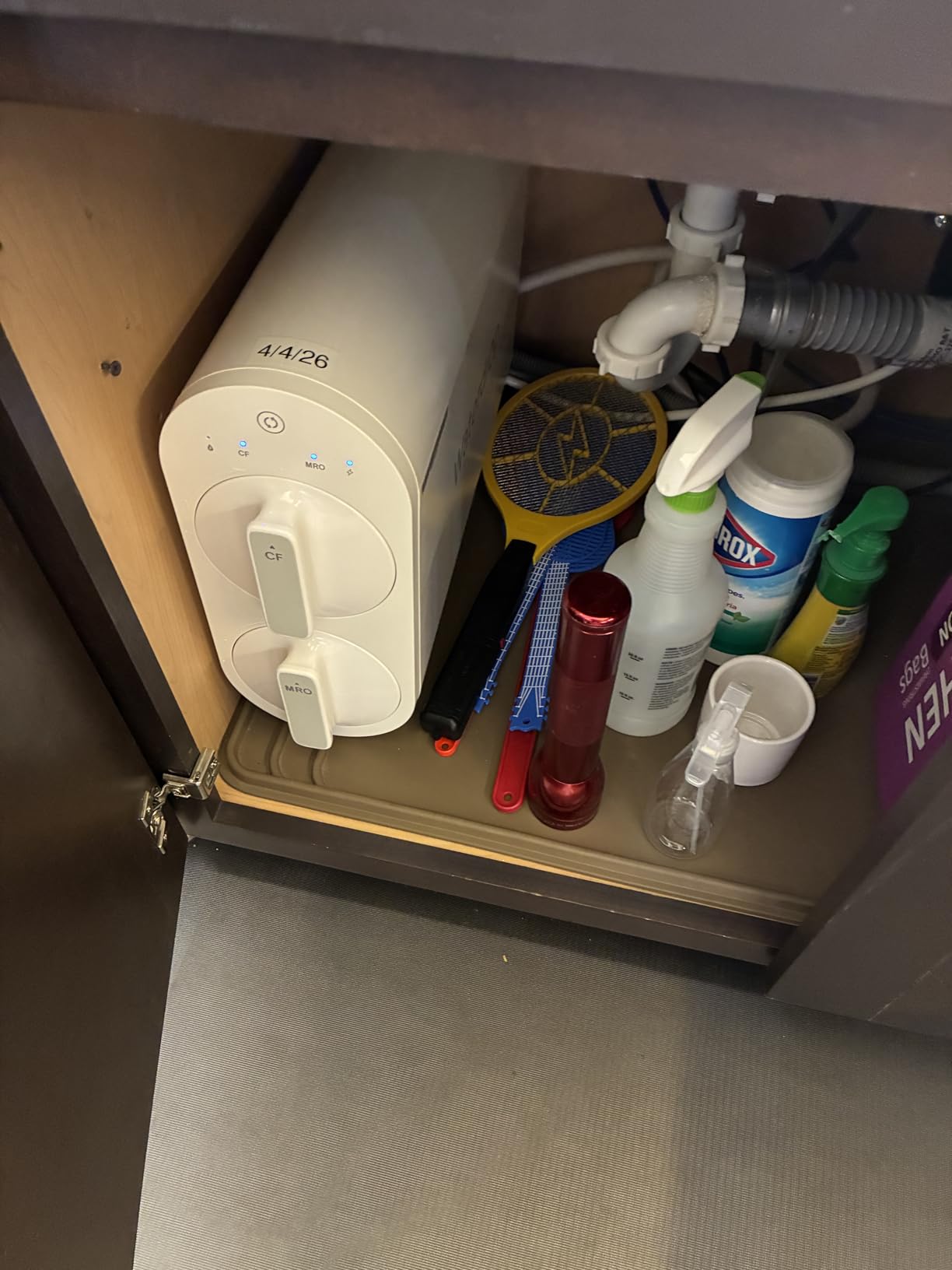
The engineering detail we appreciate most is the integrated electrical and water circuitry. Rather than separate dripline and power paths that each present a potential leak point, the design combines them, and the airtight housing is noticeably quieter during operation. Filter changes are twist-and-pull and take about three seconds, and the whole install is under 30 minutes if you have a drill.
Tankless also means no holding tank, so the under-sink space saved is more than 70 percent of what a conventional five-stage system occupies. In a small cabinet that is often the difference between a system that fits and one that does not.
When the 1:1 ratio matters
This is the one specification to weigh honestly. A 1:1 pure-to-drain ratio means every gallon you drink costs a gallon of tap water, which is better than the tanked systems in this guide that sit at 3:1 but noticeably worse than the 2:1 on the G3P600 and the 4:1 on the SimPure countertop unit. For most households the difference is manageable; for a large home on metered water in a restricted area it is worth adding up.
Feed water pressure matters more here than on a pumped system. If your incoming pressure is low, the higher output rating is aspirational, and you will notice a slower stream than the 400 GPD figure suggests.
Where the budget shows
It needs an under-sink electrical outlet and a drilled hole for the faucet, so it is not a renter product despite the low price. The replacement cartridges are proprietary G2CF and G2MRO parts, which means your ongoing filter cost is set by one supplier and cannot be shopped around the way quarter-inch standard parts can.
Owners generally describe it as the sensible budget entry into tankless filtration rather than a compromise, and the 4.5 star average across more than 2,100 reviews supports that. If your priority is continuous flow and cabinet space on a budget, this is the one to buy.
8. NU Aqua 100 GPD Five-Stage System
NU Aqua 5-Stage Under Sink Reverse Osmosis Water Filter System – 100 GPD RO
100 GPD
5-stage under sink
3-year warranty
120-day trial
Pros
- Three-year warranty and 120-day trial at this price
- PPM meter included so you can test your own water
- Double o-ring housings and a stainless steel faucet
- One owner has bought three units over eight years
Cons
- No booster pump so low pressure limits output
- Some tanks arrive over-pressurized until air is bled out
- Customer support has been slow in at least one case
The NU Aqua is the pick if warranty length is your top concern. A 3-year manufacturer warranty backed by a 120-day home trial is the longest coverage in this guide, and on a device where the common owner complaint is a pump or membrane failing around the time a one-year warranty expires, that difference is not cosmetic.
Output is rated at 100 GPD, which roughly doubles what a standard under-sink system delivers, so a family of three or four has headroom without stepping up to a tankless unit. The HydraCoil membrane is claimed to deliver up to 50 percent cleaner water than competing membranes and rejects up to 99 percent of 1,000+ total dissolved solids, and feed water up to 500 ppm TDS is supported.
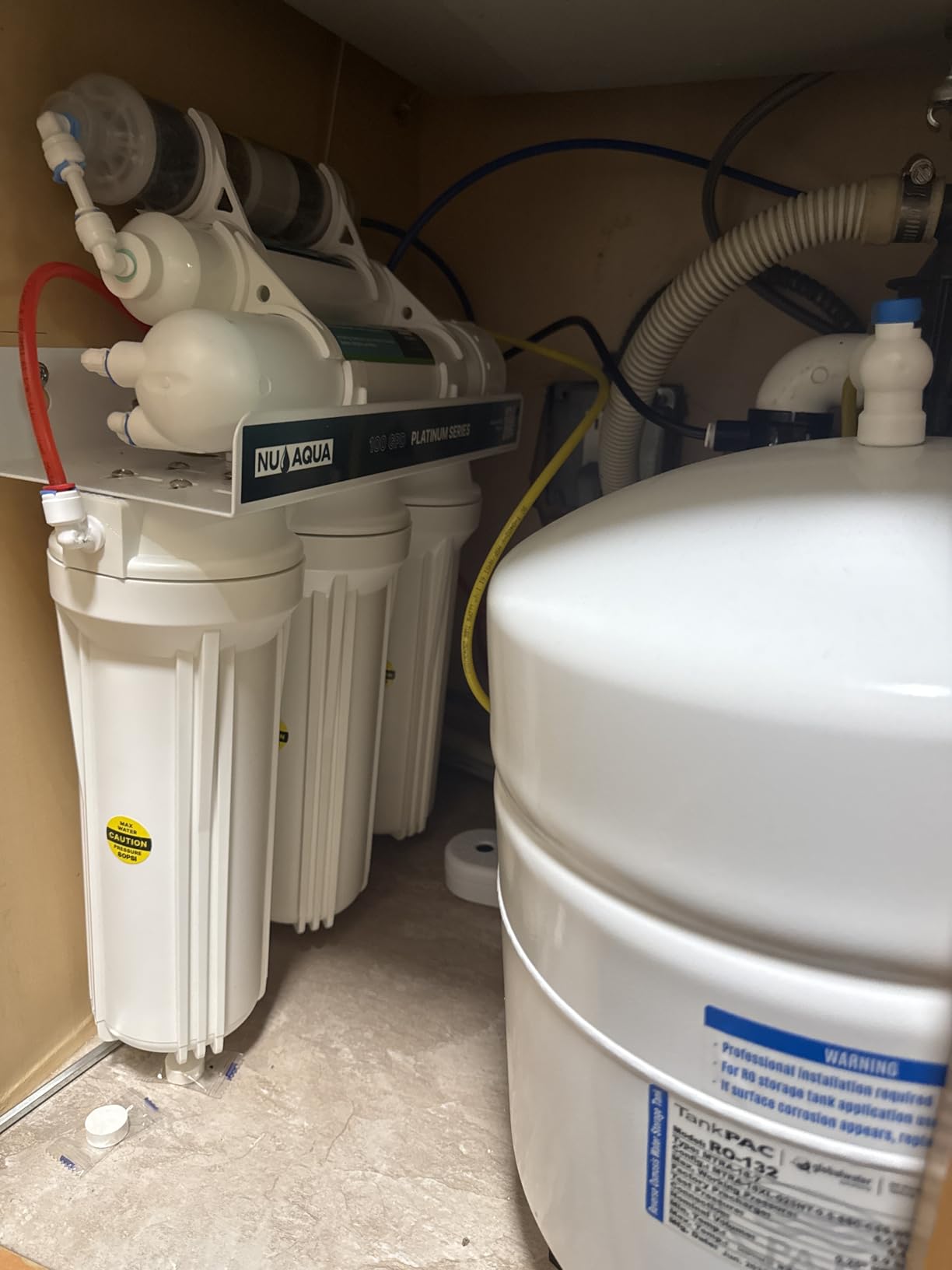
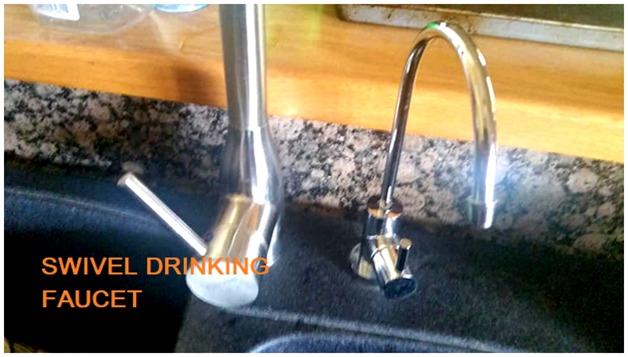
Two details make it pleasant to own. A complimentary PPM meter is included in the box, which is rare at this level and gives you an independent way to confirm what the system is actually doing. And the housings use double o-ring seals with a stainless steel faucet, which is a more durable specification than the plastic caps and plated faucets most competitors ship.
Color-coded tubing and quick-connect fittings get the install under an hour for most people. One repeat customer reported buying three units over roughly eight years without a single leak, which is the kind of history you cannot manufacture in a review section.
What the 100 GPD rating buys you
This is the tanked option for a household that has outgrown a 50 or 75 GPD system but does not want to run a power cable under the sink. There is no booster pump, so if your incoming pressure is low the membrane will not reach its rated output, and adding a pump later means adding cost and complexity that the warranty may not anticipate.
Because it is tanked, expect a short recovery period after the tank empties. In practice that means the first glass of the morning is slower than the second, and for most families that is an acceptable trade for no power dependency.
Three things to check on arrival
Some units have shipped with an over-pressurized tank that will not fill until the air is bled out. Open the valve on the tank until it hisses, then close it, and do this before the first filter change rather than after.
The installation manual is unclear on several steps and a video walkthrough is more reliable, so budget time to watch it before you start rather than mid-install. Customer support response times have been slow in at least one reported case, which is worth knowing if you expect to rely on them. Against that, the 4.4 star average and the long warranty make this one of the safer purchases in the guide.
9. SimPure T1-400ALK 400 GPD Alkaline Tankless System
SimPure T1-400ALK Tankless Alkaline Reverse Osmosis Water Filter 400 GPD
400 GPD tankless
Alkaline filter
UV stage
1.5:1 drain ratio
Pros
- Alkaline filter adds calcium magnesium and potassium back
- 1.5:1 ratio beats most conventional under-sink systems
- Tankless design saves cabinet space and avoids a tank
- Quick-change cartridges deliver 1057 gallons
Cons
- TDS will never read near zero with the alkaline stage
- Filter interval is listed at 6 months
- Average rating sits at 4.2 with 12 percent one-star reviews
The T1-400ALK is the system to buy if you specifically want alkaline, remineralized water from an under-sink tankless unit. The alkaline filter uses natural mineral material to put calcium, magnesium and potassium back after the membrane and raise the pH, which is the difference between water that tastes thin and water people actually keep drinking.
Output is 400 GPD at a flow rate of 0.4 gpm, and the pure-to-drain ratio is 1.5:1, which is better than most conventional under-sink systems in this guide. A UV stage activates automatically based on water flow pressure and is adjustable, and the whole system was tested by SGS against NSF/ANSI 58 for removal of more than 99.99 percent of 1,000+ contaminants including PFAS, lead and arsenic.
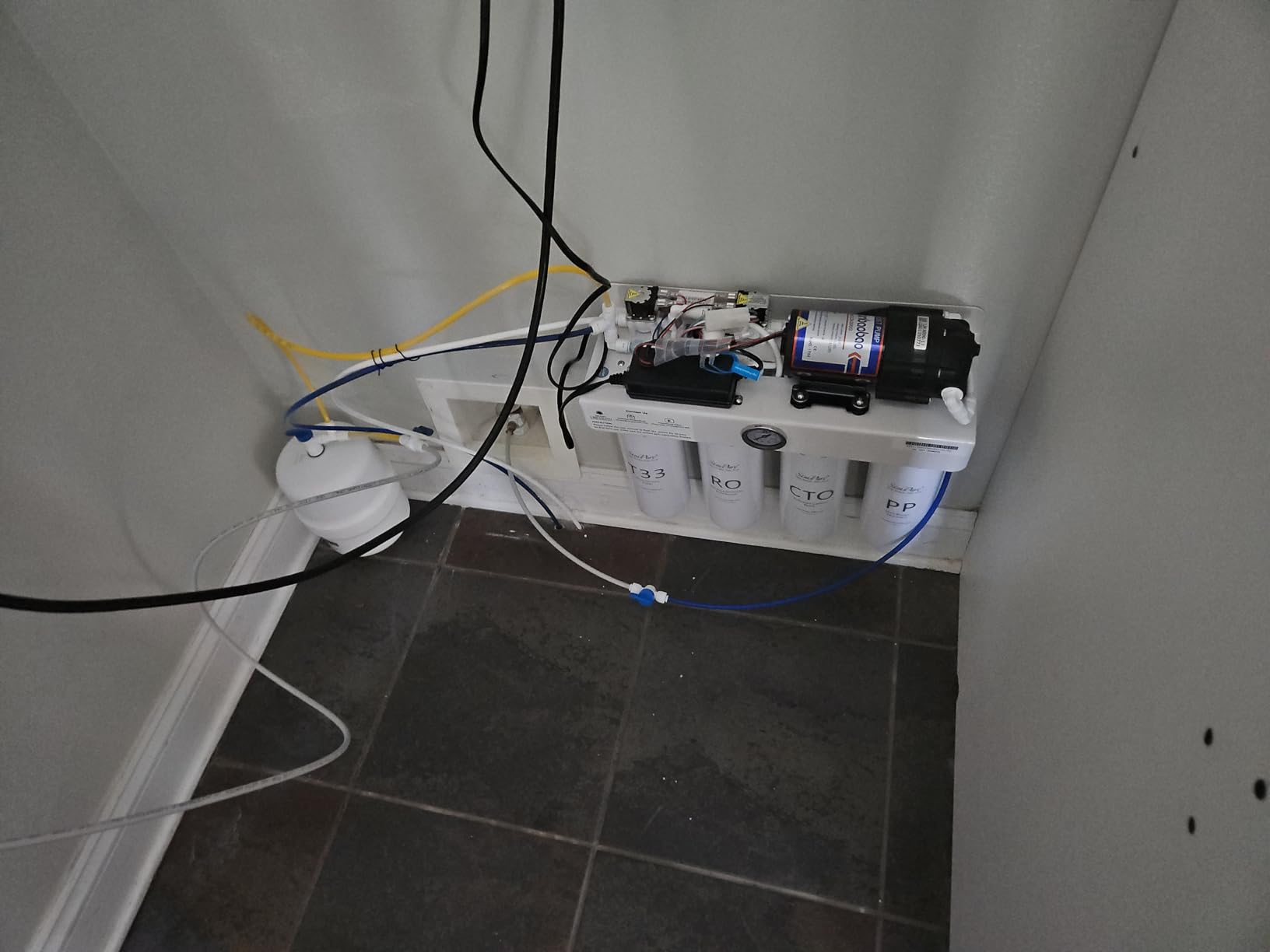
The quick-change twist cartridges deliver about 1,057 gallons of purified water, roughly the equivalent of 8,000 bottles. The unit weighs 8 kg and measures 15.6 by 5.3 by 15.7 inches, making it one of the more compact under-sink units here, and the tankless layout avoids the storage tank entirely.
Satisfaction among buyers who wanted remineralized water is generally high, and the taste improvement is the reason people stay with it.
Why your TDS meter will never read zero
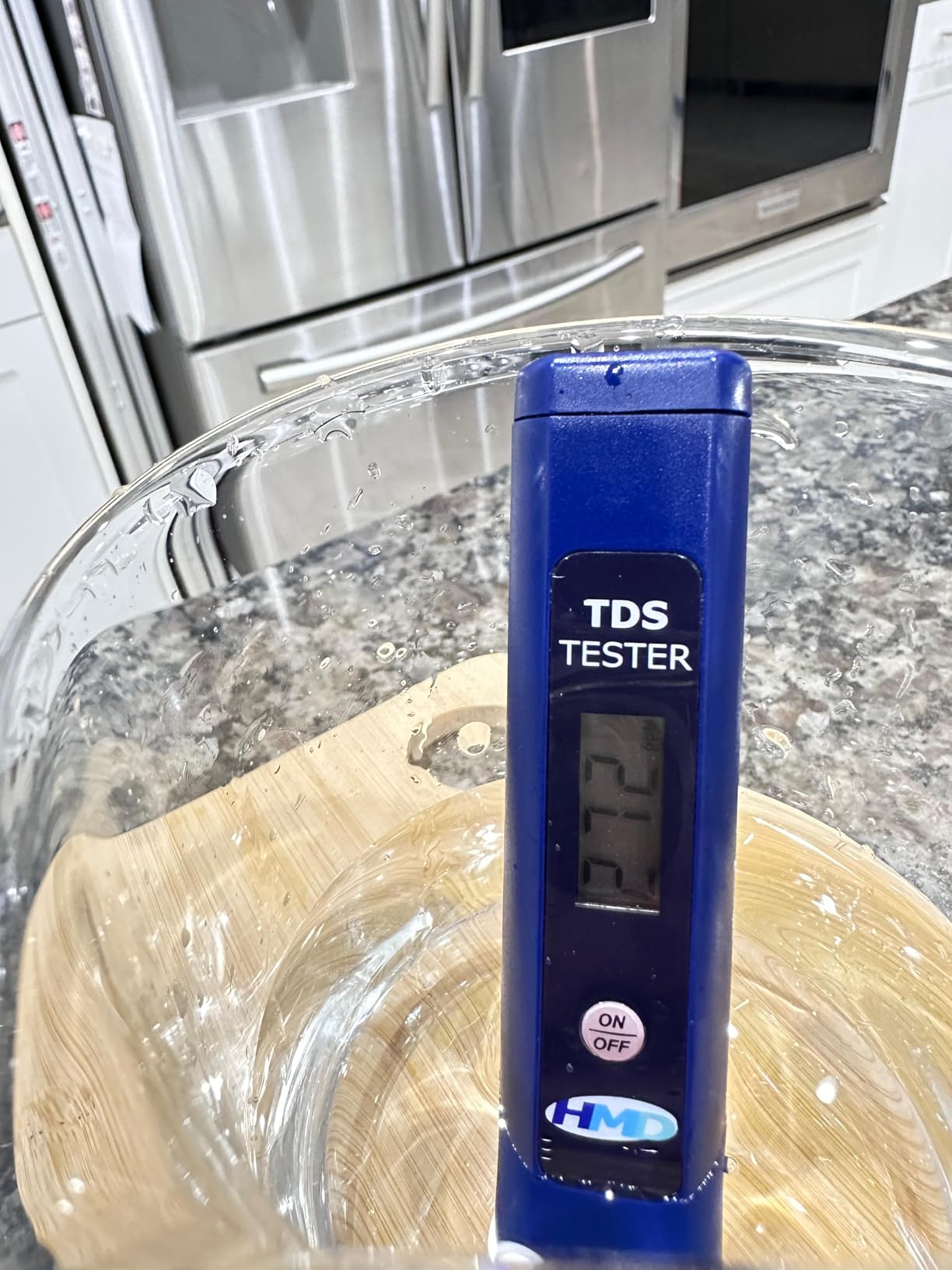
This trips up almost every new owner. The alkaline cartridge adds minerals back into the water by design, so a TDS reading on remineralized output will sit somewhere in the tens even when the membrane is performing exactly as intended. If you test this system expecting a single-digit number, you will conclude it is broken when it is not.
That measurement issue also means you cannot use the display to judge membrane life the way you can on a non-remineralizing system. Judge performance by taste, flow rate and the filter change interval instead. SimPure offers a T1-400UV variant for buyers who want near-zero readings and are willing to give up the alkaline stage.
The honest drawbacks
The filter life cycle is listed at 6 months, which is shorter than most systems in this guide, and that is where the total cost of ownership pressure comes from. The UV stage runs on water flow pressure rather than a powered sensor, so it can behave inconsistently when pressure is low.
Build consistency is the other issue. The 4.2 star average includes 12 percent one-star reviews, which is the weakest showing here, and the feedback suggests a split between owners who are happy with the taste upgrade and owners who found the overall build less refined. If you want alkaline water, this does it at a fair price; if you want the simplest possible machine, one of the standard five-stage systems is the safer bet.
10. EcoPure ECOP30 Three-Stage NSF Certified System
EcoPure ECOP30 Premium Reverse Osmosis System – Under Sink Drinking Water Filter System – NSF-Certified – Reduces Lead, Chlorine, and TDS –Bottled-Quality Water – Easy Filter Changes
3 stages
NSF 42 and NSF 58
Encapsulated filters
Tank and faucet included
Pros
- Encapsulated filters change with no shutoff and no mess
- Tool-free cartridge swaps with no contact with the spent filter
- Storage tank and dedicated faucet are in the box
- 1-year warranty extendable with registration
Cons
- Only 3 stages so no remineralization or UV
- No published GPD or flow rate figure
- Listed 20.4 inch width may not fit smaller cabinets
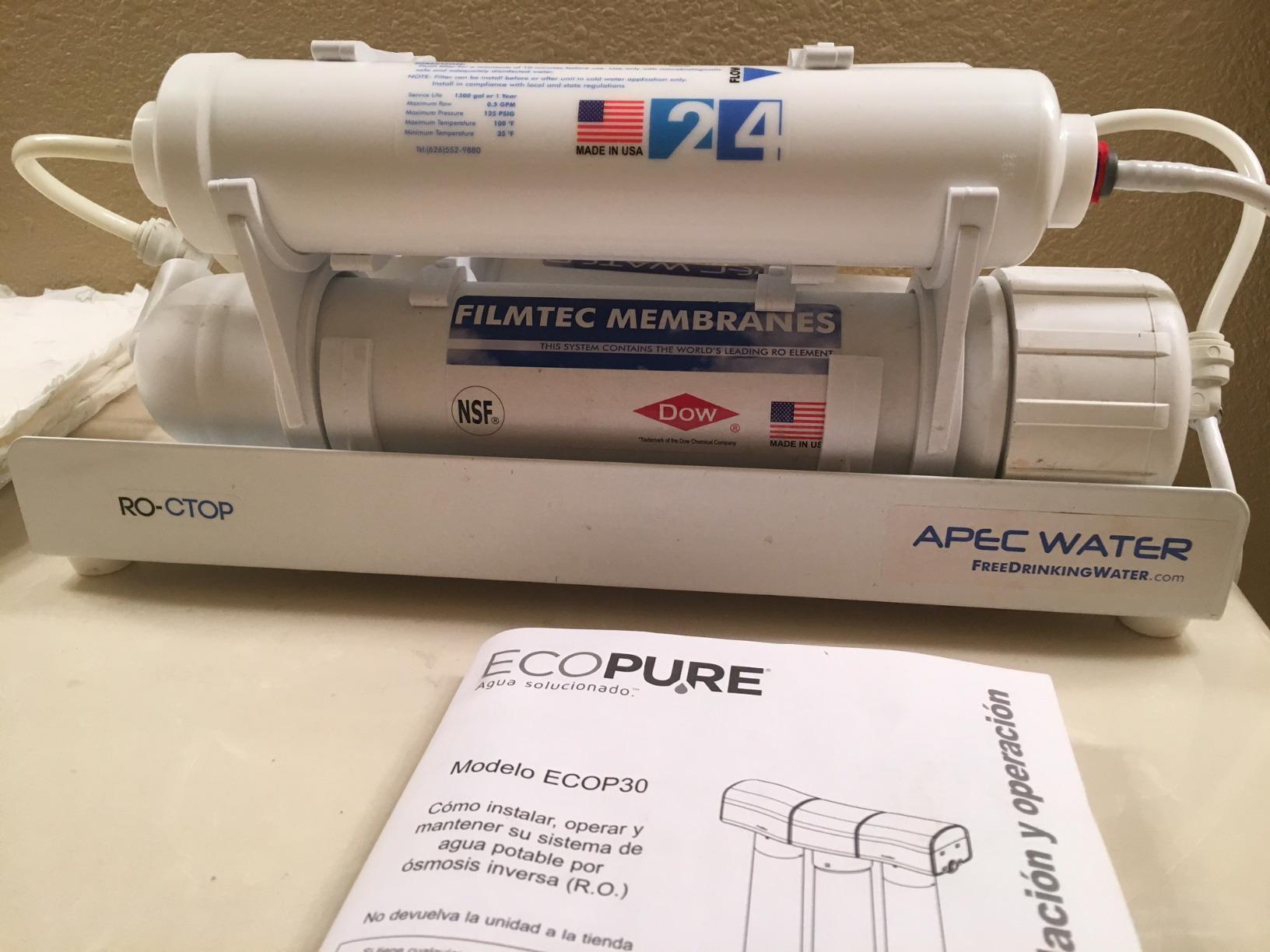
The EcoPure is the simplest system in the guide, and simplicity is the feature. Filter cartridges are fully encapsulated, meaning the spent filter is sealed inside the cartridge and never handled. No shutting off the water, no opening a housing, no touching a wet used filter, and no wrench required.
Filtration is three stages rather than the five to eight stages most competitors use, certified to NSF 42 for aesthetic impurities and NSF 58 for TDS and other contaminants. That covers sediment, chlorine taste and odour, cysts, lead, chemicals and dissolved solids, which is a genuine contaminant list. It simply does not add the polish that a remineralization stage or a UV lamp provides.
Everything needed is in the box: color-coded tubing, push-in connectors, a storage tank and a dedicated faucet. There is no drilling beyond the faucet hole, no electrical connection and no proprietary complexity, and the whole design assumes a homeowner doing the work themselves.
The warranty is a 1-year full warranty that extends to lifetime coverage when you register the product and keep up scheduled filter changes, which is a better long-term structure than a bare one-year term from some competitors.
What a three-stage system gives up
Remineralization and UV are both absent, so the water will taste flatter than output from the five-stage systems in this guide. The post-carbon polishing stage that smooths taste in a five-stage unit has no equivalent here. If taste is the thing that decides whether your family drinks the water, that is a real cost.
There is also no published GPD or flow rate figure, which makes capacity comparisons impossible. You are buying on contaminant coverage and ease of service rather than on output, and that is a legitimate choice only if you have a small household and low daily demand.
Why it ranks last in this guide
With 217 reviews and a 4.2 star average, this is the least proven system here by a wide margin, and the small review base means you have less evidence about long-term reliability than with any other pick. Buyers consistently praise the filter changes and the contaminant reduction, so the product is not the problem.
The other practical issue is footprint. The listed dimensions include a 20.4 inch width, which is the widest measurement in the roundup and may not clear a smaller under-sink cabinet. Measure before ordering. If the trade appeals to you, it is a reasonable system; it is simply the one with the least evidence behind it.
How to Pick a Sub-500 Reverse Osmosis System
Tankless, tanked, or countertop
Tanked systems store purified water in a pressure vessel, so the faucet delivers instantly but the cabinet space goes with it. Tankless systems run water through the membrane on demand, which frees more than 70 percent of under-sink space and removes the biofilm risk of a standing tank, but they need an electrical outlet and cost more in replacement filters. Countertop systems need no plumbing at all and are the only format that works in a rental, a dorm or an RV.
If you have a reliable outlet under the sink and a household that drinks a lot of water, tankless is the better long-term experience. If you want the fewest possible failure points and no power dependency, tanked is the safer bet. If you cannot drill, the choice is made for you.
Match gallons per day to your household
Advertised GPD assumes a specific test pressure and a clean membrane, so treat it as a ceiling rather than a promise. A rough sizing guide: one person drinking a few glasses a day needs 50 to 75 GPD, a couple needs 75 to 100 GPD, a family of four wants 100 to 200 GPD, and a family of five or more plus an ice maker and refrigerator dispenser is served best by 400 GPD or above.
If you fall into the large-household column and your budget is fixed, that is the single strongest argument for a tankless unit over a tanked one of the same price.
Wastewater ratio and the gallon math
Every reverse osmosis system sends rejected water to the drain, and the ratio matters. At 3:1, producing 10 gallons of drinking water per day consumes 30 gallons of tap water. At 2:1 it consumes 20. At 1:1 it consumes 10. A tankless system with a booster pump can reach 2:1, and the most efficient countertop unit in this guide reaches 4:1.
Owners on filtration forums repeatedly object to ratios worse than about 3:1, and they are right to. If water is metered or your area has restrictions, this is a specification worth filtering your shortlist on rather than a footnote.
Certification checks before you buy
Look for NSF/ANSI 58, which certifies reduction of total dissolved solids and specific contaminants, and NSF/ANSI 372, which certifies lead-free materials. NSF 42 covers aesthetic improvements like chlorine taste and odour, which is useful but not a health certification. Verify the listing on the certifier’s database rather than trusting a badge on a product page, and check that the certification covers the specific claims being made.
Forum buyers treat unverified contaminant claims as marketing, and they are largely right. A genuine performance data sheet or certification listing is the difference between a 99 percent removal claim and a claim you can check.
What you give up below the ceiling
Under 500 dollars, you are not losing filtration quality. Every system here is NSF/ANSI 58 certified or independently tested against that standard, and several are certified to 372 as well. What the ceiling does cost you is throughput, cabinet-friendly design and warranty length: high-output models and longer terms push past it, and that is where your money goes instead.
Cheap systems are not automatically bad ones. The difference between a disappointing budget system and a great one is usually a booster pump on low-pressure water, a post-carbon stage for taste, and a manufacturer who answers the phone. Those three things are not price-gated.
Installation reality check
Most under-sink systems are genuinely DIY. Color-coded tubing and quick-connect fittings mean no pipe threading, and installs run from under 30 minutes on a tankless unit to about an hour on a five-stage system. A drill, a bucket and an adjustable wrench are usually enough.
Two code notes matter. Some jurisdictions require an air-gap faucet to prevent backflow contamination of the drinking line, and a system that ships without one may need a different faucet. And you need a GFCI-protected, unswitched outlet under the sink for any unit with a pump or UV stage. Renters should skip this section entirely and buy a countertop unit.
Annual filter cost and five-year math
Replacement filters are the number one regret reported by owners, and the reason is simple: nobody publishes the cost. Most systems need sediment and carbon cartridges every six to twelve months and a membrane every two to three years, while tankless units with proprietary cartridges can cost more per year than conventional quarter-inch parts.
Before buying, find the price of the first five years of cartridges and add it to the unit cost. A system that looks cheaper up front can be the more expensive one over five years, and that calculation is the only one that matters. The units in this guide with the longest filter intervals, such as the Bluevua at 12 to 24 months, trade a higher per-gallon cost for fewer purchase occasions.
Does RO water strip minerals you need
Yes, and that is the honest downside of the technology. The membrane removes dissolved solids including calcium and magnesium, which is exactly what makes it effective against lead, nitrates and PFAS. The World Health Organization has expressed concern about long-term consumption of fully demineralized water, noting that the low calcium and magnesium content can be a negative factor in a diet already low in those minerals. The nuance matters: this is a population-level dietary observation, not evidence that a glass of RO water harms you.
It is also why the alkaline and remineralization stages exist. Those cartridges add minerals back, correcting taste and removing the concern in one move, which is why they appear on four of the ten systems in this guide. If mineral content worries you, buy a remineralized system rather than avoiding reverse osmosis entirely.
Frequently Asked Questions
What is the best RO system for the money?
For most households the iSpring RCC7-BN is the best value in the sub-500 dollar range: it is NSF/ANSI 58 certified, rated at 75 GPD, needs no electricity, and has the largest body of owner feedback in this guide. If you want continuous flow and maximum cabinet space, the Waterdrop G3P600 is the stronger machine, and it is still under the ceiling.
Which RO is best and cheap?
The cheapest option that is genuinely worth owning in this roundup is the APEC ROES-50, a five-stage 50 GPD system that is certified to NSF/ANSI 58 and NSF/ANSI 372, uses standard quarter-inch parts, and has a decade-long service record. The EcoPure ECOP30 sits lower in price but has a three-stage architecture and only a few hundred reviews behind it.
Is RO water hard on the kidneys?
There is no good evidence that drinking reverse osmosis water is hard on healthy kidneys. The World Health Organization has raised concern about long-term consumption of fully demineralized water because of its low calcium and magnesium content, describing it as a negative factor for populations already low in those minerals. Remineralization cartridges add minerals back, and four of the systems in this guide include one.
How much water does a reverse osmosis system waste?
It depends on the recovery ratio. A typical tanked system runs 3:1, so every gallon of purified water sends two to three gallons to the drain. Pumped tankless systems reach 2:1, and the most efficient countertop unit here reaches 4:1. A household drinking 10 gallons a day uses between 10 and 30 gallons of tap water depending on the system.
Do I need a plumber to install an under sink RO system?
Usually not. Most systems in this guide use color-coded tubing and quick-connect fittings with no pipe threading, and installs take between about 30 minutes and an hour. You will need a drill for the faucet and a GFCI-protected unswitched outlet under the sink for any unit with a pump or UV stage. Check whether your local code requires an air-gap faucet before you buy.
The Verdict on Sub-500 RO Systems
The best reverse osmosis systems under 500 dollars are not a compromise category, they are where most of the market actually lives. The iSpring RCC7-BN remains the default choice for good reason: certified filtration, no power dependency, and more real-world history than anything else on this list. Buy the Waterdrop G3P600 if your household drinks enough water that flow rate is a daily issue, the Bluevua RO100 if you cannot drill, and the NU Aqua if warranty length is what you want most.
Check the certifications yourself, price the first five years of replacement filters before you commit, and test your water once the system is in. Everything here is a solid buy at the ceiling, and 2026 is a good year to make the switch from bottled water.