
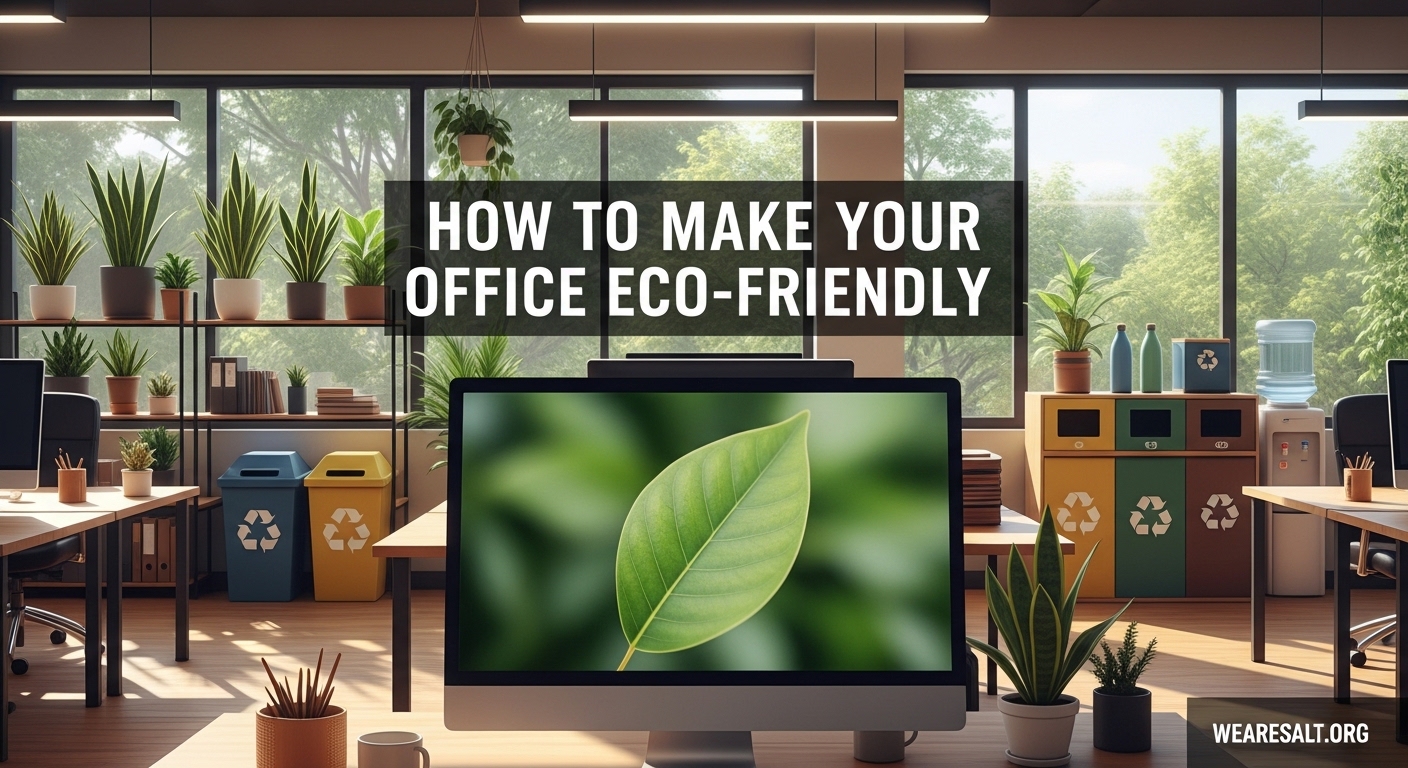
The average office worker generates about 2 pounds of waste each day. Commercial buildings consume 35% of all electricity in the United States. These numbers paint a stark picture of why it is time to make your office eco-friendly.
I have spent the last three years helping companies of all sizes reduce their environmental footprint. Some teams cut their energy bills by 30% within six months. Others saw employee satisfaction scores jump after implementing simple green initiatives. The common thread? They all started with small, manageable changes that built momentum over time.
In this guide, you will learn how to make your office eco-friendly without massive budgets or management headaches. We will cover everything from energy efficiency and waste reduction to engaging your team and measuring your impact. Whether you run a five-person startup or manage a 500-employee floor, these strategies will work for you.
Table of Contents
How to Make Your Office Eco-Friendly: Quick Wins
Here are ten practical ways to make your office eco-friendly starting today:
- Switch to LED bulbs with motion sensors
- Install smart power strips to eliminate phantom power
- Set up clearly labeled recycling and compost stations
- Remove individual desk trash cans
- Go paperless with digital workflows
- Stock reusable kitchen supplies instead of disposables
- Offer bike racks and transit stipends
- Start a volunteer green team
- Fix leaky faucets and install low-flow fixtures
- Celebrate wins and track your progress
Why Make Your Office Eco-Friendly?
Creating an eco-friendly office delivers benefits far beyond helping the planet. Companies typically see energy costs drop 20-30% after basic efficiency upgrades. Employees report higher job satisfaction when their workplace aligns with their environmental values. Plus, sustainability initiatives make your company more attractive to top talent, especially among younger workers.
The 3 P’s of sustainable improvement provide a useful framework: Planet (environmental impact), People (employee wellness), and Profit (cost savings). When you make your office eco-friendly, you address all three simultaneously. Reducing paper use saves trees while cutting supply costs. Better lighting reduces eye strain while lowering electricity bills. It is a rare win-win-win scenario.
Offices produce significant carbon emissions through electricity consumption, commuting, and waste generation. A typical 100-person office generates roughly 200 metric tons of CO2 annually. Making targeted changes can cut this footprint by 40-60% within the first year. The environmental impact compounds as more businesses adopt these practices across entire industries.
Energy Efficiency: Start with the Basics
Energy consumption represents the largest environmental impact for most offices. Lighting, computers, heating, and cooling account for 70% of commercial building energy use. Targeting these areas first delivers the fastest returns on your sustainability investment.
Switch to LED Lighting
LED bulbs use 75% less energy than traditional incandescent bulbs and last 25 times longer. They also generate less heat, which reduces cooling costs in summer months. The upfront cost difference pays for itself within 12-18 months through lower electricity bills.
Install motion-activated sensors in conference rooms, bathrooms, storage areas, and hallways. These spaces often stay lit for hours with nobody present. Sensors ensure lights only operate when needed. Our team reduced lighting-related energy consumption by 40% after installing motion sensors throughout our office.
Maximize natural daylight by keeping blinds open during working hours. Position desks near windows where possible. Daylight reduces eye strain and improves mood while cutting artificial lighting needs by 30-50% during sunny periods.
Eliminate Phantom Power
Phantom power, also called standby power, describes electricity consumed by devices when turned off but still plugged in. Computers, monitors, printers, phone chargers, and coffee makers all draw power in standby mode. This hidden energy drain costs the average office $200-400 annually per workstation.
Smart power strips solve this problem automatically. They detect when devices enter standby mode and cut power completely. Advanced models include timers and remote switches. Plug all computer peripherals into one strip and turn everything off with a single button at day end.
Enable power-saving or sleep mode on all computers and monitors. Set monitors to sleep after 10 minutes of inactivity. Configure computers to hibernate after 30 minutes. These simple settings reduce energy consumption by 60-80% during idle periods without affecting work quality.
Optimize Heating and Cooling
HVAC systems typically consume 40% of office energy. Small adjustments to temperature settings create significant savings. Set thermostats to 68-70 degrees in winter and 74-76 degrees in summer. Each degree adjustment saves 3-5% on heating and cooling costs.
Programmable thermostats automatically adjust temperatures during nights and weekends. There is no reason to heat or cool an empty office. Smart thermostats learn your patterns and optimize automatically. The investment pays for itself within one heating or cooling season.
Regular maintenance keeps HVAC systems running efficiently. Change filters quarterly at minimum. Clean vents and ensure furniture does not block airflow. These simple steps improve air quality while reducing energy consumption by 10-15%.
Waste Reduction Strategies That Work
The average office worker throws away 10,000 sheets of paper annually. Single-use coffee cups, plastic utensils, and food containers add mountains of unnecessary waste. Implementing proper waste reduction systems addresses these issues systematically.
Set Up Proper Recycling Stations
Confusion kills recycling programs. When bins are unlabeled or poorly positioned, everything ends up in trash. Create clearly marked stations with separate containers for paper, plastic, glass, and compost. Use color coding and visual icons to eliminate language barriers.
Remove individual trash cans from desks. This controversial but effective technique forces employees to walk to central waste stations. The inconvenience makes people think twice before tossing items. It also ensures proper sorting since everything goes through a central, monitored location. Companies that implemented this change saw waste diversion rates improve from 30% to 70% within months.
Position recycling and compost bins in high-traffic areas like the kitchen and copy rooms. Make them more accessible than trash bins. Place signs explaining exactly what goes in each container. Pizza boxes go in compost, not recycling. Plastic bags contaminate recycling streams. Clear guidance prevents common mistakes.
Go Paperless
Digital workflows eliminate the largest source of office waste. Store files in cloud systems rather than filing cabinets. Use digital signature tools instead of printing contracts. Email meeting agendas rather than distributing paper copies. These changes reduce paper consumption by 50-80% within the first year.
When printing is necessary, set double-sided printing as the default. This single change cuts paper use in half instantly. Reuse printed paper as scrap for notes and drafts. Keep a tray near the printer for single-sided misprints that can serve second purposes.
Audit your paper usage monthly. Track which departments print most and identify digital alternatives. Celebrate teams that reduce their paper footprint. Small competitions drive engagement and create accountability.
Add Composting
Food scraps and coffee grounds comprise 30-40% of office waste by weight. Composting diverts this organic material from landfills where it would produce methane, a potent greenhouse gas. Instead, it becomes nutrient-rich soil amendment.
Start with a small kitchen compost bin for coffee grounds, tea bags, fruit peels, and food scraps. Use BPI-certified compostable bags to prevent mess. Partner with a local composting service for weekly pickup if your building lacks composting infrastructure. Many cities now offer commercial composting at rates comparable to regular trash service.
Educate employees about what is compostable versus recyclable. Paper napkins and BPI-certified plates go in compost. Plastic utensils and regular paper plates go in trash or recycling depending on local capabilities. Clear signage prevents contamination that ruins entire compost batches.
Create an Eco-Friendly Kitchen
Break rooms generate surprising amounts of waste through disposable cups, plates, and utensils. A sustainable kitchen serves as a daily reminder of your environmental commitment while cutting costs significantly.
Stock reusable plates, bowls, cups, and silverware rather than disposables. The upfront investment pays for itself within two months of eliminating paper and plastic purchases. Provide dish soap and towels to make cleanup easy. Our office saved $150 monthly after switching to reusables, and employees prefer eating with real dishes anyway.
Install a bottleless water dispenser instead of bottled water delivery. These systems connect directly to tap water and filter it on demand. They eliminate plastic bottle waste, delivery truck emissions, and storage headaches. Most models include hot and cold options for tea and instant coffee.
Buy snacks and supplies in bulk to reduce packaging waste. Large containers of coffee, sugar, and creamer generate less trash than individual packets. Support local, organic snack providers when possible. Bulk purchasing typically costs 20-40% less per serving than pre-packaged alternatives.
Switch to eco-friendly cleaning products for kitchen surfaces. Castile soap, vinegar solutions, and plant-based cleaners work as effectively as chemical alternatives without harsh fumes or environmental impact. They are safer for employees with allergies or sensitivities too.
Sustainable Purchasing Decisions
Every purchase sends a message about your environmental priorities. Sustainable purchasing extends your eco-friendly impact beyond your walls into your supply chain.
Choose Energy Star certified appliances when replacing refrigerators, dishwashers, or coffee makers. These products use 10-50% less energy than standard models without sacrificing performance. The certification provides third-party verification you can trust.
Select recycled paper products with high post-consumer content. Look for FSC certification on any wood-based products. These certifications ensure materials came from responsibly managed sources. Recycled paper works identically to virgin paper for most office purposes while requiring 70% less energy to produce.
Replace personal desk printers with shared network printers. Individual printers encourage unnecessary printing and consume more energy and supplies per page than efficient shared models. Place shared printers strategically to require a short walk, which reduces impulse printing.
Choose evergreen company swag that employees actually want. Skip disposable trinkets that end up in trash. Quality reusable water bottles, canvas bags, and bamboo utensil sets reinforce your environmental message while providing lasting utility. Quality swag costs more per item but delivers far better engagement and brand exposure over time.
Engage Your Team in Green Initiatives
Technology and systems matter, but cultural change drives lasting impact. Employee engagement transforms sustainability from a management directive into a shared mission.
Start a Green Team
Form a volunteer green team with representatives from different departments. This group champions initiatives, provides feedback, and helps troubleshoot challenges. Keep the team small enough to stay nimble, typically 5-8 members for every 100 employees.
Green teams succeed when they have genuine authority, not just advisory roles. Give them a small budget for initiatives and direct access to decision-makers. Getting the office manager or facilities lead involved is crucial. They control the resources and access needed to implement physical changes.
Start with quick wins that build credibility. A successful recycling program or energy challenge creates momentum for bigger initiatives. Document and share results to demonstrate impact. Our green team published quarterly sustainability reports showing electricity savings and waste diversion rates. These concrete numbers secured additional funding for larger projects.
Encourage Sustainable Commuting
Employee commuting often exceeds office energy consumption for carbon impact. Addressing transportation extends your eco-friendly reach beyond the building itself.
Install secure bike racks and provide shower facilities if possible. Safe storage and hygiene options remove major barriers to bike commuting. Offer small stipends for employees who bike or walk to work regularly. Even $20 monthly rewards show appreciation for their effort.
Provide pre-tax transit benefits or transit stipends for public transportation users. These programs save employees money while reducing parking needs and traffic congestion. Many regions offer tax advantages for employer-provided transit benefits that offset the cost.
Embrace hybrid work models that reduce commuting days. Two remote days weekly cuts an employee’s commuting emissions by 40%. The pandemic proved many roles function effectively with flexible arrangements. Maintaining hybrid options post-pandemic delivers environmental benefits while improving work-life balance.
Run Green Challenges
Gamification drives engagement and makes sustainability fun. Design challenges that create friendly competition between departments or individuals.
Start with simple metrics like steps walked, paper saved, or energy reduced. Track progress on visible leaderboards in common areas. Offer small prizes like preferred parking spots, extra PTO hours, or gift cards to sustainable local businesses.
Celebrate achievements publicly. Feature green champions in company newsletters. Share photos of successful initiatives on internal social channels. Recognition reinforces positive behaviors and inspires others to participate.
Water Conservation Tips
Water conservation receives less attention than energy or waste, but offices use significant amounts through restrooms, kitchens, and landscaping. Simple measures reduce consumption without affecting operations.
Fix leaky faucets and running toilets immediately. A single dripping faucet wastes 3,000 gallons annually. Running toilets can waste hundreds of gallons daily. These repairs cost little but deliver immediate savings on water bills.
Install low-flow aerators on all faucets. These $5 devices reduce water flow by 30-50% without affecting perceived pressure. Employees barely notice the difference, but the cumulative savings add up quickly across dozens of sinks.
Post signs reminding employees to report leaks promptly. Create a simple system for flagging maintenance issues. Quick response prevents small drips from becoming expensive problems. Include water usage in your sustainability reports to maintain awareness.
Getting Management Buy-In for Green Initiatives
Many employees want to make their office eco-friendly but face skeptical management. Securing approval requires framing sustainability in terms decision-makers care about.
Lead with cost savings, not environmental benefits. Present the return on investment for LED bulbs, smart power strips, or reusable kitchen supplies. Most eco-friendly upgrades pay for themselves within 12-24 months through reduced utility and supply costs. Hard financial projections resonate more strongly than abstract environmental goals.
Emphasize employee recruitment and retention benefits. Millennials and Gen Z workers actively seek employers with environmental commitments. A visible green office program differentiates your company in competitive hiring markets. Frame sustainability as an investment in talent, not just an operational cost.
Start with pilot programs that prove concepts before requesting larger budgets. A one-month trial of motion sensors in one hallway demonstrates results without major commitment. Document energy savings, employee feedback, and any challenges encountered. Successful pilots build confidence for broader rollouts.
Address concerns about disruption honestly. Some changes, like removing individual trash cans, initially face resistance. Acknowledge the adjustment period and provide support. Share testimonials from other companies that successfully implemented similar programs. Peer validation often overcomes skepticism better than theoretical arguments.
Measuring Your Sustainability Impact
You cannot manage what you do not measure. Tracking metrics demonstrates progress, maintains motivation, and identifies improvement opportunities.
Start with baseline measurements before implementing changes. Record monthly electricity, gas, and water bills. Count trash bags and recycling volumes. Survey employee commuting methods. These benchmarks enable meaningful comparisons as programs roll out.
Calculate your office carbon footprint using free online tools from EPA or Carbon Trust. Most calculators require square footage, employee count, and basic utility data. Update calculations quarterly to track improvements. Share results transparently with employees to maintain engagement.
Set specific, achievable targets with timelines. Aim to reduce energy consumption 20% within 12 months. Target 50% waste diversion to recycling and compost. Specific goals create accountability and enable celebration when milestones are reached.
Publish regular sustainability reports, even informal ones. Monthly email updates showing kWh saved or pounds recycled reinforce that individual actions matter. Recognition drives continued participation better than vague appeals to do better.
Frequently Asked Questions
How can I make my office more environmentally friendly?
Start with simple changes like switching to LED bulbs, setting up proper recycling stations, and going paperless with digital workflows. Remove individual desk trash cans to encourage mindful waste disposal. Install smart power strips to eliminate phantom power from devices in standby mode. Engage employees through a green team and celebrate progress to build momentum.
What are the 3 P’s of sustainable improvement?
The 3 P’s stand for Planet, People, and Profit. Planet refers to reducing environmental impact like carbon emissions and waste. People covers employee wellness, satisfaction, and engagement. Profit represents cost savings from reduced energy and supply expenses. Effective sustainability programs address all three simultaneously.
What are the 5 C’s of sustainability?
The 5 C’s of sustainability are Conservation, Community, Culture, Collaboration, and Commitment. Conservation involves protecting natural resources. Community means engaging local stakeholders. Culture refers to building environmental awareness within your organization. Collaboration involves working with partners and suppliers. Commitment represents the ongoing dedication to continuous improvement.
What are the 5 R’s of sustainable practices?
The 5 R’s are Refuse, Reduce, Reuse, Repurpose, and Recycle. Refuse means rejecting unnecessary items. Reduce involves consuming less. Reuse extends product lifecycles. Repurpose finds new uses for old items. Recycle processes materials into new products. This hierarchy prioritizes prevention over end-of-pipe solutions.
How do I get management to approve green initiatives?
Frame sustainability in financial terms by showing return on investment and cost savings. Emphasize recruitment benefits since eco-conscious talent seeks green employers. Start with small pilot programs that prove concepts with minimal risk. Address disruption concerns honestly and provide peer examples from similar companies that succeeded.
Start Small, Think Big
Making your office eco-friendly does not require massive budgets or executive mandates. Small changes compound into significant impact over time. Start with one initiative this week. Maybe it is installing LED bulbs in the conference room or setting up a proper recycling station in the kitchen.
Track your progress and celebrate wins. Each kilowatt-hour saved and each pound diverted from landfills represents progress. Share results with your team to build momentum. Before you know it, your office will become a model of sustainability that inspires others to follow.
The journey to make your office eco-friendly starts with a single step. Take it today.