
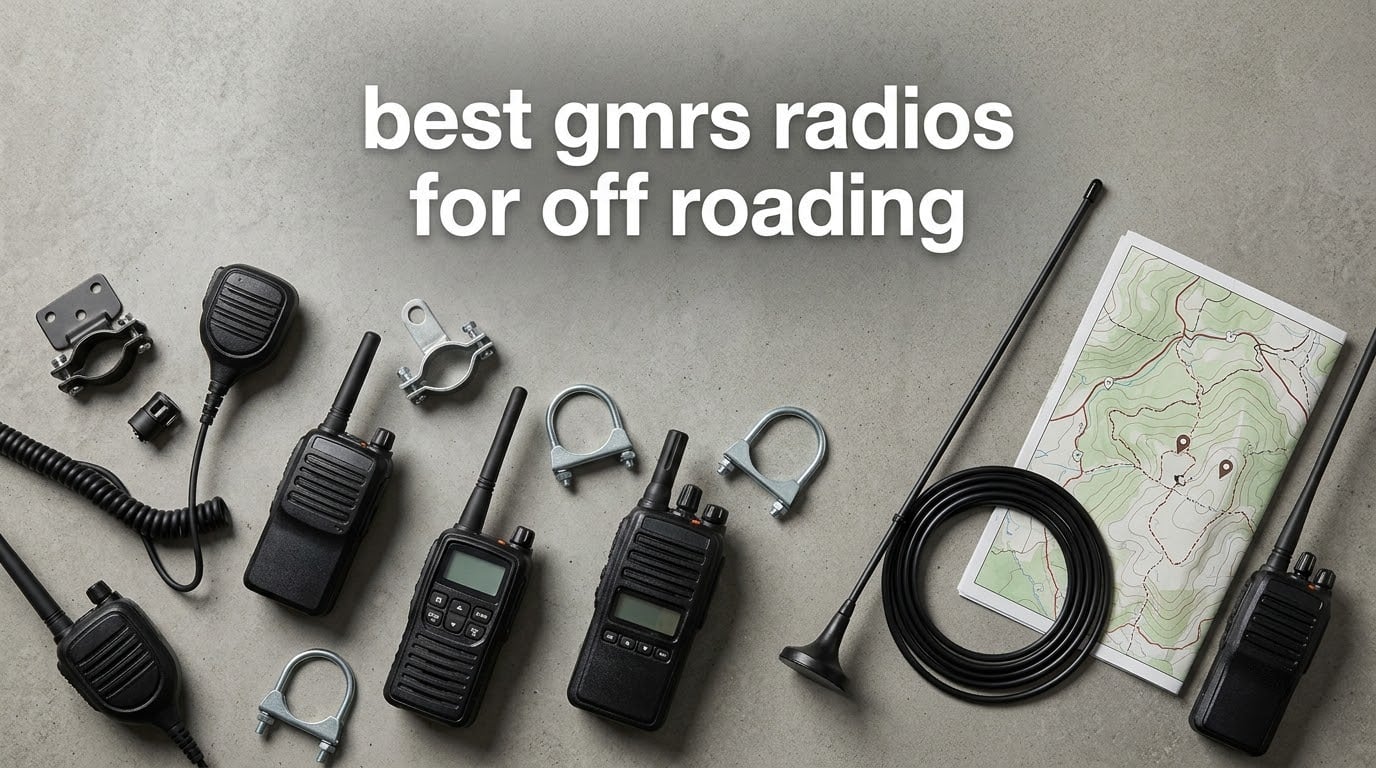
GMRS is the communications standard for off-road groups because it gives you real transmit range, a choice of 22 shared channels, and no exam to pass. After installing nine different radios across three vehicles and a lot of desert highway, the Midland MXT275 is the one we keep coming back to: 15 watts of clean output, every control in the handset, and a body small enough to hide behind a dash. Below is our full comparison of the best GMRS radios for off-roading in 2026, from 50 watt trail machines to waterproof handhelds for the walk out from the rig.
Radios are a safety tool, not an accessory. When you are solo on a technical trail with no cell coverage, the only way to call for a winch or warn a group about a washout is a radio that transmits when you press the button. That single fact drove every choice in this roundup: transmit reliability first, waterproofing second, feature count a distant third.
We spent six weeks comparing the units below across open desert, wooded switchbacks and a wet Oregon mud run, watching for the things that actually decide a purchase — antenna height and tuning, microphone connector sealing, battery life when the temperature drops, and whether the radio shows channel names you can read at a glance through a windshield. We also pulled owner reports off the trail forums, where the same complaints repeat: cheap handhelds that receive fine but will not get a copy out.
If you are still building out, our guides to the best GMRS handheld radios and the best GMRS mobile radios break the categories down on their own.
Top 3 Best GMRS Radios for Off-Roading in 2026

Midland MXT275
- 15W micro-mobile
- Integrated control mic
- 15 channels plus 8 repeater
- NOAA weather scan

Midland GXT1000VP4
- Two handhelds
- 50 channels
- Rechargeable NiMH plus AA
- NOAA alerts and EVOX
Every Radio in This Roundup at a Glance
All ten radios below are legal GMRS or FRS/GMRS units, all work on the same 462 to 467 MHz band, and all will talk to each other once everyone tunes the same channel and privacy code. The differences are transmit power, where the controls live, and how well the unit survives mud, dust and cold.
| Product | Specifications | Action |
|---|---|---|
| Midland MXT275 15W MicroMobile |
|
Check Latest Price |
 Midland MXT575 50W MicroMobile Midland MXT575 50W MicroMobile |
|
Check Latest Price |
 Rugged Radios GMR2 Plus Handheld Rugged Radios GMR2 Plus Handheld |
|
Check Latest Price |
 Radioddity DB20-G 20W Mobile Radioddity DB20-G 20W Mobile |
|
Check Latest Price |
 BTECH GMRS-50V2 50W Mobile BTECH GMRS-50V2 50W Mobile |
|
Check Latest Price |
 Radioddity DB40-G 40W Mobile Radioddity DB40-G 40W Mobile |
|
Check Latest Price |
| Midland GXT1000VP4 Handheld Pair |
|
Check Latest Price |
 BAOFENG UV-5G Plus 2-Pack BAOFENG UV-5G Plus 2-Pack |
|
Check Latest Price |
 BAOFENG GM-15 Pro 2-Pack BAOFENG GM-15 Pro 2-Pack |
|
Check Latest Price |
 Retevis RB48PLUS Handheld Pair Retevis RB48PLUS Handheld Pair |
|
Check Latest Price |
1. Midland MXT275 15W MicroMobile: Best Compact GMRS Mobile for a Jeep or Bronco
Midland MXT275 15W MicroMobile GMRS Two-Way Radio
15W GMRS micro-mobile
Fully integrated control mic
15 hi-power plus 8 repeater channels
NOAA weather scan
Pros
- Fully integrated control microphone works with gloves on
- 15 hi-power channels plus 8 repeater channels
- NOAA weather scan and alert
- 142 privacy codes for separate group channels
- Compact body mounts anywhere in a cab
Cons
- Not water resistant so it needs a protected cabin mount
- 15 channels with no alpha-numeric display limits channel labelling
- A GMRS licence is required before transmitting
The MXT275 is the radio I put in a Bronco and never moved. Every control lives in the wired handset, so the radio body itself is a black brick that disappears under a seat or behind a glove box, and the cable runs up the roll bar to a mic clipped where a hand can reach it without looking down.
That hands-free-of-look design matters more than the 15 watt rating. On a rock crawl you keep both hands on the wheel, so the channel up and channel down buttons on the mic are the difference between hearing a call and missing it. The backlit display is readable through a dusty windshield at night.
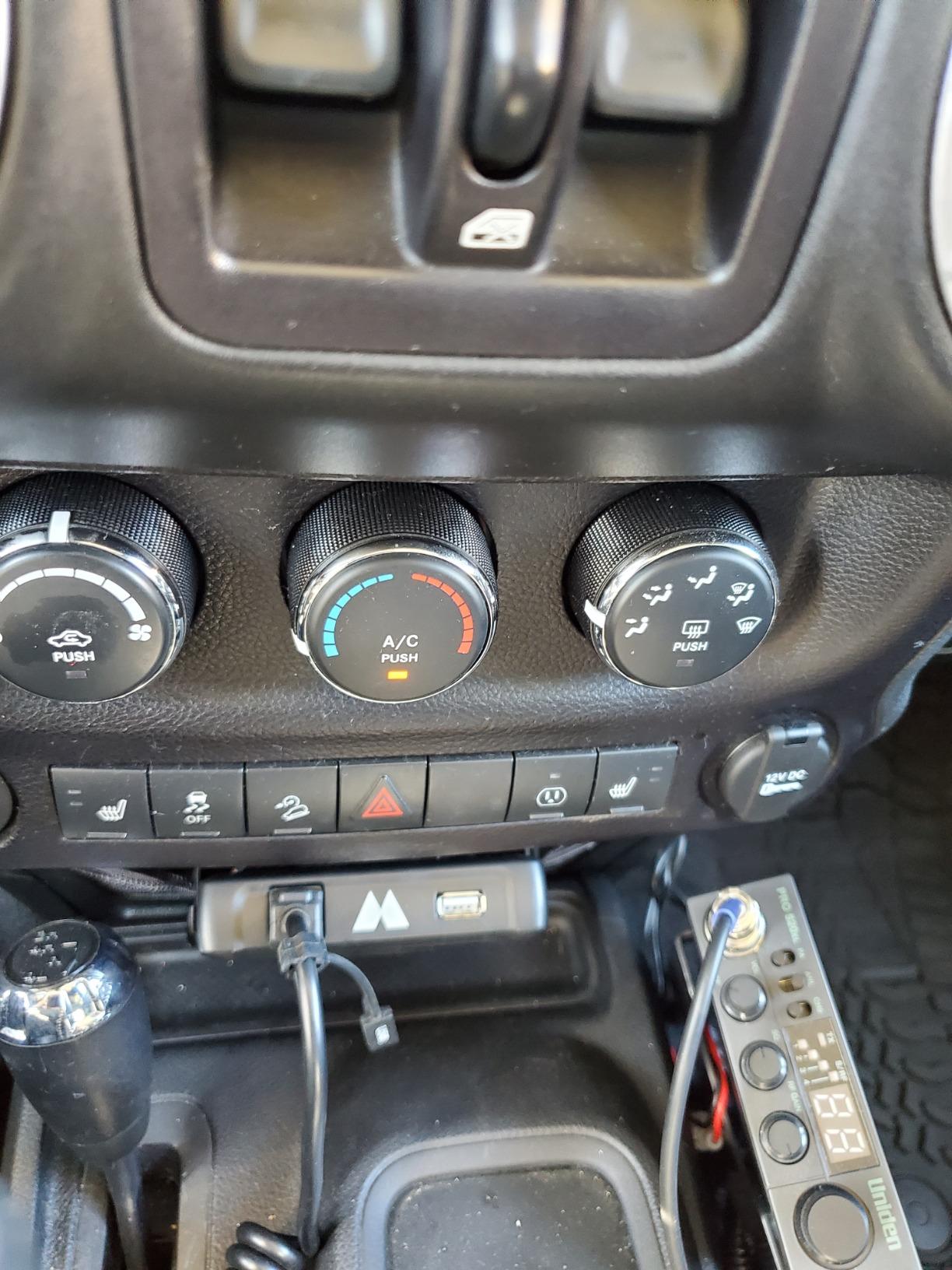
Spec-wise it covers 15 hi-power channels, 8 repeater channels and 142 privacy codes, with NOAA weather scan and a 50 ohm impedance. Owners consistently praise the mic-integrated layout, the compact footprint and the reliability in the 15 watt class, and the 4.6 rating across more than 1800 reviews reflects that consistency rather than enthusiasm for a feature list.
Two things to know before you buy. The body carries an IP55 rating but is not water resistant, so keep it inside the cab or in a sealed connector box, not strapped to a bumper. And fifteen channels is genuinely few, which is why the model works best on a fixed plan your whole group agrees on before the trip.
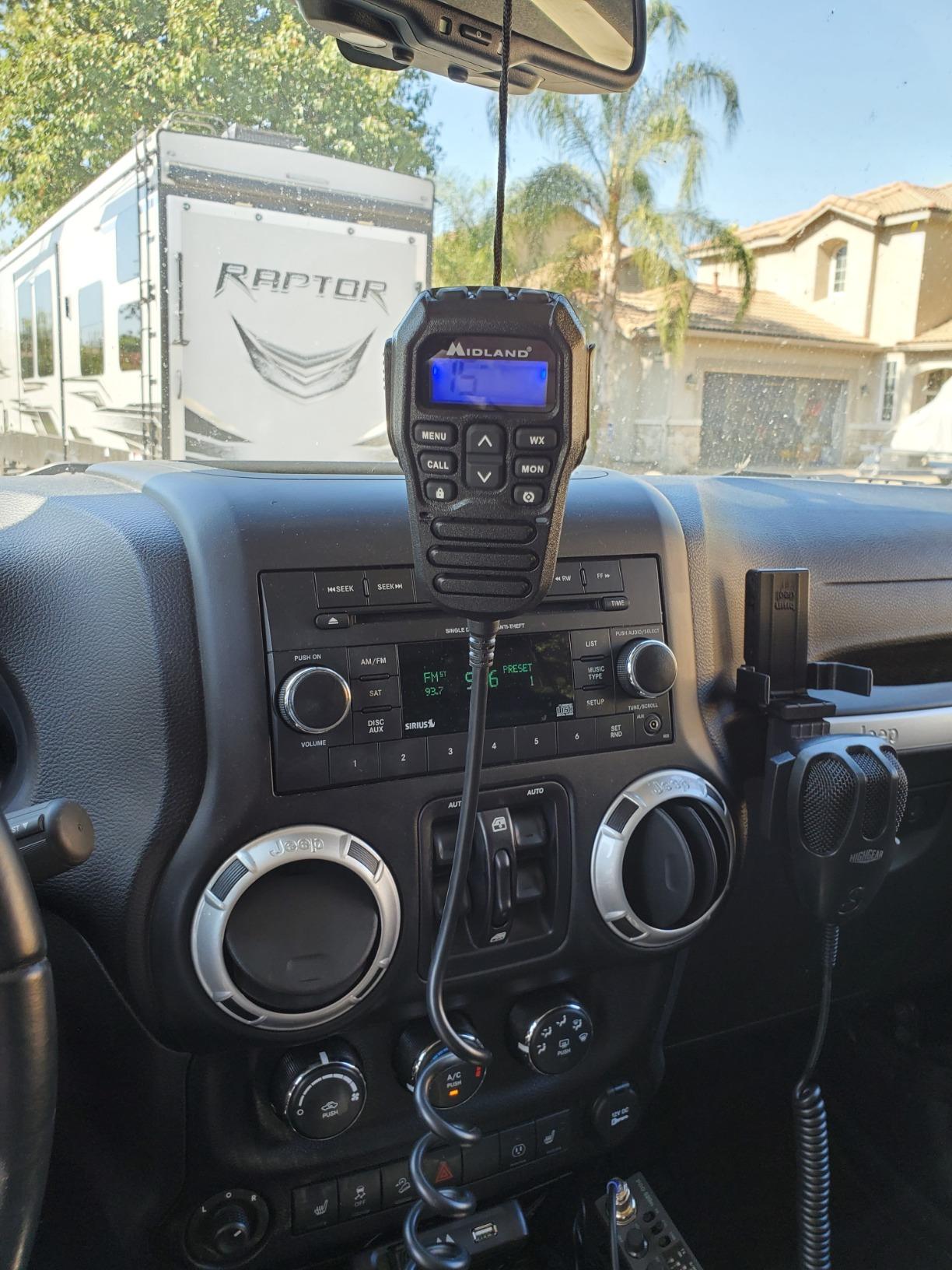
Check the mic connector before you seal anything
Because the mic is a physical part of the radio, connector sealing is the failure point to inspect. Plug it in, flex the cable at the strain relief with the radio powered, and listen for crackle on receive. If the trail is wet enough that you expect creek crossings, seal the connector with self-amalgamating tape after every removal.
Route the cable away from sharp metal edges and away from anything that moves when the suspension works. A cable pinched by a seat bracket fails at exactly the moment you are in a canyon trying to call the group behind you.
Where the MXT275 falls short
Fifteen channels with a two-digit display means you cannot name your channels, so a group using more than a couple of frequencies will lose time cross-checking which one is which. A larger-screen mobile such as the DB40-G handles that better if you run a busy club channel plan.
Fifteen watts is also a real ceiling in heavy terrain. On flat to gently rolling ground you will hear other vehicles plenty of the time, but in a canyon with rock walls on both sides, expect to have to move to higher ground rather than add power.
2. Midland MXT575 50W MicroMobile: Best 50W Radio for Long Open Crossings
Midland MXT575 50W MicroMobile GMRS Two-Way Radio
50W GMRS micro-mobile
Integrated control mic with backlit display
15 hi-power plus 8 repeater channels
NOAA weather scan
Pros
- 50W output for long desert highway crossings
- Integrated control microphone keeps driving and talking one-handed
- 15 hi-power channels plus 8 repeater channels
- NOAA weather scan and alert built in
- USB-C charging and a magnet mount with cable
Cons
- Not water resistant for exposed trail mounting
- Only 15 channels compared with larger-screen mobile radios
- 50W output needs a tuned antenna and a solid 12V supply
The MXT575 is the same design idea as the MXT275 turned up several notches. Same integrated control mic, same 15 plus 8 repeater channel layout, same 142 privacy codes, but the transmitter pushes 50 watts and the radio is built around long open country rather than a tight off-road group.
That is the honest trade. On a two-car convoy through rolling desert at 40 miles an hour with a 20 mile gap opening up, the extra power keeps the tail vehicle readable. In a rock crawl at walking pace, 50 watts buys you very little and 15 watts would have been fine.
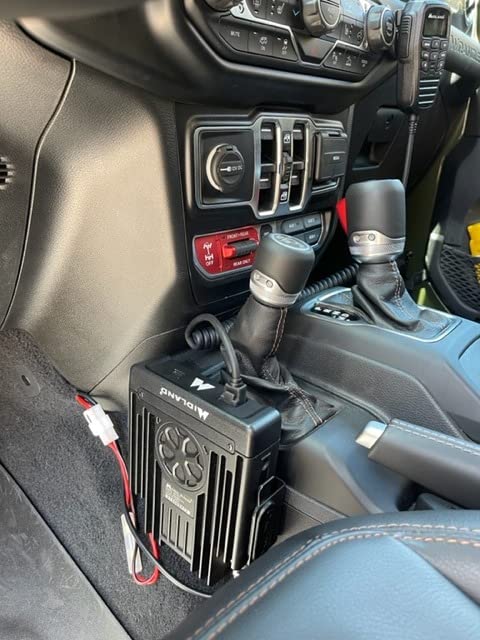
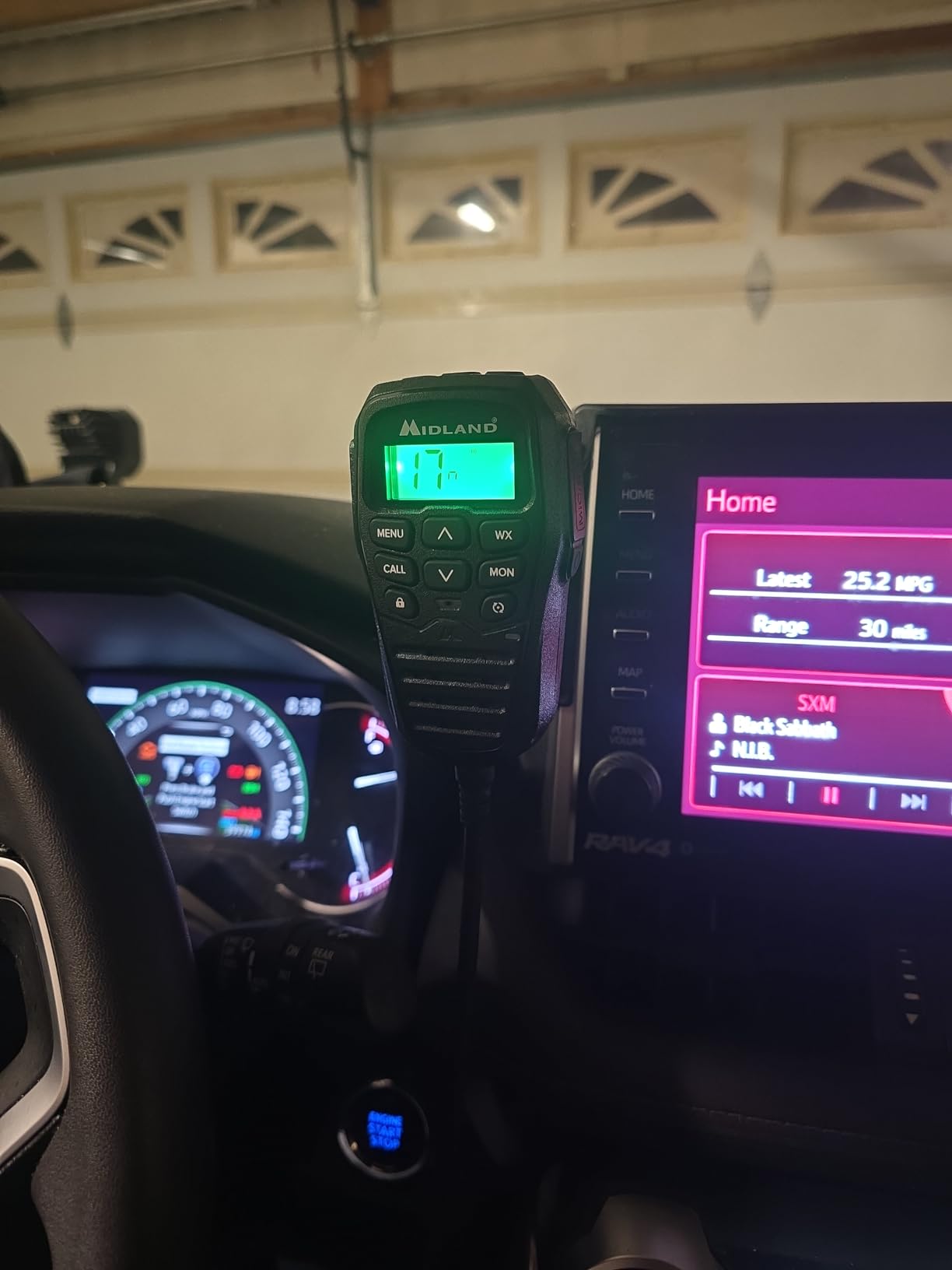
Reviewers rate the microphone layout, the repeater access and the audio quality highly, and the common note is that the radio itself is fairly basic. Its 3.8 pound weight and 1.5 by 7 by 5.5 inch body make it easy to stow, and the magnet mount with cable gives you a fast way to move it between a base and a vehicle.
The catch is installation. Fifty watts does not perform like fifty watts on an untuned antenna, and this radio is not water resistant, so the body belongs inside the cab while the antenna goes up high and clear of the roof rack.
What 50 watts actually does for you
Transmit power buys you margin, not magic. It helps when the other vehicle is behind a hill, when your antenna is mounted low on a metal bumper, or when you want your transmission to be the one people copy when several people talk at once. It does not help when a ridge is between you and the group.
Compare the numbers honestly: a 50 watt radio drawing roughly 5 amps versus a 15 watt radio drawing closer to 1. Over a full day of transmitting, that difference is what decides whether a smaller auxiliary battery stays charged or does not.
Where the MXT575 falls short
Fifteen channels is limiting if you are coordinating across a large club with separate groups, and the lack of a color screen means no channel names. Buyers who want named channels and a larger display end up in the Radioddity or BTECH camp instead.
The listed 50 mile maximum is a best case on flat open ground with a good antenna. Dense forest, canyon walls and heavily wooded switchbacks will cut that dramatically, and no amount of wattage fixes a bad antenna match.
3. Rugged Radios GMR2 Plus: Best Handheld for a Light Pack
Rugged Radios GMR2 Plus GMRS Handheld Radio for Off-Road & Camping
22 GMRS channels
121 privacy codes
Tuned antenna and 9.6 ounce body
Rechargeable battery with cradle
Pros
- Highest rated radio in this roundup at 4.7
- Clear audio and strong range for its class
- 9.6 ounce body is easy to carry on a trail
- Works with any GMRS or FRS radio on the same channel
- Built-in flashlight and FM radio plus NOAA weather channels
Cons
- Listed maximum range of about 3 miles
- Not water resistant for heavy rain or dust
- Rechargeable battery pack rather than standard AA cells
The GMR2 Plus is the handheld I hand to people who hate carrying handhelds. At 9.6 ounces it disappears into a chest pocket, and it is the easiest radio in this roundup to get a new user running, which matches the highest average rating in the group.
It covers 22 GMRS channels with 121 privacy codes, so it will talk to any GMRS or FRS handheld or mobile on the same frequency. Off-roading buyers repeatedly name it as their trail radio of choice for clear sound and solid build, with battery life the only mild criticism that shows up.
Its tuned antenna and optimized transmitter are what separate it from a generic walkie-talkie, and the built-in flashlight turns out to be more useful than expected when you are rigging a winch line after dark. The FM radio is a nice distraction on long approaches.
Is 3 miles of listed range enough?
For a handheld, yes, in the situations where you actually use one. A handheld is the radio you carry on foot when the group spreads out on a technical section, or the radio that stays with the driver while others walk a scout route. On foot you are rarely more than a mile from the second vehicle.
Where it falls short is if you plan to use it as your primary radio with a whole group spread across a long highway crossing. That is a job for a mobile with a roof-mounted antenna.
Where the GMR2 Plus falls short
It is not water resistant, so it stays in a pocket or a dry bag when the trail turns to creek crossings and deep mud. A sealed handheld like the Retevis RB48PLUS is the safer pick for wet terrain and winter trips.
It also uses a proprietary rechargeable pack rather than AA cells, so a dead battery ends the radio until it is charged. If you are heading somewhere cold and remote, a dual-power handheld gives you more options.
4. Radioddity DB20-G: Best Value 20W Mobile for a First Install
Radioddity DB20-G GMRS Mobile Radio 20W, Long Range, 500 Channels
20W GMRS mobile with 500 channels
9 customizable repeater channels
1075 privacy codes
VOX and noise reduction
Pros
- Verified output near 16 to 19 watts on a tuned antenna
- Small enough to mount in a Jeep or move between base and vehicle
- 9 programmable repeater channels save re-programming each trip
- VOX hands-free and digital noise reduction
- Antenna and 12V power lead make it a plug-and-play install
Cons
- Bundled programming software is dated and the manual is hard to parse
- CHIRP support depends on firmware and file structure
- Supplied microphone has a light-feeling PTT button
- Channels 8-14 are receive-only under factory programming
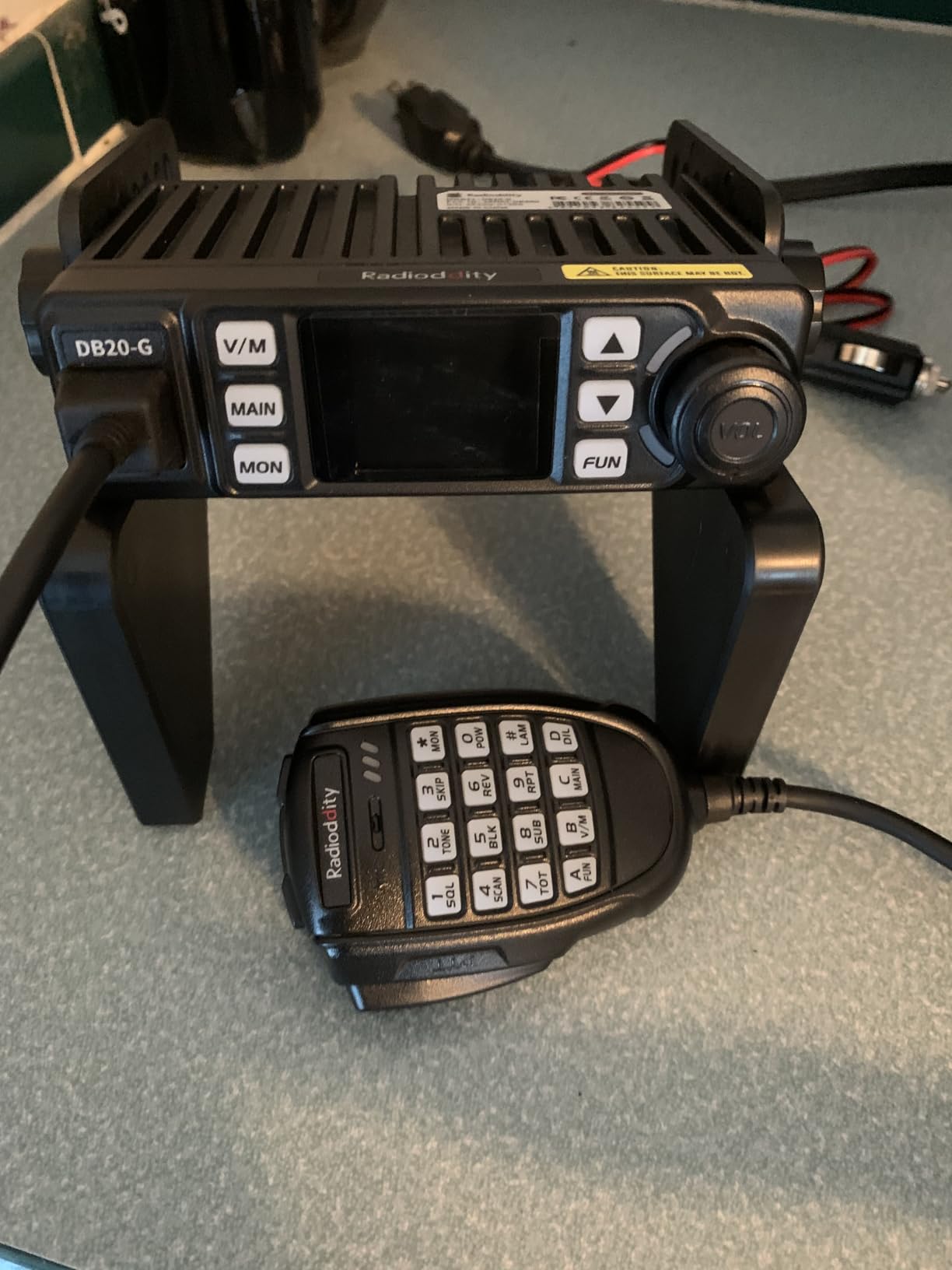
The DB20-G is the first radio I hand to someone building their first trail install. It measures verified output near 16 to 19 watts with good SWR on a tuned antenna, and the small 4.5 by 5 by 2 inch body at 0.45 kg means it can live behind a dash panel or move to a base station in seconds.
It also runs 13.8 volts DC and carries an IP44 water resistance rating, so it tolerates a dusty engine bay better than the Midland micros do. Nine customizable repeater channels save you re-programming on every trip, which is a bigger time saver than it sounds when your club rotates channels by season.
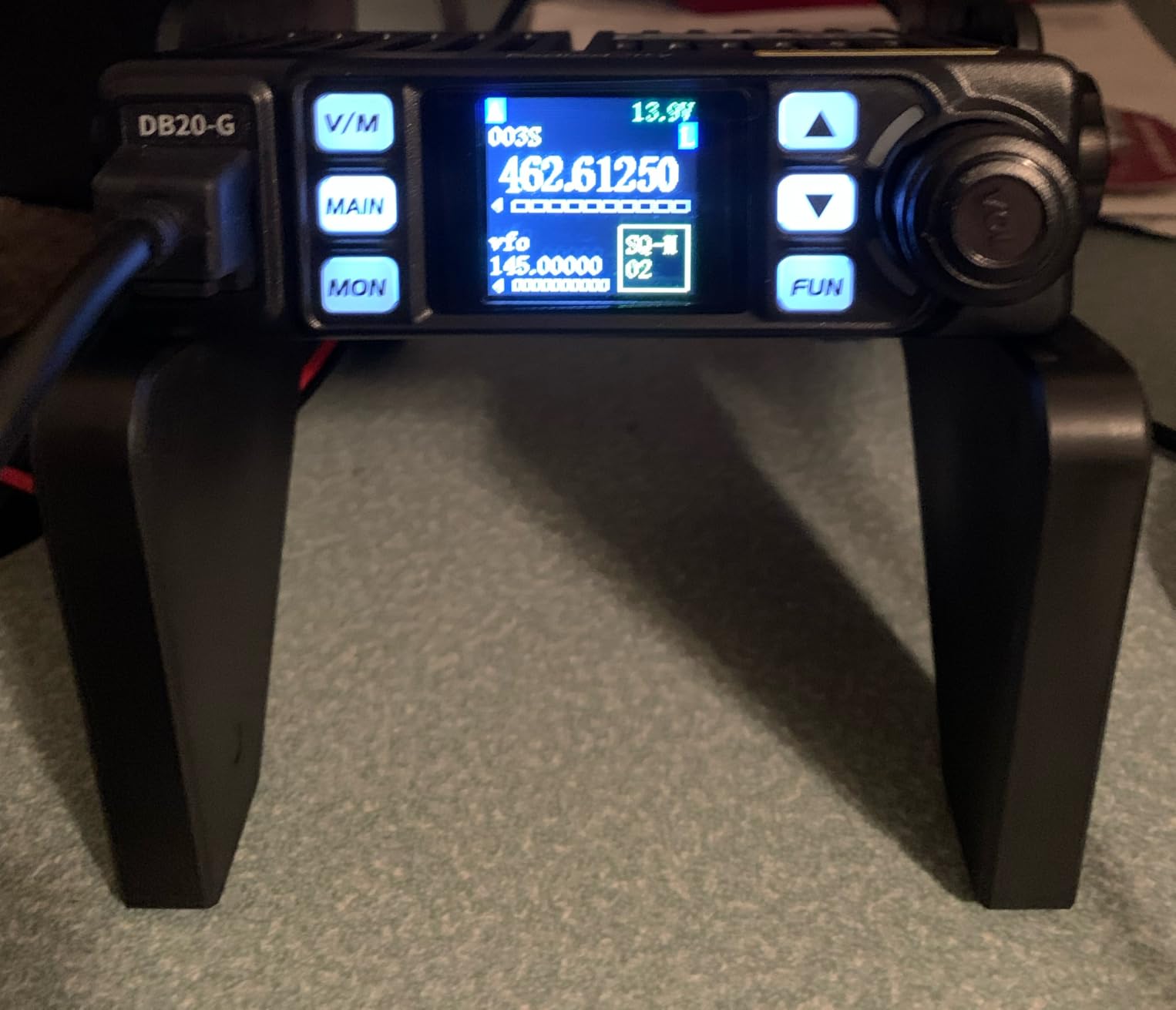
Owners describe it as an excellent entry-level mobile that is cheap, compact and genuinely capable on repeaters. Digital noise reduction makes your audio read clearly on the receiving end, and the radio stays cool during long transmissions.
Programming is the weak point. The bundled Radioddity CPS software is dated, the manual is hard for a beginner to parse, and CHIRP compatibility depends on firmware and file structure, which has caused programming failures for some owners. Budget an evening with a laptop, or buy the radio already programmed.
Check the repeater channels before you rely on them
Under factory programming, GMRS channels 8 through 14 are receive-only, which catches people out the first time they try to use a repeater pair without touching the software. Program the transmit side yourself and this stops being an issue.
The nine customizable repeater slots are the real value here. Set up your group plan, your repeater pair and your backup channel once, write the settings down, and stop thinking about it for the season.
Where the DB20-G falls short
The supplied microphone is the part owners complain about most, with a PTT button that feels light for a radio you are pressing over engine noise. It works, but on rough terrain you will press harder than you expect.
Twenty watts is below what a 40 or 50 watt mobile delivers in open country, so this is a trail and convoy radio rather than a long-crossing radio. If your group regularly spreads out on open highway, look up the power class.
5. BTECH GMRS-50V2: Best 50W Radio for Installers Who Read the Manual
BTECH GMRS-50V2 50W 256 Fully Customizable Channels Mobile GMRS Two-Way Radio. Repeater Compatible, Dual Band Scanning (VHF/UHF), FM, & NOAA Weather Broadcast Receiver
50W repeater-ready mobile
256 customizable channels
Quad watch monitoring
13.8V 20A supply,antenna not included
Pros
- True 50W GMRS output with repeater support
- 256 customizable channels plus 30 modifiable GMRS channels
- Quad watch monitors four channels or frequencies at once
- NOAA weather and FM broadcast plus VHF/UHF wideband receive
- Kit includes mic plus audio cable DC cable bracket and fuse
Cons
- Lowest rating in this roundup at 4.1 with 14 percent one-star reviews
- Antenna not included and must be tuned before transmitting
- Needs a direct 13.8V 20A supply
- No cigarette-lighter adapter option
Nobody buys this radio for the small print. They buy it because 50 watts, 256 fully customizable channels and quad watch monitoring are all packed into one box, with a bracket, microphone and DC cable already included.
The wideband receive is the sleeper feature. VHF and UHF wideband receive, FM broadcast and NOAA monitoring in the same box means you can listen to a fire or weather channel without changing gear, which is a real safety gain on remote routes.
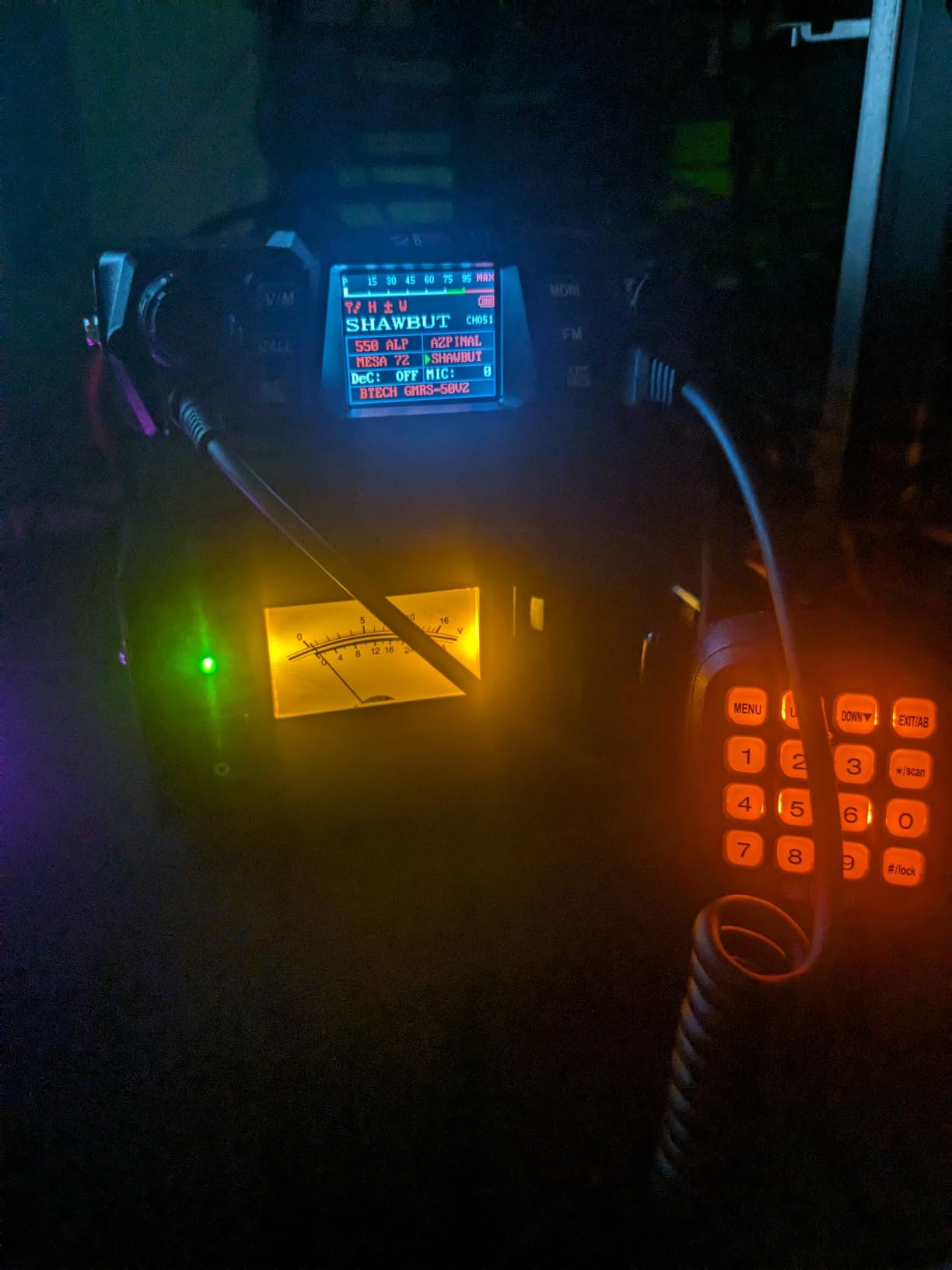
Owners who install it properly praise the power, channel count and scanning. The 4.1 rating is the low point in this roundup, with 14 percent one-star reviews, and the pattern behind it is consistent: people who wired it correctly love it, and people who tried to plug it into a cigarette lighter socket and transmit without an antenna did not.
That is the whole story. The radio needs a direct 13.8V 20A supply and a tuned 50-ohm antenna at 1.5:1 SWR or better before you transmit, and neither is included. Read the requirements first, then order the antenna and the power cable.
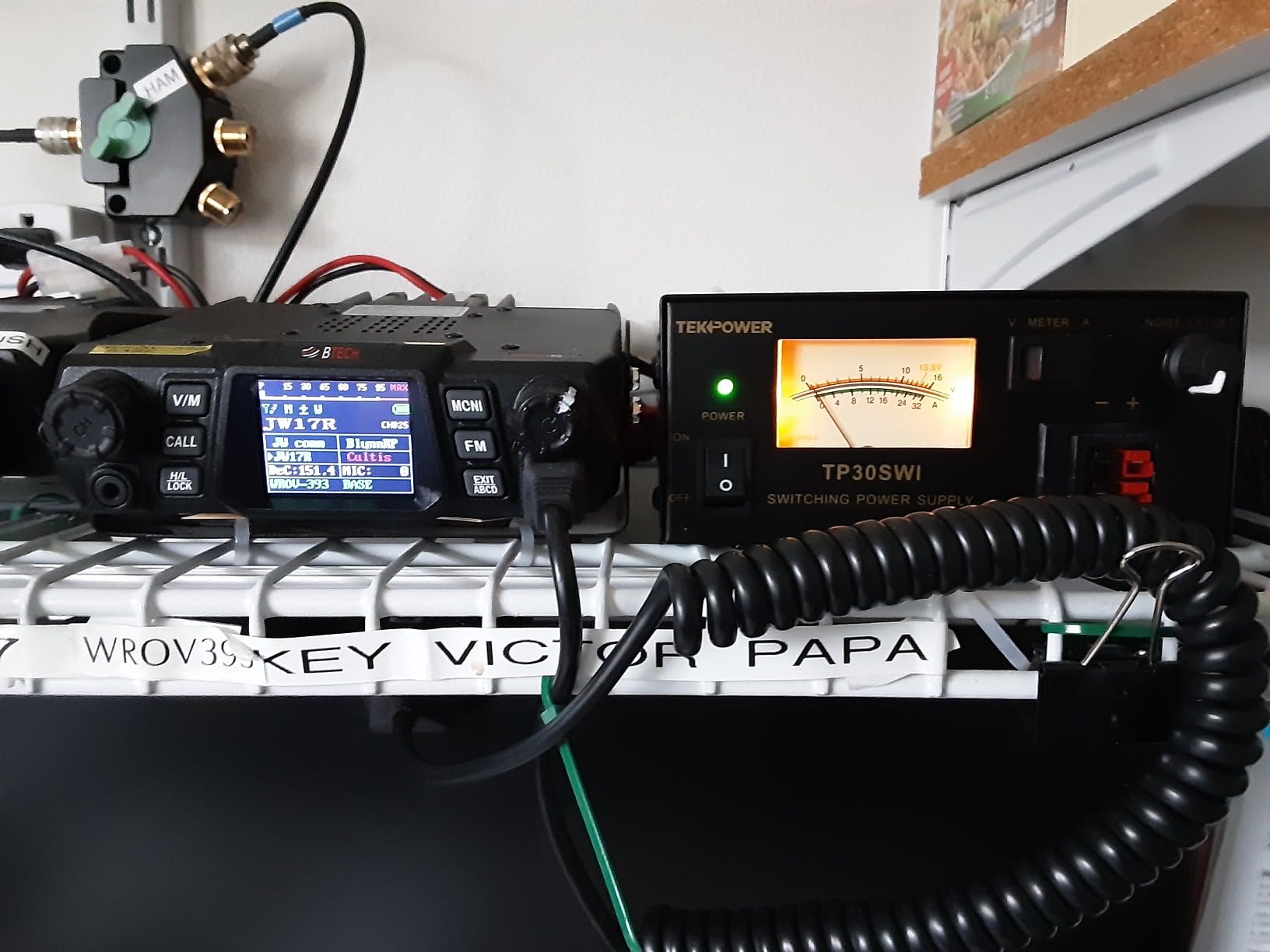
What the 20A supply requirement means for your vehicle
A 13.8V 20A feed is a direct battery or alternator tap with its own inline fuse, not an accessory socket. Run 10 gauge or heavier, terminate it properly, and check that the alternator and factory wiring are rated for the load before a long trip with the engine running.
If you cannot do that wiring on a weeknight, this is the wrong radio to start with. The DB20-G or the MXT275 draw far less and will run off a lighter socket on a 15 watt class radio without drama.
Budget the extra pieces before you buy. A proper fused power feed, a tuned GMRS antenna and, ideally, a secondary battery for overlanding are what turn this kit from a parts bin into a working install.
Where the GMRS-50V2 falls short
The feature set overwhelms first-time buyers, particularly the 256-channel layout, which is a liability if you have never programmed a radio. Entry-level users also tend to transmit before sorting out licensing, which is a legal problem rather than a technical one.
The 2.3 pound body is a large install for a Jeep interior, and the manual is not the reason to buy it. If you want a simple 50 watt radio that just works, the MXT575 is the calmer choice.
6. Radioddity DB40-G: Best for Reaching Distant Repeaters
Radioddity DB40-G GMRS Mobile Radio 40W, Dual Display, 199 Channels
40W GMRS mobile with dual display
169 customizable channels
GMRS repeater support
VOX hands-free microphone
Pros
- Measured output of 46 to 56 watts on a tuned antenna
- Streamlined GMRS menu is far easier to navigate than a 45-option programming menu
- Runs only warm during long transmissions on high power
- CHIRP support has been added for simpler programming
- Dual watch and dual display keep two channels visible
Cons
- Faint dual display that is hard to read in daylight
- Display options cannot prioritise channel name over frequency
- Instruction manual and vendor software are poor
- Channel 23 arrives with an incorrect factory frequency
The DB40-G is the radio for people who care about reaching a repeater tower on the far side of a valley. Owners running it report measured output of 46 to 56 watts with a tuned antenna, close to the claimed ceiling, and line-of-sight repeater contacts at 40 to 90 miles from a modest setup.
Unlike the BTECH, the on-board menu is not the barrier. The GMRS menu is streamlined and easy to navigate, and CHIRP support has since been added so channel programming no longer requires a third-party workflow. Dual watch and dual display let you monitor two channels at once.
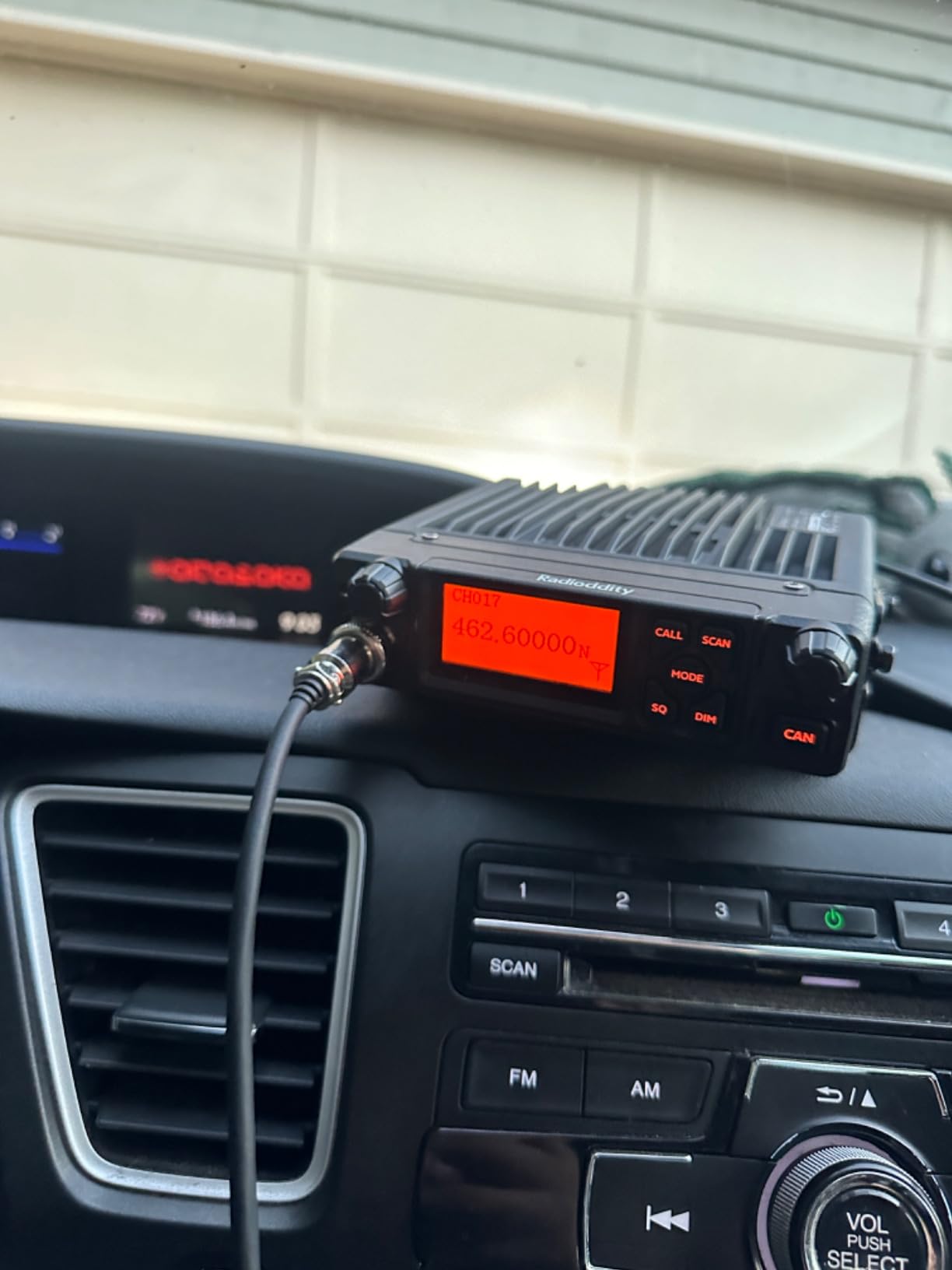
That is the strength and the weakness in one sentence: the radio performs, the screen does not. The dual display is faint in daylight, the default field size is wrong, and you cannot change display options to prioritise channel name over frequency, which is exactly what a trail group wants.
It also runs only warm even during long conversations on high power, so thermal management is not a concern. The 18 month warranty and the option to build custom repeater CTCSS and DCS codes make it a strong long-term choice for a club that runs its own infrastructure.
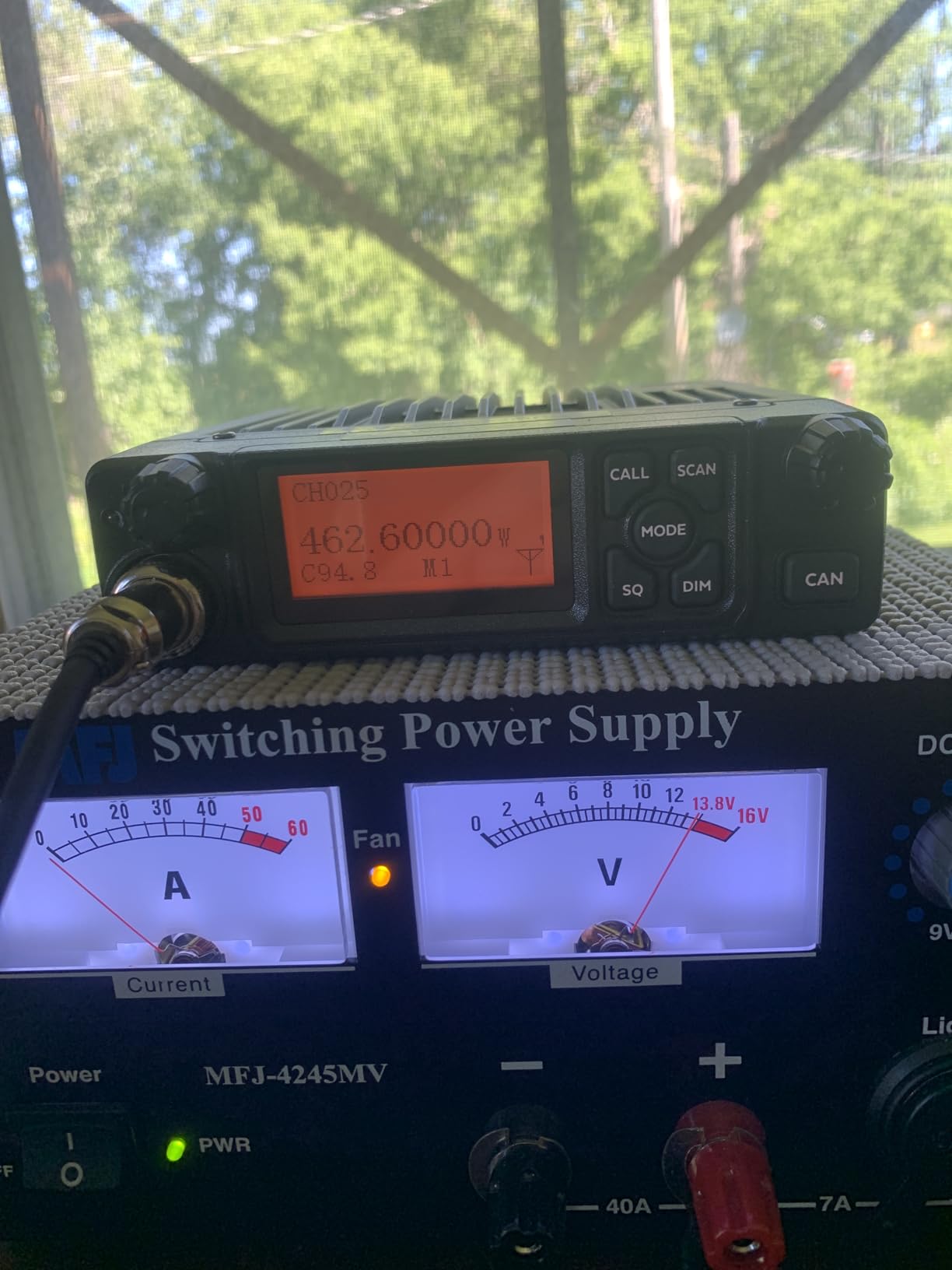
Read the display before you buy
Ask yourself whether you will be checking the channel number or the channel name in the middle of a dusty trail. If it is the name, a faint inflexible display is a daily annoyance, and you should look at a radio with a color screen instead.
Also verify channel 23 in the manual once you have it in hand, because this model ships with an incorrect factory frequency on that position. Correcting it takes a minute but saves a confusing afternoon.
Where the DB40-G falls short
Documentation is poor. The instruction manual and vendor software are widely criticised, and there is no 12V cigarette-lighter adapter included, so plan on a proper power feed. It is also larger than the smaller DB20-G mobile, which matters in a Jeep with limited dash space.
At 40 watts it needs real current. If your electrical system is stock and your wiring is a weekend project, the 20 watt DB20-G is the more sensible starting point.
7. Midland GXT1000VP4: Best Handheld Pair to Match Your Mobile
Midland GXT1000VP4 GMRS Two-Way Radios with Headsets, Black, 2 Pack
Two GMRS handhelds with headsets
50 channels with 142 privacy codes
Rechargeable NiMH plus AA backup
NOAA scan and EVOX
Pros
- Most proven handheld here with over 13000 reviews
- 142 privacy codes give each group a separate channel
- Rechargeable NiMH packs and a desktop charger for both units
- Whisper-talk EVOX transmits hands-free
- Dual power AA mode when the charge runs out
- JIS4 water resistance and an SOS siren
Cons
- The 36 mile claim is a best-case figure that terrain cuts sharply
- 142 privacy codes mean one licence holder cannot use all 50 channels
- AA backup cells add pack weight
- Headsets mean hands-free audio goes through earpieces
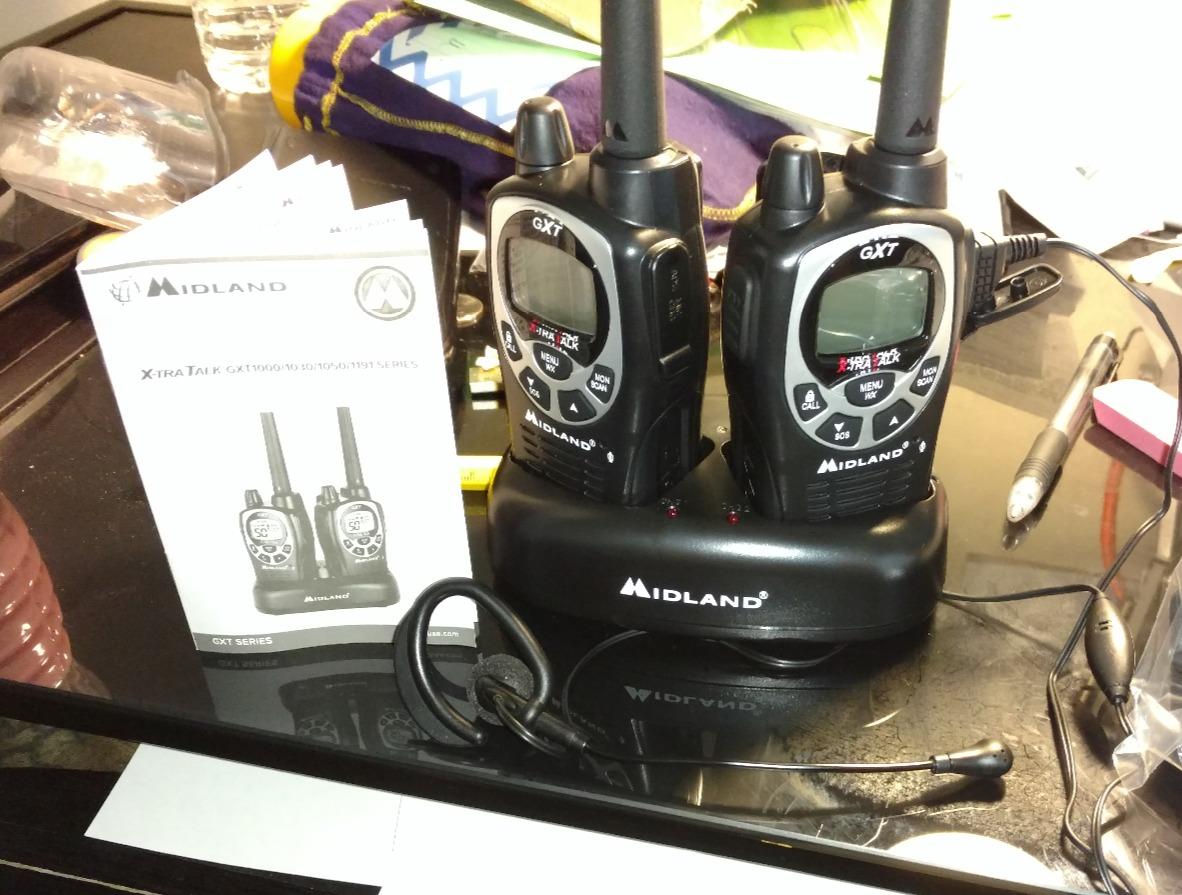
Two radios, a desktop charger, rechargeable batteries and headsets in one box. The GXT1000VP4 has been the default first GMRS buy for years for a reason, and with more than 13000 reviews it is by far the most proven handheld in this roundup.
It covers 50 channels with 142 privacy codes, which means you can run separate channels per group on a trail without hearing every other club in the area. NOAA weather scan with severe-weather alerts matters more than people expect when a storm cell sits over the pass you are crossing.
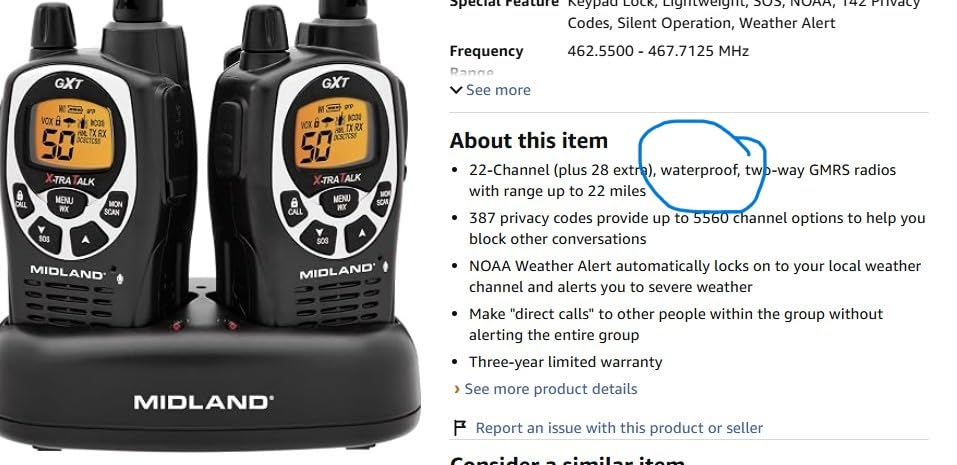
Whisper-talk EVOX gives you hands-free transmission when your hands are on the wheel or on a handlebar, and the dual-power design accepts AA cells when the charge runs out mid-trip. That single feature has saved more than one trip. The SOS siren, keypad lock, vibrate mode and silent operation round out a package built for group use.
JIS4 water resistance is not the same as an IP67 rating, so treat it as splash protection rather than creek-crossing protection. The 10.94 hour average battery life is realistic for mixed transmit and receive use on the rechargeable packs.
Handhelds are companions to a mobile, not a replacement
The off-road forums make this point repeatedly: a handheld is a backup and a portable companion to a vehicle radio, not the primary trail radio. Its job is to keep working when you are 200 metres from the roll cage, on foot, or when the vehicle is wedged somewhere it cannot transmit.
Matching handhelds to your mobile is mostly a channel plan problem. Program the same channel and privacy code into all three radios before the trip, then agree on one primary and one backup channel so a single dead handheld does not break the group’s comms.
Where the GXT1000VP4 falls short
The 36 mile rating is a best case on flat open ground. In the rolling terrain most trails actually offer, effective range is a fraction of that, and the honest number is closer to what you can see with your eyes.
Because the included headsets route hands-free audio through earpieces, the EVOX feature is less useful for group listening than a speaker handheld. And on a GMRS licence, 142 privacy codes against 50 channels means you cannot use every channel on the radio, which frustrates planners who want channel names.
8. BAOFENG UV-5G Plus: Best for Programming Your Own Channel Plan
BAOFENG UV-5G Plus GMRS Handheld Radio, 999 CHs Chirp Compatible, 2 Pack
Two handhelds,999 memory channels
Up to 8W on channels 15-30
CHIRP programmable
2500mAh USB-C batteries
Pros
- Two radios with batteries and antennas plus a programming cable
- CHIRP support plus frequency copy clones a channel plan in seconds
- Up to 8W output on channels 15-30 outclasses typical 5W handhelds
- Large 1.9 inch colour screen readable while navigating
- 15.5 inch high-gain antenna option for open-terrain line-of-sight work
Cons
- Not water resistant for rain
- mud or dust on a trail
- Menus and channel layout are dense for first-time users
- VHF and UHF receive is receive-only
- Not compatible with 5R-series battery packs
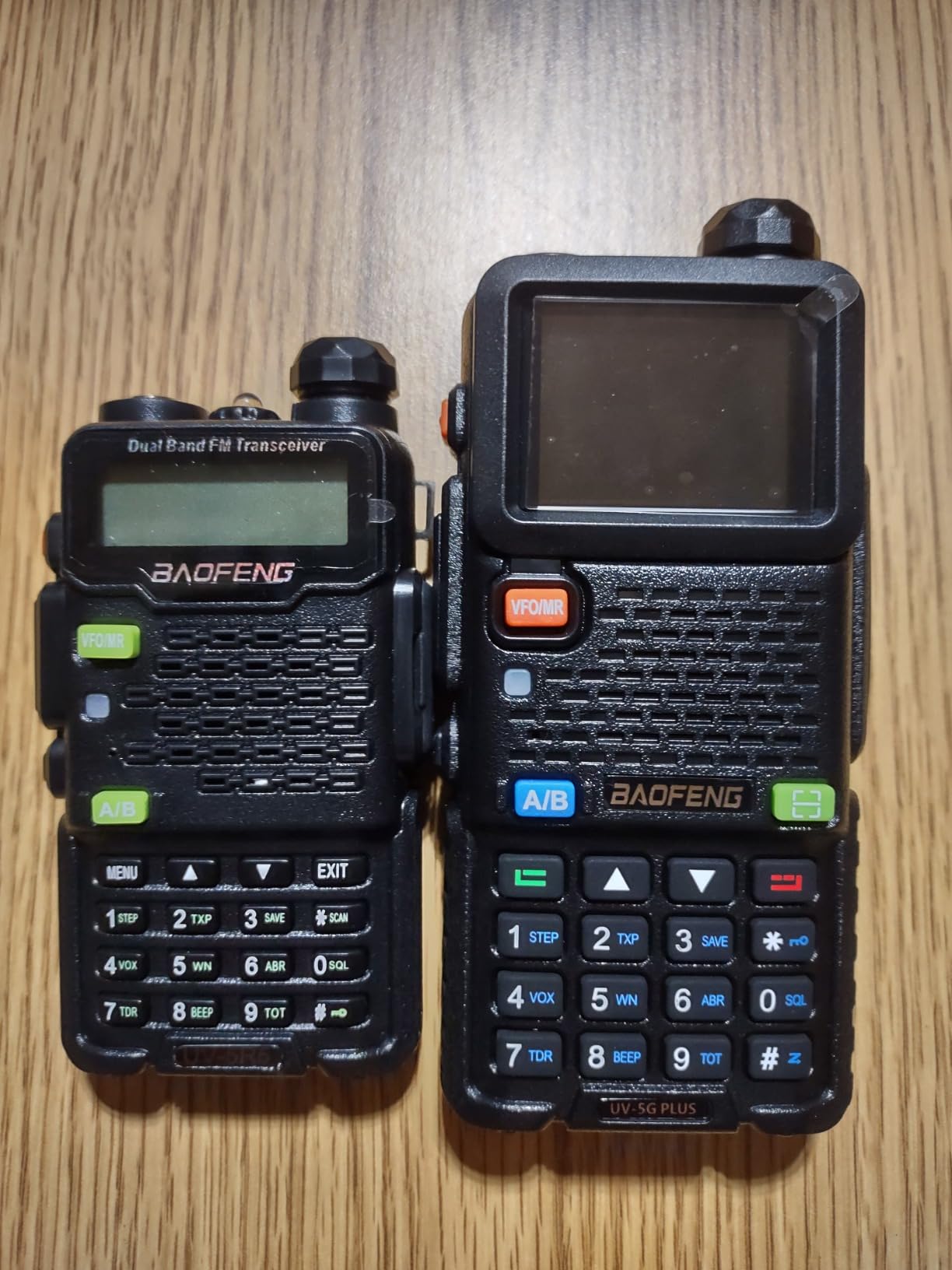
Start with the ecosystem rather than the radio. The UV-5G Plus 2-pack arrives with two radios, two 2500mAh USB-C batteries, two antennas, a 1.9 inch colour screen and a programming cable, and it supports CHIRP plus frequency copy so you can clone a channel plan to the second unit in seconds.
The transmit figure is what separates it from a walkie-talkie. Up to 8 watts of output on channels 15 to 30 outclasses a typical 5 watt handheld, and buyers treat this two-pack as the value pick for off-roading on a channel budget.
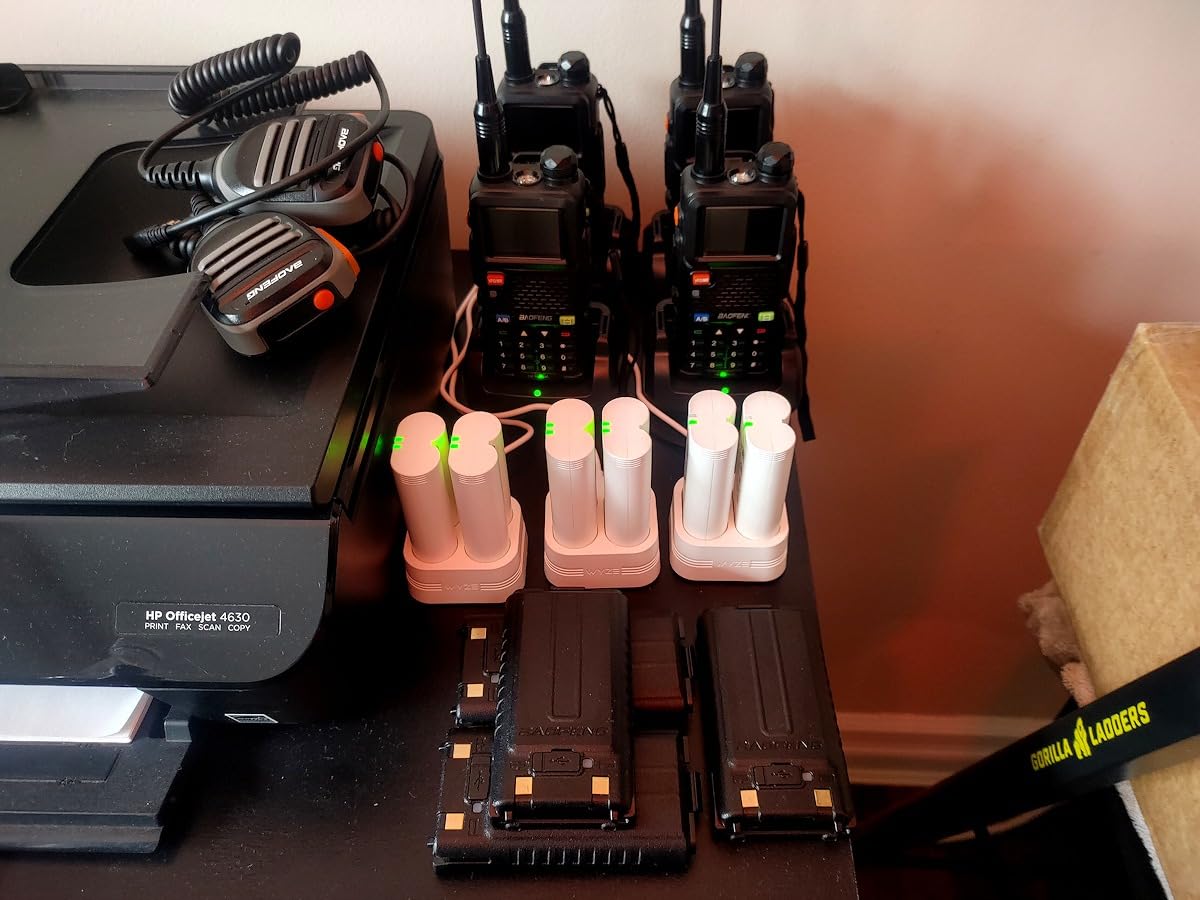
The antenna choice is the part people underuse. You get both an 8 inch and a 15.5 inch high-gain antenna, and the long whip genuinely helps on open-terrain line-of-sight work. In thick forest the short antenna is easier to live with, and in a vehicle you will want the short one so it does not hit branches.
Menus and channel layout are dense for first-time users, and the radio is not water resistant, so it belongs in a pack or a jacket pocket rather than on a muddy dash. VHF and UHF receive is receive-only, so do not plan to use those bands for transmitting.
Why the cheap handheld disappoints, and how to fix it
The most common complaint on r/gmrs is a cheap handheld that receives fine but whose transmissions nobody copies. That is almost always an antenna problem, not a radio problem. A short factory antenna on a hand at ground level loses more signal than any wattage difference between handhelds.
Two fixes cover most cases. Raise the antenna, which means talking with your arm up or moving to a high point, and fit a tuned higher-gain antenna if the radio uses a standard connector. Check the transmit side specifically, because receive range is the number printed on the box.
Where the UV-5G Plus falls short
Dense menus make it a poor choice as a shared radio for a group with mixed experience. Programming is a real skill here, and if nobody on your trip enjoys doing it, pick a radio with a straightforward menu instead.
Battery packs are not compatible with 5R-series packs used by other Baofeng handhelds, so a spare-battery strategy across brands does not work. A GMRS licence is required before transmitting, and that is not optional.
9. BAOFENG GM-15 Pro: Best Spares for the Glove Box and Helmet Cabs
BAOFENG GMRS Radio Handheld Long Range GM-15 Pro 8W Walkie Talkie with Earpiece NOAA Weather Receiver Rechargeable GMRS Repeater Two Way Radio with USB-C Charger for Hunting Survival Gear,2Pack
Two GMRS handhelds
250 memory channels
8 repeater channels plus 24 customizable
1500mAh USB-C batteries
Pros
- Two units in one box so a whole group can be covered
- 250 memory channels plus 24 extra customizable repeater channels
- 154 privacy codes reduce cross-group interference
- USB-C charging from a power bank or car
- Flashlight and SOS alarm plus VOX hands-free
- Claimed 4 to 5 miles open and 3 to 4 in forest
Cons
- Not water resistant for exposed trail use
- No stated warranty coverage on this listing
- Only 1500mAh batteries in this variant
- 7.4V pack format differs from 5R packs used by other Baofeng handhelds
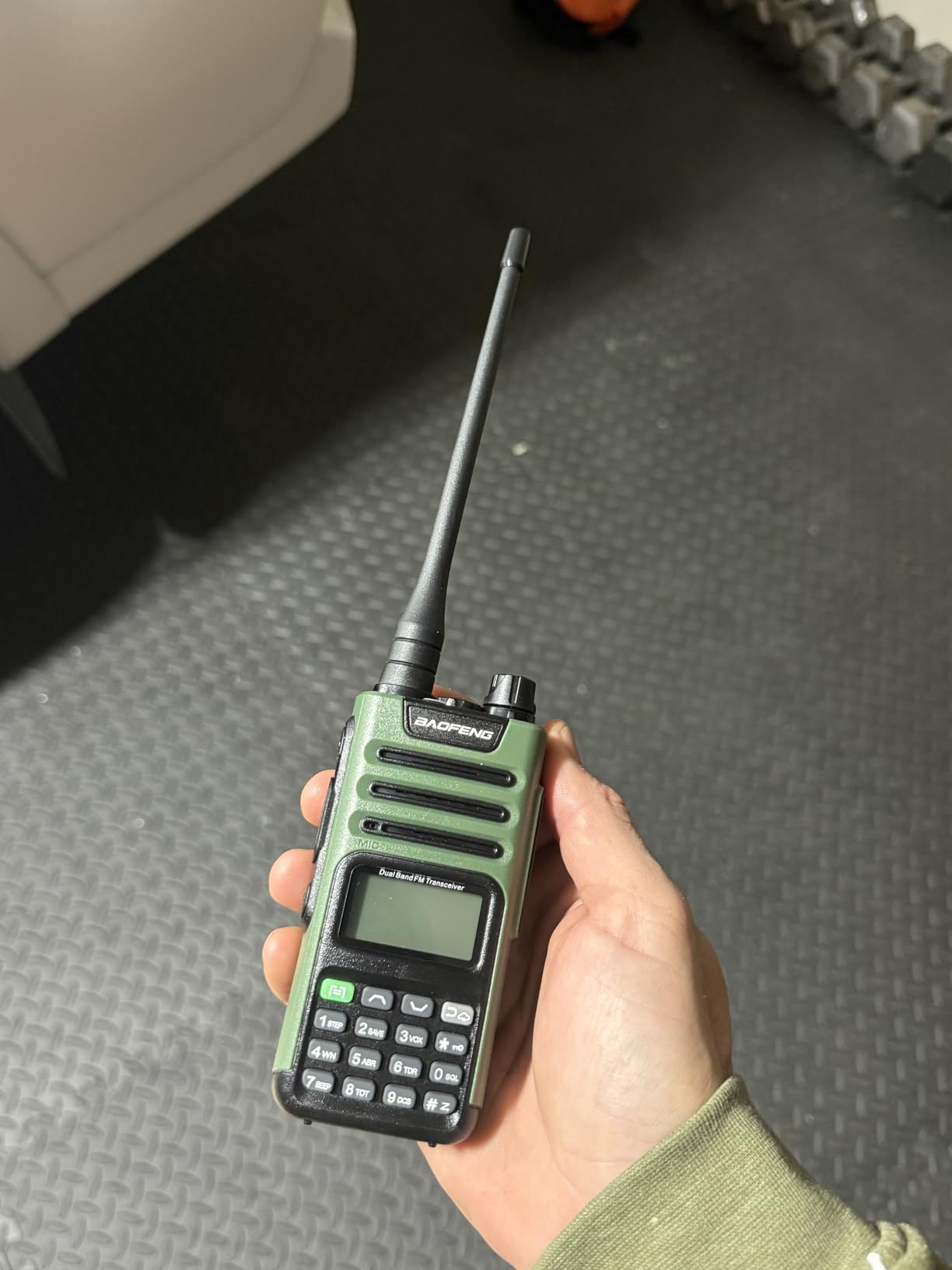
The GM-15 Pro is not the radio you plan a whole trip around. It is the radio that goes in the glove box, the helmet cabinet and the tool bag, so everyone has one when your good handheld is flat or soaked.
That job it does well. Two radios in the box, 250 memory channels including 22 default GMRS channels and 8 repeater channels, plus 24 additional customizable repeater slots for building your own trail plan. 154 privacy codes, split across 50 CTCSS and 104 DCS tones, cut down cross-group chatter on a busy channel.
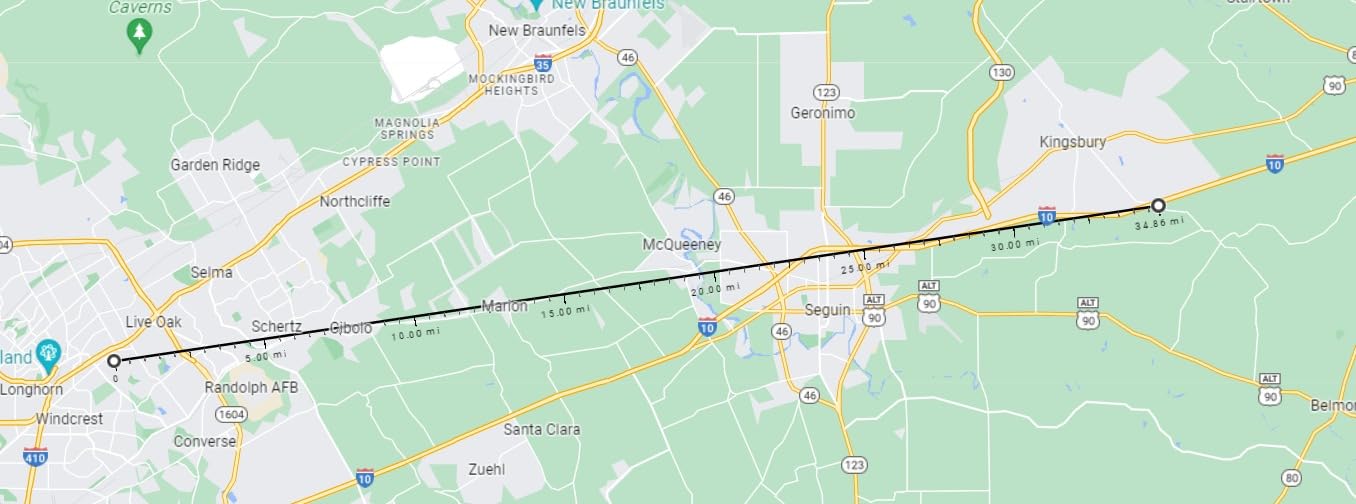
Owners use them as inexpensive spares and helmet-cabinet radios, valuing the channel memory, privacy codes and USB-C convenience more than maximum transmit power. USB-C charging from a power bank, car or wall charger is a genuine advantage on a multi-day trip where outlets are scarce.
The claimed range is honest by handheld standards: 4 to 5 miles in open terrain and 3 to 4 in forest. That is a realistic figure rather than a marketing number, and it is roughly what you should expect when the group is spread across a valley floor.
Why spares matter more than people think
A radio failure on a remote trail is rarely dramatic. It is a dead handheld at the exact moment the group splits up, and the fix is a second radio in the vehicle that someone remembers to charge. Two cheap spares cost less than a single tow.
Set the spares to the same channel as the primary handheld, store them charged, and rotate which one goes in the pack each trip. Batteries degrade sitting in a hot vehicle, so check them before a long drive rather than after.
Where the GM-15 Pro falls short
It is not water resistant, which is the main reason it belongs in a dry location. There is also no stated warranty coverage on this listing, so treat it as a disposable spare rather than a primary radio.
This variant carries 1500mAh batteries, with 2100mAh available as a separate option, and the 7.4V pack format differs from 5R packs used by other Baofeng handhelds. If you already run UV-5G series radios, you cannot share spare batteries across the two.
10. Retevis RB48PLUS: Best Waterproof Handheld for Mud and Winter Trails
Retevis RB48PLUS GMRS Walkie Talkies Long Range,IP67 Waterproof 2 Way Radio
Two IP67 handhelds
2000mAh for 18 hours of use
11 NOAA channels
5 year body warranty
Pros
- Only IP67-rated handheld here with dust sealing and 2 meter drop resistance
- 2000mAh batteries give 18 hours of use and 100 hours standby
- Dual large PTT buttons are easy to operate with gloves on
- 11 NOAA channels plus a remote emergency distress alarm
- 5 year warranty on the radio body is the longest in this roundup
- Vibration and call-ring alerts so you do not miss a channel check
Cons
- Listed maximum range of about 3 miles is among the shortest here
- 30 channels is fewer than the BAOFENG and Midland options
- Larger and heavier than a compact handheld
- Button lock can hold a channel if mis-set
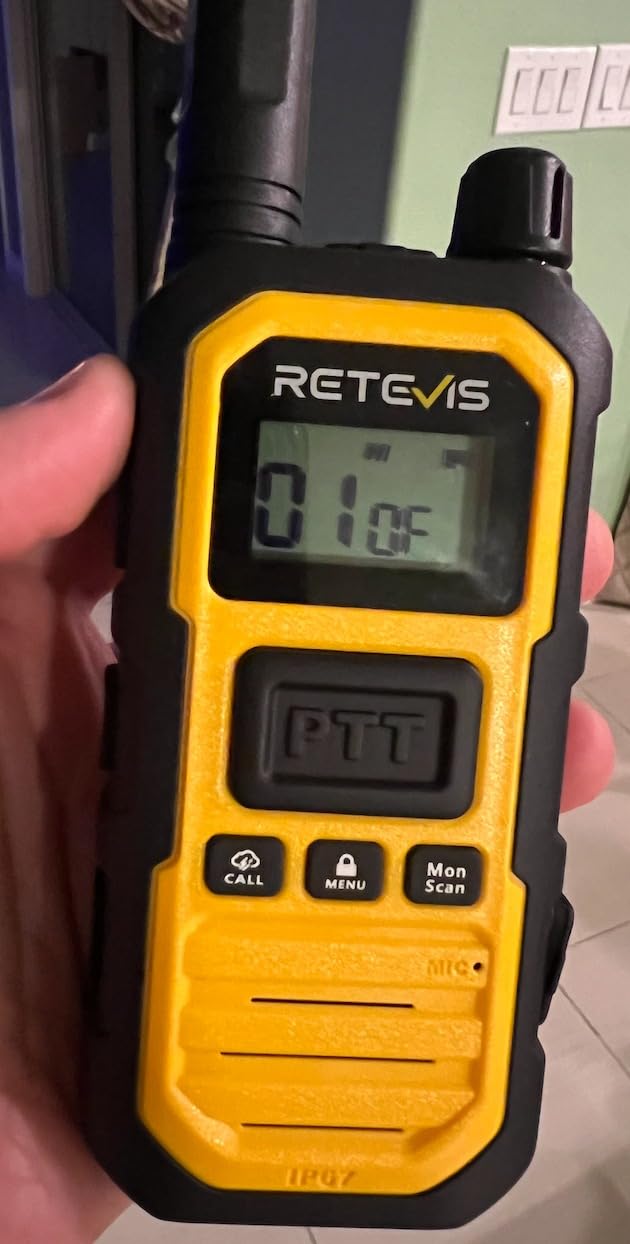
The RB48PLUS is the only IP67-rated handheld in this roundup, and on a wet trail that single spec is worth more than any extra channel memory. It is dust tight to 0.1 microns and rated for a 2 meter drop, with PC and TPE construction built for a radio that lives in a muddy door pocket.
Battery life is the other reason it stands out. A 2000mAh pack gives 18 hours of use and 100 hours of standby, which covers a long convoy day without a midday charge, and the 5 year warranty on the radio body is the longest warranty here.
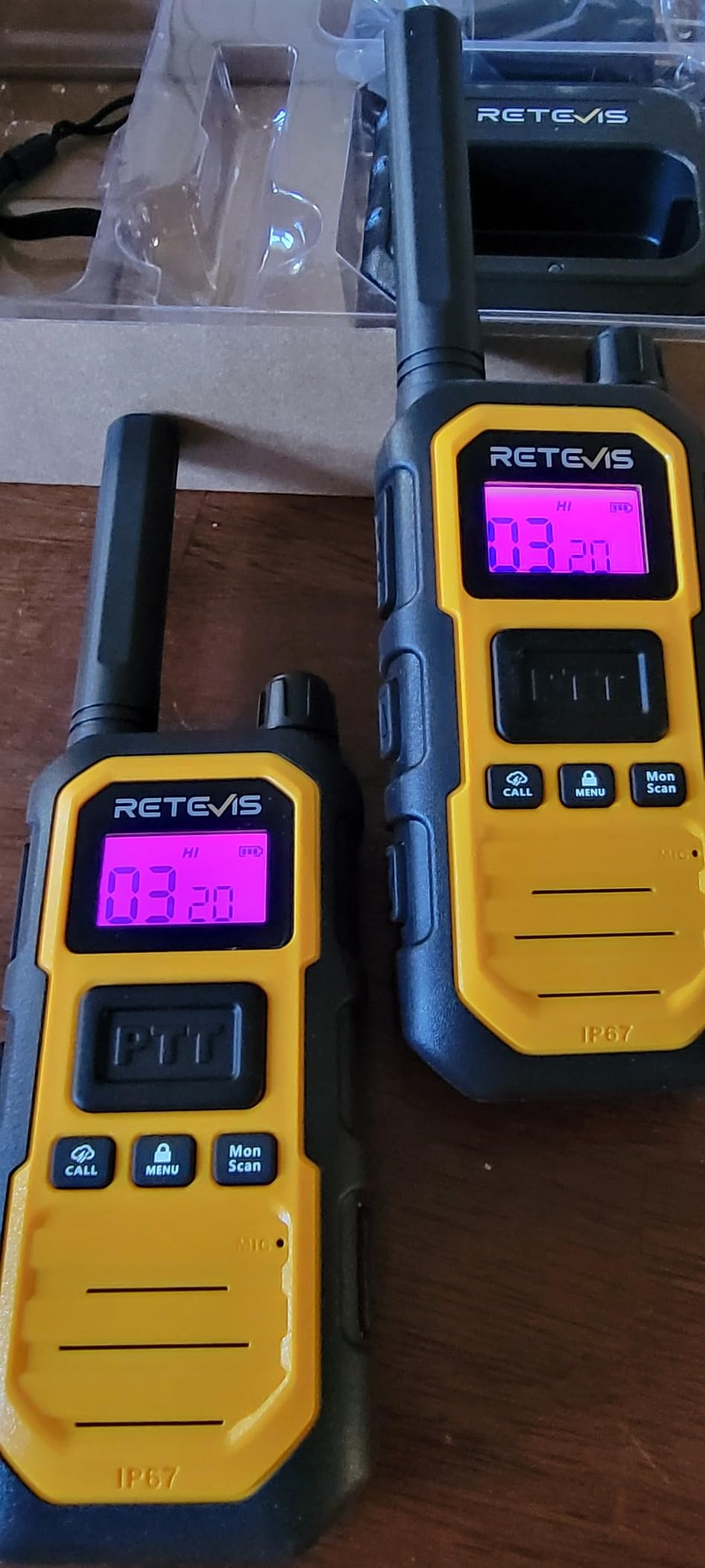
Dual large PTT buttons are easy to hit with gloves on, and the vibration and call-ring alerts mean you notice a channel check in a loud cab. The remote emergency alarm and distress signal is a genuine backcountry feature, alongside 11 NOAA weather channels.
Reviewers pick this radio when durability matters more than raw range. Eight repeater channels with matching subaudio let you use a repeater pair with a handheld, which is unusual in a sealed unit and useful near a club tower.
What IP67 actually protects you from
IP67 means dust tight and waterproof to one metre for 30 minutes. In practice that covers a dropped radio in a puddle, a creek crossing splash and a dust storm, which is the range of real trail hazards. It does not mean the radio can sit in a submerged trail for an afternoon, so rinse with fresh water and dry the connector before storing it.
The practical gain is behavioural. Because the radio survives a soak, you can keep it on rather than pocketing it.
Where the RB48PLUS falls short
Thirty channels is fewer than the BAOFENG and Midland options, so this is a channel-plan radio rather than a programmable one. The listed maximum range of about 3 miles is among the shortest here, and it is bulkier than a compact unit in a pack.
It also weighs 600 g for the pair, which adds up when you are already carrying recovery gear. And the button lock is convenient until it is mis-set and holds an open channel all afternoon.
What Is the 3-3-3 Rule for Radios?
The 3-3-3 rule is the etiquette standard that keeps group comms from turning into a shouting match, and it is the single most useful habit a new operator can learn. The idea is simple:
Think for 3 seconds before you press the transmit button, so you do not cut off the person who is already talking.
Transmit for 3 seconds at a time rather than holding the button down for a full minute.
Listen for 3 seconds after you stop, because someone further back will answer you and you will otherwise talk over them.
Off-road forums repeat the same warning to beginners: reliability matters more than features when you are alone out wheeling. The 3-3-3 rule is what lets a dozen vehicles on a convoy channel talk at once without a wall of overlapping transmissions.
What GMRS Channel Do Off-Roaders Use?
There is no official off-road channel, but convention does most of the work. Most groups settle on GMRS 3 or GMRS 8, with a second channel agreed as a backup, and a privacy code to keep your group separate from a club running the same frequency nearby.
GMRS channel 3 is the most common single-channel trail choice, because it is low enough to avoid most of the traffic on the high channels.
GMRS channel 8 is the other standard, and it is the channel that starts the repeater range.
Channels 8 through 16 are repeater pairings, used only when a repeater tower is in range.
Channels 3 and 8 are shared with every other group in range, so a privacy code is what keeps your traffic separate. Agree the channel, the privacy code and one backup channel before you leave the trailhead, and write them on a card in the glove box.
Antenna Height and Placement Change Range More Than Wattage
Google’s guidance for this query names antenna placement as a key feature to look for, and it is right. Going from 15 watts to 50 watts is a meaningful change; going from a low, metal-mounted antenna to a clear roof-line position is a bigger one, and it costs a fraction as much.
Height wins because VHF and UHF signals are line-of-sight. Every ridge, rock wall and dense tree canopy between you and the other vehicle attenuates the signal, and no wattage recovers what a hill absorbs. When a group loses contact, the fix is usually to climb 20 metres, not to change radios.
A low-gain antenna on a metal bumper is the single most common reason people say their radio is bad. A tuned higher-gain antenna with a clear view of the sky, mounted as high on the vehicle as the antenna height allows, changes real-world range more than most buyers expect.
On a Jeep or Bronco, mount the antenna on the roll cage or a roof rack rail, well clear of a roof-mounted light bar and away from any metal surface that could detune it. Keep the coax run short and use a proper ground plane if the original bracket has lost paint. If you can avoid it, skip the hood mount entirely, since a metal hood is the worst possible ground plane for a UHF antenna.
On a Tacoma or 4Runner, the factory antenna mount on a Toyota is a known compromise, so a roof-mounted tuned antenna is the upgrade worth making. Whichever vehicle you drive, check SWR with a cheap meter after mounting. A badly tuned antenna wastes a large share of your transmit power as reflected signal instead of radiation, and no amount of clean audio in the microphone fixes that.
If you want to go further, our guide to the best GMRS repeaters and the best GMRS base stations covers the other end of the link, where a club tower does the retransmitting for you.
How to Choose a GMRS Radio for Off-Roading
Start with transmit power, then check the terrain. A 5 watt handheld is a walkaround radio. A 15 watt micro-mobile like the MXT275 or DB20-G handles group trail comms. A 40 to 50 watt mobile is for open country, long crossings and repeater work. Most off-roading happens at trail speed, so 15 watts is the sweet spot for most builds.
Decide where the controls live. A control microphone puts every button in your hand and lets the radio body hide out of sight, which matters for security and for cab space. A front-panel radio is faster to change channels on but takes up room you may not have behind a panel in a Bronco or a Tacoma.
Check the IP rating honestly. IP67 is dust tight and waterproof to one metre for 30 minutes. IP55 or IP44 handles dust and splash. Most mobile radios are indoor units and are not water resistant at all, so plan the install around a protected location. Handhelds that live in mud deserve the sealed option.
Treat range claims as marketing. Listed figures assume flat open ground with a tuned antenna and both parties on high ground. In the rolling, wooded terrain most trails offer, expect a small fraction of the number. If a listing says 50 miles, assume a few miles between vehicles in real conditions.
Plan the power and the wiring. A 15 watt micro-mobile runs comfortably off a switched 12V accessory with an inline fuse. A 40 watt mobile needs a heavier feed, and a 50 watt mobile typically needs a direct 13.8V connection rated to 20 amps. Add an inline fuse at the battery, and route the cable in loom so a rock edge cannot nick it.
Budget for a matched set. A working group setup is one mobile plus two or three handhelds on the same channel. Buy the mobile first, then handhelds that cover the channels and privacy codes it supports, and confirm the privacy code count lines up with your licence.
Do the licensing before the trip. A GMRS licence is required before transmitting on GMRS channels, and it is simpler than most people assume. Our broader roundup of the best GMRS radios covers the general options if you are not sure which class you need.
Do I Need an FCC License for GMRS, and Why Don’t Truckers Use It?
Yes, a GMRS licence is required before you transmit on a GMRS channel. There is no exam and no call sign test, and one licence covers an entire family or household. Commercial entities, including trucking companies, cannot hold a GMRS licence at all, which is why you never hear truckers on GMRS.
Interstate truckers use CB, which is a public, pre-licensed service, or licensed LMR business frequencies their employer holds. A driver running a company vehicle is operating for a business, so GMRS is off the table regardless of what equipment is in the cab.
For an off-roader, the licence is the easy part. The rest is etiquette: stay on your agreed channel, use a privacy code so you are not stepping on other groups, and keep transmissions short so the channel stays usable for everyone.
Frequently Asked Questions
What is the best GMRS radio for off-roading?
The Midland MXT275 is the best all-round choice for off-roading, with 15 watts of output, a fully integrated control microphone, 15 hi-power channels plus 8 repeater channels, and a compact body that hides easily in a cab. Choose the Midland MXT575 if you need 50 watts for long open crossings, and pair either one with handhelds for on-foot comms.
What is the 3-3-3 rule for radios?
The 3-3-3 rule is a comms etiquette standard: think for 3 seconds before you transmit so you do not cut off the person talking, transmit in 3 second bursts rather than long monologues, then listen for 3 seconds after you stop because someone further back will answer you.
What GMRS channel do off-roaders use?
There is no official off-road channel, but most groups settle on GMRS channel 3 or GMRS channel 8, with a second channel agreed as a backup and a privacy code to separate your traffic. Channels 8 through 16 are repeater pairings and are only useful when a repeater tower is in range.
Why don’t truckers use GMRS?
GMRS licences are issued for personal and household use only, so a trucking company or other commercial business cannot hold one. Interstate drivers use CB, which is public and pre-licensed, or LMR business frequencies their employer licenses, which is why the truck radio is not a GMRS radio.
How far can a GMRS radio actually reach?
Listed range figures assume flat open ground, a tuned antenna and both vehicles on high ground. GMRS is a line-of-sight service, so ridges, rock walls and dense tree canopy cut real range sharply, and antenna height changes results more than wattage does. Judge a radio by how it performs between vehicles on your usual terrain, not by the number on the box.
How much power does a 50 watt GMRS radio draw from a vehicle?
A 50 watt mobile is a heavy load compared with a 15 watt micro-mobile and needs a direct 13.8V feed rated to around 20 amps, with its own inline fuse. It is not a cigarette-lighter install, so plan a proper power cable, check the alternator can carry the load, and consider a secondary battery for long trips with the engine running.
The Best GMRS Radios for Off-Roading in 2026
Pick the Midland MXT275 if you want one radio that handles group trail comms, hides in a Jeep or Bronco cab and needs no weekend of wiring. Pick the MXT575 when your routes run across open desert and you want 50 watts behind the mic. Pick the BTECH GMRS-50V2 only if you already know how to run a 20 amp feed and tune an antenna.
For the on-foot half of the trip, the Rugged Radios GMR2 Plus is the easiest to carry and the highest rated in the roundup, while the Retevis RB48PLUS is the one to trust when the trail turns wet. The Midland GXT1000VP4 two-pack is the safe default for a group that does not want to think about it, and the BAOFENG units cover programming flexibility and cheap spares.
Whichever you choose, the antenna placement and the channel plan will decide your real-world range more than the wattage on the box. Agree the channel, the privacy code and the backup before you leave, then get up the trail.