
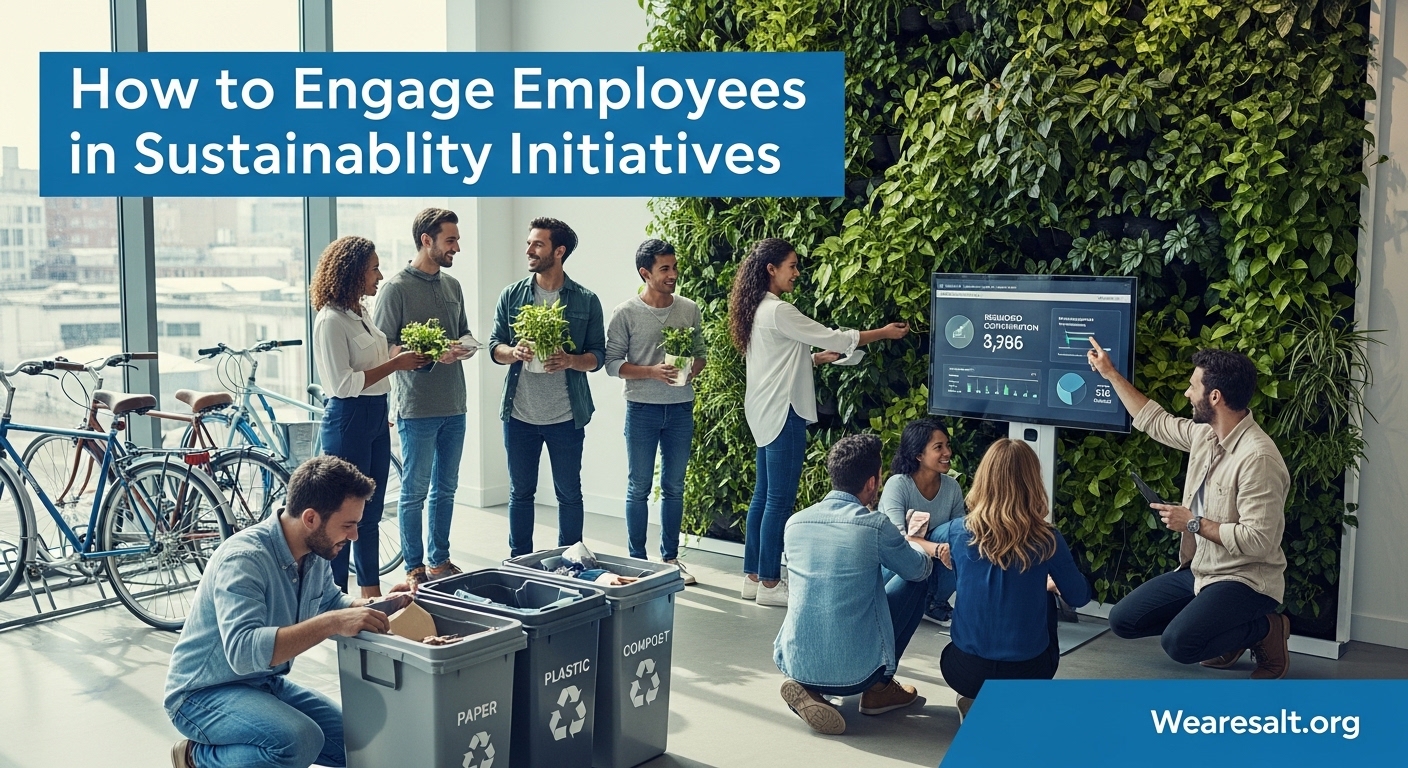
Getting employees genuinely excited about sustainability programs remains one of the biggest challenges organizations face in 2026. Nearly half of all companies cite lack of employee engagement as the primary obstacle to achieving their environmental goals. I have spent years working with organizations to bridge this gap, and the difference between failed initiatives and thriving programs always comes down to one factor: how well you engage your people.
This guide shows you exactly how to engage employees in sustainability initiatives using seven proven strategies that create lasting cultural change. You will learn practical techniques that work across industries, company sizes, and employee demographics. These approaches have helped companies increase participation rates from 15% to over 80% within six months.
Whether you are building a sustainability program from scratch or trying to revive a stalled initiative, the methods in this article give you a clear roadmap for success.
Table of Contents
Why Employee Engagement Is the Key to ESG Success
Organizations with highly engaged employees report 23% higher profitability according to Gallup research. This performance boost extends directly to sustainability outcomes. When employees genuinely care about environmental and social goals, they bring creativity, persistence, and innovation that top-down mandates simply cannot replicate.
The World Economic Forum found that companies struggling with ESG targets overwhelmingly point to engagement problems rather than technical or financial barriers. You can install solar panels and set carbon targets, but without employee buy-in, these become expensive decorations rather than transformational changes.
Traditional top-down approaches fail because they treat sustainability as a compliance exercise. Employees receive memos about new recycling rules or energy-saving requirements without understanding why these matter or having any say in implementation. This creates resistance rather than enthusiasm.
How to Engage Employees in Sustainability Initiatives: 7 Proven Strategies
The most successful sustainability programs share common elements that transform passive compliance into active participation. These seven strategies work individually but create exponential impact when combined.
1. Practice Transparent Communication About Goals and Progress
Employees need to understand what you are trying to achieve and see honest progress updates. Share specific sustainability targets, current baseline measurements, and regular reports on improvements. Be equally transparent about setbacks and challenges.
Forum discussions reveal that employees deeply value transparency about company sustainability goals. When leadership openly discusses environmental commitments alongside business metrics, employees trust the program is genuine rather than performative. One HR professional shared that simply posting monthly energy usage data in break rooms increased conservation behavior by 34% without any additional training.
Create multiple communication channels including dashboards, team meetings, and digital updates. The key is consistency: employees should never wonder whether sustainability remains a priority.
2. Give Employees Real Ownership Through Green Teams
Green teams and sustainability committees work best when they have actual authority and budget, not just advisory roles. Form groups of interested employees across departments and give them decision-making power over specific initiatives.
Employee-led initiatives consistently outperform top-down programs because participants understand ground-level realities. A green team of warehouse workers will design better waste reduction systems than executives in corner offices. Provide these teams with dedicated time, modest budgets, and direct access to leadership.
Structure your green committee with clear roles: chairperson, communications lead, project coordinators, and department representatives. Meet monthly with quarterly leadership check-ins. Most importantly, let the team choose which initiatives to pursue rather than handing down mandates.
3. Connect Sustainability to Training and Professional Development
Frame sustainability education as career development rather than extra work. Offer training programs that build valuable skills: carbon accounting, sustainable supply chain management, circular economy principles, and ESG reporting standards.
Younger employees particularly value professional development opportunities tied to environmental impact. Linking sustainability training to learning and development budgets signals serious organizational commitment. One manufacturing company saw 67% higher participation in their green team after offering sustainability certifications as professional development credits.
Create tiered learning paths from basic environmental literacy for all employees to specialized technical training for those leading initiatives. Include external conferences and workshops in your professional development offerings.
4. Build Recognition Systems That Celebrate Contributions
Public acknowledgment significantly boosts participation according to forum insights from sustainability professionals. Create recognition programs that highlight both individual actions and team achievements in sustainability efforts.
Tie sustainability contributions into existing performance review systems rather than creating separate awards. When employees see environmental leadership considered in promotion decisions, behavior changes rapidly. Non-monetary recognition often works as well as bonuses: feature sustainability champions in company newsletters, give them speaking opportunities at all-hands meetings, or provide extra vacation days.
Recognition works best when specific rather than generic. Instead of “Employee of the Month for green efforts,” try “Sarah reduced packaging waste in her department by 23% through supplier negotiations.”
5. Empower Employees to Make Real Decisions
Let employees choose which sustainability priorities matter most to them and their departments. Create systems for idea submission, voting on initiatives, and actually implementing employee suggestions. Nothing kills engagement faster than suggestion boxes that lead nowhere.
Empowered decision-making means giving teams authority to spend modest budgets without multiple approval layers. A retail company allowed each store to allocate $500 monthly toward their chosen sustainability project. Store managers reported higher morale and better results than when corporate dictated uniform programs.
Establish clear criteria for decision-making: alignment with company goals, feasibility, cost, and potential impact. Then trust your employees to apply these criteria intelligently.
6. Deploy Digital Tools for Real-Time Engagement
Modern employee engagement platforms make sustainability participation visible and rewarding. Mobile apps allow frontline workers to log contributions, see team progress, and receive instant recognition. Real-time dashboards create healthy competition between departments while maintaining focus on collective goals.
Digital tools solve the awareness-action gap that plagues many programs. Employees know sustainability matters but do not know what actions to take. Apps can guide daily decisions: which bin to use, how to adjust equipment for efficiency, or when to participate in community events.
Choose tools that integrate with existing workplace systems rather than adding another login. The best platforms connect to your intranet, Slack, Teams, or existing HR systems.
7. Integrate Sustainability into Daily Culture
Make sustainable practices invisible parts of normal work rather than special events. Daily routines create lasting culture while annual Earth Day celebrations create temporary enthusiasm followed by quick forgetting. Frontline employee engagement requires integrating environmental considerations into standard operating procedures.
Simple changes make significant differences: install composting stations next to regular trash bins, provide reusable dishware in cafeterias, create energy-saving competitions between shifts. One office removed individual trash cans and added centralized recycling stations. Within weeks, recycling rates increased 40% with zero training required.
Focus on making the sustainable choice the easy choice. When employees must actively work against the system to be unsustainable, behavior changes automatically.
Real-World Examples: Companies Getting It Right
Learning from organizations that have successfully engaged employees provides concrete models for your own programs. These companies demonstrate different approaches that share common themes of employee empowerment and transparent communication.
IKEA: Grassroots Sustainability From the Ground Up
IKEA applies Kaizen philosophy to sustainability: continuous improvement driven by frontline employees. Workers in stores and distribution centers identify efficiency opportunities and environmental improvements as part of their regular responsibilities. This approach generated over 50,000 employee suggestions annually, with many focusing on waste reduction and energy efficiency.
The company reports that employee-led sustainability initiatives consistently deliver better results than corporate-mandated programs. Store-level teams choose which environmental priorities to address based on local conditions and customer needs.
Sonova: Employee App Driving Measurable Results
Global hearing care company Sonova deployed an employee engagement app to connect their distributed workforce around sustainability goals. The platform allows employees to log actions, see collective impact metrics, and participate in challenges. Within the first year, participation rates reached 85% across 30 countries.
The key to their success was making engagement social and competitive while keeping actions simple. Employees could complete sustainability challenges in under five minutes during normal workdays.
McCue: Frontline Worker Engagement
Manufacturing company McCue focused specifically on engaging frontline production workers often excluded from sustainability discussions. They created shift-level green teams with authority to modify production processes for environmental benefit. These teams reduced material waste by 18% and energy consumption by 12% within eight months.
Their approach recognized that frontline employees possess detailed knowledge of operational inefficiencies that managers miss. Giving these workers permission and tools to address problems unlocked massive improvement potential.
Overcoming Common Barriers to Engagement
Even well-designed programs encounter resistance. Understanding common obstacles helps you address them proactively rather than reacting to stalled initiatives.
Dealing with Greenwashing Skepticism
Employees increasingly view corporate sustainability programs with suspicion, fearing they are performative exercises designed for marketing rather than genuine environmental commitment. Address this directly through transparent data sharing and acknowledging company shortcomings.
When leadership openly discusses environmental challenges the company still faces, trust increases dramatically. One sustainability director reported that her admission that the company had not yet solved packaging waste problems generated more employee suggestions than any previous green initiative.
Preventing Sustainability Fatigue
Too many campaigns without follow-through create fatigue. Employees stop responding to new initiatives because they expect abandonment within months. Combat this by limiting the number of active programs, ensuring each has clear timelines and resources, and celebrating completion before launching replacements.
Focus on depth over breadth. Three well-supported initiatives that run for a full year outperform twelve flash-in-the-pan campaigns.
Engaging Remote and Distributed Teams
Remote work creates unique challenges for sustainability engagement. Employees working from home may feel disconnected from corporate environmental programs focused on office spaces. Create virtual green teams, allow remote workers to define their own sustainability goals, and provide resources for home office environmental improvements.
Virtual volunteering and digital collaboration tools help remote employees participate in community sustainability projects alongside office-based colleagues.
Including Introverts and Reluctant Participants
Not every employee wants to join committees or attend sustainability events. Create multiple engagement pathways: individual actions tracked through apps, anonymous suggestion systems, and private recognition options. Some of your most valuable contributors prefer quiet contribution over public participation.
Respect different communication styles and engagement preferences. A comprehensive program includes loud champions and silent supporters.
How to Measure Sustainability Engagement Success
Tracking the right metrics proves program value and guides continuous improvement. Many organizations struggle to connect engagement activities to business outcomes, creating skepticism about program ROI.
Key Engagement Metrics to Track
Measure participation rates across different employee segments: by department, tenure, age group, and work location. Track both breadth (how many employees participate) and depth (how frequently engaged employees contribute). Monitor idea submission rates, implementation of employee suggestions, and time spent on sustainability activities.
Survey data provides crucial insights: employee sentiment about company environmental commitment, perceived impact of individual actions, and satisfaction with sustainability programs. Track these quarterly to identify trends.
Connecting Engagement to Business Outcomes
The ultimate test of engagement success is environmental and business impact. Measure waste reduction, energy savings, carbon footprint changes, and cost reductions attributable to employee-driven initiatives. Calculate cost savings from material efficiency and waste reduction.
Connect engagement metrics to retention rates: employees who participate in sustainability programs show 20-30% lower turnover in studies from major consulting firms. Calculate recruitment benefits from strong sustainability culture, particularly for attracting Gen Z and millennial talent.
Reporting and Communication Frameworks
Create regular reporting rhythms: monthly dashboards for green teams, quarterly summaries for leadership, and annual reports for all employees. Tie sustainability engagement metrics into existing business reporting systems rather than creating separate processes.
Include both quantitative metrics and qualitative stories. Numbers prove impact, but stories of individual contributions inspire continued participation.
Budget-Friendly Sustainability Initiatives That Generate Quick Wins
Resource constraints should not prevent engagement. Many effective sustainability initiatives require minimal investment while generating momentum for larger programs.
Start with behavioral changes that cost nothing: turning off lights and equipment, printing double-sided, adjusting thermostats seasonally. Add low-cost infrastructure like composting bins, reusable dishware collections, and clearly labeled recycling stations. Create energy-saving competitions between departments with small prizes.
Programs that save money generate more organizational traction than expensive ones. Focus first on initiatives that reduce costs through efficiency: waste reduction, energy conservation, and material optimization. Use savings to fund more ambitious projects.
Integrating Sustainability into Performance Management
Embedding environmental considerations into formal performance systems signals genuine organizational priority. Include sustainability contributions in job descriptions, performance reviews, and promotion criteria.
Create specific, measurable sustainability goals for each role where appropriate. A facilities manager might have energy reduction targets. A procurement specialist could have sustainable sourcing objectives. Individual contributors might have waste reduction or conservation goals.
When employees see sustainability performance affecting their career progression, engagement becomes self-sustaining. The practice moves from voluntary extra effort to expected professional behavior.
FAQ
Why employee engagement is the key to ESG success
Employee engagement drives ESG success because engaged workers bring creativity, persistence, and innovation to environmental and social goals. Organizations with highly engaged employees report 23% higher profitability. Nearly 50% of companies cite lack of employee engagement as the primary obstacle to achieving sustainability targets. When employees genuinely care about ESG goals, they identify efficiency opportunities and drive continuous improvement that top-down mandates cannot replicate.
How to involve employees in sustainability initiatives
Involve employees by practicing transparent communication about goals, creating green teams with real authority and budget, connecting sustainability to professional development, building recognition systems, empowering decision-making at all levels, deploying digital engagement tools, and integrating environmental practices into daily culture. Let employees choose priorities and give them implementation authority. Recognition from leadership significantly boosts participation rates.
What are the barriers to employee engagement in sustainability
Common barriers include greenwashing skepticism where employees view programs as performative, sustainability fatigue from too many abandoned campaigns, difficulty engaging remote workers, challenges including introverts and reluctant participants, lack of leadership buy-in, disconnect between company values and actual practices, and difficulty measuring impact and showing ROI. Address these through transparent data sharing, limiting program breadth, creating multiple engagement pathways, and embedding sustainability into performance management systems.
How to create a green committee for sustainability
Create a green committee by recruiting interested employees across departments, giving the group real authority and modest budgets rather than just advisory roles. Structure with clear roles including chairperson, communications lead, project coordinators, and department representatives. Meet monthly with quarterly leadership check-ins. Let the team choose which initiatives to pursue. Connect the committee to learning and development opportunities. Most importantly, ensure leadership participates actively rather than just mandating participation.
What are sustainability employee engagement activities
Effective engagement activities include green teams with decision-making authority, sustainability training and certification programs, energy-saving competitions between departments, composting and recycling initiatives, reusable dishware programs, community volunteer projects, idea submission systems with implementation authority, sustainability challenges through employee apps, Earth Day events with lasting follow-through, and integrating environmental goals into performance reviews. The best activities give employees real influence over outcomes rather than treating them as passive recipients of mandates.
Conclusion: Building a Sustainability Culture That Lasts
Learning how to engage employees in sustainability initiatives transforms ESG from corporate obligation into shared organizational value. The seven strategies in this guide provide a complete framework: transparent communication, employee ownership, training connections, recognition systems, empowered decision-making, digital tools, and daily culture integration.
Success requires patience and consistency. Start with one or two strategies that fit your organizational culture, prove value through early wins, and expand from there. The companies seeing the best results did not implement everything at once. They built engagement over time through genuine commitment to employee involvement.
Remember that employees trust sustainability programs more when they see leadership participation, not just mandates. Measure your progress, share results transparently, and celebrate contributions at every level. When sustainability becomes part of how work gets done rather than something extra to remember, you have built a culture that will outlast any single initiative.
Your next step is choosing which strategy to implement first. Review the seven approaches, identify which addresses your biggest current gap, and begin building your engagement foundation today.